

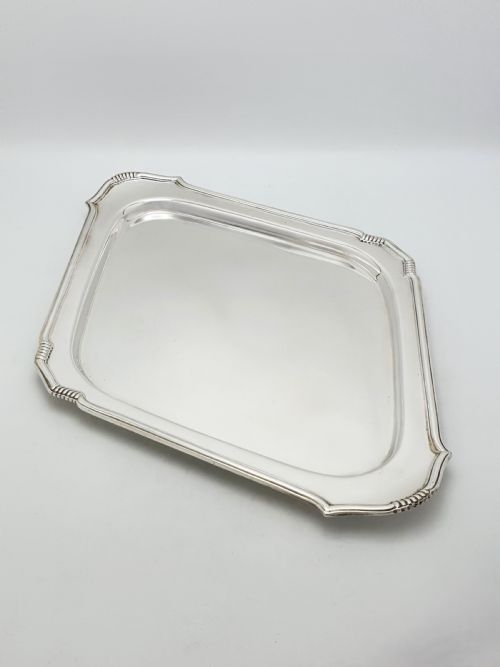


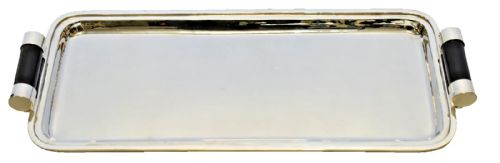


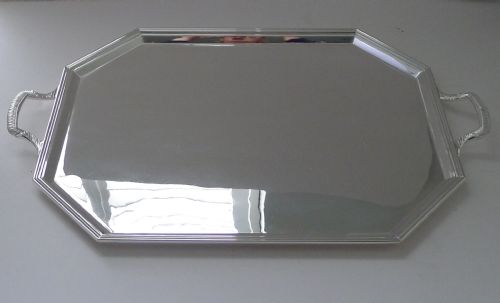
Silver Barware Tray
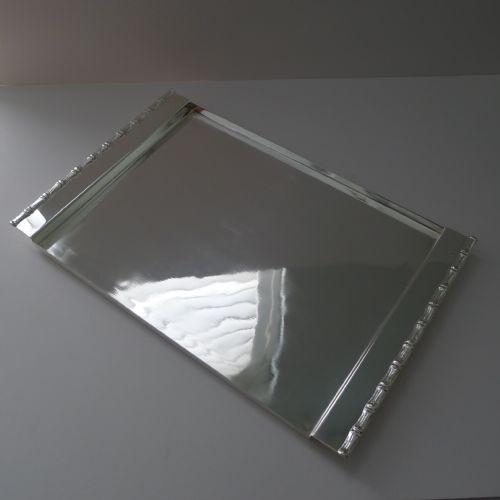
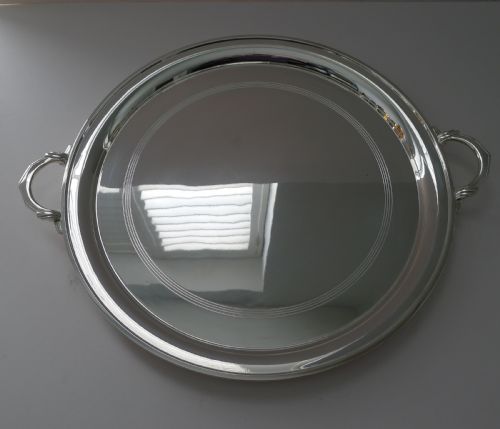
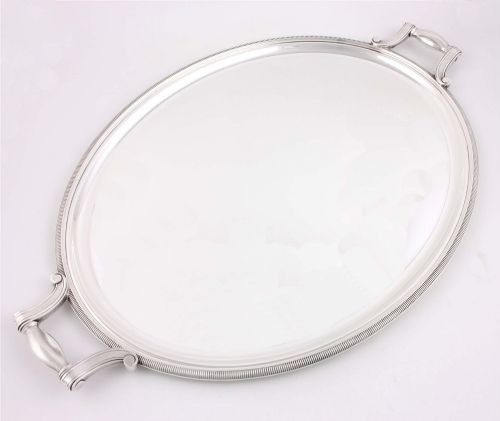
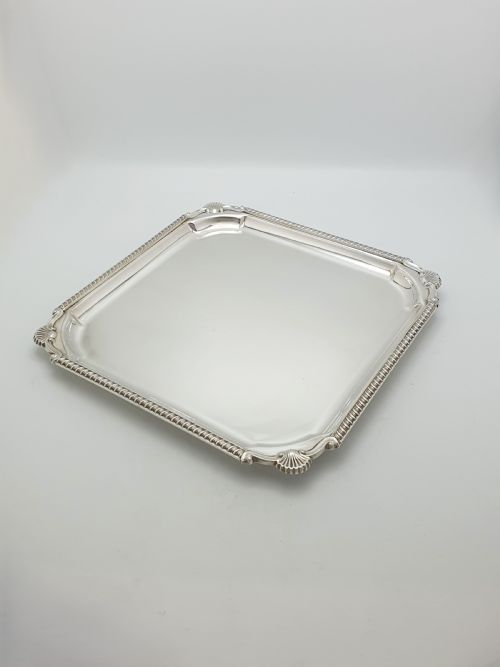
A silver barware tray organises glassware and bottles with poise, bringing substance to any drinks service.
What silver barware tray pieces are
A silver barware tray serves as a dedicated base for glasses, decanters and cocktail shakers, holding everything together during service. The pieces found here range from circular formats to expansive oval shapes designed for butler use.
The selection encompasses Edwardian examples alongside pieces from the 1900s, 1910s, 1920s and 1960s. Formats span serving trays, salvers and platters intended specifically for drinks and cocktails.
Makers represented in the current and archive records include Christofle, Walker & Hall, John Collyer and Co., Elkington, and Atkin Brothers. Alongside plated wares, solid sterling silver salvers appear in the archive records.
How they were made
Construction relies primarily on silver plate, nickel silver, EPNS and base metal, though solid sterling silver also occurs in archive records. Makers applied silver layers over robust base metals to achieve a bright reflective surface suitable for frequent use.
Surface decoration includes engine turned patterns, which provide geometric precision and visual texture across the metal plate. Edges and handles often incorporate cast or applied borders that add weight and decorative definition.
Retail Price Guide 2026
Typical UK retail prices for silver barware tray, calculated from the Sellingantiques database of over a million retail prices indexed since 2003. This retail price guide relies exclusively on Sellingantiques data; no external sources or auction records are used, so the figures do not describe the wider market.
Listings feature items spanning the Edwardian period through the 1960s, utilising silver plate, nickel silver, EPNS and base metal.
What varies in quality
The standard of a silver barware tray depends on the crispness of its surface pattern and the robustness of its foundation metal. Engine turned decoration executed with deep, even lines demonstrates greater skill than shallow or worn engraving.
Weight and balance distinguish standard production from superior pieces, particularly in larger formats intended to carry heavy decanters. Maker attribution also influences standing, with established houses maintaining distinct standards of plating thickness and border finish.
Christofle·Walker & Hall·John Collyer and Co.·Elkington·Atkin Brothers
The Silver Barware Tray Glossary
- Silver Plate
- A thin layer of silver bonded to a base metal core such as nickel silver or copper. This technique allowed manufacturers to produce substantial decorative items at a lower cost than solid silver.
- EPNS
- Electroplated Nickel Silver, denoting a base alloy of copper, nickel and zinc coated with pure silver through an electrical process. It became the dominant standard for durable domestic tableware.
- Salver
- A formal tray, typically circular and raised on small feet, traditionally used for presenting drinks or calling cards. In barware contexts, it functions as a compact cocktail tray.
- Engine Turned
- A decorative technique involving precise geometric patterns cut into metal by a specialised machine. It creates repetitive, textured designs that catch the light.
- Base Metal
- The underlying metal structure beneath a plated surface, commonly incorporating copper or nickel alloys. Its durability determines the long-term structural integrity of the piece.
Frequently Asked Questions
What is a silver barware tray used for?
A silver barware tray provides a stable, elegant surface for arranging cocktail shakers, glasses and bottles during service. It protects furniture from condensation and spills while containing glassware in one designated place.
Beyond practical hosting, these trays serve as decorative display pieces on sideboards or drinks trolleys when not in active use.
How do I clean silver plated trays?
Clean silver plated trays using a soft cloth and a specialised silver polish formulated for plated items. Avoid aggressive scrubbing or abrasive materials that can wear away the thin silver layer over the base metal.
Wash the tray gently in warm soapy water after polishing, then dry it thoroughly with a lint-free cloth to prevent water spots.
Are solid silver trays common?
Solid sterling silver trays are less common than silver plated versions, appearing occasionally in archive records as heavy salvers. Most period barware relies on durable base metals covered with a silver plating.
Solid pieces offer intrinsic metal value and greater weight, whereas plated alternatives provided accessible luxury for Edwardian and mid-century households.
How do I identify the maker?
Makers mark their silver barware trays with specific stamps, initials or symbols stamped into the underside or rim. These hallmarks and trade marks indicate the manufacturing firm, such as Elkington or Walker & Hall, and sometimes the plating standard used.
Consulting historical maker mark registers helps match these symbols to specific firms and active working periods.