




Silver Plated Waiter
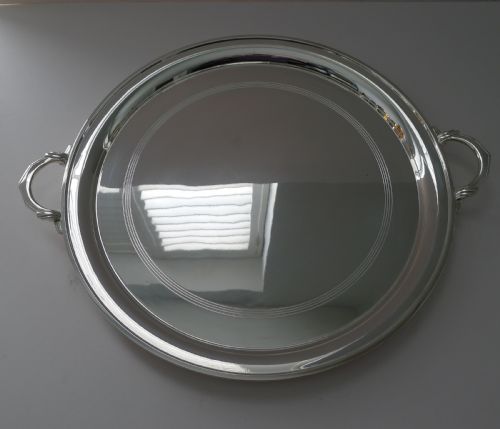
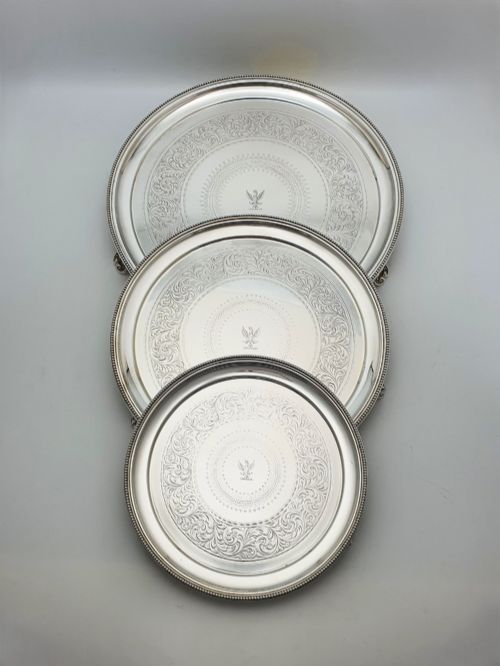
A silver plated waiter is a small serving tray or salver designed for glasses, cards, and letters, offering a bright metallic surface that catches the light in any room.
Silver Plated Waiter
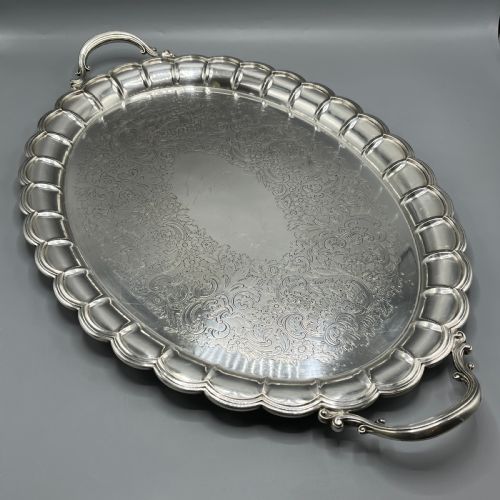
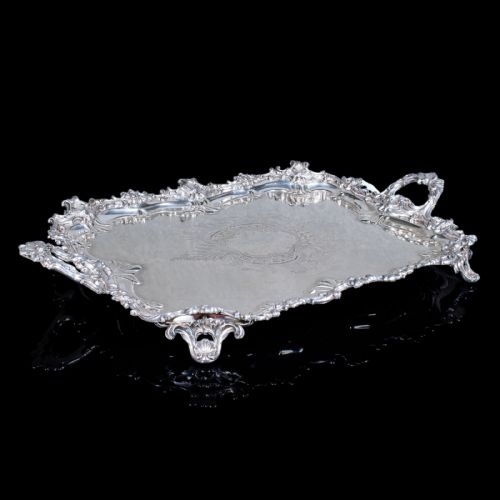
A silver plated waiter is a practical small tray or salver used historically for carrying calling cards, letters, or drinks. On this page, the pieces you meet most often are Victorian and Edwardian salvers alongside later Art Deco cocktail trays.
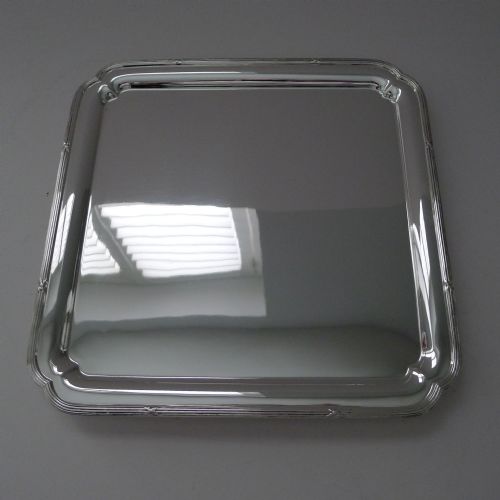
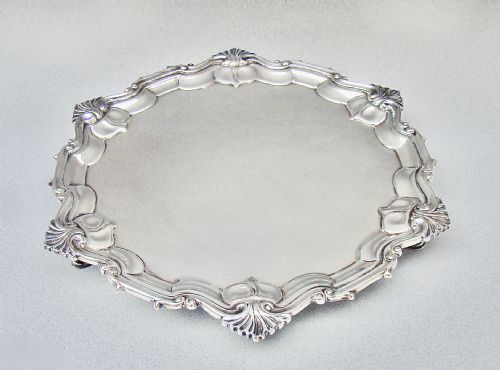
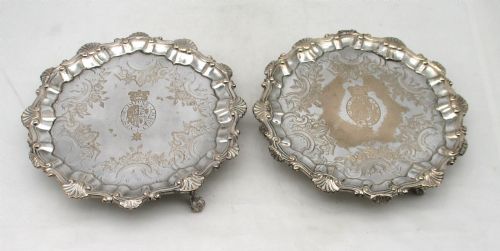
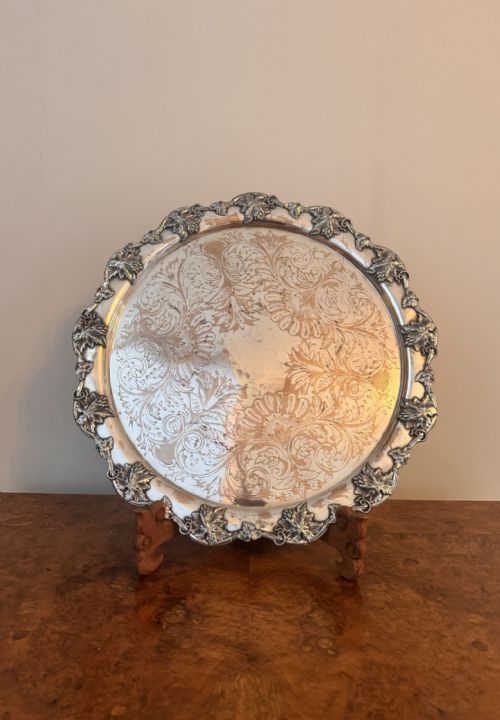
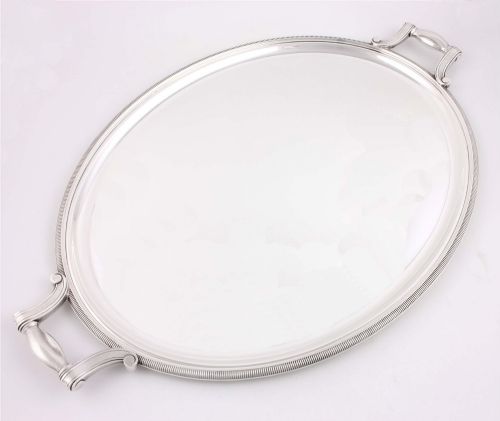
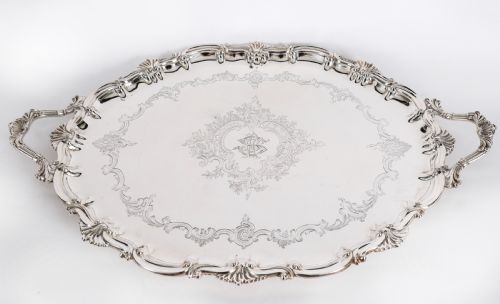
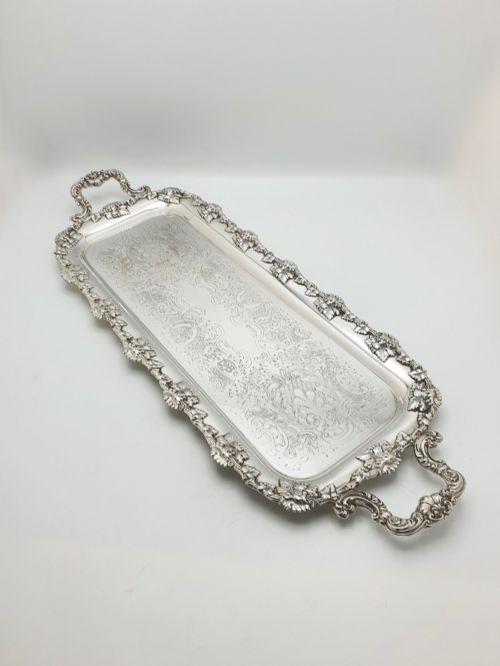
The selection ranges from compact 18th century Old Sheffield plated card trays to large 20th century serving trays with handles. Forms vary from circular salvers with raised detailed rims to square and oval cocktail trays.
Makers and silversmiths utilised various baseline materials beneath the metal skin, yielding items created for afternoon tea, formal presentations, and everyday hospitality.
How They Were Made
Early pieces rely on Old Sheffield Plate, a process fusing a thin sheet of silver onto a thicker copper body, often revealing the underlying copper at the edges over long periods of use. Later items employ electroplated nickel silver, EPNS, or base metal substrates coated using electrical current.
Craftsmen applied applied borders, such as grapevine motifs, and engraved intricate geometric or floral patterns across the surface by hand. Handles and cast feet were soldered securely to the body to support the weight of carried glassware and decanters.
Silver Plated Waiter Retail Price Guide 2026
Typical asking prices for silver plated waiter among the pieces listed under this phrase on Sellingantiques today, from the lower quarter to the upper quarter. They describe what is for sale here now, not the wider market.
Card trays once intercepted unwelcome visitors by announcing callers before they reached the parlor.
What Varies In Quality
The thickness of the original plating determines longevity, separating heavy electroplate and fused Old Sheffield pieces from thin washes that wear away to expose the base metal. Crispness in the cast borders and the depth of hand engraving indicate the level of care taken in the workshop.
Proportion and structural rigidity separate standard utility items from presentation pieces, where sturdy handles and substantial weight prevent flexing when the tray is lifted with a full set of glasses.
Mappin & Webb·William Hutton & Sons·Christofle·Thomas Bradbury & Sons·Elkington·John Harrison·Padley Parkin·Samuel Hennell·J B Chatterley & Sons·Walker & Hall·James Dixon & Sons·Philip Ashberry & Sons
The Silver Plated Waiter Glossary
- Waiter
- A small serving tray or salver, typically supported on small feet, used for handing round drinks or letters.
- Salver
- A tray, usually made of silver or silver plate, used for presenting items or serving food and beverages.
- Old Sheffield Plate
- A composite material made by fusing a sheet of silver to a copper ingot, common in pieces dating before the invention of electroplating.
- EPNS
- Electroplated Nickel Silver, a common base metal composition coated with a thin layer of silver through an electrical bath.
- Gallery tray
- A tray featuring an openwork metal gallery or pierced railing around the perimeter to keep items from sliding off.
- Alms dish
- A shallow basin or dish traditionally used for collecting offerings, often repurposed or styled similarly to decorative plates.
Silver Plated Waiter: Frequently Asked Questions
What is a silver plated waiter used for?
These trays serve drinks, cocktails, and afternoon tea. Historically, smaller versions held calling cards or letters presented in a hallway.
They also function as decorative centerpieces on sideboards or tables to hold glassware and decanters.
How do I clean a silver plated waiter?
Use a specialised silver polish and a soft cloth to remove tarnish gently. Avoid abrasive pads that scratch the metal or wear through the plating.
Wash the tray in warm soapy water afterwards and dry it completely with a lint-free cloth.
How do I tell Old Sheffield Plate from later pieces?
Old Sheffield Plate shows thin lines of copper bleeding through where the silver layer has worn away along high points and edges. Later pieces utilise nickel silver or brass beneath, which reveals a dull grey or yellow tone rather than warm copper.
Weight and construction methods also help date the item.
Can I use these trays for daily drinks service?
Most pieces handle daily use well if treated with care and dried promptly after serving wet glasses. Sturdy handles and solid frames support normal weight without issue.
Older or heavily worn items benefit from gentle handling to preserve the remaining surface metal.