


Electroplated Nickel Silver
Electroplated nickel silver offers the bright appearance of solid silver through a durable metallic coating over a base alloy.
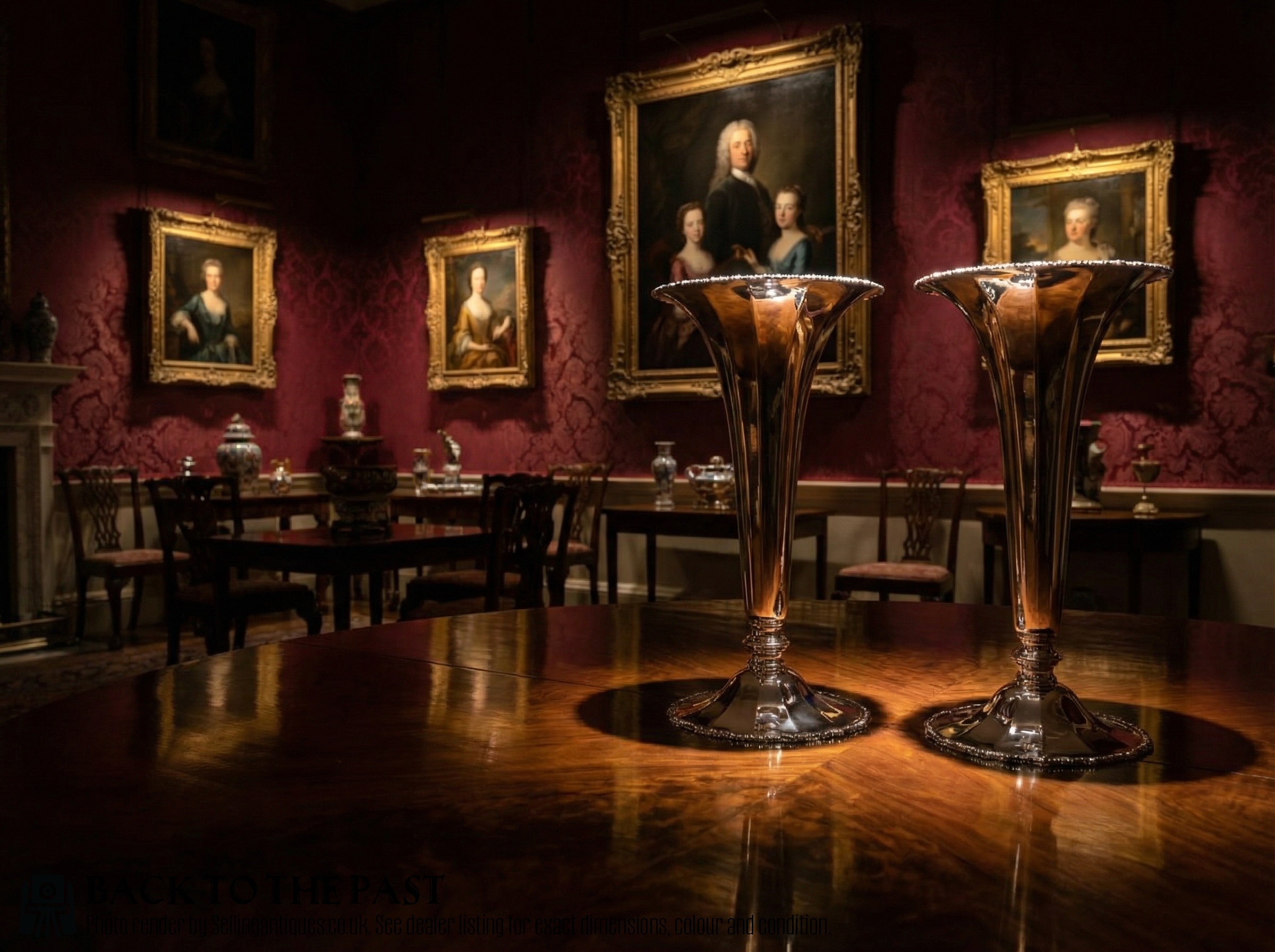
What electroplated nickel silver pieces are
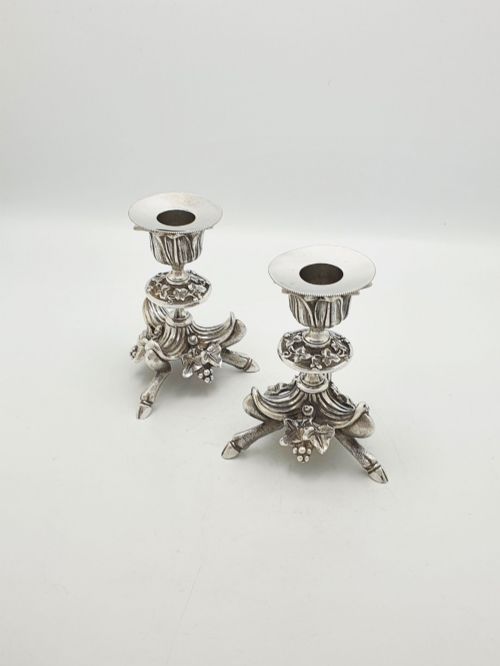
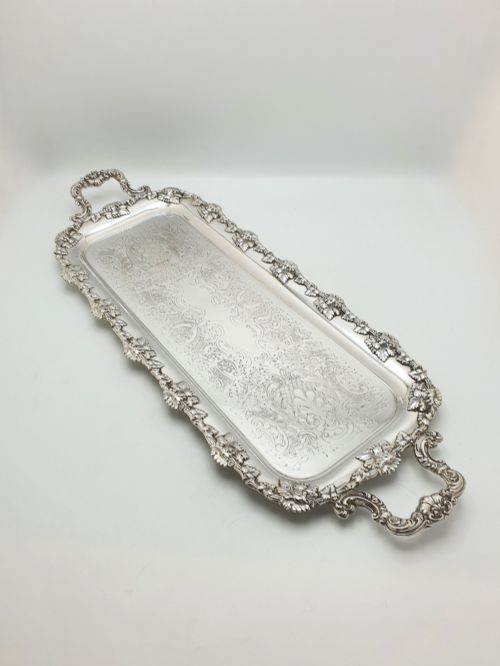
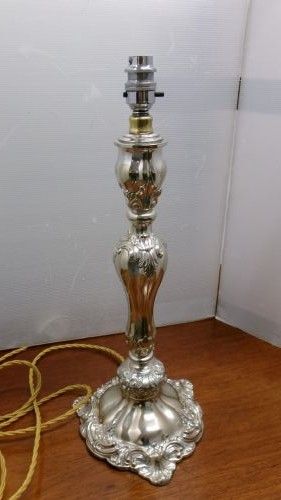
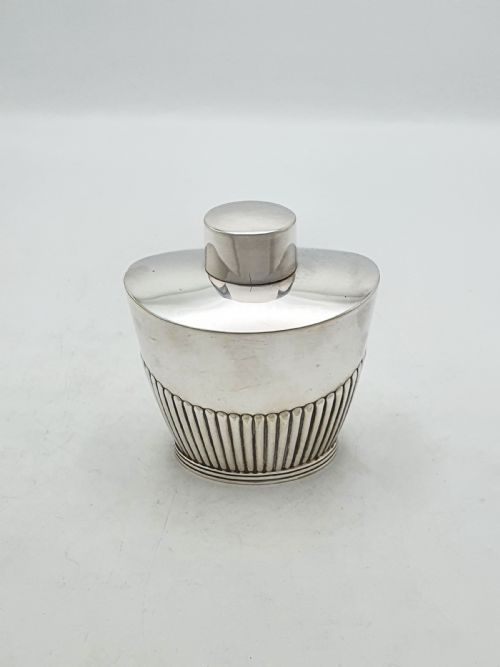
When searching for electroplated nickel silver, collectors encounter various serving vessels, lighting fixtures, and desk items dating from the nineteenth and twentieth centuries. These objects reflect domestic routines of the Victorian, Edwardian, and Art Deco periods, ranging from formal salvers to everyday ink wells.
The pieces appearing on this page most frequently include serving trays, platters, and candelabra suites produced across the late nineteenth and early twentieth centuries. They demonstrate the transition from elaborate nineteenth-century ornamentation to cleaner twentieth-century styles.
Makers such as James Dixon & Sons, Daniel & Arter, and Fenton Russel feature prominently in this category, showing the commercial output of British workshops. Their work supplies functional dining and desk accessories that mimic solid precious metal at a lower cost.
How electroplated nickel silver was made
Manufacturers formed the foundational body using nickel silver or brass, shaping the core components through casting, spinning, or pressing. Workers then applied a thin layer of silver over this base alloy using electrolytic deposition processes.
Decorative elements like grapevine borders, handles, and figural details were often cast separately and soldered onto the main body before plating. Glass inserts or liners sometimes accompanied desk accessories and ink wells to hold liquids safely.
Retail Price Guide 2026
Typical UK retail prices for electroplated nickel silver, calculated from the Sellingantiques database of over a million retail prices indexed since 2003. This retail price guide relies exclusively on Sellingantiques data; no external sources or auction records are used, so the figures do not describe the wider market.
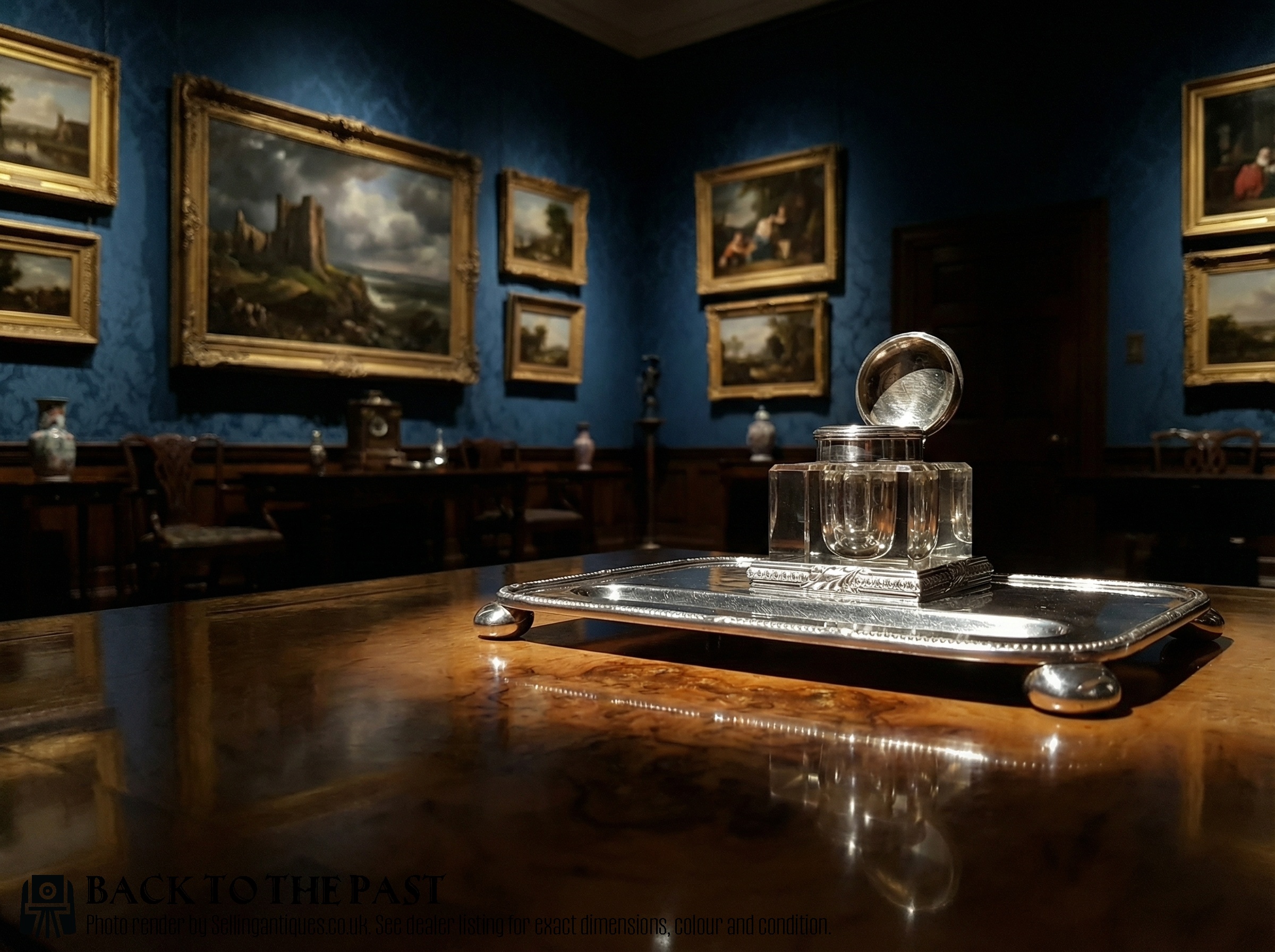
An ink well and pen tray pairing reminds us of an era when daily correspondence required liquid ink and a steady hand.
What varies in quality
Quality depends upon the thickness of the applied silver coating and the precision of the underlying metalwork. Finer items retain their plating evenly across high-wear areas, whereas inferior examples reveal the yellowish base metal beneath through rubbing.
Design execution distinguishes standard domestic wares from exceptional pieces produced by established makers. Crisp chasing, well-defined figural elements, and sturdy construction separate superior serving trays and candelabra suites from mass-market production.
James Dixon & Sons·Daniel & Arter·Fenton Russel
The Electroplated Nickel Silver Glossary
- EPNS
- Electroplated nickel silver. This abbreviation denotes a base metal alloy of copper, nickel, and zinc covered with a thin coat of silver.
- Salver
- A serving tray, usually round and supported on feet. These items serve drinks or present calling cards in formal settings.
- Candelabra
- A branched candlestick holding multiple lights. Paired examples often form symmetrical suites for dining tables and sideboards.
- Chasing
- A metalworking technique used to ornament the surface by hammering or indenting without removing material. It adds relief to borders and decorative panels.
Frequently Asked Questions
What is electroplated nickel silver?
Electroplated nickel silver is a composite metal formed by depositing a thin layer of silver onto a base alloy of copper, nickel, and zinc. This method provided households with the visual appeal of solid silver tableware at a fraction of the expense.
Items created this way became staples of middle-class dining tables and drawing rooms from the Victorian era onward.
How do I clean these pieces?
Cleaning requires mild silver polish applied gently with a soft cloth to avoid wearing through the thin plated surface to the base metal underneath. Frequent light polishing preserves the shine better than aggressive scrubbing.
Harsh chemical dips should be avoided, particularly on items with decorative chased borders or soldered joints.
When were these items made?
The pieces available span from the nineteenth century through the Art Deco period of the 1930s. Victorian and Edwardian examples often feature ornate floral borders, while later items embrace geometric lines.
Stylistic shifts reflect changing domestic tastes across these decades.
How were serving trays used?
Serving trays and salvers facilitated the movement of tea services, glasses, and calling cards around the home. They protected polished wooden furniture from spills and heat.
Larger trays remained central to formal entertaining during the nineteenth and early twentieth centuries.