






Silver Bar Tray
A silver bar tray brings period glamour and useful surface area to a home bar, spanning sturdy silver plate and solid sterling silver.
Silver Bar Tray
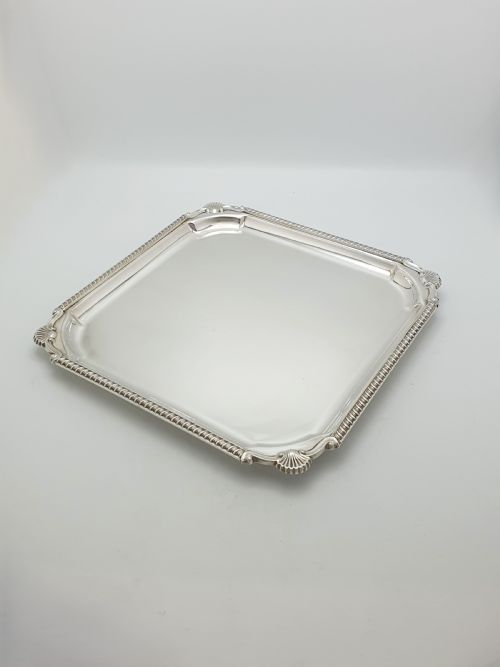
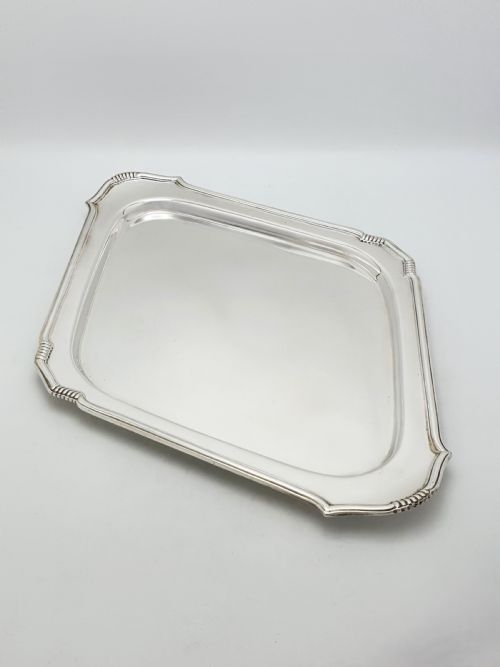
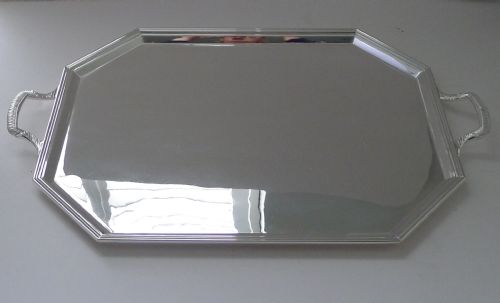
A silver bar tray functions primarily as a serving piece or drinks display, appearing in forms ranging from heavy gallery trays with low railings to sleek cocktail trays and flat salvers. When exploring a silver bar tray, a buyer encounters domestic barware designed to hold glassware, decanters, and cocktail shakers securely during service.
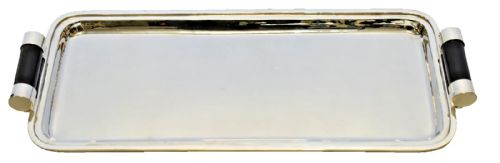
The pieces available draw from several distinct eras, stretching from late Victorian and Edwardian examples through the geometric lines of Art Deco pieces and into Mid-Century Modern designs. Silver plate and electroplated nickel silver predominate, alongside occasional examples in solid sterling silver and combinations featuring oak, mahogany, or cobalt blue mirror glass.
Edwardian pieces often utilise raised wooden galleries or intricate borders, whereas 1930s examples lean towards modernist shapes, engine-turned patterns, and stylised handles. Buyers most frequently meet silver plated variants from the early twentieth century, reflecting the peak era of home cocktail culture and formal entertaining.
Materials and construction methods
Makers built these pieces using a foundation of base metal, nickel silver, or cabinet woods such as oak and mahogany, subsequently applying a layer of silver via electroplating or old Sheffield plating techniques. Solid sterling silver examples required traditional silversmithing methods, including hand-raising, casting, and precision hallmarking at assay offices.
Gallery edges and decorative borders involved soldered wirework or cast components, fixed securely to the base plate to create functional barriers for glassware. Surface decoration relied on engine-turning, geometric engraving, hammering, or the integration of contrasting materials like inlaid wood and mirror glass.
Silver Bar Tray Retail Price Guide 2026
Typical asking prices for silver bar tray among the pieces listed under this phrase on Sellingantiques today, from the lower quarter to the upper quarter. They describe what is for sale here now, not the wider market.
Listings feature items spanning the Victorian era through the 1960s, incorporating silver plate, sterling silver, oak, mahogany, and cobalt blue mirror glass.
Evaluating craftsmanship and distinction
Quality rests upon the weight of the metal, the rigidity of the gallery, and the crispness of any cast or engraved ornamentation. Superior examples display substantial gauge metal that resists flexing under load, alongside clean solder joints and well-defined maker marks.
The distinction between ordinary production and finer work lies in the hand-finishing of details, such as finely chased borders, substantial handles integrated into the frame, and the quality of underlying base metals in plated items.
J B Chatterley & Sons·Walker & Hall·Hukin & Heath·James Dixon & Sons·Roberts & Dore·Asprey London·Elkington·Harrods·Edward Barnard·Barker Brothers·Reed Barton·John Grinsell and Co·Edward Souter Barnsley
The Silver Bar Tray Glossary
- EPNS
- Electroplated Nickel Silver. This designates a base metal alloy of copper, nickel, and zinc coated with a layer of pure silver through an electrical process.
- Gallery tray
- A serving tray featuring an upright pierced or solid gallery railing around the perimeter to keep items from sliding off.
- Engine-turned
- A surface decoration technique. Skilled artisans used a rose engine lathe to cut precise, repetitive geometric patterns into the metal.
- Old Sheffield plate
- An early form of composite metal. Makers fused a thin sheet of sterling silver to a thicker copper core before rolling and shaping the material.
- Salver
- A flat serving vessel typically raised on small feet. This term often applies to solid silver trays used for serving drinks or presenting cards.
Silver Bar Tray: Frequently Asked Questions
What is the difference between a silver plate and sterling silver tray?
A sterling silver tray consists entirely of solid precious metal and bears official hallmarks indicating its silver purity. A silver plate tray uses a base metal core, such as nickel silver or copper, covered with a thin outer layer of pure silver.
While sterling pieces carry intrinsic precious metal value, high-quality silver plate items often feature more complex gallery work and decorative manufacturing techniques that were too costly in solid silver.
How were these trays used historically?
These pieces served as portable surfaces for carrying drinks, teapots, decanters, and glassware from a pantry or bar to a reception room. In the early twentieth century, cocktail trays became central to home entertaining, holding shakers, glasses, and bar accessories.
In domestic settings, they also functioned as permanent display bases on sideboards, keeping decanters organised and protecting polished wood surfaces from spills.
How do I care for a silver bar tray?
Regular maintenance involves gentle cleaning with a soft cloth to remove dust and moisture after use. When tarnish accumulates, a dedicated silver polish formulated for plated or solid surfaces restores the shine without abrading the metal layer.
Harsh chemical dips should be avoided, particularly on gallery trays with wooden bases, mirror glass inserts, or felted undersides that can be damaged by excess liquid.
How can I identify the period of a tray?
Stylistic cues provide the first indication of age, such as the clean geometric lines of Art Deco pieces from the 1920s and 1930s, or the elaborate floral motifs of Victorian designs. Maker marks, registry numbers, and hallmarks stamped into the metal offer more precise dating clues.
Matching the maker's stamp against historical records reveals the active working dates of the firm that produced the item.