

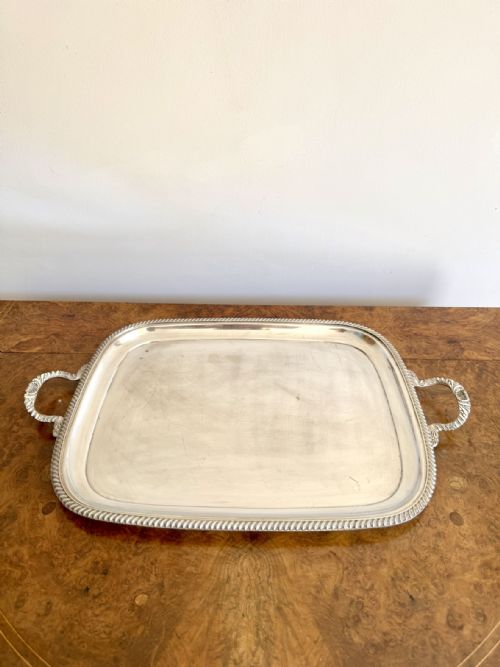


Edwardian Silver Salver
An edwardian silver salver brings formal proportion and bright metal to a table, offering a sturdy flat surface for serving drinks and display.
Edwardian Silver Salver
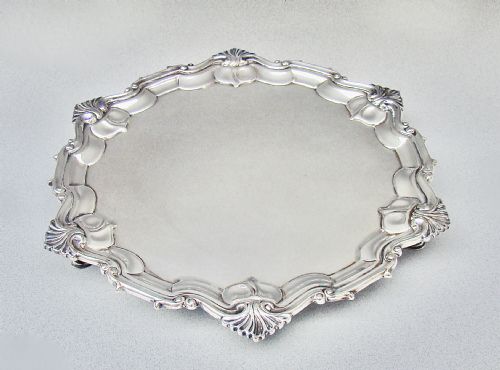
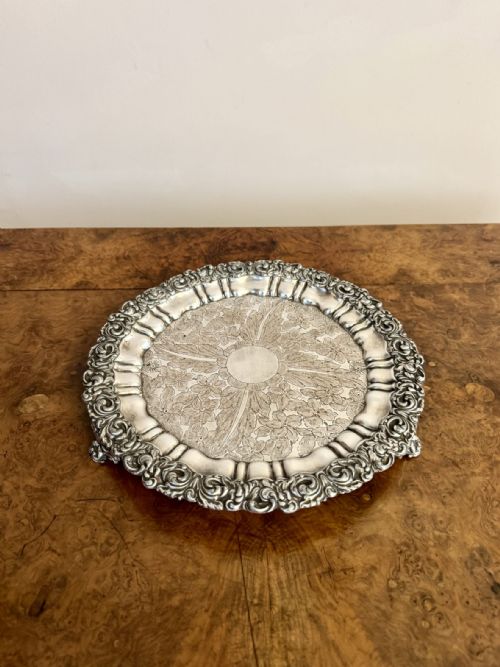
An edwardian silver salver is typically encountered as a round or square serving plate raised on small feet, dating from the early years of the twentieth century. These pieces appear in solid sterling silver and in silver plate over base metal, carrying the distinct stylistic weight of the Victorian transition into the Edwardian period.
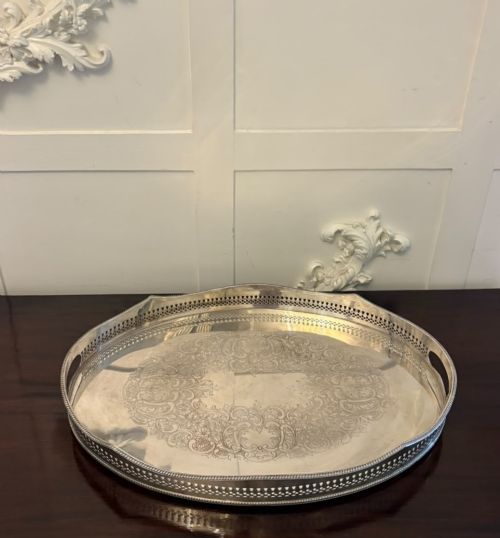
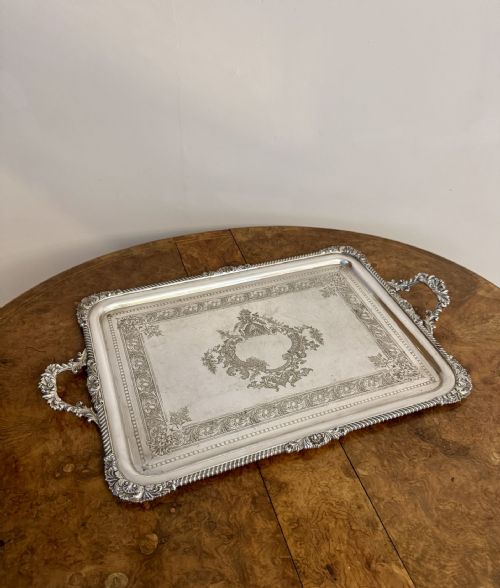
The forms range from compact drink trays and cocktail vessels to large ceremonial platters engraved with family crests or monograms. Makers of the era also produced gallery trays with pierced borders and oval serving trays designed for domestic hospitality.
Judging quality
The distinction between standard domestic wares and superior examples rests on metal weight, gauge thickness, and the crispness of hand-engraved motifs. Heavier gauge silver provides structural rigidity that prevents flexing across larger diameters.
Superior execution is further visible in the balance of the piece upon its feet and the precision of applied cast borders, whereas lesser pieces rely on simpler stamped decoration and thinner plating.
Salver forms span compact eight-inch presentation plates to enormous fourteen-inch serving trays.
William Hutton and Sons·Mappin and Webb·Martin Hall and Company·Walker and Hall·Ackroyd Rhodes·Harrison Brothers·Warings London
The Edwardian Silver Salver Glossary
- Salver
- A flat tray with feet used for serving food or drinks. They are typically circular or square in shape.
- EPNS
- Electroplated Nickel Silver. A base metal of nickel brass coated with a layer of pure silver through electrolysis.
- Pie crust
- A decorative raised rim shaped with alternating curves and points resembling a pastry crust edge.
- Gallery tray
- A tray featuring an openwork pierced metal gallery or pierced railing around the outer flat border.
- Crest
- An engraved heraldic device or family badge personalising the metal surface.
Edwardian Silver Salver: Frequently Asked Questions
What is the difference between a salver and a tray?
Salvers generally refer to footed circular or square platters meant for presenting items or drinks formally. Trays often include handles or flat serving formats for carrying.
In the Edwardian period, the terms frequently overlap in descriptions for both solid silver and silver plated items.
How do I clean an antique silver plated salver?
Use a soft cloth with a mild silver polish specifically formulated for plated objects. Avoid harsh abrasive compounds that wear away the thin silver layer.
Wash gently in warm soapy water and dry thoroughly to maintain the surface shine.
Are these pieces made of solid silver?
The inventory includes both solid sterling silver and silver plated items over base metals like nickel silver. Hallmarks stamped on the metal confirm sterling standard purity.
Plated items carry designations such as EPNS indicating electroplating.
How were these trays used originally?
Edwardian households utilised these metal trays for serving tea, cocktails, and calling cards in formal reception rooms. They functioned both as mobile serving pieces and permanent display surfaces.
Engraved family crests often indicated their role in aristocratic or prosperous homes.