


Ornate Silver Tray
An ornate silver tray brings heavy metalwork and chased detail straight to the table.
Ornate Silver Tray
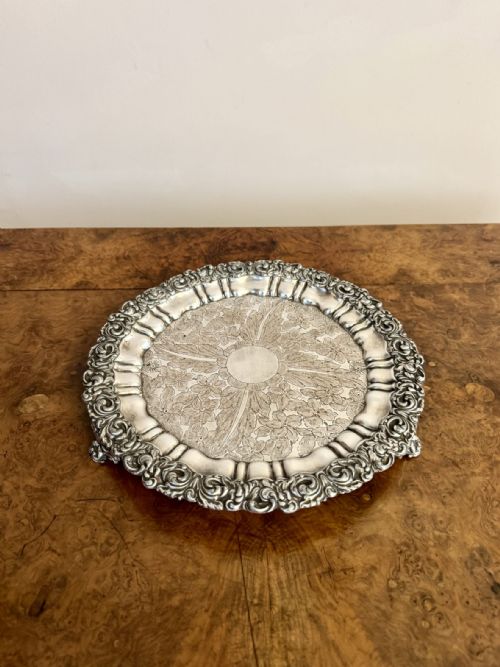
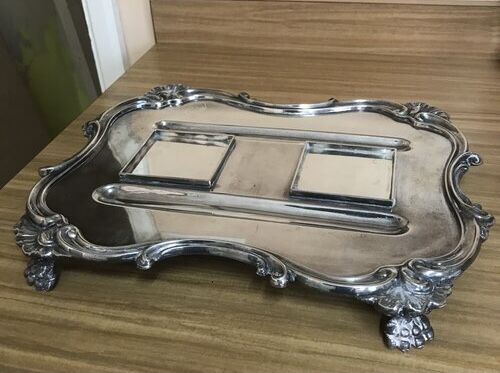
An ornate silver tray encompasses heavy serving pieces, round salvers, butler plates, and decorative desk tidies designed with elaborate borders. When searching for an ornate silver tray, buyers encounter heavy silver-plated items from the Victorian, Edwardian, and Georgian eras alongside solid silver gilt dishes and pieces featuring engraved surfaces.
The selection here draws heavily from nineteenth-century and early twentieth-century workshops, ranging from large tea and cocktail trays to smaller pin dishes and inkstands. Many examples display detailed rims, raised edges, and mirrored bases or figural battle scenes.
Beyond standard serving ware, the category stretches to include associated desk accessories, biscuit barrels, and carved horn bowls with silver mounts. These items bridge formal hospitality and domestic organisation through decorative metalwork.
How they were made
Makers utilised silver plate, electroplated nickel silver, and solid silver gilt over copper bases to achieve durable yet decorative surfaces. Metal spinning and heavy casting formed the structural shapes of large serving trays and round salvers.
Surface decoration relied heavily on manual engraving, chasing, and applied cast rims. Artisans also incorporated mixed media such as cut glass and carved horn into metal mounts for specific forms like biscuit barrels and desk tidies.
The listings here span the Victorian, Edwardian, and Georgian periods, incorporating materials from silver gilt and cut glass to carved horn.
What varies in quality
The distinction between ordinary and superior pieces rests on the crispness of the chased decoration and the weight of the metal blank. Heavier plates and solid silver gilt items maintain their structural integrity and surface detail through decades of handling.
Maker attribution and the depth of hand-engraved motifs separate standard production items from workshop pieces created by known silversmiths. Detail in cast figural scenes and applied borders dictates the upper tier of the range.
John Harrison·Fenton Russel·Elkington·William Comyns and Sons
The Ornate Silver Tray Glossary
- Silver Plate
- A layer of silver fused or electroplated onto a base metal such as copper or nickel silver. This technique allowed makers to produce substantial domestic items at a lower cost than solid silver.
- EPNS
- Electroplated Nickel Silver, a common base metal composition for nineteenth and twentieth-century tableware. It provides a durable foundation for silver plating.
- Salver
- A flat round tray, typically with a raised rim and supported on small feet, used for serving drinks or presenting cards. These pieces often feature detailed hand-engraved surfaces.
- Silver Gilt
- Silver that has been coated with a thin layer of gold on its surface. This treatment imparts a warm, rich tone to charger dishes and ceremonial tableware.
- Desk Tidy
- A compact compartmented tray or stand designed to hold writing instruments, ink wells, and stationery. They frequently combine silver plating with glass or horn.
Ornate Silver Tray: Frequently Asked Questions
How do I clean an ornate silver tray?
Use a soft cloth and a gentle silver cream formulated to protect plated surfaces from excessive abrasion. Avoid harsh chemical dips that strip away the darkened contrast in engraved lines.
Store the tray in a dry environment and handle it with clean cotton gloves to prevent skin oils from accelerating tarnishing on the detailed rims.
Are these trays suitable for daily use?
Heavy silver-plated and solid silver pieces cope well with everyday service when treated with care. Serving dry goods, cocktails, or letters puts minimal strain on the metal structure.
Acidic foods and prolonged moisture should be washed away promptly to preserve the underlying plate and engraved surfaces.
How can I tell the Victorian pieces apart?
Victorian trays often display heavier cast rococo revival borders, dense floral engraving, and substantial copper bases showing through wear. Makers during this period favoured dramatic scale and deep relief work on serving trays and salvers.
Edwardian examples tend to show lighter framing, cleaner lines, and integrated mirror bases or specialised desk accessories alongside traditional tea services.
What is a silver gilt charger dish?
A charger dish is a large decorative plate used as a base or sideboard display piece rather than for direct food service. The addition of gold plating over the silver surface creates a distinctive two-tone appearance.
These large sideboard dishes frequently incorporate figural battle scenes or historical motifs beaten into the metal.