



Edwardian Silver Vase
An edwardian silver vase brings domestic floral display into sharp focus through slender trumpet forms and chased metalwork.
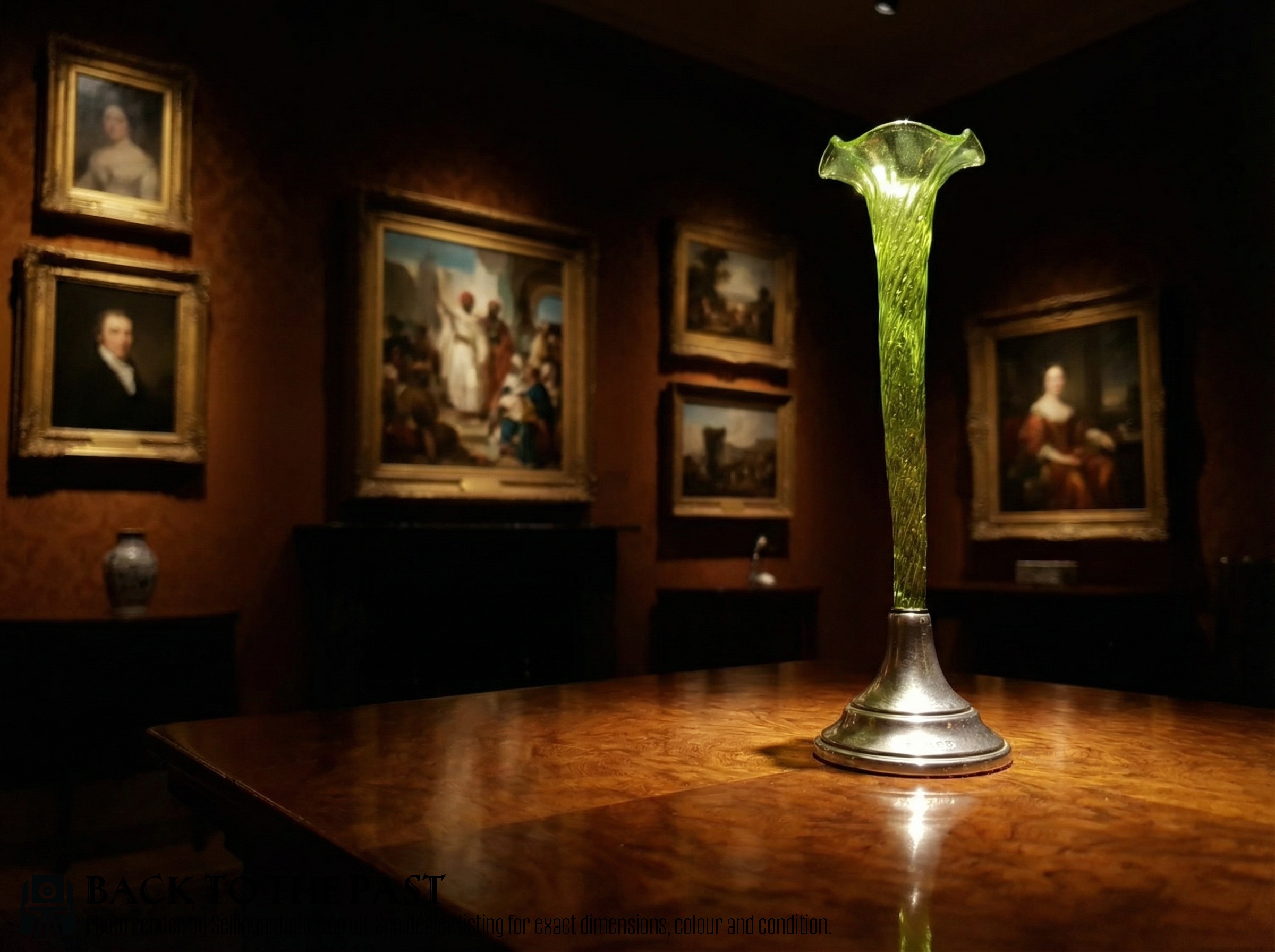
Forms and Origins
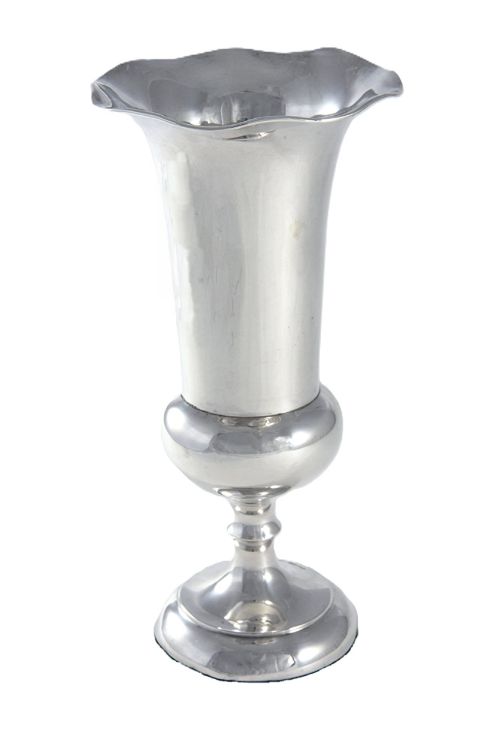
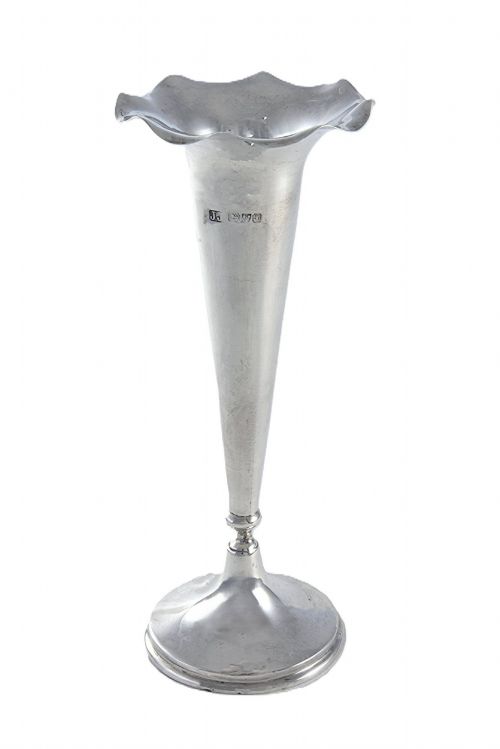
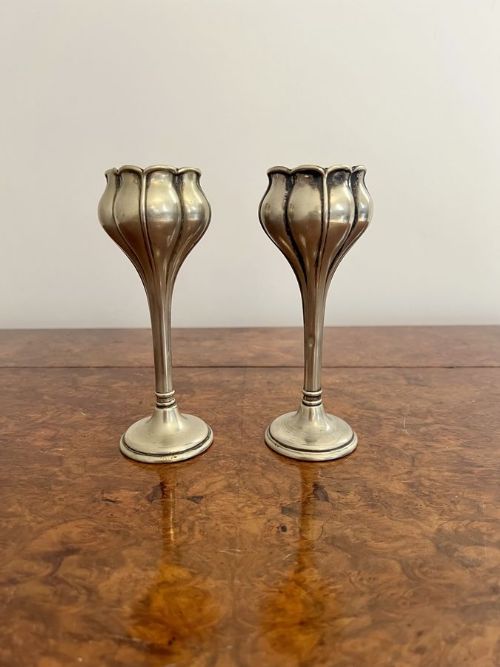
An edwardian silver vase typically appears as a slender trumpet, posy, or bud holder designed for single stems and small arrangements. These domestic vessels emerge predominantly from the Edwardian era, alongside related pieces bearing Victorian or Art Nouveau stylistic influences.
Makers often pair sterling silver framework with contrasting inserts, producing combinations featuring green glass liners, Bristol blue glass, or cranberry glass. Collectors encounter both solo specimens and balanced pairs, sometimes accompanied by fitted presentation cases.
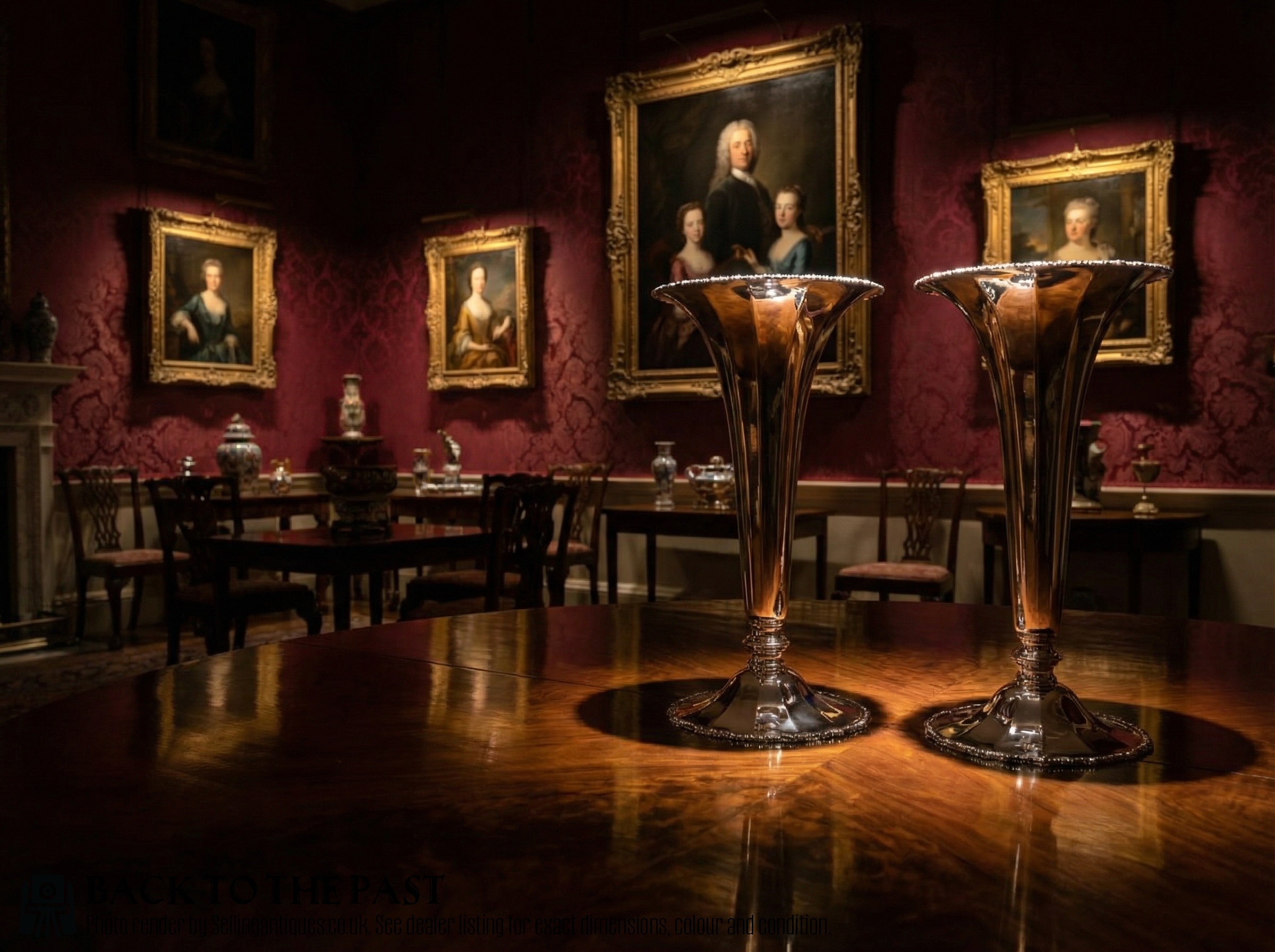
Distinctions in Standard
Quality rests upon the weight of the silver and the crispness of any pierced or chased ornamentation. Substantial gauge metal and clear hallmarks indicate superior workshop standards.
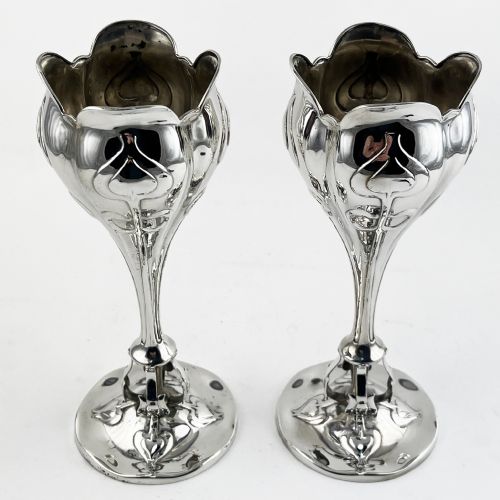
The integration of original coloured glass inserts and matching pairs elevates the desirability of a piece. Finer examples maintain structural balance and clear definition within organic Art Nouveau motifs.
Retail Price Guide 2026
Typical UK retail prices for edwardian silver vase, calculated from the Sellingantiques database of over a million retail prices indexed since 2003. This retail price guide relies exclusively on Sellingantiques data; no external sources or auction records are used, so the figures do not describe the wider market.
Some vessels double as wine goblets and trophy cups when the flower stems are removed.
Goldsmiths & Silversmiths·Daniel & Arter·William Hutton·Johnson, Walker & Tolhurst
The Edwardian Silver Vase Glossary
- Posy vase
- A small vessel designed to hold a short bunch of flowers rather than a large bouquet. These pieces sit low on tables and surfaces.
- Trumpet vase
- A vessel characterised by a narrow base that flares outward toward an open, trumpet-shaped rim. This profile supports tall flower stems.
- Spill vase
- A tall, narrow container originally used to hold thin wooden splints for transferring a flame from a hearth to a candle or pipe. Makers frequently applied this form to silver and glass receptacles.
- Sterling silver
- An alloy containing a high proportion of pure silver mixed with other metals for durability. British items carry specific hallmark stamps confirming this standard.
- Silver plate
- A base metal coated with a thin layer of silver through electroplating or older techniques. Daniel and Arter produced notable examples using this method.
Frequently Asked Questions
How do I identify an edwardian silver vase?
Look for British hallmarks stamped directly onto the metal surface, which indicate the assay office, such as Chester or London, alongside the date letter. Stylistic cues include organic Art Nouveau curves and slender trumpet profiles.
Weight and construction methods also help distinguish solid sterling pieces from silver-plated alternatives.
Were these vases used in pairs?
Makers frequently produced these vessels in matching pairs to balance mantelpieces and dining tables. Fitted presentation cases often accompanied these paired sets.
Single specimens also appear widely, serving as individual centrepieces for smaller rooms.
What glass colours appear in these vases?
Makers frequently paired silver mounts with green glass liners, Bristol blue glass, and cranberry glass. Cut glass and fluted glass inserts also feature prominently.
These coloured elements contrast with the polished surface of the surrounding metal framework.