




Art Nouveau Silver Vase
When you handle an art nouveau silver vase, you hold the fluid, organic lines of a movement that transformed domestic metalwork and glass at the turn of the twentieth century.
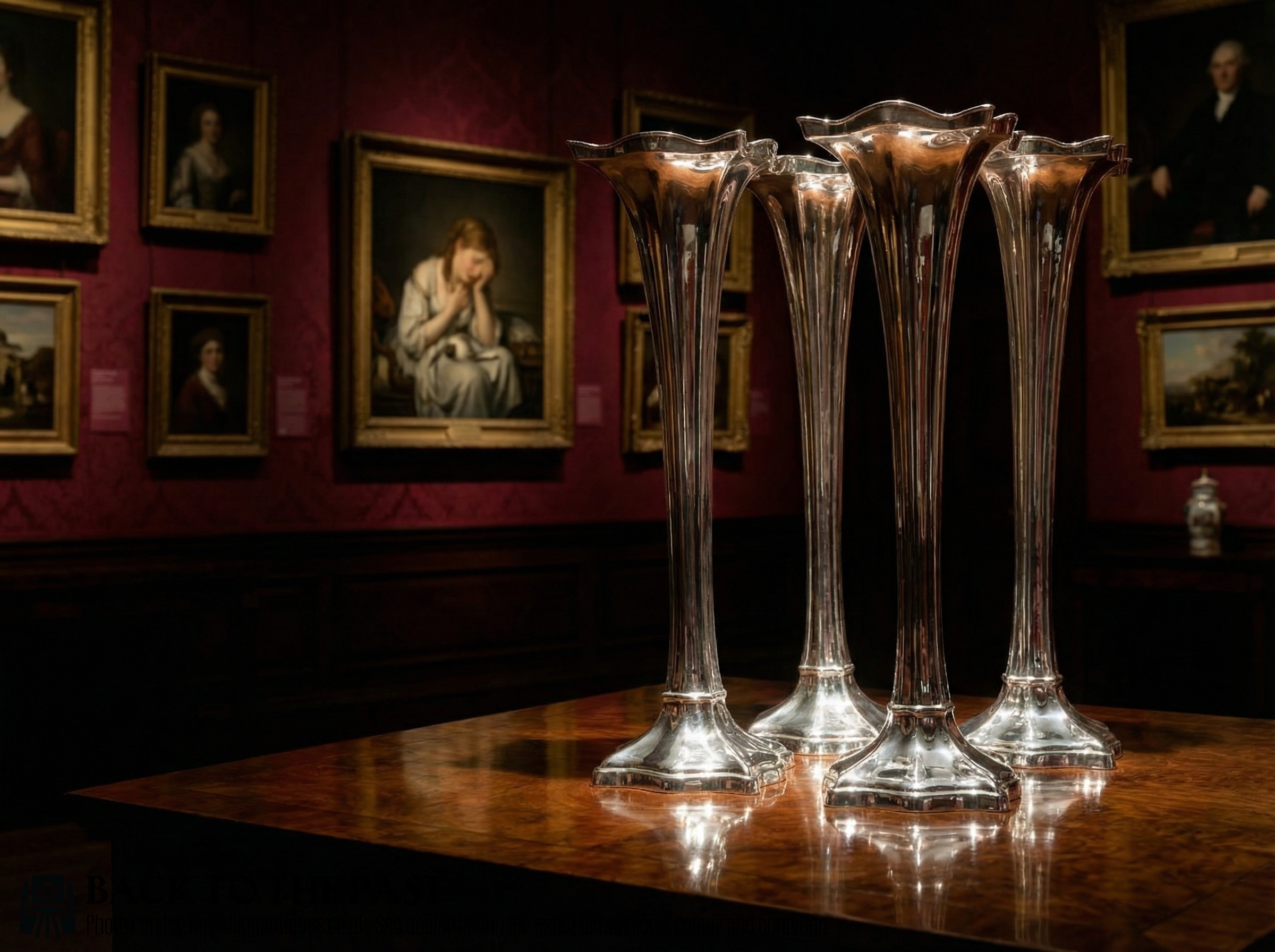
Art Nouveau Silver Vase
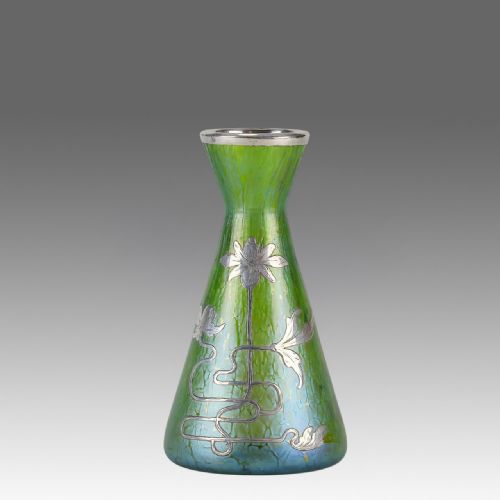
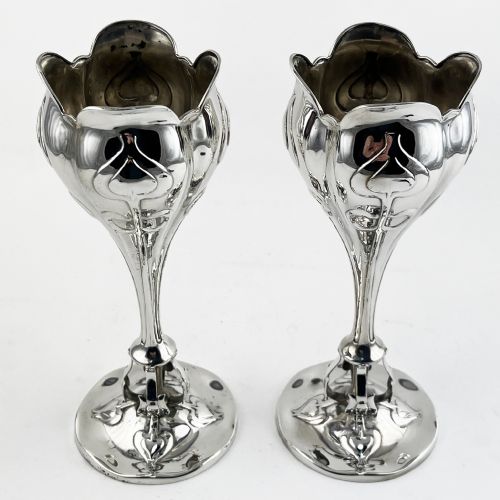
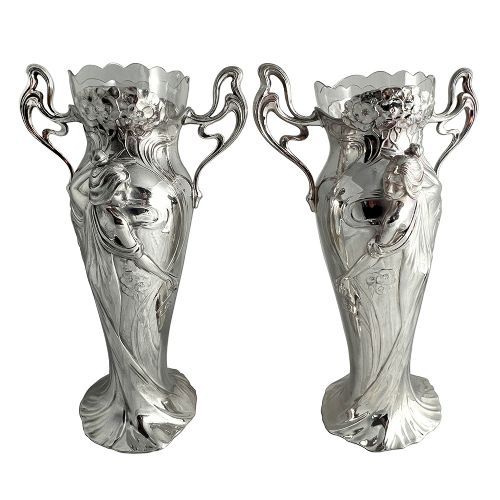
An art nouveau silver vase encompasses both solid sterling vessels and glass bodies enhanced with intricate metal mounts, collars, or overlays. These pieces draw heavily on the natural forms of stems, petals, and flowing hair characteristic of the period.
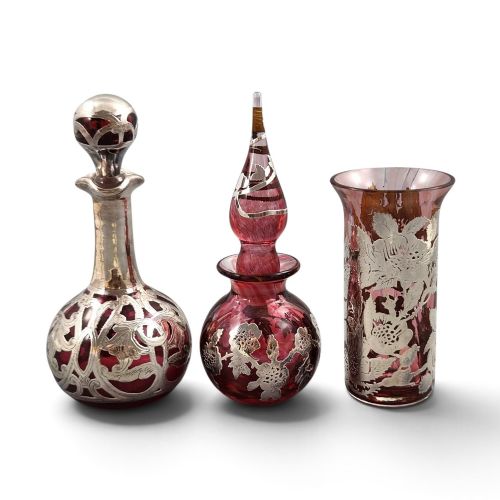
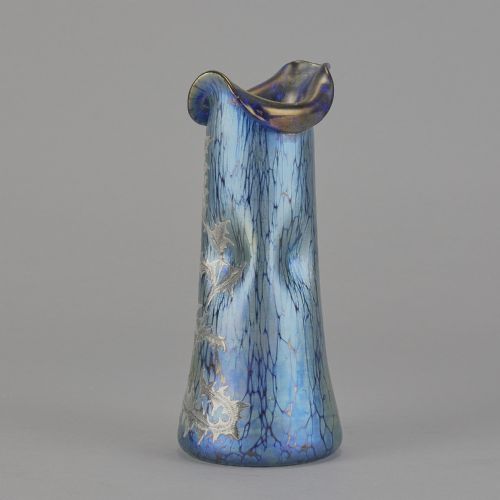
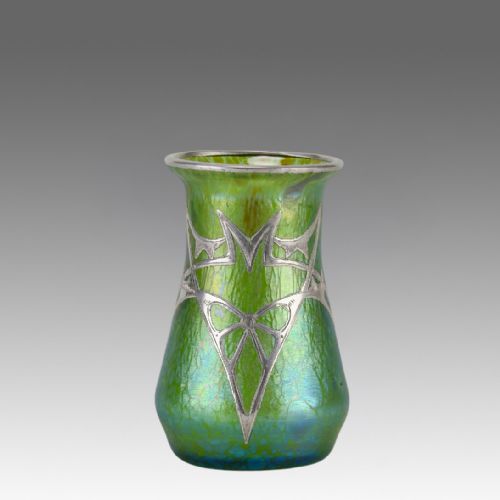
The selections on this page range from tall trumpet vessels and spill vases to diminutive bud holders and bulbous centrepieces. Many combine rich iridescent glass with metallic decoration, reflecting the crossover between continental Jugendstil and British Arts and Crafts aesthetics.
Makers working across Britain, America, and Europe produced these decorative vessels in solid silver, silver plate, and base metal, frequently pairing them with cobalt, green, or ruby glass inserts.
Materials and construction
The creation of these vessels relied on uniting glass and metal, often through the technique of silver overlay where liquid silver is bonded directly to blown glass surfaces. Alternatively, smiths fashioned solid sterling or silver-plated mounts by hand, employing embossing and piercing to achieve tactile botanical motifs.
Makers also utilised pewter and base metal frameworks to support iridescent glass bodies, achieving a dual-tone effect through contrasting finishes. Hot-worked glass varieties such as papillon and vaseline provided a shimmering backdrop for the metallic embellishments.
Listings feature items spanning the Victorian era through the 1930s, encompassing sterling silver, silver plate, and iridescent glass.
Assessing quality and craftsmanship
Quality in these vessels reveals itself in the crispness of the chased or embossed ornament and the structural integration of the metalwork to the glass. Superior examples display fluid, deeply undercut motifs where the metal flows naturally around the contours of the vessel rather than appearing flat or hastily stamped.
The weight of the silver or the thickness of the silver plate distinguishes finer workshop output from mass-produced items. Furthermore, the optical depth of the underlying glass and the precision of the silver overlay define the upper tiers of the surviving range.
Gorham·Loetz Witwe·WMF·Joseph Rodgers And Sons·Ferdinand von Poschinger·Kralik·Sampson Mordan·William Comyns·Alvin Corp·Christofle·William Neale·Saunders And Shepherd·Elkington And Co
The Art Nouveau Silver Vase Glossary
- Silver overlay
- A decorative technique where pure silver is applied to the surface of a glass or ceramic vessel in intricate patterns before being fired and polished.
- Spill vase
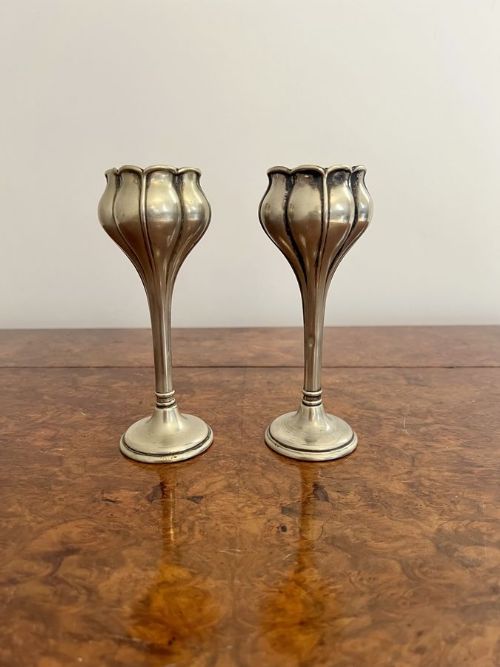
- A tall, slender container traditionally used to hold wooden spills for lighting fires or candles, frequently produced in matched pairs during the Edwardian era.
- Jugendstil
- The continental German-language variant of the Art Nouveau movement, emphasising sinuous plant forms and linear design.
- Iridescent glass
- Glass treated with metallic salts while hot to produce a shimmering, rainbow-like surface sheen often seen on continental vessels.
- Trumpet vase
- A vessel characterised by a narrow base that flares outward toward the rim in the shape of a musical horn.
Art Nouveau Silver Vase: Frequently Asked Questions
What is an art nouveau silver vase?
An art nouveau silver vase is a decorative vessel featuring the characteristic asymmetrical, plant-inspired lines of the turn-of-the-century design movement. These objects take the form of solid metal containers or glass vessels encased in detailed silver mounts and overlays.
Craftsmen across Europe and America produced them to bring naturalistic motifs into domestic interiors, utilising the contrast between gleaming metal and coloured glass.
How were glass and silver combined?
Makers combined glass and silver primarily through electroplating silver directly onto blown glass blanks to form delicate botanical patterns. Another common method involved constructing freestanding silver mounts, collars, or pierced sleeves designed to securely grip the glass body.
These techniques allowed workshops to merge the shimmering qualities of iridescent art glass with the reflective gleam of worked metal.
How do I date these vases?
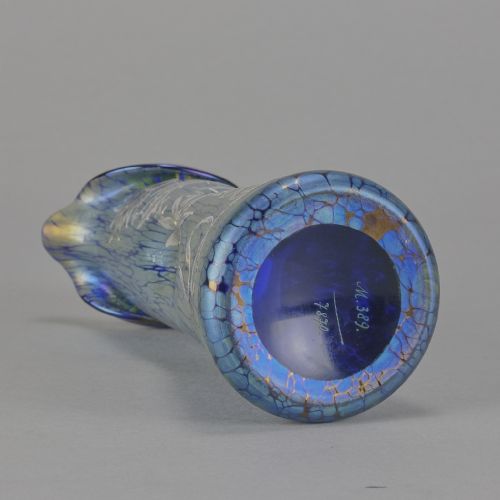
Dating relies heavily on hallmarks stamped on solid silver and silver-plated examples, which indicate specific assay offices and years of production. Stylistic markers also help, as pieces showing distinct Vienna Secessionist or Jugendstil geometry typically point to the 1900 decade.
Examining the manufacturing techniques and the specific glass formulations provides additional clues for pieces lacking clear maker marks.
How should I display them?
Displaying these vessels involves placing them where natural light can catch the iridescent surfaces of the glass and the polished details of the silver. Because many were designed as bud holders or spill vases, they suit settings that highlight their slender silhouettes.
Keeping them away from direct, harsh heat sources protects any delicate glass bodies and helps preserve the condition of the metal mounts over time.