


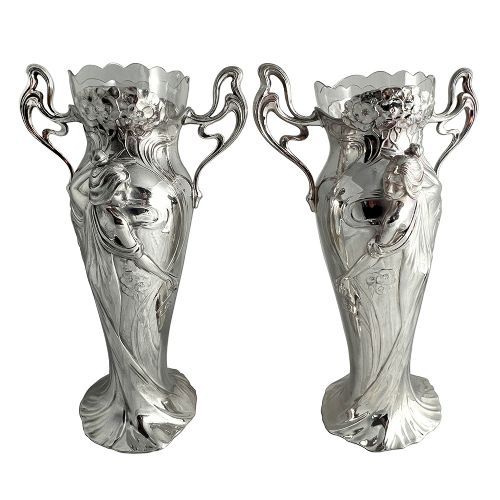


Pair of Silver Vases
When hunting for a pair of silver vases, you are looking at matched dual vessels crafted from solid sterling or plated metals to display single stems or dramatic floral arrangements.
Pair of Silver Vases
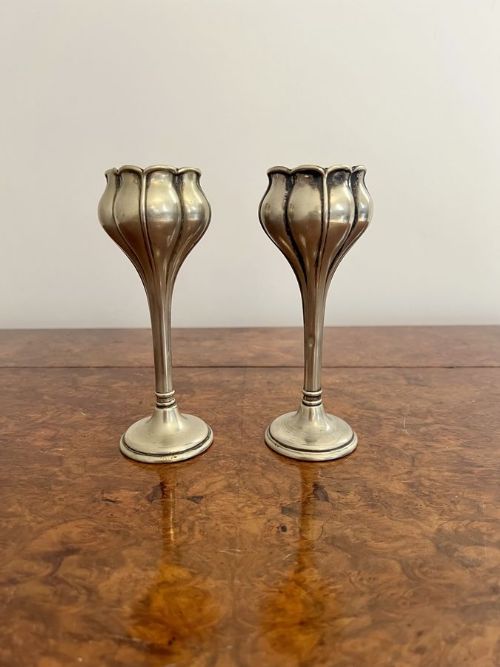
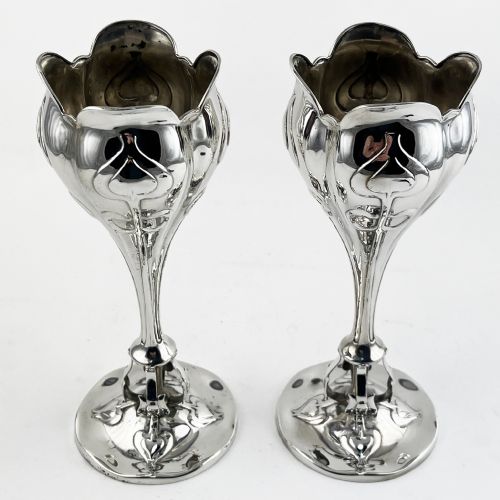
A search for a pair of silver vases brings up matched dual vessels spanning from the Victorian and Edwardian eras into the Art Nouveau and Art Deco periods. The most common examples met on this page are trumpet-shaped solid sterling or silver-plated flower vases designed for domestic display on mantelpieces and side tables.
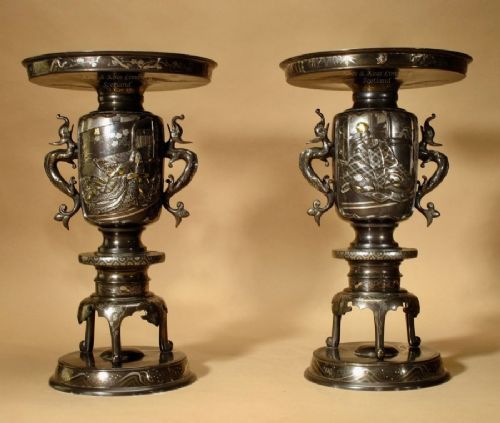
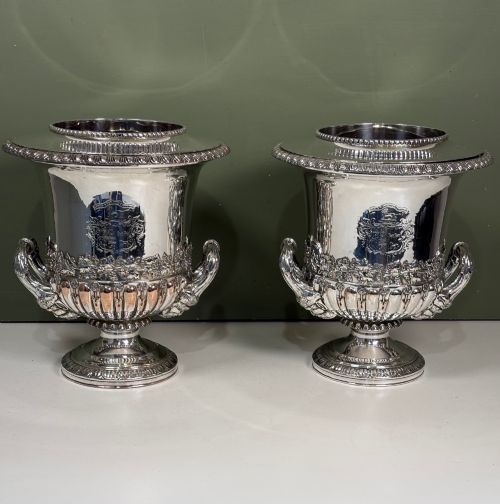
The inventory ranges from small posy and bud vases up to substantial floor-standing champagne coolers and pedestal urns. Alongside British hallmarked sterling silver, the selection includes continental silver plate, pewter, bronze, and chrome iterations from various European workshops.
Makers often fashioned these paired vessels with utilitarian flexibility in mind, integrating glass liners for holding water or creating specific forms like spill vases for fireplaces. Buyers find both simple domestic tableware and highly decorative ornamental garnitures meant to anchor a room's symmetrical design.
Materials and construction methods
Silversmiths utilised traditional techniques such as hammering, spinning, and piercing sheet sterling silver to create lightweight yet rigid bodies. Pierced work required steady hand-sawing to produce intricate geometric or floral lattice patterns, which were then typically fitted with removable glass liners to contain water safely.
Plated wares relied on coating base metals like copper, brass, or pewter with a thin layer of silver or chrome through electroplating or immersion. Makers also combined mixed media, pairing silvered metals with cut glass bodies, marble bases, or ormolu mounts to add colour and textural contrast.
Art Nouveau and Secessionist pieces frequently employed cast pewter or bronze with applied patination and organic figurative motifs. Master craftsmen chased surface details by hand, imparting texture onto trumpet stems, twin handles, and flared rims.
Victorian silversmiths occasionally modelled vases to resemble trumpeting elephants.
Distinctions in craftsmanship and design
Quality rests heavily on the crispness of the original chasing and the weight of the metal utilised in the body. Superior examples maintain structural integrity across both paired items without distortion to the rims or weighted bases, showing deliberate hand-finishing rather than mass-produced uniformity.
Makers known for exceptional output, such as Elkington, WMF, or specialised Birmingham silversmiths, invested in thicker silver deposits on plated items and clearer, deeper hallmarks on solid pieces. Lesser items rely on thin gauge metal that yields easily to pressure and displays shallow, indistinct stamping.
Artistic ambition also separates standard production items from masterworks, with the best pairings exhibiting harmonious proportions, integrated handles, and sophisticated stylistic execution that honours periods like Art Nouveau or the Classical Revival.
WMF·Beldray Ltd·Daniel & Arter·Hawksworth Eyre & Co·Elkington & Co·Wang Hing·Henry Matthews·S Blanckensee & Son Ltd
The Pair of Silver Vases Glossary
- Hallmark
- Official stamps struck into precious metals to guarantee purity, origin city, and the year of manufacture. These small stamped marks provide the backbone for dating British antique silver accurately.
- Trumpet vase
- A vessel characterised by a narrow base that flares outward progressively toward a wide rim. This silhouette remains exceptionally common among Edwardian and Victorian floral displays.
- Spill vase
- A tall, narrow container historically utilised to hold slender wooden spills for lighting candles or fires. They frequently appear in pairs flanking a hearth.
- Silver plate
- A manufacturing method involving a thin layer of pure silver bonded to a base metal substrate such as copper, nickel, or brass. This technique offered an accessible alternative to solid sterling.
- Posy vase
- A small vessel engineered specifically to hold a compact handheld gathering of flowers rather than large botanical arrangements. They usually sit low on tables for intimate dining settings.
Pair of Silver Vases: Frequently Asked Questions
How were silver vases used?
These vessels served primarily as decorative table centerpieces, mantel garnitures, or functional holders for fresh cut flowers, posies, and fireplace spills. Paired items allowed owners to achieve symmetrical arrangements on dining tables, sideboards, and drawing-room mantels.
Larger variations functioned as wine coolers or champagne vessels for formal dining. Smaller bud and posy versions accommodated single stems to brighten intimate domestic spaces.
How do I care for antique silver?
Maintaining these metals requires gentle cleaning with specialised silver cloth and mild non-abrasive polishes only when necessary. Avoid harsh chemical dips that strip away desirable patination and damage softer base metals or applied patinas.
Glass liners should be washed separately in warm soapy water to prevent moisture accumulation against the metal interior. Keep the pieces away from direct heat sources and humid environments to preserve any delicate plated surfaces.
What periods do these pieces span?
The available selection primarily covers the nineteenth and early twentieth centuries, stretching from Victorian and Edwardian eras into the Art Nouveau and Art Deco movements. You will also encounter specific revivals including Georgian and Classical motifs.
Each period introduced distinct aesthetic priorities, moving from ornate floral chasing in the nineteenth century toward sleek geometric styling by the nineteen-thirties.
Are all these items solid silver?
No, the selection encompasses both solid sterling silver and various plated metals including silver plate, chrome, silvered pewter, and bronze. Hallmarks on the base or rim generally indicate solid sterling manufacture.
Items without official silver assay marks are typically silver-plated base metals or alternative alloys like pewter. Examining the wear points helps reveal the underlying substrate metal.