
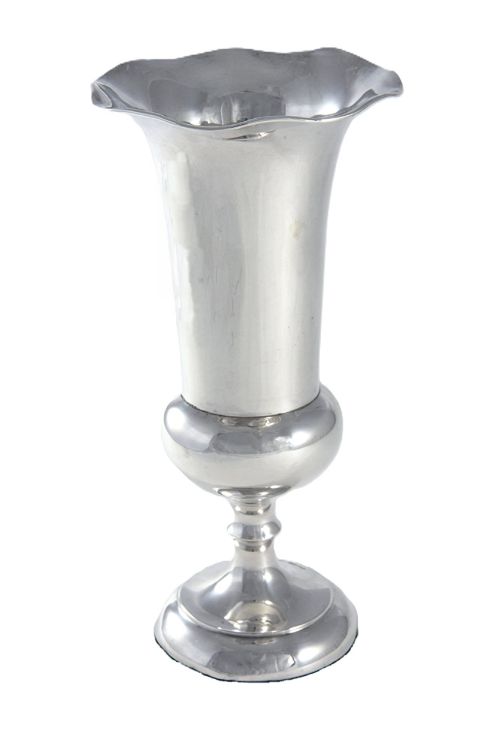
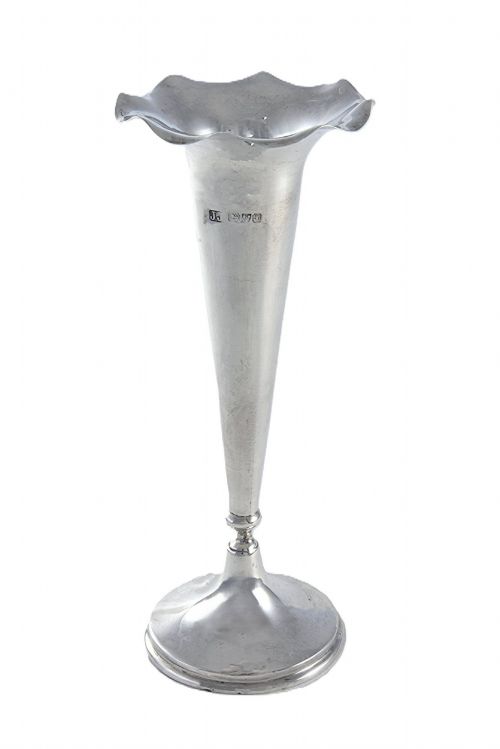
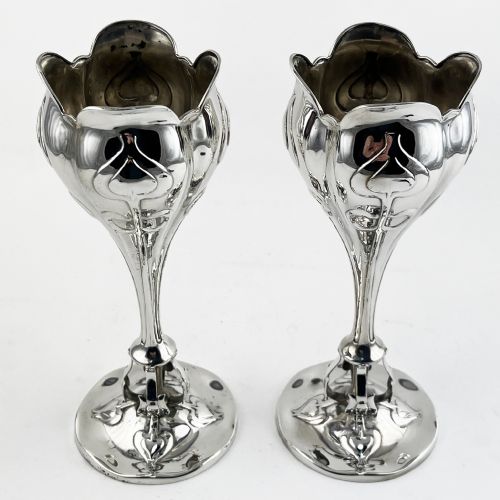


Hallmarked Silver Vase
A hallmarked silver vase brings refined weight and polished British assay office stamps to a mantelpiece.
Hallmarked Silver Vase
A hallmarked silver vase is a decorative vessel shaped to hold single blooms or small posies, bearing official stamps that confirm its metal purity and origin. Buyers hunting for these pieces encounter forms ranging from slender trumpet shapes to twin-fluted epergnes and glass inserts mounted in precious metal bases.
The examples most commonly met on this page belong to the Edwardian and Victorian eras, spanning the late nineteenth and early twentieth centuries. These vessels often appear as matched pairs or individual posy vases, reflecting domestic display habits of their period.
Makers working in this category employed styles from traditional Victorian forms to flowing Art Nouveau curves. Some pieces integrate cut glass flutes or collars with sterling silver mounts, creating contrast between the transparent material and the heavy metal base.
How they were made
Silversmiths constructed these vessels primarily from sterling silver and glass, shaping the metal through spinning, stamping, or hand-raising techniques. Molten glass or blown glass components were frequently combined with silver collars, bases, or rims to build composite table ornaments.
Assay offices in cities such as Birmingham, Chester, and London struck official hallmarks directly into the silver surface. These punches recorded the standard of the metal, the assay office mark, and a date letter corresponding to the year of manufacture.
Hallmarked Silver Vase Retail Price Guide 2026
Typical asking prices for hallmarked silver vase among the pieces listed under this phrase on Sellingantiques today, from the lower quarter to the upper quarter. They describe what is for sale here now, not the wider market.
The recorded listings feature pieces from the Victorian, Edwardian, and 1900 periods, utilising sterling silver, glass, and silver materials.
What varies in quality
Quality in these vessels rests upon the crispness of the silversmith's chasing, the gauge of the silver used in the body, and the legibility of the official hallmarks. Thicker metal resists distortion and sustains sharper decorative motifs over time.
The integration between mixed materials also dictates overall standard, particularly in pieces combining glass flutes with silver bases. Clean fits and well-balanced proportions separate standard production items from finer workshop output.
Henry Matthews·Deakin & Francis·Goldsmiths & Silversmiths·Hukin & Heath
The Hallmarked Silver Vase Glossary
- Hallmark
- An official stamp struck into precious metal by an assay office to guarantee its purity and provenance. These marks typically include a maker's mark, standard mark, and date letter.
- Sterling silver
- A silver alloy containing 92.5 percent pure silver by weight, with the remaining percentage consisting of copper or other metals for durability. This standard is denoted by the lion passant mark on British items.
- Epergne
- A central table ornament featuring a main vessel with multiple branching holders or detachable flutes. These pieces were designed to hold flowers or fruit for formal dining.
- Posy vase
- A small vessel designed to hold a short arrangement of cut flowers. They often feature weighted bases to support the concentrated weight of the metal.
Hallmarked Silver Vase: Frequently Asked Questions
How do I date a silver vase?
Dating relies upon the stamped hallmarks, specifically the designated date letter struck by the assay office during testing. Each year corresponds to a specific letter shape and shield outline recorded in silver reference guides.
Secondary clues include the stylistic details of the piece, such as Victorian ornamentation versus Edwardian or Art Nouveau curves, which align with the period of the associated assay marks.
What is the difference between a posy vase and a trumpet vase?
A posy vase is generally shorter and designed to hold a compact bunch of flowers for a dressing table or small surface. Its proportions suit modest stems and intimate room settings.
By contrast, a trumpet vase flares outward from a narrow base toward a wide rim, creating a taller silhouette suited to larger floral arrangements on dining tables.
How should I clean antique silver?
Cleaning requires a soft microfiber cloth and a mild silver polish specifically formulated for antique items. Gentle application prevents the removal of thin silver plating or the softening of hand-engraved details.
Harsh abrasive dips or excessive scrubbing should be avoided to preserve the original surface texture and the integrity of the antique hallmarks.