



Silver Flower Vase
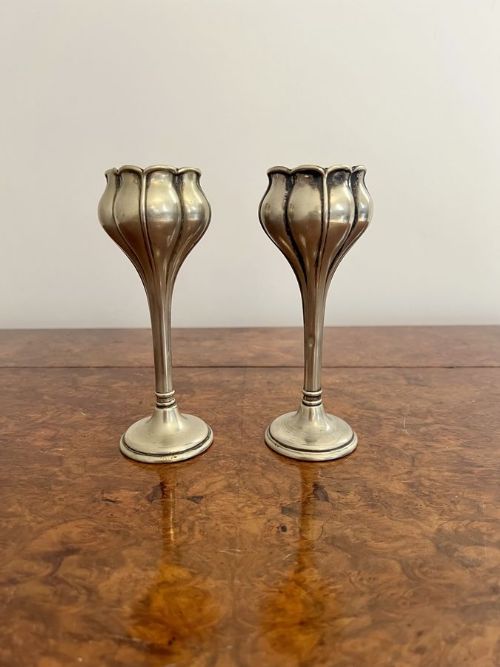
A silver flower vase brings polished metal and cut glass to the table, holding stems securely while reflecting light across the room.
What silver flower vase pieces are
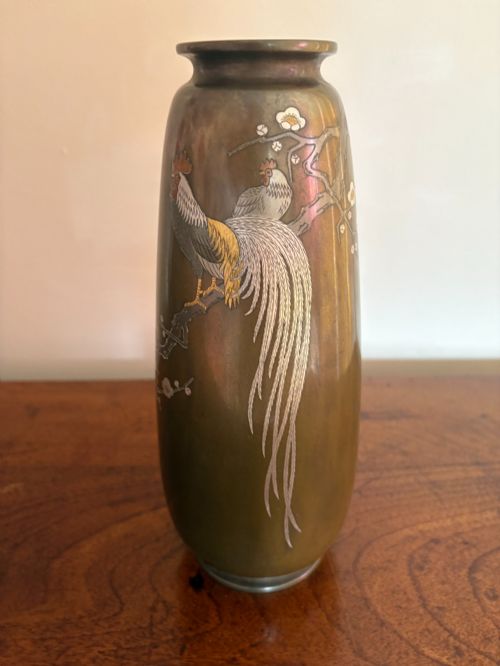
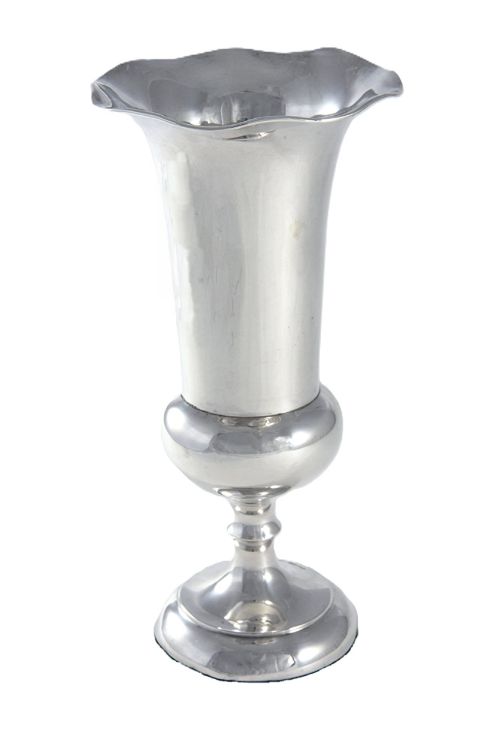
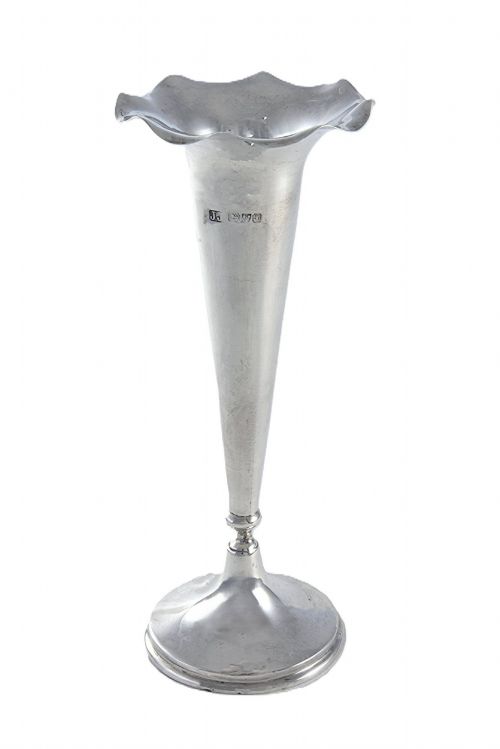
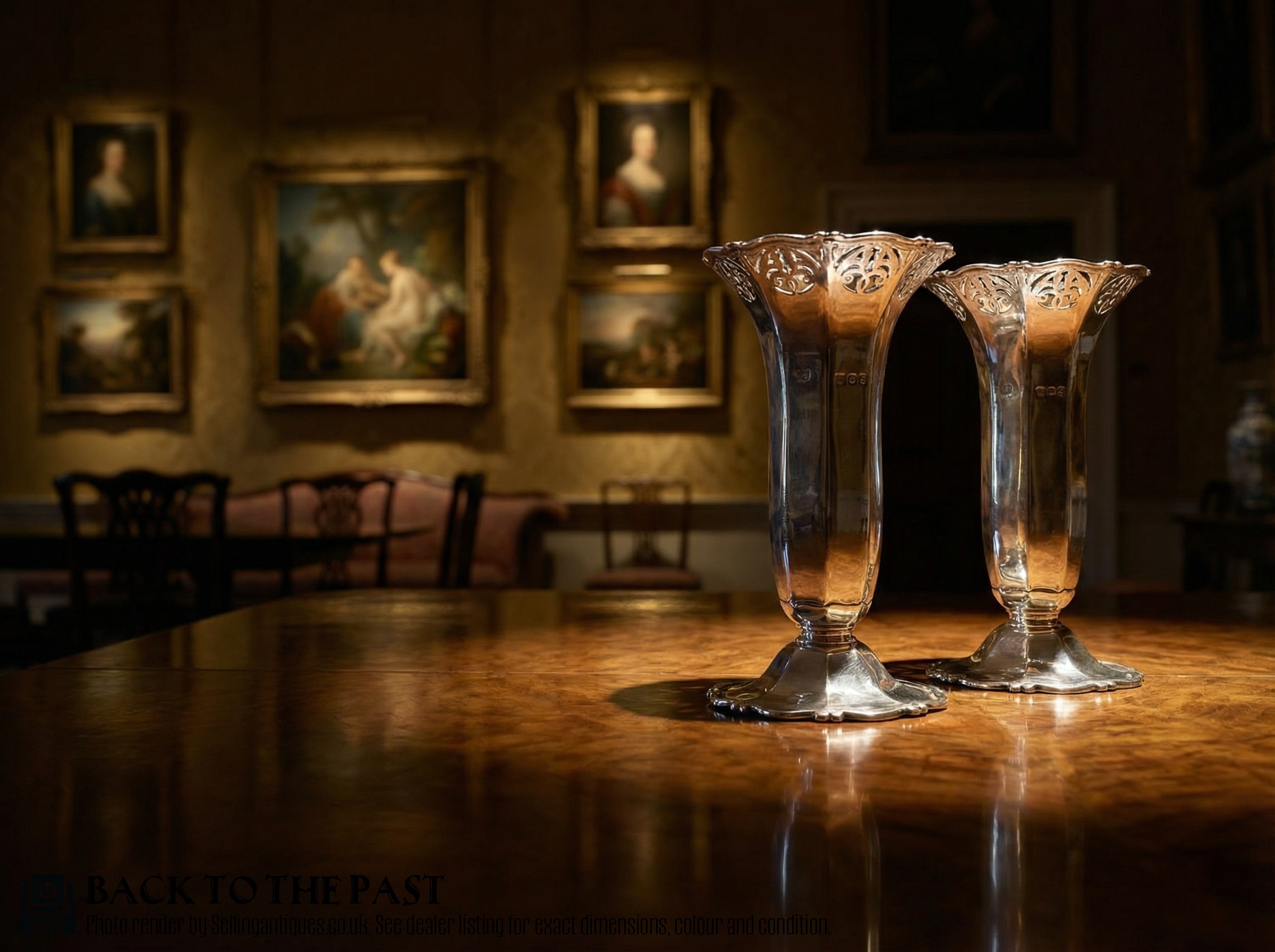
When you search for a silver flower vase, you encounter items designed to display single stems or small arrangements on a table or surface. The selection spans the Victorian, Edwardian, and George V periods, showing forms from slender bud holders to large trumpet shapes.
Edwardian examples appear frequently alongside Victorian and 19th-century pieces, often fashioned as pairs or single trumpet vases. Makers utilised sterling silver and silver plate, sometimes combining the metal with green glass liners or cut glass bodies.
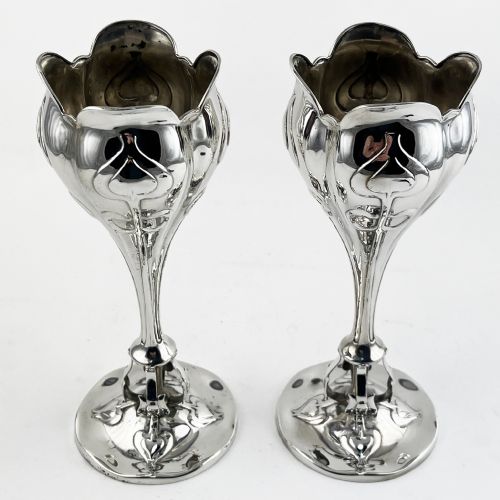
Stylistic influences range from plain bodies to Art Nouveau curves, Celtic Revival motifs, and Greek key engravings. Certain pieces function as posy holders or form part of larger epergne arrangements.

How they were made
Silversmiths shaped sterling silver and silver plate into slender tapering bodies, trumpet silhouettes, and posy holders using traditional hammering and spinning techniques. Pierced silver work required careful cutting of the metal to create openwork patterns supported by glass liners.
Makers integrated clear or green glass liners within sterling silver mounts, securing the components together to hold water and stems safely. Engraved details such as Greek key borders were hand-chiseled directly onto the metal surface.
Retail Price Guide 2026
Typical UK retail prices for silver flower vase, calculated from the Sellingantiques database of over a million retail prices indexed since 2003. This retail price guide relies exclusively on Sellingantiques data; no external sources or auction records are used, so the figures do not describe the wider market.
Some Edwardian silver vessels served double duty as wedding lapel flower holders.
What varies in quality
Weight and gauge of the metal separate heavier solid silver items from lighter plated versions or thinner sheet constructions. Substantial pieces maintain rigidity and balance even when filled with water and heavy stems.
The crispness of pierced openwork and the precision of hand-engraved borders indicate the skill involved in the manufacturing process. Original matching glass liners and clear hallmarks add to the integrity of the piece.
Goldsmiths & Silversmiths·WMF·Josiah Williams & Co·Walker and Hall
The Silver Flower Vase Glossary
- Sterling silver
- A silver alloy containing 92.5 percent pure silver and 7.5 percent other metals, usually copper, ensuring durability for tableware.
- Trumpet vase
- A vessel characterised by a narrow base that flares outward toward the rim in the shape of a musical horn.
- Posy vase
- A small container specifically intended for holding a short-stemmed bunch of flowers.
- Epergne
- A large table centrepiece featuring a central bowl with multiple hanging or attached small vases.
- Pierced work
- Metal decorated by cutting out open patterns to create ornamental designs.
Frequently Asked Questions
How do I clean a silver flower vase?
Wash the interior glass liner in warm soapy water and dry thoroughly to remove mineral deposits.
Polish the exterior silver gently with a dedicated cloth, avoiding abrasive compounds that damage fine engravings.
Are silver flower vases stable?
Many trumpet and posy shapes rely on weighted bases or heavy metal gauges to maintain balance when holding stems.
Using fitted glass liners also adds appropriate internal weight to keep the vessel upright.
How do I date an antique silver vase?
Examine the hallmarks stamped on the metal for assay office symbols, date letters, and maker marks.
Stylistic indicators such as Art Nouveau curves or Victorian engraved Greek keys also point to specific eras.