


Silver Centrepiece Vase
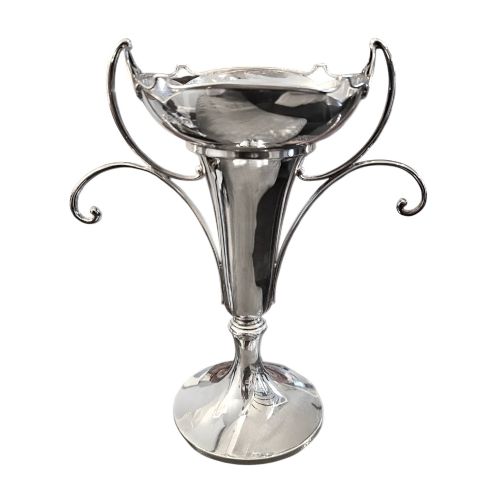
A silver centrepiece vase anchors a dining table with height and shine, bringing structured floral display to the room.
Silver Centrepiece Vase
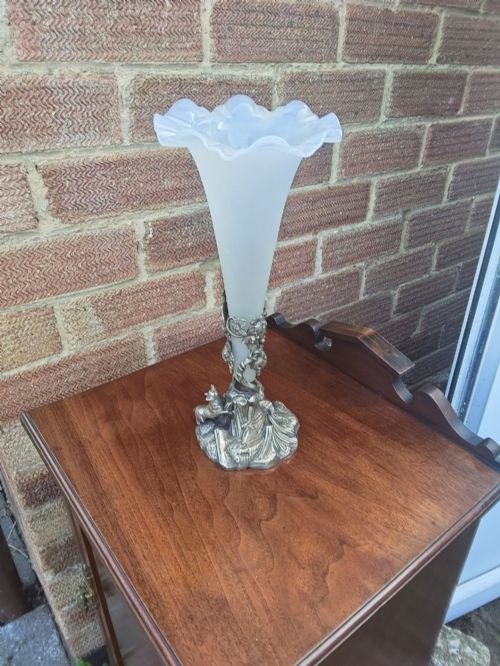
A silver centrepiece vase combines structural metalwork with vessels for flowers, appearing across the Victorian, Edwardian, and early twentieth century periods. These objects take the form of tall vases, epergnes, pedestals, and multi-fluted table centrepieces designed to hold blooms or liners. The examples found here span styles from ornate Victorian and Edwardian designs to flowing Art Nouveau and Vienna Secessionist lines.
Most items on this page utilise silver plate or sterling silver paired with glass inserts such as vaseline glass, opaque glass, green glass liners, and etched vessels. Makers ranging from Walker & Hall to WMF and Loetz Witwe produced these display pieces in various configurations, including pairs and single large vessels. The resulting objects serve as decorative table centrepieces and vessels for grand dining settings.
How they were made
Silversmiths constructed the metal frames using sterling silver or silver plate over white metal, employing techniques like piercing, casting, and plating to build rigid stands and mounts. Many pieces incorporate blown or moulded glass liners, including iridescent, pearlescent, and cut glass varieties that drop securely into the metal framework.
Art Nouveau and Secessionist examples demonstrate specialised glassworking, such as the silvered Phänomen technique applied by Loetz Witwe, alongside organic metal casting. Older Sheffield plated items utilise fused silver layers on a base metal core, while Victorian pieces often feature detailed etched glass and cast mounts.
Listings feature items spanning the Victorian, Edwardian, and early twentieth century periods, utilising materials from sterling silver to opaque and iridescent glass.
What varies in quality
The distinction between standard production and superior craftsmanship rests on the weight of the metal and the integration of the glass components. Finer pieces display crisp piercing, substantial silver plating or solid sterling construction, and heavy, well-fitted glass liners that match the exact contours of the stand.
Artistic ambition also separates the tiers, with noted makers like WMF or Loetz Witwe achieving sculptural fluidity that lesser workshops simply imitate. Condition of the original glass liner and the intactness of delicate silver overlays or applied mounts significantly elevate the standing of any given example.
Loetz Witwe·Walker & Hall·WMF·Josiah Williams & Co·Joseph Rodgers & Sons·Daniel & Arter·Deykin & Sons
The Silver Centrepiece Vase Glossary
- Epergne
- A large table centrepiece featuring a central vase surrounded by smaller hanging baskets or trumpet vases. These tiered vessels were traditionally used for fruit, sweetmeats, or floral arrangements.
- Vaseline glass
- A type of glass coloured with uranium oxide that exhibits a distinct yellow-green fluorescence under ultraviolet light. It frequently appears in late nineteenth century and Edwardian table wares.
- Silver plate
- A manufacturing method where a thin layer of silver is bonded to a base metal such as copper or white metal. It allowed makers to produce large decorative items at a lower cost than solid sterling silver.
- Phänomen
- An iridescent glass decoration technique developed by Loetz Witwe featuring combed, feather-like surface patterns. This method defines much of the distinctive Art Nouveau glasswork from the period.
- Sheffield plate
- An early form of plated silver created by fusing a sheet of silver to a copper ingot before rolling them into sheets. This technique predates modern electroplating.
Silver Centrepiece Vase: Frequently Asked Questions
How do I clean a silver centrepiece vase?
Use a soft cloth and a gentle, non-abrasive silver polish to maintain the metal surfaces without wearing through the plating. Avoid getting polish on any attached glass liners or delicate iridescent surfaces.
Wash the glass components separately in warm soapy water using a soft sponge. Dry both parts thoroughly before reassembling the piece to prevent moisture spots.
Can I use these vases for fresh flowers?
Most of these pieces include original glass liners specifically designed to hold water and fresh stems safely. Using these liners protects the surrounding silver plate or white metal from moisture damage.
For pieces missing their liners, insert a small glass container that fits securely inside the metal mount rather than pouring water directly into the antique structure.
How do I identify an Edwardian epergne?
Edwardian epergnes often feature lighter, airier proportions than their Victorian predecessors, frequently incorporating pastel glass liners like pearlescent or green glass. The metalwork leans towards refined floral motifs and slender fluted trumpets.
Look for hallmarks or registration numbers stamped on the silver components, which can narrow down the production year to the early twentieth century.
What is the difference between silver plate and sterling silver?
Sterling silver consists of a solid silver alloy containing a high proportion of pure silver throughout the entire object. Silver plate involves a thin coating of silver applied over a base metal core such as white metal or copper.
Objects made of sterling silver generally bear standard assay office hallmarks indicating purity, whereas plated items often carry manufacturer marks denoting the plating method.