


Antique Silver Vases
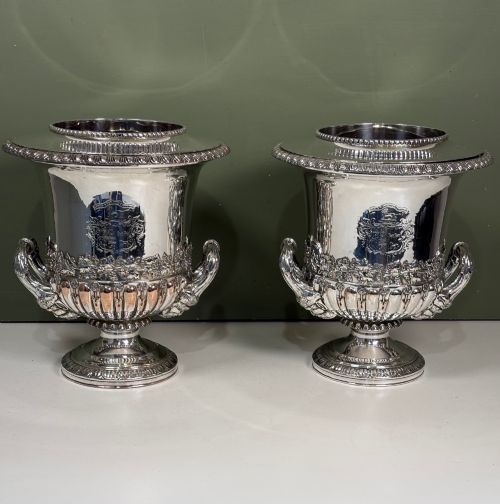
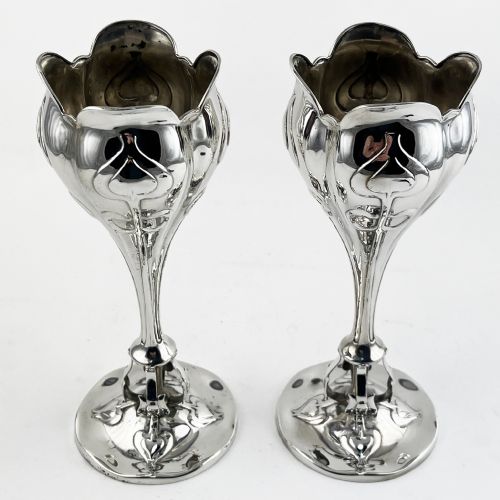
Small hallmarked flower-holders in silver, made for cut stems on dining and dressing tables: posy, bud, stem, trumpet and spill shapes, often bought and sold in pairs.
Antique Silver Vases
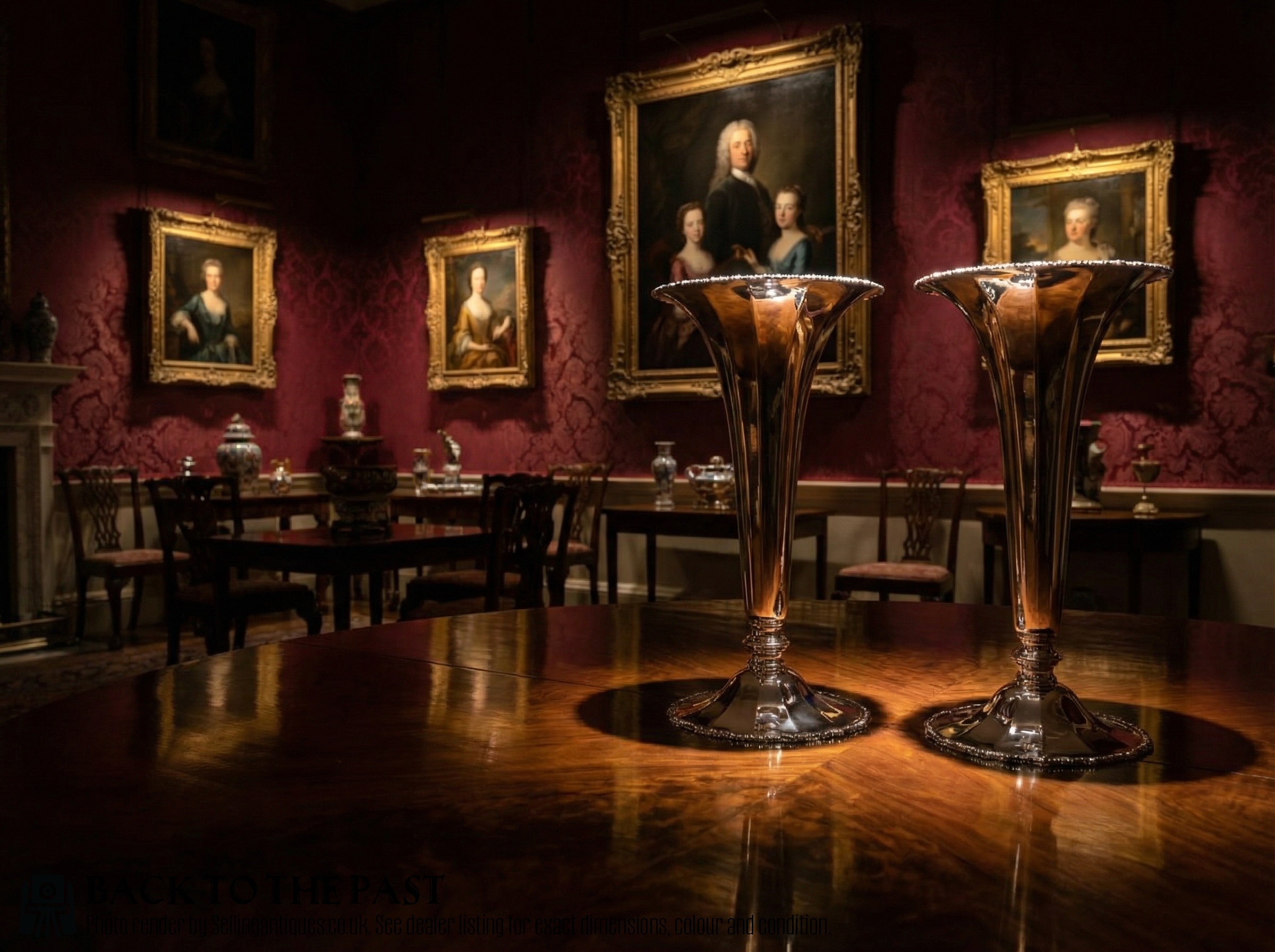
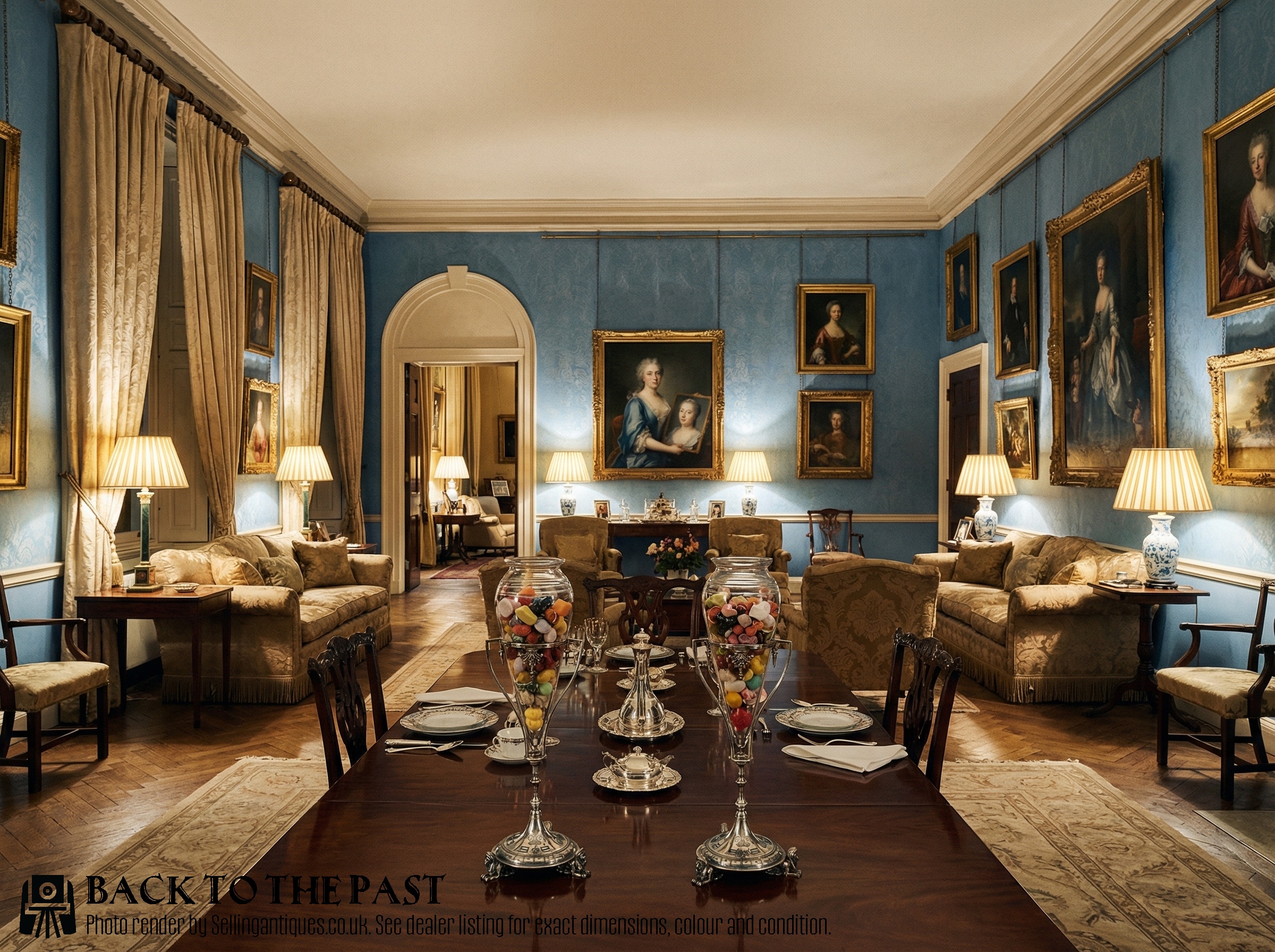
The heading covers small-to-medium British flower-holders, with a handful of larger urn shapes and epergnes at the top end. Silver vases for cut flowers became a standard domestic item in the nineteenth century, when small posy, bud and trumpet forms were made in quantity for tables and dressing tables.
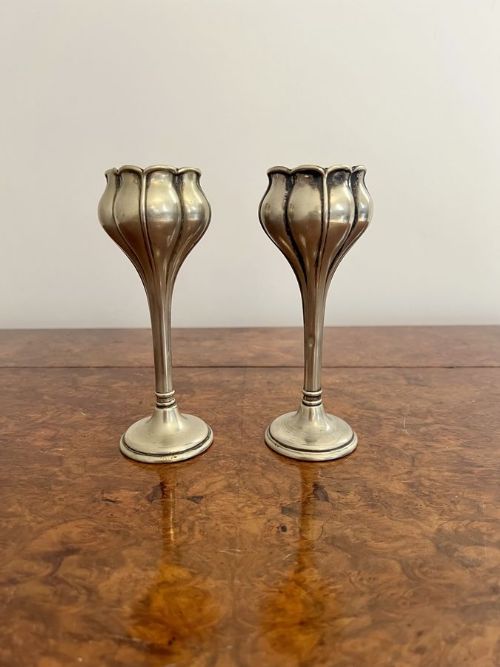
The piece you are most likely to meet is a pair of small English sterling flower vases from the Edwardian or George V decades, described in the title by shape and hallmark year and nothing else. Almost half the archive on Sellingantiques is sold as pairs, 219 titles of 482, and sets of three and four turn up regularly enough to count as a format rather than an accident.
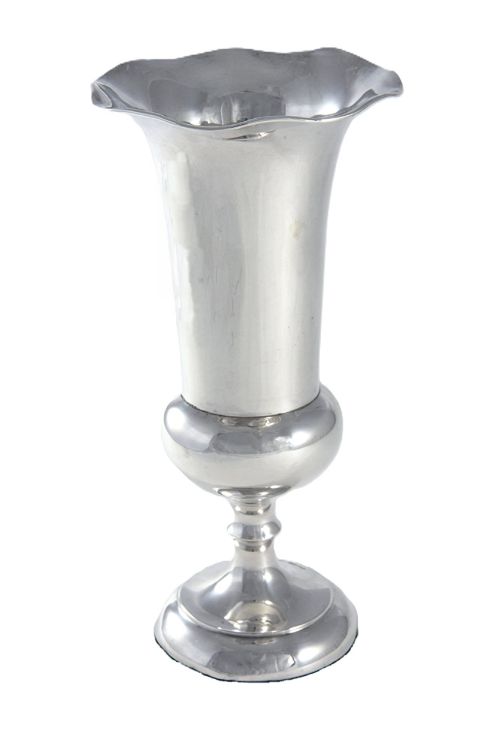
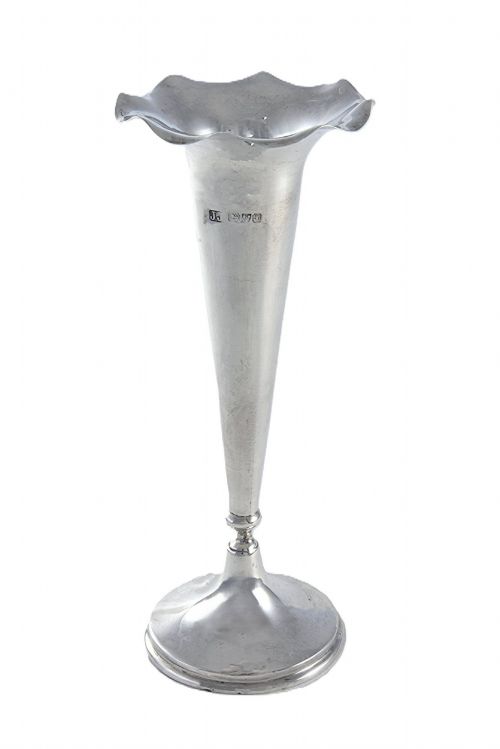
Named shapes sort into a few groups. Trumpet is the commonest at 60 titles, then posy at 49, stem at 25 and bud at 24, with spill vases a genuine rarity at 14. Alongside the solid silver sit silver-mounted and silver-topped glass bodies, some with coloured or cranberry liners, and a run of plated pieces that make up a much larger share of current stock than of the archive.
Dating runs from 1750 to 1960, but the weight sits hard on the turn of the century: Edwardian 145 entries, the 1910s 90, Victorian 86. Many dates are period labels rather than years, so a title reading Victorian may carry no hallmark year, while one reading 1901 or 1896 does. Assay towns named in titles are Birmingham, Chester, London and Sheffield, with Chester nearly as common as Birmingham.
What Sets Them Apart
Completeness does most of the work. A matched pair sits above a single, and sets of four cluster in the upper part of the range. Metal is the other plain divider: hallmarked sterling and solid silver dominate the titles, and plated examples, a few continental designer pieces aside, sit low down.
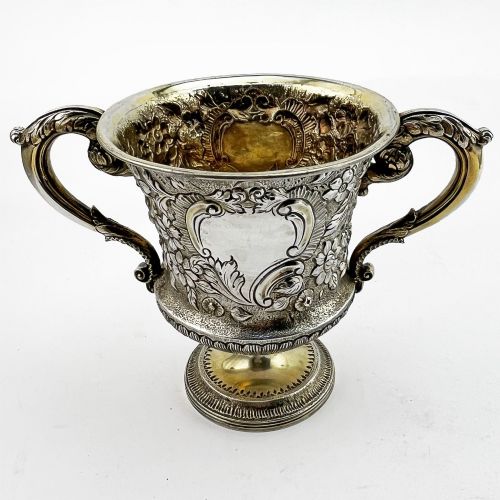
Size and decoration then separate the rest. Stated heights in titles mostly run between four and a half and eight inches, and the taller ones sit well above the small posy vases. Piercing, wirework, embossing and figural work, elephants, birds, daffodils, a mother and child scene, appear disproportionately in the dearer half.
The extreme top belongs to weight and to silver made outside Britain. Stated weights climb from a 50g novelty to a 3012g Indian baluster vase, and the Japanese Meiji, Chinese export, Persian and Indian pieces that surface singly take the highest positions in the range.
Antique Silver Vases Retail Price Guide 2026
Typical UK retail prices for silver vases, calculated from the Sellingantiques database of over a million retail prices indexed since 2003. This retail price guide relies exclusively on Sellingantiques data; no external sources or auction records are used, so the figures do not describe the wider market.
Chester is nearly as common as Birmingham among the assay towns on Sellingantiques for silver vases. Dublin, Glasgow and Belfast surface once or twice.
The Antique Silver Vases Glossary
- Posy vase
- A small, usually squat vase for a short bunch of flowers. It runs to 49 titles, second only to trumpet among named shapes.
- Trumpet vase
- Flaring conical form widening to the rim, and the commonest named shape here at 60 titles, sometimes written as trumpet shaped.
- Bud vase
- A narrow vase for a single stem, 24 titles. Stem vase, at 25, describes a taller slender holder, often on a spreading foot.
- Sterling or solid silver
- The hallmarked standard, kept distinct in titles from plate: sterling appears in 125 titles and solid in 48, against 29 for plated.
- Mounted or silver-topped
- A glass body with a silver collar, rim or cover. Related listings mention liners, separate glass inserts in blue, green, red or cranberry that hold the water.
- Epergne
- A branched table centrepiece carrying several vases or dishes, 12 titles, including examples with four and with seven vases. A garniture is a matched set of three or more for a mantel or table.
Antique Silver Vases: Frequently Asked Questions
Why are so many sold in pairs?
Pairs were the normal way these were made and used, and the archive reflects it: 219 of 482 titles are pairs.
Sets of four recur often enough to be a recognised format, and there is a garniture of three, plus epergnes carrying four and seven vases apiece.
What period do most of them come from?
Late Victorian through George V accounts for the great majority. Edwardian appears in 145 listings, the 1910s in 90 and Victorian in 86.
The dealers' dating stretches from 1750 to 1960, but the 1920s and 1930s tail off sharply and later decades barely register. Georgian silver vases are barely represented.
Which assay towns turn up in the titles?
Birmingham and Chester lead, with 24 titles and 22, and Chester being that close to Birmingham is unusual for a silver category.
London and Sheffield follow. Dublin, Glasgow and Belfast surface only once or twice across the whole archive.
How big are these vases usually?
Where a height is quoted in the title it generally falls between four and a half and eight inches, so these are table and dressing-table objects rather than floor pieces.
Only a couple reach ten to twelve inches. Large appears in 38 titles against small in nine, and the taller ones sit well above the small posy vases in price.
Are silver plated examples common in this category?
Plated appears in 29 titles across the archive, a small share of what has sold.
Current stock is different: plate and electroplate make up a far larger part of what is listed now than of what has gone before.
What unusual forms show up?
The odd ones include a lapel or boutonnière vase for buttonhole flowers, a shoe vase, and a ring tree fitted with a tiny trumpet vase.
A pair of novelty bear spill vases with glass eyes, a cornucopia vase and a pair in Connemara marble have also passed through Sellingantiques.