
Antique Silver Dishes
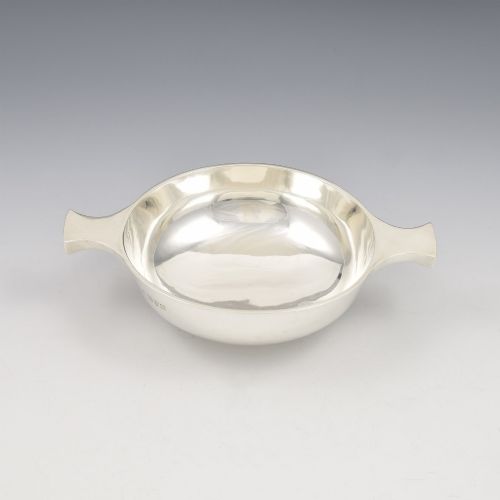
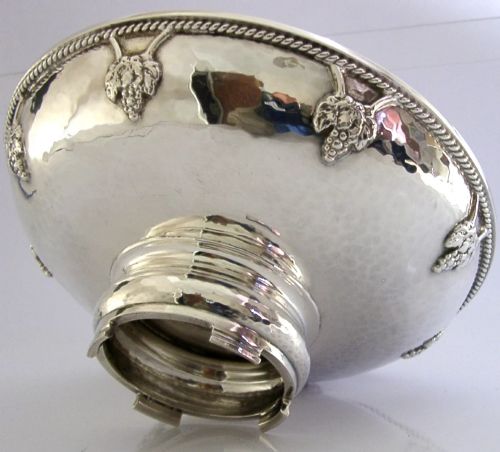
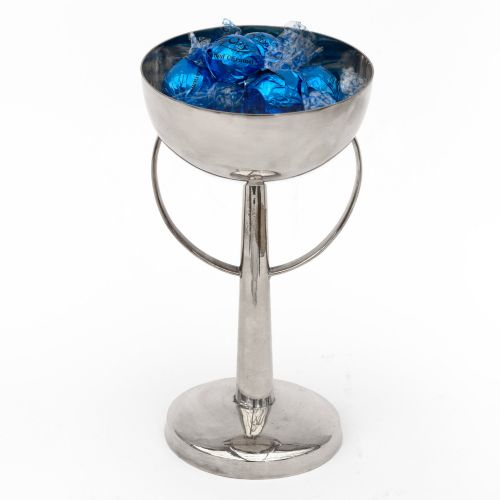
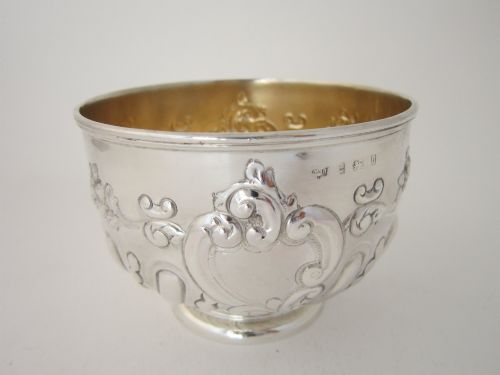
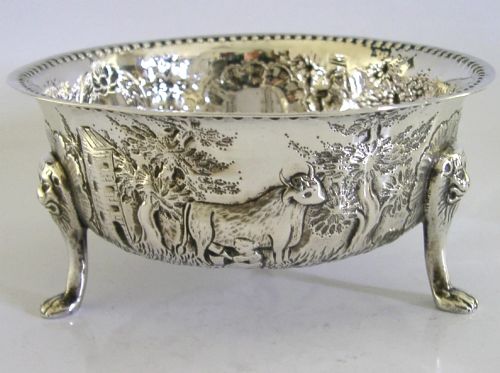
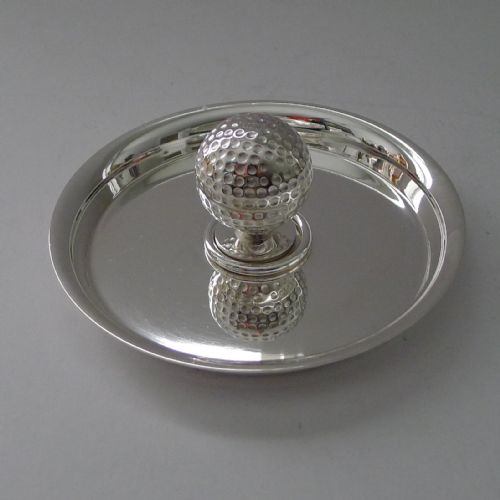
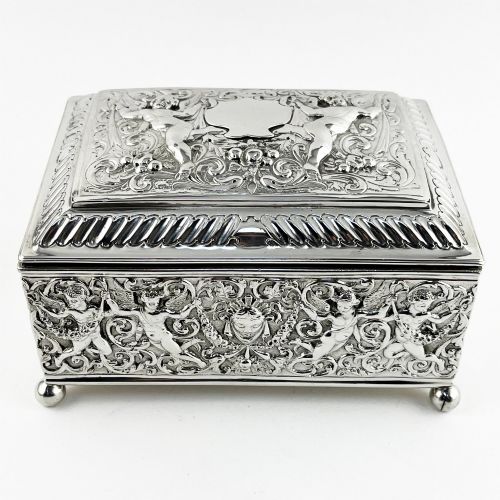
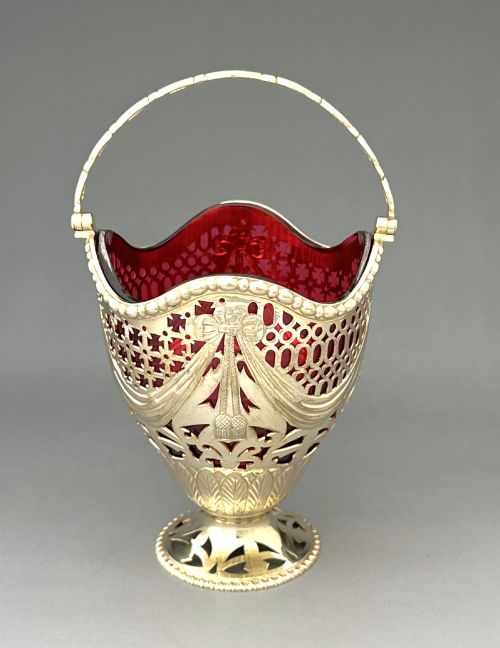
Small and medium table and serving vessels in silver or plate: sweetmeat and bon bon dishes, butter dishes, covered entree dishes, baskets and pedestal dishes, made for the dining table and the dressing table.
What They Are
The heading covers a wide run of forms. Bon bon and sweetmeat dishes dominate, with butter dishes the next distinct group, then plated serving ware, baskets and tazze, and a scattering of novelty and continental pieces. Roughly a fifth of titles say plated or Sheffield plate, about a quarter say sterling or solid, so the category runs from electroplate and Old Sheffield Plate through to hallmarked silver.
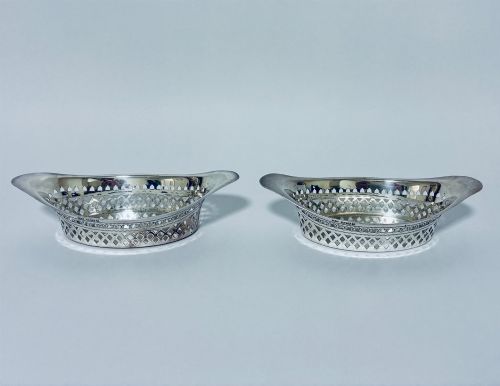
The piece you're most likely to meet is a small pierced bon bon dish of the late Victorian or Edwardian years, and often a pair of them. Victorian and Edwardian are the leading period words by a long way. Butter dishes come next, frequently modelled as a scallop shell or fitted with a cut glass liner.
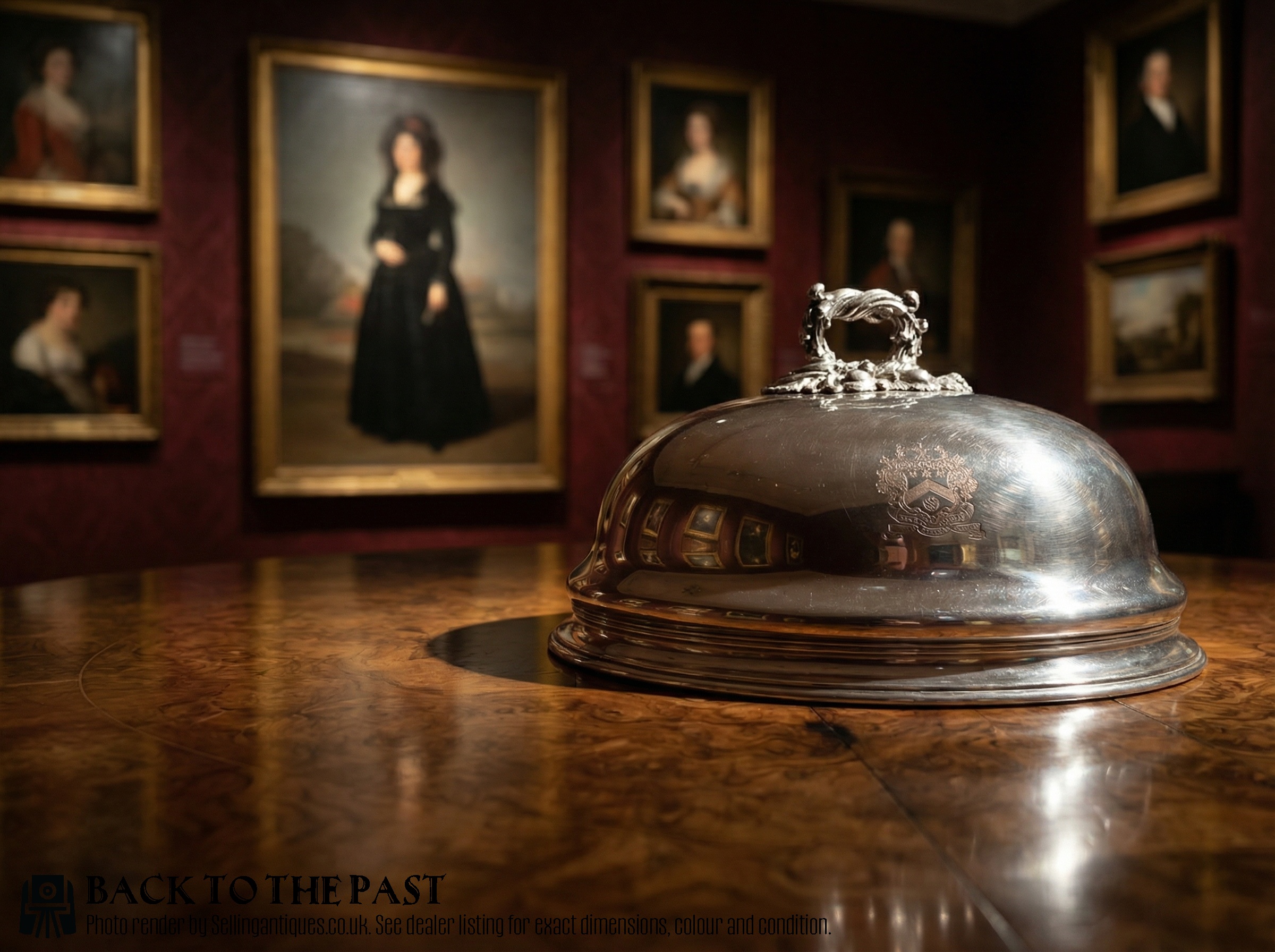
Plated serving ware forms its own branch: covered entree dishes, warming dishes, tureens and meat covers, the kind of thing that sat on a sideboard. The covered entree dish for keeping food hot at table became standard on well-off British tables from the later 18th century, and fused plate, then electroplating from the mid-19th century, put the same shapes within reach of many more households.
Dates given by dealers run from 1700 to 1960, though Georgian and earlier material is a small fraction of the whole. A good number of listings carry no precise year, only 19th Century or Georgian or Regency. At the late end, 47 listings sit in the 1960s, among them planished modernist dishes and Tudor-rose commemorative pieces.
Where The Range Splits
Metal does most of the sorting. Hallmarked silver, described as sterling or solid, clusters in the upper part of the range, while plated and Old Sheffield Plate pieces fill the lower and middle. Weight and size push the same way: pin dishes of 30g sit at one extreme, a 504g serving dish, a kilogram-plus pair of gilt chargers and 10 to 14 inch dishes at the other.
Number counts too. Pairs appear in a sixth of all titles, and sets of four, six and twelve turn up, including cased sets of bon bon and butter dishes and a set of twelve Georgian gilt dishes. Multiples sit higher than singles. Worth noting that one title says plainly "matched pair", so a pair on offer was not always born as one.
Early date lifts a piece, and the small Georgian and earlier group, reaching back through the 1770s to a 1702 Britannia standard bowl, sits at the top of the sampled range. So do Irish dish rings, the potato rings, which are the rarest recurring speciality in this category. A named firm helps as well, though only six firms recur across three or more dealers, so most listings carry no maker name at all.
Retail Price Guide 2026
Typical UK retail prices for silver dishes, calculated from the Sellingantiques database of over a million retail prices indexed since 2003. This retail price guide relies exclusively on Sellingantiques data; no external sources or auction records are used, so the figures do not describe the wider market.
Mappin & Webb is the name that turns up from the most dealers on Sellingantiques, with Walker & Hall and Elkington & Co behind it.
Mappin & Webb·Walker & Hall·Elkington & Co·Martin Hall & Co·James Dixon & Sons·William Comyns
The Antique Silver Dishes Glossary
- Bon bon dish
- Small shallow dish, usually pierced and often offered in pairs, for sweets and nuts. Spelt both bon bon and bonbon across the listings.
- Sterling or solid
- Both words are used in titles to mean hallmarked silver rather than plate. Sterling appears in 372 titles, solid in 187.
- Silver plate or plated
- Base metal with a silver surface, the commonest description in the category, with 346 titles saying plated and a further 82 plate.
- Old Sheffield Plate
- The earlier fused-plate technique, distinct from electroplate. Sheffield turns up in 102 titles, often phrased as Old Sheffield Plated.
- Entree dish
- Covered serving dish for the table, frequently sold as a pair or on a stand. Just over a hundred titles use the term.
- Dish ring
- Ring-shaped stand for a bowl or dish, the Irish potato ring being the best-known form and the one that recurs here.
Frequently Asked Questions
What is a bon bon dish for?
Sweets and nuts. They're small, shallow, commonly pierced round the sides or rim, and made to sit on a table rather than carry much weight.
They are the largest single group in this category, and they come in pairs as often as singly.
Are these dishes silver or silver plate?
Both. About a quarter of titles say sterling or solid, meaning hallmarked silver, and roughly a fifth say plated or Sheffield plate.
The plated branch includes Old Sheffield Plate, the earlier fused technique, alongside later electroplate. Entree dishes, warming dishes and meat covers are where plate shows up most.
How old are most of them?
Victorian and Edwardian pieces lead, with the 1900s, 1910s, 1920s and 1930s following on behind.
Dealer dating stretches from 1700 to 1960 in total. Georgian and earlier work exists but is a small fraction, and a fair number of listings carry only a loose label such as 19th Century.
At the far end, 47 listings are dated to the 1960s.
Why do so many come in pairs?
Pairs appear in around a sixth of titles, and sets of four, six and twelve occur too, including cased sets and a set of twelve Georgian gilt dishes.
Pairs and sets sit higher in the range than singles. One title describes a matched pair, so not every pair began life together.
What does a shell dish mean in a title?
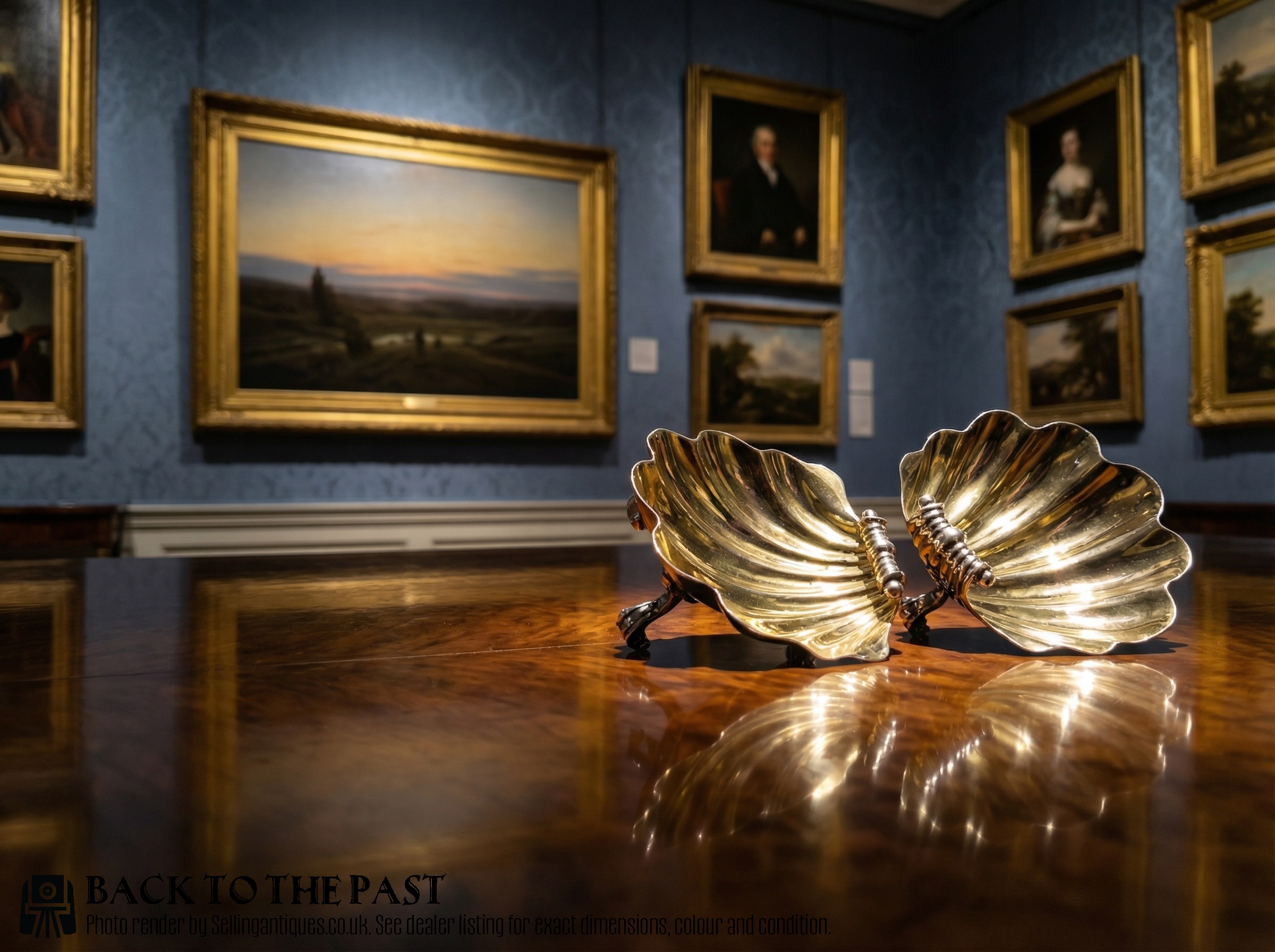
A dish modelled as a scallop shell. Around 82 titles use the word, and the form served for butter, salt or sweetmeats.
Butter dishes are the second distinct group in the category, and shell shapes and cut glass liners both turn up often among them.
Do unusual or novelty forms appear?
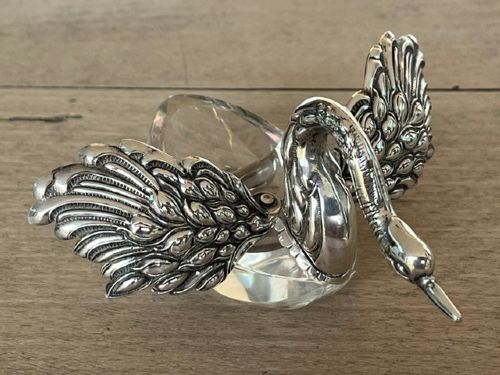
They're a persistent thread. Squirrel nut dishes, playing-card suit dishes, rowing and Viking boats, a gondola, a shoe, a frog and a horseshoe all appear, along with dishes made around 1797 pennies and Chinese trade dollars.
Origins beyond Britain show up sparingly: German, French, Dutch, Norwegian, Spanish and Austrian pieces, Chinese export dishes and Anglo-Indian Kutch work.
Around 167 of these dishes are listed a year on Sellingantiques, spread across 124 different dealers.