



Antique Silver Marrow Scoops
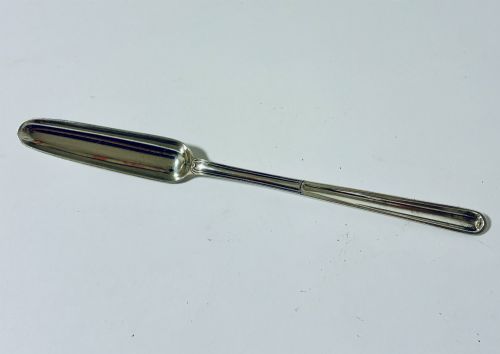
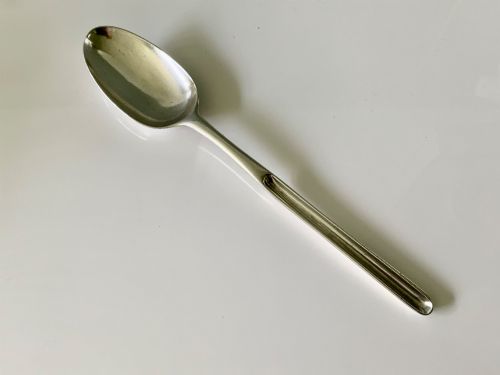
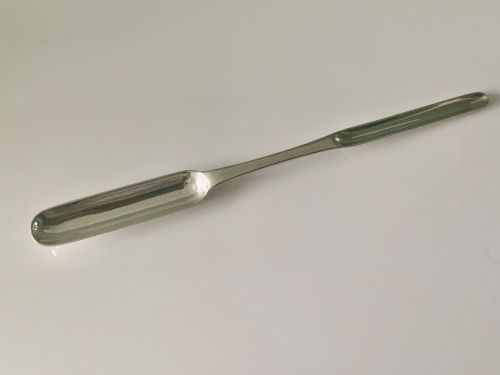
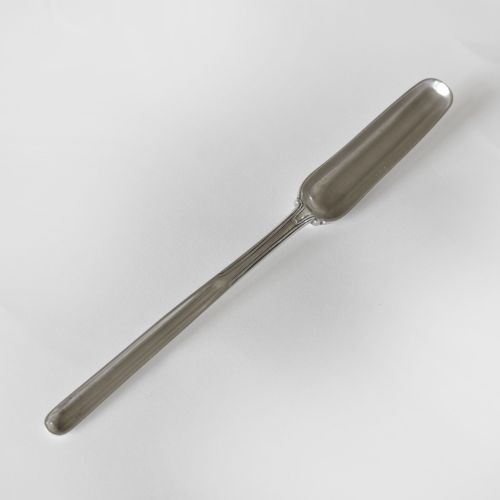
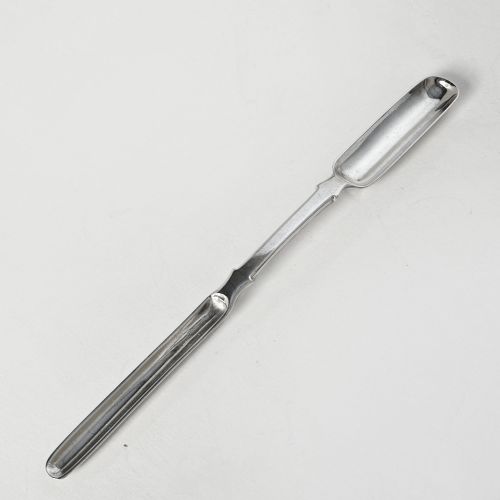
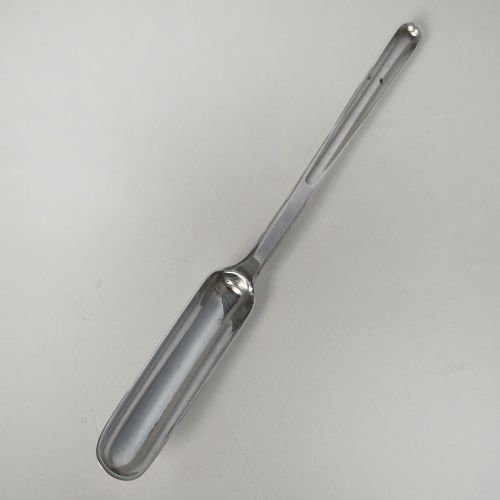
A marrow scoop is a slim silver implement with a narrow trough at one end, made to reach inside a bone and lift out the marrow at table.
Antique Silver Marrow Scoops
Marrow scoops came in during the late 17th and early 18th centuries, when bone marrow was a valued delicacy and a narrow channel was the tool for reaching inside a split or whole bone. They stayed part of English flatware services through the 18th century, then fell away with the dish itself.
The version you'll meet most often on Sellingantiques is a single-ended English sterling scoop with a long trough, hallmarked and frequently London-assayed. Georgian dating dominates the titles, with George III the reign named most, and 'sterling' and 'solid' recurring alongside. A smaller group is double-ended, with a wider trough at one end and a narrower one at the other for different bones.
Engraved crests turn up throughout, sometimes with the family named outright, and one archive piece goes further as a full armorial. Irish scoops appear more than once in the samples and a Scottish one just once, making Scotland the rarest origin named. Sheffield is the only other English assay town that shows up.
A thin tail sits after 1900: a pair of Edwardian scoops, Sheffield examples of the 1920s, and at the far end a pair of 1969 sterling scoops sold as high-ball cocktail mixers. Others depart from the type altogether, among them a mother-of-pearl-handled silver-bladed marrow and cheese scoop, a silver-gilt campaign scoop, and a miniature.
Where The Range Sits
Date does most of the work. The Queen Anne and early Georgian pieces, with hallmark years like 1700, 1712, 1733 and the early 1750s, sit at the upper end of what has sold, while later Sheffield work and the 20th-century oddities sit at the bottom. Half the archive is dated only to a reign or a century, so titles that spell out a hallmark year are doing something the period field does not.
After date, it's what the title can name. A marked maker set out in full lifts a listing above the plain 'antique solid sterling silver marrow scoop' entries. Crests and armorials, particularly where the family is identified, sit in the middle-upper part of the range, and an Irish or Scottish origin lifts a scoop above a generic London one.
Substance and unusual form make up the rest. Weight is quoted only occasionally, and where it is, or where a title flags heavy gauge, it's being treated as a selling point. The departures from the standard single-ended shape, a reversed double-ended scoop, a silver-gilt campaign scoop, a miniature, cluster in the upper half.
Antique Silver Marrow Scoops Retail Price Guide 2026
Typical UK retail prices for silver marrow scoops, calculated from the Sellingantiques database of over a million retail prices indexed since 2003. This retail price guide relies exclusively on Sellingantiques data; no external sources or auction records are used, so the figures do not describe the wider market.
The earliest scoops on Sellingantiques are Queen Anne, with titles citing 1700 and 1712, and a 1733 example the next dated step.
The Antique Silver Marrow Scoops Glossary
- Marrow scoop
- Slim silver implement with a narrow trough for extracting marrow from a bone.
- Double-ended
- A scoop with a channel at each end, one usually wider than the other, for different bone sizes.
- Marrow spoon
- Variant form and variant title wording, where one end is a spoon bowl rather than a second trough.
- Assay office
- The town whose hallmark the piece carries. London dominates the titles, with Sheffield and Irish marks also present.
- Silver gilt
- Silver with a gold surface. One campaign scoop in the archive is described this way.
- Intaglio mark
- A mark cut into the metal rather than raised, noted in one title.
Antique Silver Marrow Scoops: Frequently Asked Questions
What was a marrow scoop used for?
It was an eating implement. The narrow trough reached inside a bone, split or whole, and lifted the marrow out at table when the dish was a valued delicacy.
By the 19th century the fashion had faded, which is why the bulk of what comes to market is 18th-century.
Are most marrow scoops Georgian?
Georgian dating dominates. It appears in the majority of titles and period fields on Sellingantiques, with George III the reign named most often, and 18th Century and 1750s accounting for much of the rest.
The dated field runs from 1700 to 1960, but only a thin tail sits after 1900.
How does a double-ended scoop differ?
A double-ended scoop has a channel at each end rather than a trough and a plain stem. One channel is usually wider than the other, so a single implement suited different bone sizes.
They're a minority of what turns up. One in the archive is described as reversed double-ended.
Do marrow scoops come in pairs?
Almost always singly. Pairs surface only twice in the samples, both Edwardian, and a pair of 1969 sterling scoops sold as cocktail mixers is the latest-dated thing in the archive.
Single scoops are the norm across the sixty listings.
Why do crests appear on the stems?
Marrow scoops were part of a household's flatware service, and engraved family devices identified the owner. Several titles name the family outright, among them Trotter, Mills and Crew.
One is described as an armorial, meaning a fuller coat of arms rather than a single crest.
Which assay towns show up on these?
London is the town named most in the titles, and it's the office behind a good share of the Georgian group. Sheffield is the only other English office that appears, mainly on the 1920s examples.
Irish marks turn up several times in the samples, and a Scottish William IV scoop once.