

Antique Silver Mugs
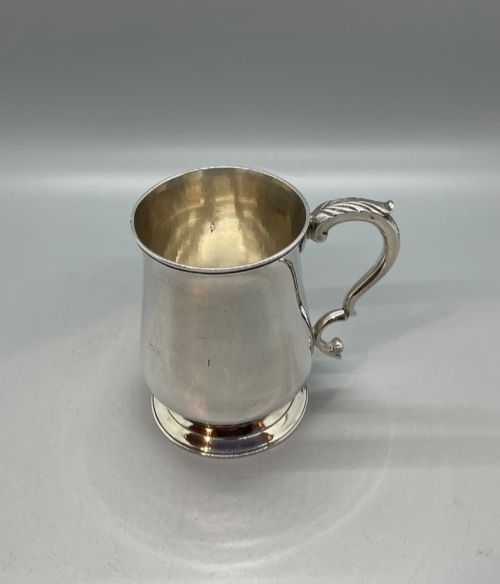
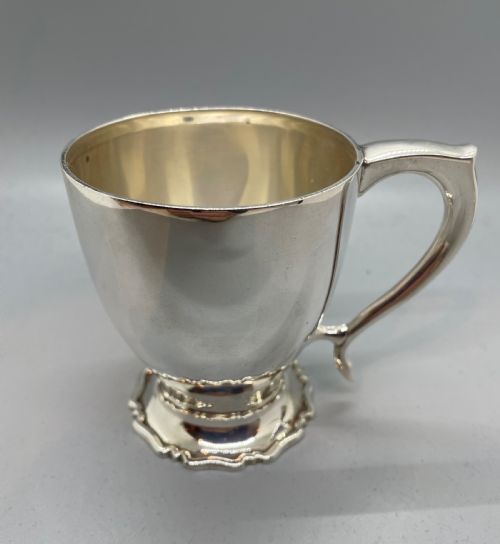
A single-handled silver drinking cup, made for beer and other drinks from the 17th century on, and from the 18th century given as a christening present to a child.
Antique Silver Mugs
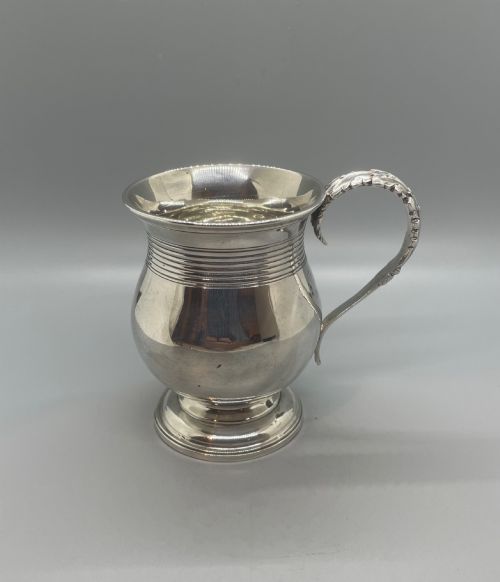
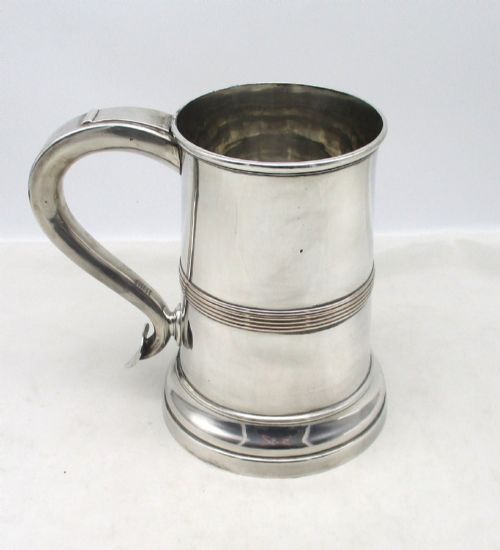
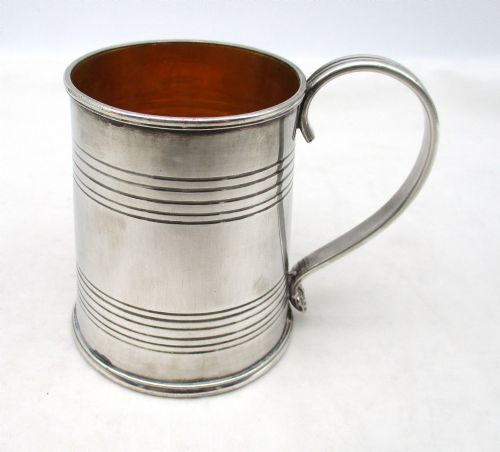
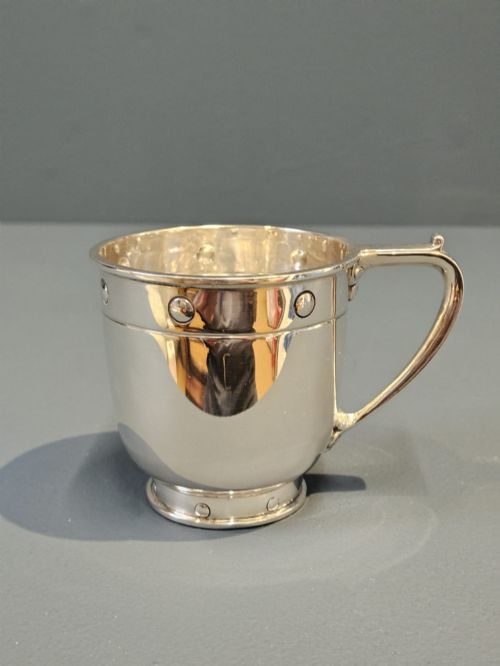
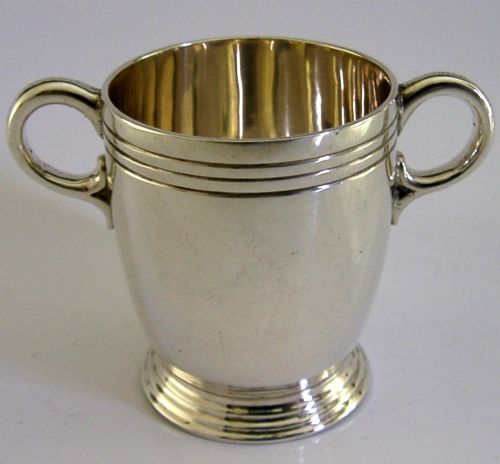
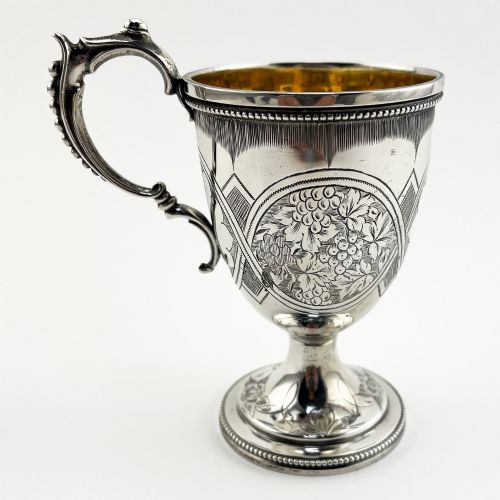
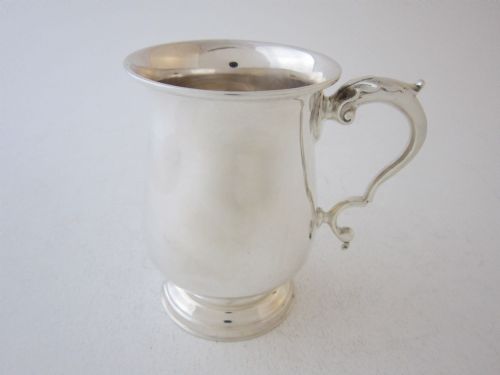
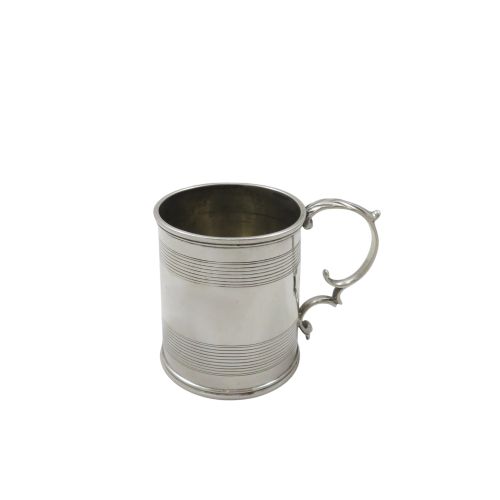
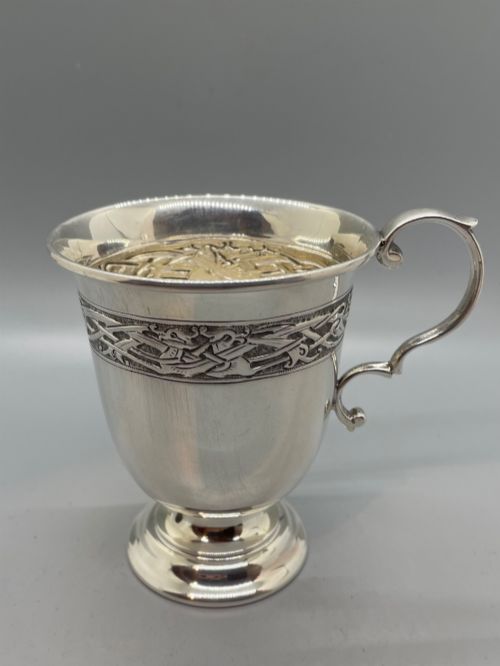
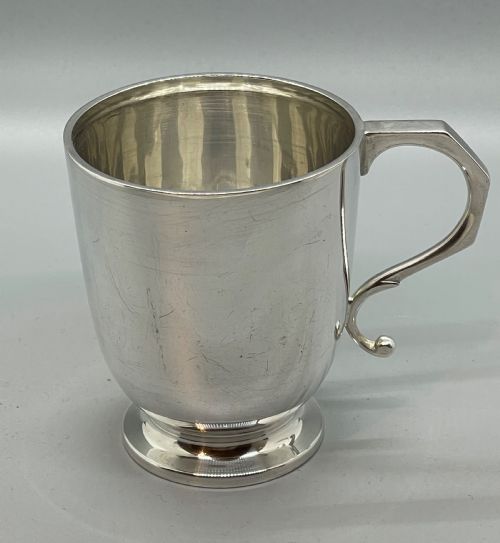
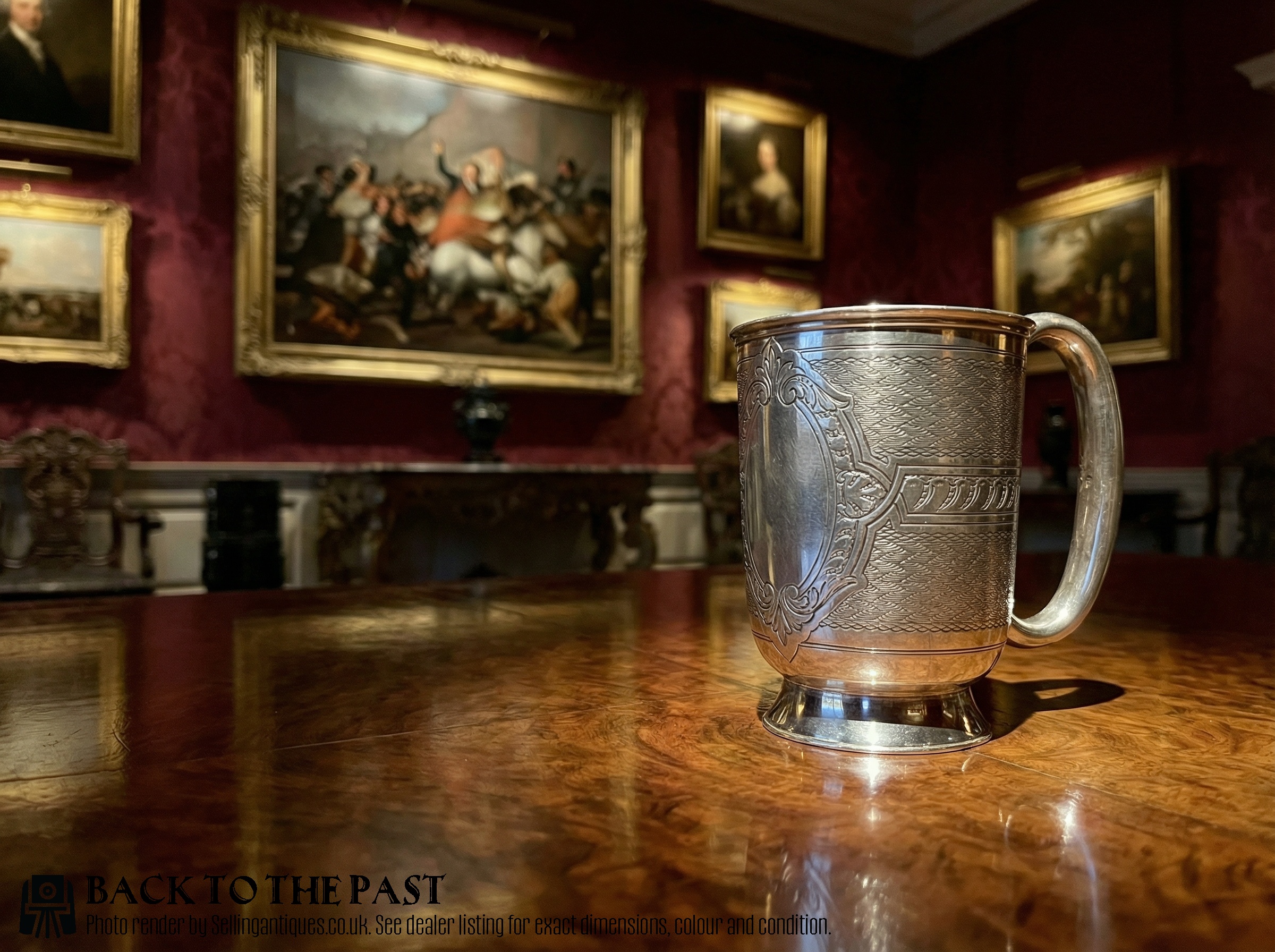
A mug here is a one-handled vessel holding somewhere between a quarter pint and a pint, with a scroll, loop or bracket handle and a body that is plain, baluster, barrel or cylindrical and tapering. Two uses run side by side under the heading: the small christening cup and the larger drinking mug for the table.
The christening mug is the form you'll meet most often. Nearly half the titles on Sellingantiques say christening, and Victorian is the largest single period, ahead of the 1930s, the Georgian bucket, the 1920s and the Edwardian years. Sterling is stated in a third of titles, with 'solid' used to mean the same thing.
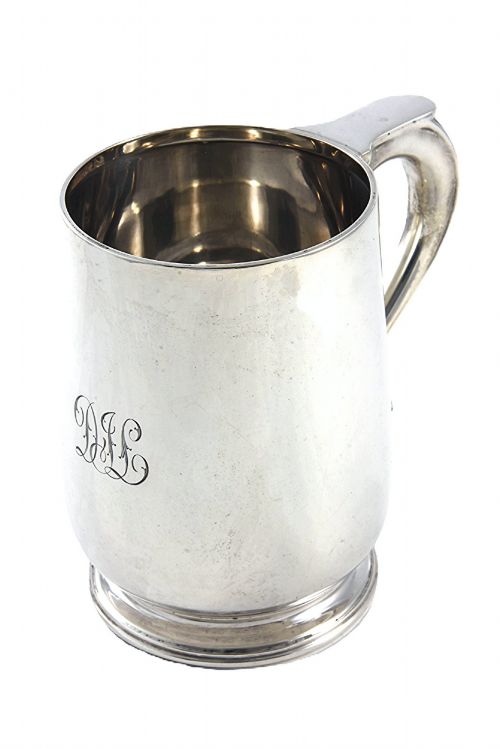
The second block is the pint or half-pint mug, which dealers title interchangeably as a tankard. Titles pair the two words outright, as in 'Pint Mug / Tankard', and most so titled have no lid. Capacity is quoted with real precision: quarter pint, one-third, three-quarter, half and full pint all turn up.
Smaller groups sit around those two. Silver plate and Old Sheffield plate account for a slice of the archive and a good deal more of current stock. Georgian mugs and tankards make up roughly one in eight. A handful have bodies of glass, horn, carved oak or Wedgwood black basalt with silver mounts. Period labels can be a dealer's shorthand, so the hallmark year given in a title is the firmer guide.
Where The Range Splits
Metal sets the floor and the ceiling. Silver-plated and Old Sheffield plate mugs cluster at the cheap end of the range, while sterling pint mugs and Georgian tankards hold the top. Where a title quotes gauge or weight, and the figures run from around 50g for a small mid-century christening mug to 473g for a pint tankard, the heavier pieces sit high.
Size pulls in the same direction as metal. Pint capacity dominates the upper half of the sampled range, and the small christening cup sits lower. Age pulls harder still: the earliest sampled pieces, Georgian and one Charles II tankard of 1680, occupy the very top, with later christening mugs well beneath them.
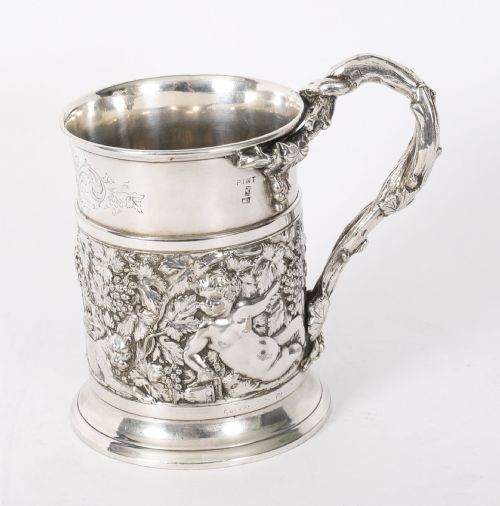
Decoration and packaging make the rest of the difference. Mugs with a named subject on the body, nursery rhymes, Noah's Ark, birds, rabbits, the man in the moon, a wolf-and-crane fable, sit above their plain equivalents. So do pieces in a fitted case or presentation box, and the scarce pairs and sets.
Antique Silver Mugs Retail Price Guide 2026
Typical UK retail prices for silver mugs, calculated from the Sellingantiques database of over a million retail prices indexed since 2003. This retail price guide relies exclusively on Sellingantiques data; no external sources or auction records are used, so the figures do not describe the wider market.
The oldest to pass through Sellingantiques is a Charles II tankard dated 1680, sitting well clear of the rest.
The Antique Silver Mugs Glossary
- Christening mug
- Small single-handled cup given at a baptism, and the commonest description in this category. Not always small or plain, though: the archive includes large, embossed, chased and pedestal examples.
- Tankard
- Used by dealers as another word for a larger mug rather than only for a lidded vessel. Most mugs titled tankard here carry no lid.
- Sterling
- The 925 silver standard, stated in a third of titles. 'Solid' appears in others and means the same thing.
- Old Sheffield plate
- Silver fused onto a copper sheet, made before electroplating. It forms its own small group, titled 'Old Sheffield Plated'.
- Baluster
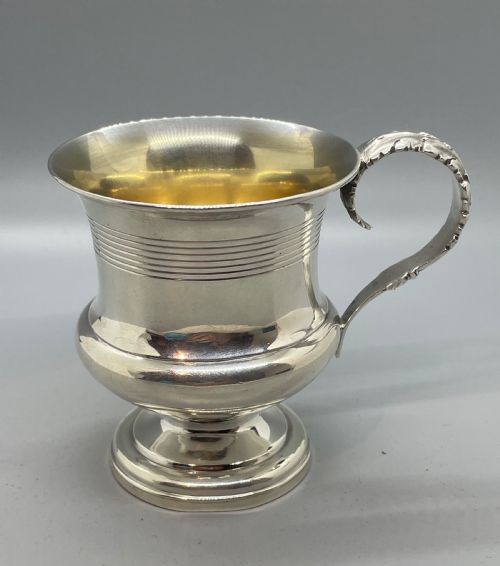
- A swelling, vase-like body profile. Campana, the inverted-bell shape named from the classical urn, turns up occasionally alongside it.
- Cartouche
- A reserved panel on the body for a crest or initials, frequently described as vacant or empty where nothing was ever engraved.
Antique Silver Mugs: Frequently Asked Questions
What's the difference between a mug and a tankard?
In this category, very little. Dealers use the two words for one object, and 181 titles say tankard while pairing it with mug in the same breath.
The lidded vessel most people picture isn't what the word signals here. Only a few titles mention a lid at all.
Which period turns up most often?
Victorian, by a clear margin. It accounts for the largest single block of dated listings, with the 1930s next, then the Georgian group, the 1920s and the Edwardian years.
The dated field runs from 1700 to 1960, and 290 of 524 listings carry a clean year. A run of pieces dated into the 1960s, 70s and 80s shows the category carrying on past the antique threshold into vintage.
Are all silver mugs solid silver?
No. Silver plate and Old Sheffield plate together make up a small share of the archive, though they account for far more of what's listed at any given moment.
A few pieces aren't silver-bodied at all. The archive includes silver-mounted glass, carved oak, horn, a boar's tooth handle, a tusk handle and a Wedgwood black basalt mug with silver mounts.
Which assay offices appear on these mugs?
London leads the title counts, followed by Sheffield, Birmingham and Chester.
Beyond those four, Exeter, Newcastle, Edinburgh, Glasgow and Dublin each show up only a few times. Newcastle pieces sit near the top of the range.
How common are silver mugs on Sellingantiques?
Around 57 are listed in a year, handled by 49 different dealers.
That spread says something about the form. It's one nearly every silver dealer touches at some point rather than a specialist corner of the trade.
Do decorated christening mugs differ from plain ones?
They sit higher in the range. Narrative and novelty subjects recur often enough to count as a theme: nursery rhymes, Noah's Ark, birds, rabbits, cherubs, the man in the moon, a wolf-and-crane fable, a girl with a dog.
Plain bodies are the baseline, often with a cartouche left empty. Engine turning and gilt interiors show up in a scattering of titles.