

Antique Silver Boats
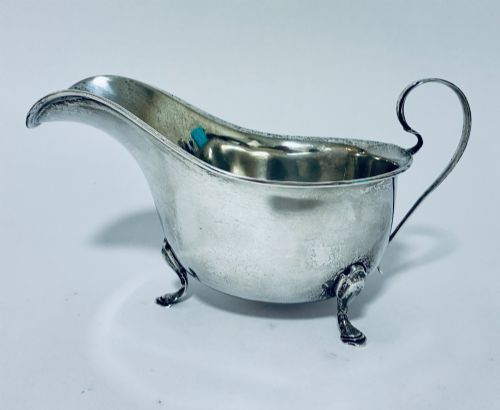
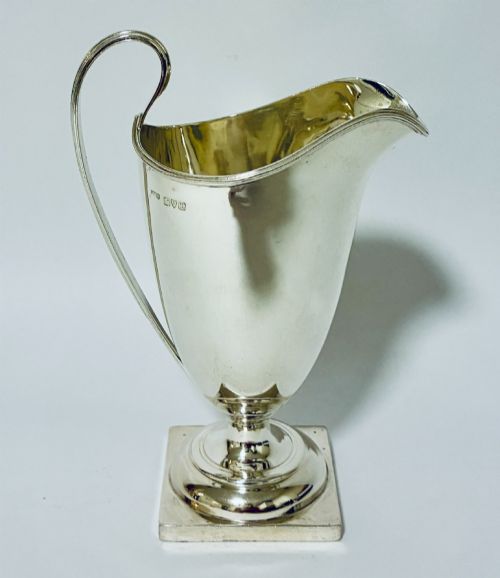
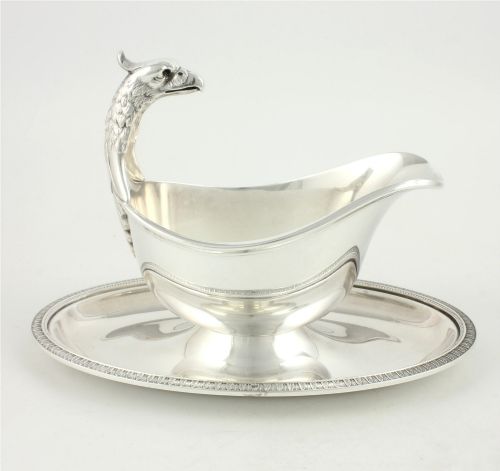
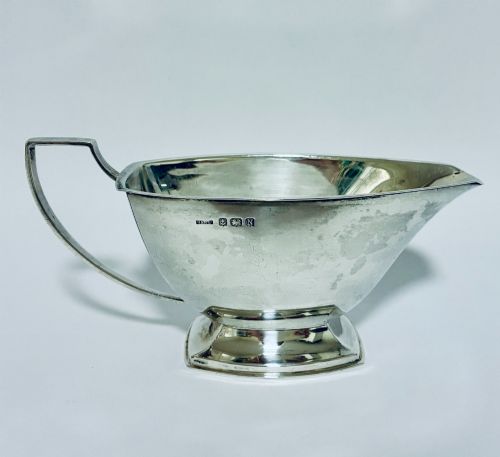
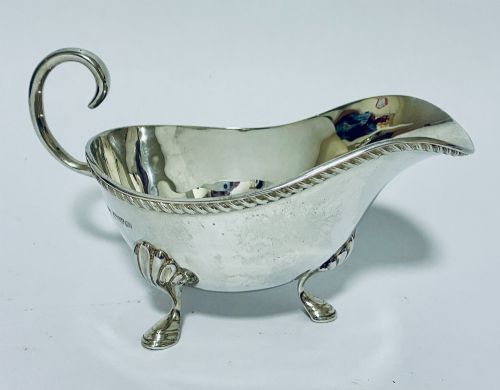
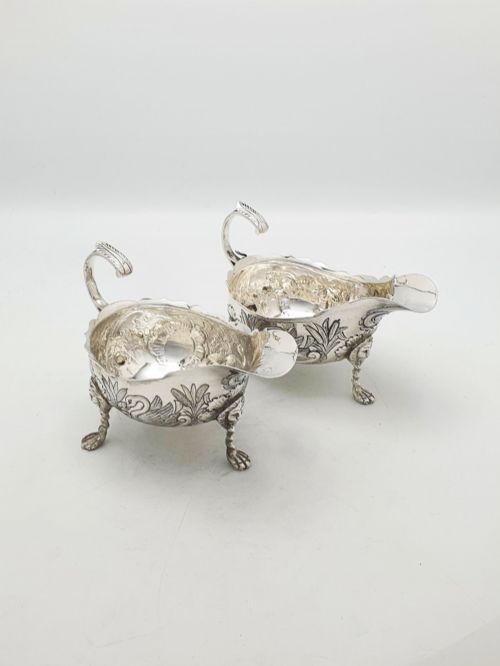
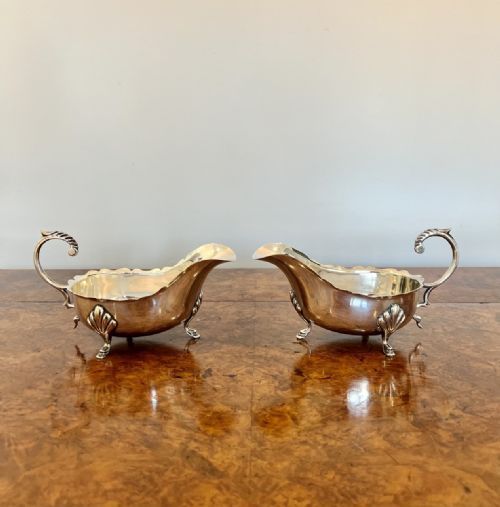
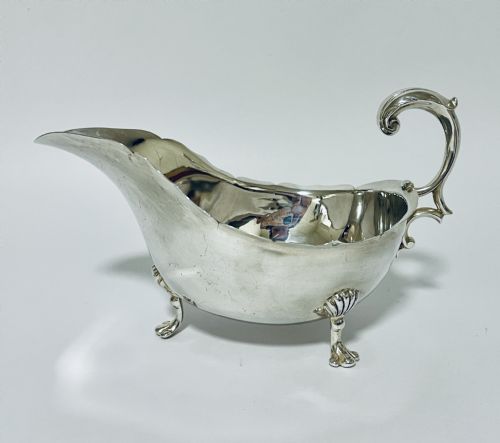
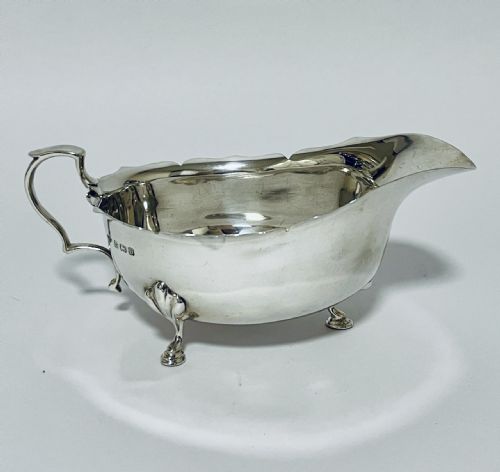
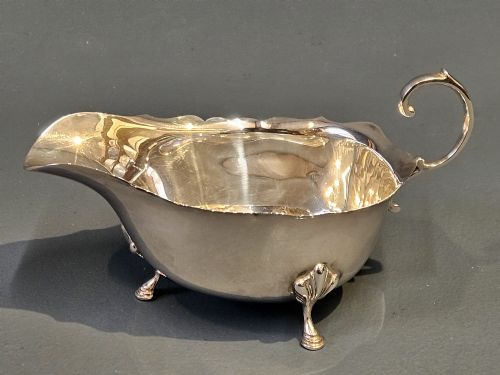
Nearly all of these are sauce boats: small lipped vessels with a scroll handle, standing on three feet or a pedestal foot, made to pour gravy and sauces at table.

Antique Silver Boats
The word "sauce" appears in more than two thirds of the titles on Sellingantiques, and "gravy" is used for the same object. The form settled early in the 18th century as a low oval body with a single pouring lip and a handle opposite, and it has barely moved since. Some have two lips with the handle in the middle.
The version you'll meet most often is a single sterling silver boat of the late Victorian to Art Deco decades. The 1930s is the largest single period band, ahead of Edwardian, the 1910s and the 1920s, so interwar rather than Georgian is the norm. Georgian pieces are present but in a minority, and dealer dates run from 1750 to 1960. A great many are placed to a reign or a century rather than to a hallmark year.
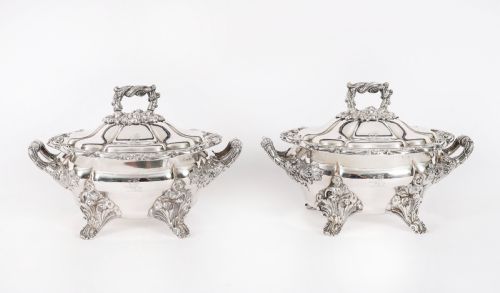
Singles and pairs come up in roughly equal measure, with a handful of cased sets with ladles. Alongside the sterling there's a smaller run of electroplate, and an earlier strand of Old Sheffield plate sauce tureens and argyll gravy warmers dated around 1800 to 1830. Chester is named more often than Sheffield, London or Birmingham as the assay town.
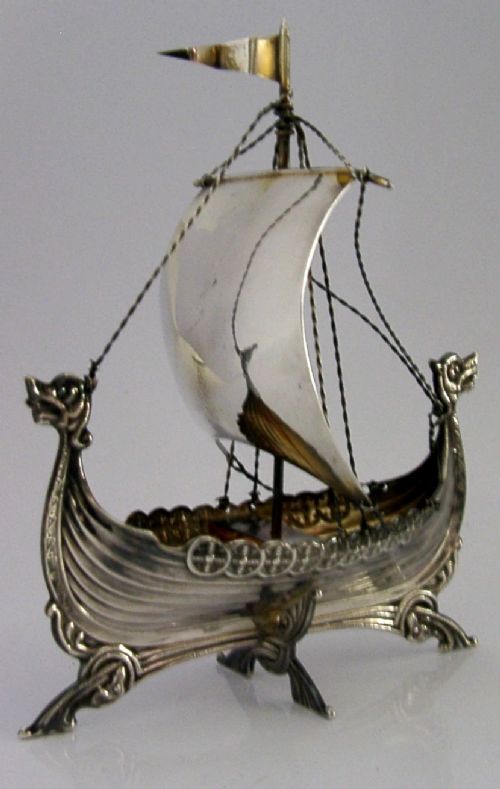
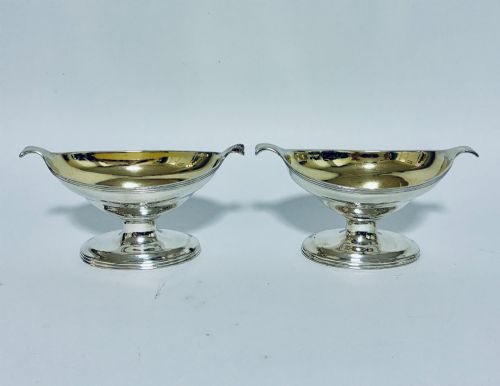
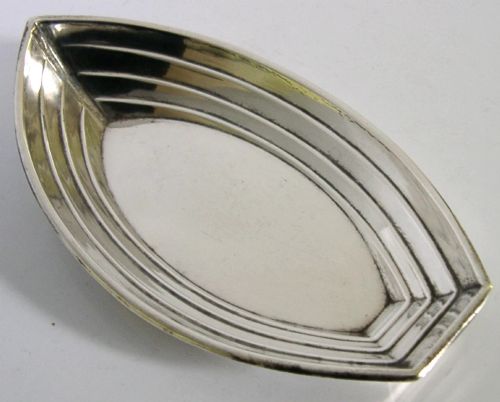
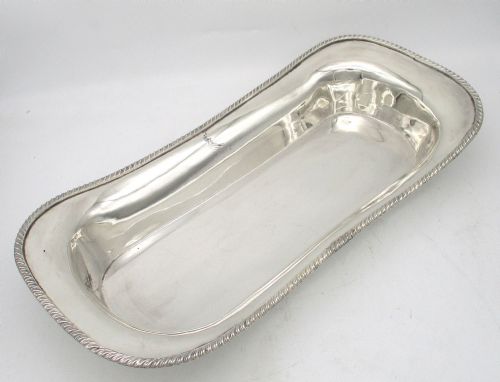
The rest of the category is anything read as boat-shaped or boat-themed: pap boats for feeding infants and invalids, boat-shaped salts, sugar baskets and dishes, and novelties. Norwegian Viking longship dishes and bowls turn up repeatedly, the one consistently foreign strand, along with rowing boats, yachts and rowing trophies.
Where The Range Sits
Weight and size do most of the work. Titles quote grams often enough to compare, and the samples run from a seven-gram Georgian pap boat through a 382g silver yacht to a 1930g centrepiece bowl over 50cm long. "Large" and "heavy" appear in the titles, and they cost more than the small plain boats.
Two things then separate the top from the bottom. Hallmarked silver sits above electroplate, and plated examples cluster low in the range. Matched pairs sit above singles, and pairs are a quarter of all titles. The upper part of the range is almost entirely pairs, 18th-century dates, or naturalistic and figural modelling rather than a plain oval body.
Elaboration counts too. Matching stands, fitted cases with ladles, silver gilt, chasing, double lips and pedestal feet all pull upward. So does a name: titles reading only "Antique Silver Sauce Boat" sit low, while those carrying a maker or an early date sit high.
Antique Silver Boats Retail Price Guide 2026
Typical UK retail prices for silver boats, calculated from the Sellingantiques database of over a million retail prices indexed since 2003. This retail price guide relies exclusively on Sellingantiques data; no external sources or auction records are used, so the figures do not describe the wider market.
The largest to pass through Sellingantiques was a centrepiece bowl 53cm long, weighing close to two kilos.

Asprey
The Antique Silver Boats Glossary
- Sauce boat
- Lipped oval vessel with a handle, for pouring sauce or gravy. The core of this category, and the word turns up in over two thirds of titles.
- Gravy boat
- The same object under another name. Titles use the two interchangeably, and sauceboat and sauce jug appear as well.
- Solid silver / sterling
- Hallmarked silver as opposed to plate. "Sterling" runs through about a fifth of titles and "solid" a little under that.
- Silver plated / electroplate
- Base metal with a silver surface, named in roughly one title in twelve.
- Pap boat
- Small shallow lipped bowl for feeding infants or invalids. About one in twenty titles, and the sampled ones include Georgian and George II examples dated 1758 and 1798.
- Argyll
- A lidded pouring vessel with a hot-water or iron jacket to keep gravy warm, sometimes listed as a gravy warmer. Found among the Old Sheffield plate.
Antique Silver Boats: Frequently Asked Questions
What is the difference between a sauce and gravy boat?
Nothing. Dealers use the two words for the same object, a lipped oval vessel with a handle for pouring at table.
"Sauce" is much the commoner word in titles on Sellingantiques, with "gravy" a distant second and "sauceboat" and "sauce jug" also in use.
How old are most silver sauce boats?
The dealer-supplied dates span 1750 to 1960, and 192 of the 314 listings carry a clean year. The 1930s is the largest single band, followed by Edwardian, the 1910s and the 1920s.
Georgian examples exist, including a 1750-dated George II boat and a 1753 London pair, but they're a minority. Interwar and Edwardian material dominates.
Are pairs more sought after than singles?
Pairs appear in about a quarter of titles, so singles and pairs come to market in roughly equal measure once you count each boat.
Matched pairs cluster in the upper half of the range. The top is almost entirely pairs, 18th-century dates, or figural and naturalistic modelling.
Why is Chester mentioned so often?
Chester is named in around one title in sixteen, ahead of Sheffield, London and Birmingham. That's conspicuous prominence for an assay office that closed in 1962.
The town named in a title is simply the office that marked the piece.
What is a pap boat for?
It's a small shallow bowl with a pouring lip and no handle, used for feeding infants and invalids. About one title in twenty is a pap boat.
They're small and light. One sampled Georgian example weighed seven grams, the lightest thing in the category.
Do Viking longship dishes belong in this category?
They turn up repeatedly on Sellingantiques, mostly Norwegian and dated around 1890 to 1950, including 830-standard and enamelled pieces.
They're the one consistently foreign strand in an otherwise British category, sitting alongside rowing boats, yachts, canoe pin cushions and boat-race trophies.