

Antique Silver Candlesticks
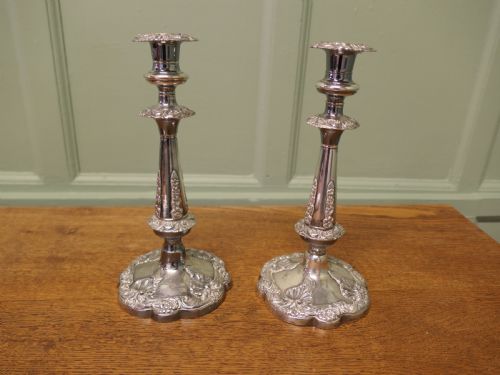
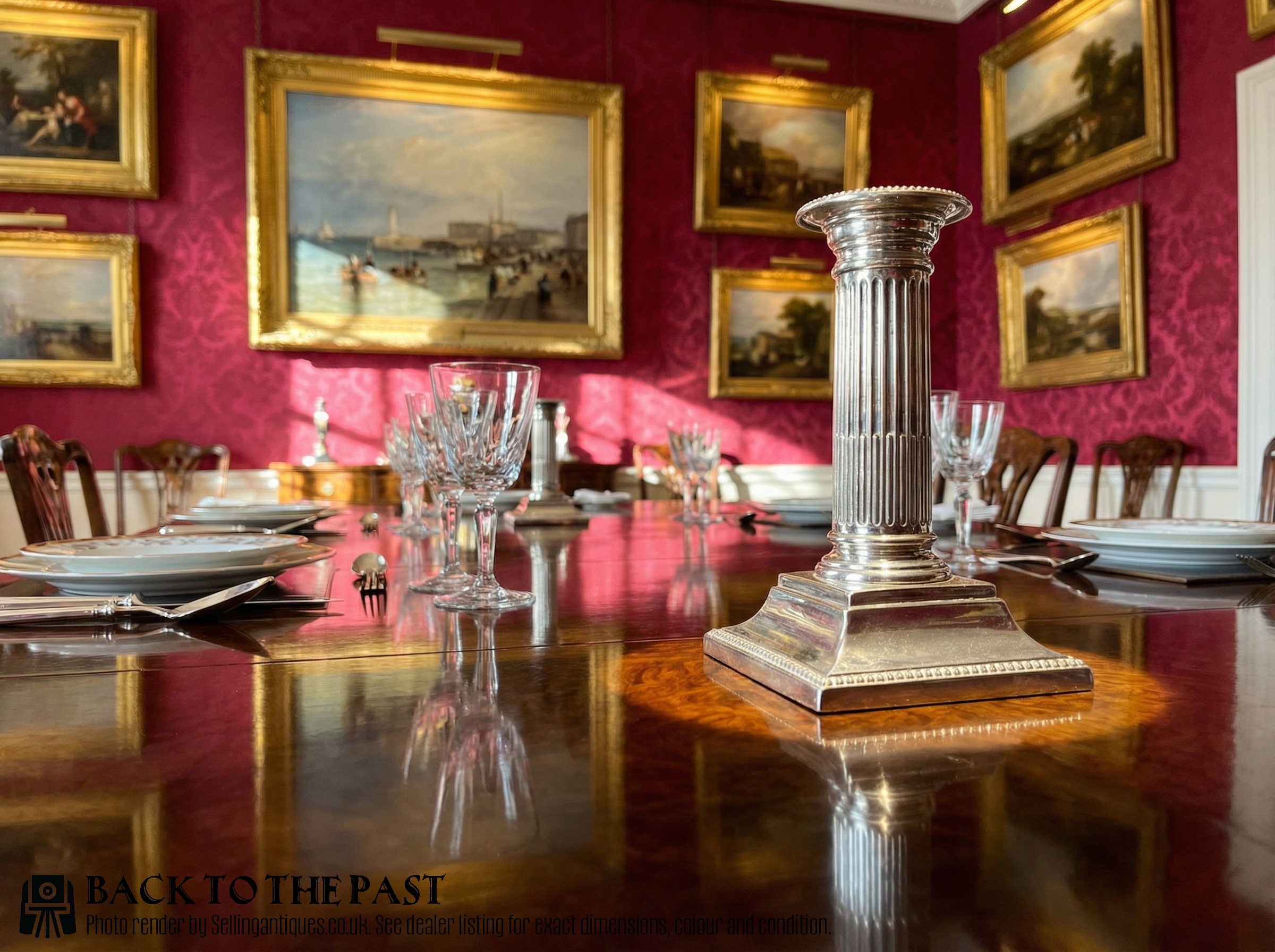
Table candlesticks in silver and in silver plate, made to raise a candle to table or bedside height, and sold almost always in pairs.
What You're Looking At
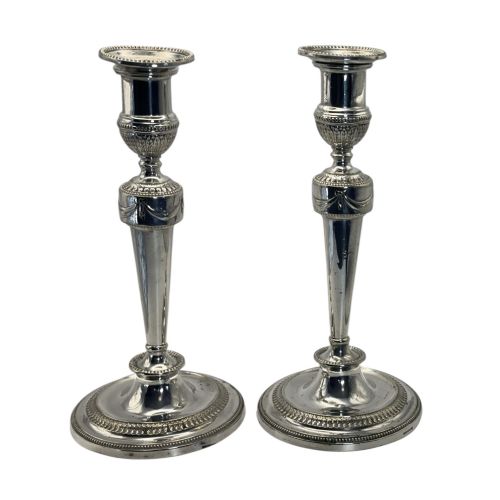
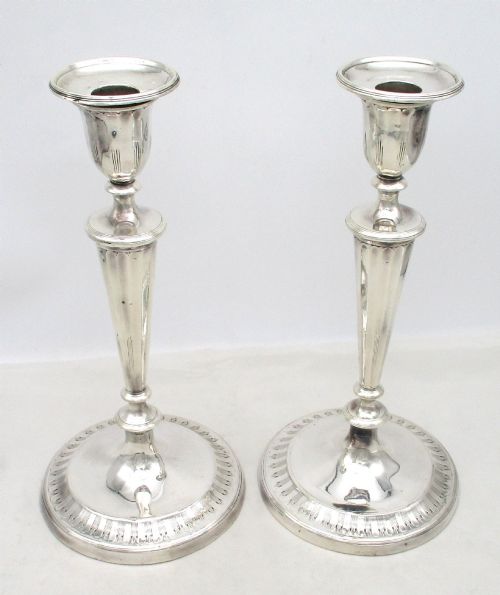
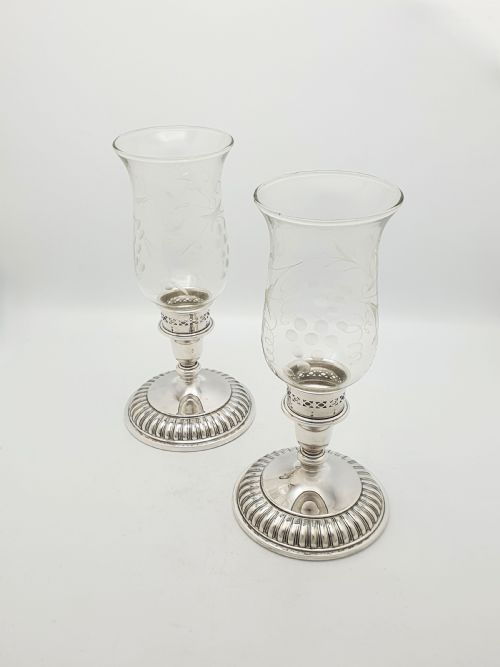
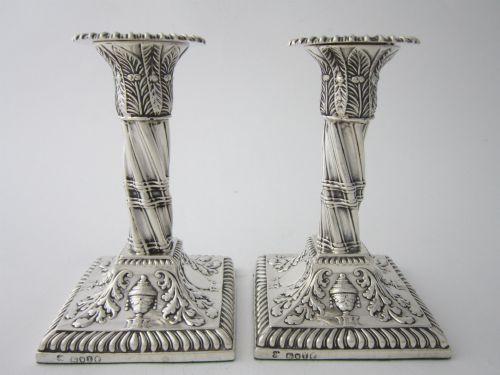
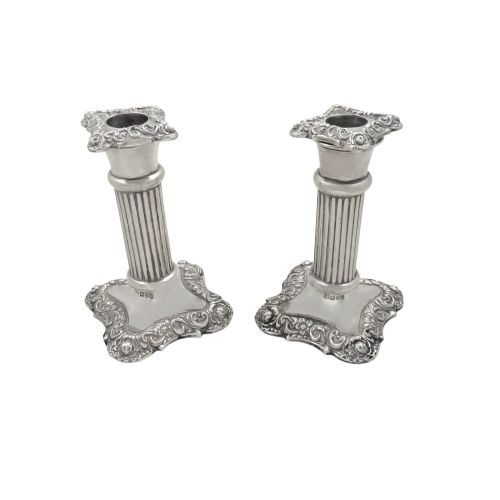
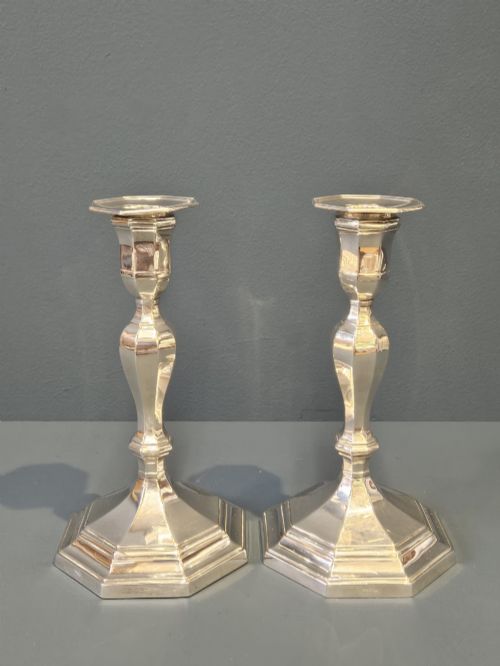
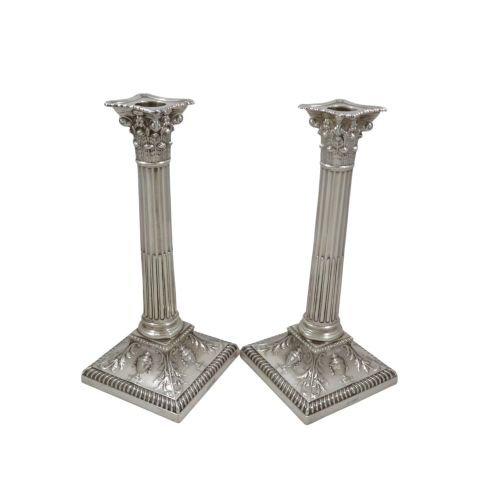
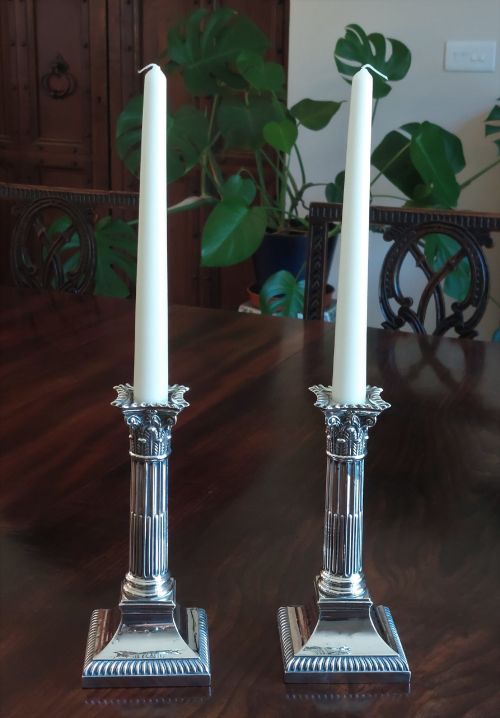
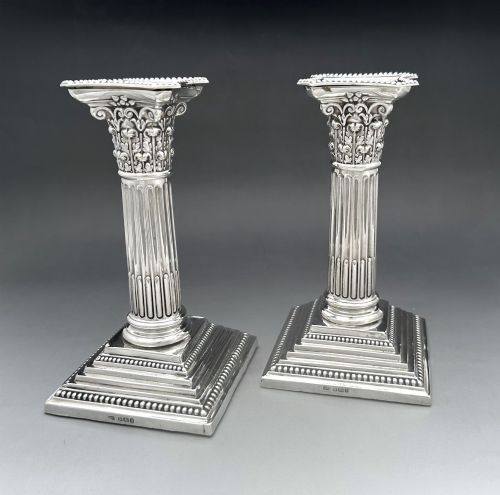
Candlesticks are among the oldest domestic silver forms, and the pattern you'll meet most often on Sellingantiques is a pair of table sticks on a columnar stem, late Victorian or Edwardian. "Pair" appears in 565 of 761 titles, and Victorian and Edwardian are the two largest style words in the archive.
The category splits down the middle between precious metal and plate. Sterling appears in 136 titles, solid in 39, while 193 titles declare plate of some kind: electroplate, Sheffield plate or Old Sheffield plate. The Old Sheffield plate sticks, silver fused to copper, are mostly Georgian or early nineteenth century and carry dates around c1770 to c1830. Elkington is the plating name that recurs.
Columns run through both metals. "Column" is in 52 titles, of which 34 specify Corinthian, and reeded, hexagonal, panelled and fluted stems turn up alongside them. Sheffield is the word most often in titles, either as the assay town or the plating, with London, Birmingham and Chester behind it.
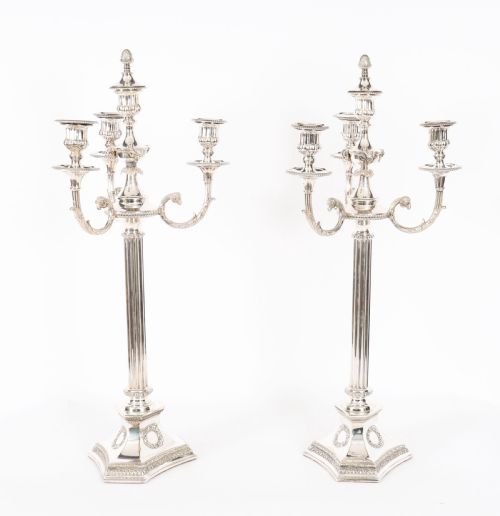
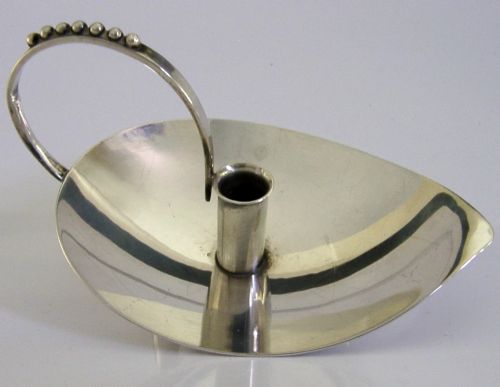
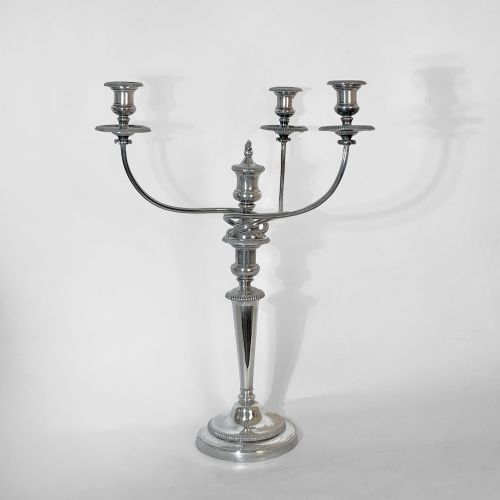
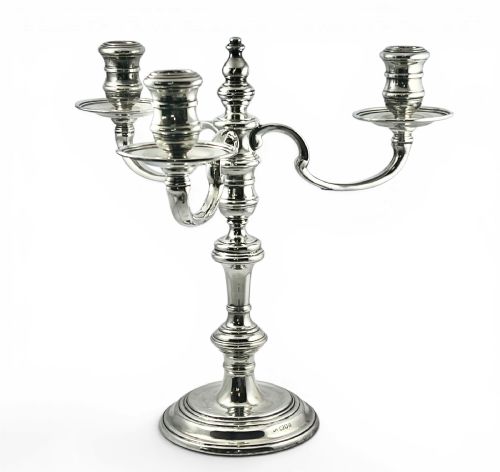
Away from the standard table stick sit the smaller forms: chamber candlesticks with a dished base and handle, made to be carried from room to room, telescopic sticks whose stems slide to alter height, and dwarf or low sticks. Candelabra appear too, sometimes as a branched top on a candlestick base. Dates run from 1700 to 1960, so the category carries plenty made after the antique line, including pieces hallmarked in the 1960s and 1970s.
Top And Bottom
Metal does most of the work. Sterling and solid silver concentrate at the upper end, while electroplate and Old Sheffield plate cluster low. Number follows: pairs are the norm, sets of four sit markedly higher, and single sticks fall to the bottom, where the range is occupied almost entirely by lone chamber sticks and small plated pairs.
Date and construction sort the rest. Georgian and eighteenth-century work sits high, and the word "cast" appears in only twelve titles, several of them among the earliest and highest-placed pieces. The top of the range is eighteenth-century cast silver and multi-light candelabra.
Where size is quoted it tracks the same way. Height in the listings runs from around four and a half inches to thirty, and the tall and heavy sit above the dwarf and the small. Weights are given only occasionally, but the pair of military sticks at 1260g and the 68g mid-century holder mark the two ends of what turns up.
Retail Price Guide 2026
Typical UK retail prices for silver candlesticks, calculated from the Sellingantiques database of over a million retail prices indexed since 2003. This retail price guide relies exclusively on Sellingantiques data; no external sources or auction records are used, so the figures do not describe the wider market.
Silver candlesticks have been listed on Sellingantiques since 2008, and over six hundred have passed through since.
Elkington & Co·William Hutton & Sons·Mappin & Webb·Thomas Bradbury & Sons·Walker & Hall
The Antique Silver Candlesticks Glossary
- Sterling
- The .925 silver standard, in 136 of these titles, usually alongside an assay year.
- Silver plate
- Base metal with a silver surface, and the single most common qualifier across these listings.
- Old Sheffield plate
- Silver fused to copper, made before electroplating. In this archive it's almost always dated between about 1770 and 1830.
- Corinthian column
- A stem modelled as a classical column with an acanthus capital. Named in 34 titles, the one architectural pattern that recurs.
- Chamberstick
- A low stick on a dished pan with a handle, made for carrying. Listed as both chamber candlestick and chamberstick.
- Sconce or nozzle
- The socket the candle sits in. A few listings note that the nozzles detach.
Frequently Asked Questions
Are silver candlesticks always sold as pairs?
Pairs dominate to an unusual degree. Of 761 listings, 565 say "pair" in the title.
Sets of four are the step up and appear in only 23 titles. Single sticks turn up too, often chamber sticks, and they sit at the bottom of the range.
How many come up for sale each year?
Around 93 candlesticks or pairs come to market on Sellingantiques in a year.
They've been listed by 108 different dealers, which makes them one of the more widely stocked silver forms on the site.
What does Old Sheffield plate mean on a candlestick?
It's silver fused to copper, the method used before electroplating arrived. Listings here almost always date it between about 1770 and 1830.
It sits in the plated half of the category, alongside later electroplate. Several of the telescopic sticks in the archive are Old Sheffield plate.
Which assay towns appear in the listings?
Four are named: Sheffield, London, Birmingham and Chester.
Sheffield leads by a wide margin, appearing in 111 titles, though that count includes its use as a plating word. London, Birmingham and Chester trail behind.
Do Georgian examples turn up often?
They're present but thin. "Georgian" appears in 33 listings and "18th" in 13 titles, against much larger blocks of Victorian, Edwardian and early twentieth-century work.
Where they do appear, the eighteenth-century cast silver sticks sit at the top of the range.
Is foreign silver common in this category?
No. The stock is overwhelmingly English.
Single Danish, Finnish, Italian, Mexican, Egyptian, Viennese and Greek pieces have passed through, but they're occasional visitors rather than a stream.