
Antique Silver Knives
A broad group of small silver and silver-mounted cutting pieces for the table and the desk, from butter knives and mother-of-pearl fruit knives to fish servers, letter openers and knife rests.
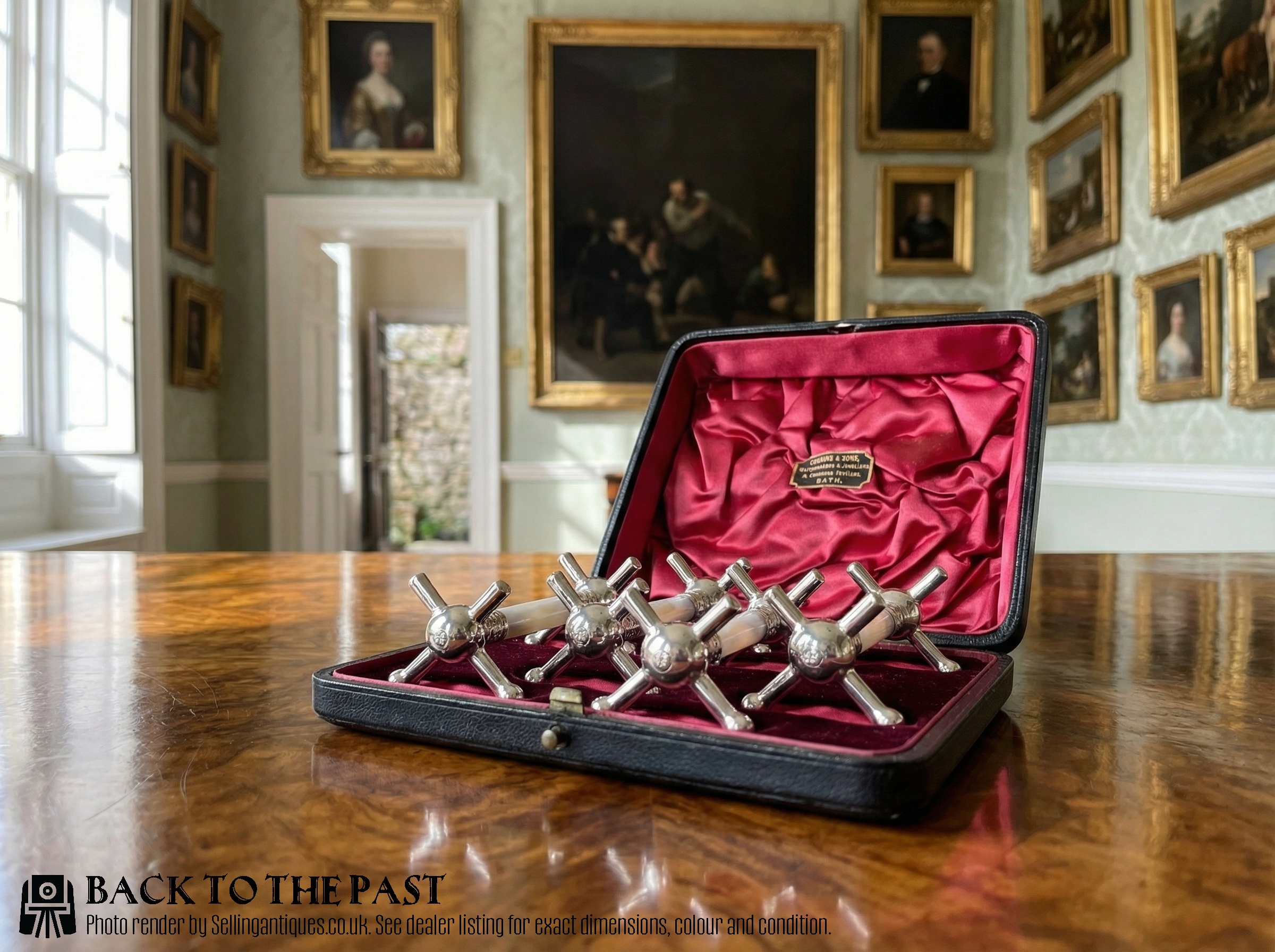
Antique Silver Knives
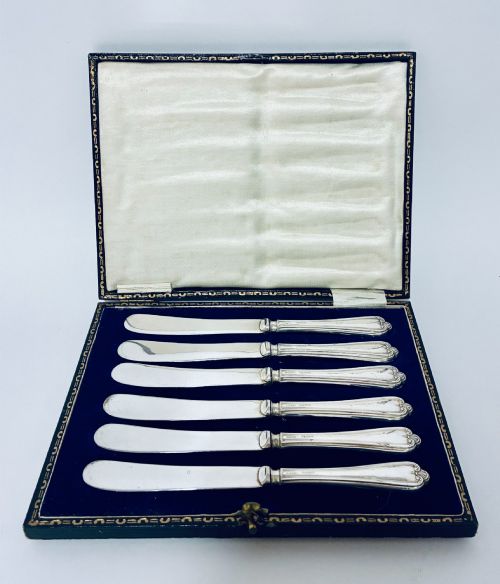
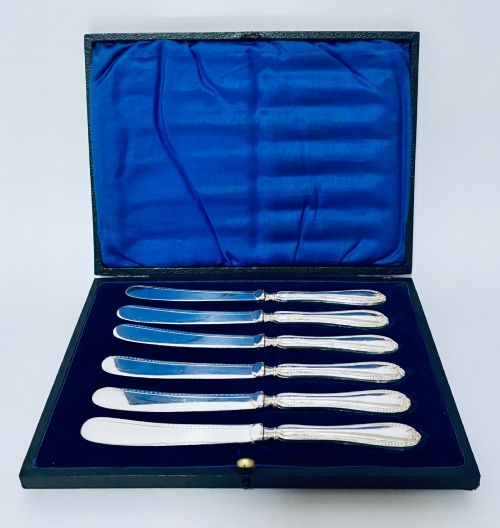
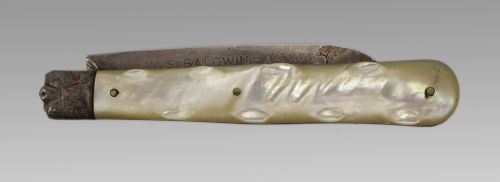
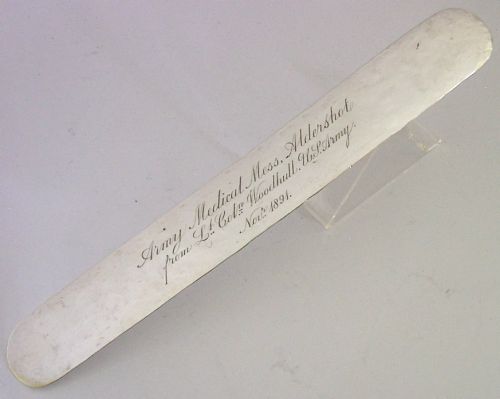
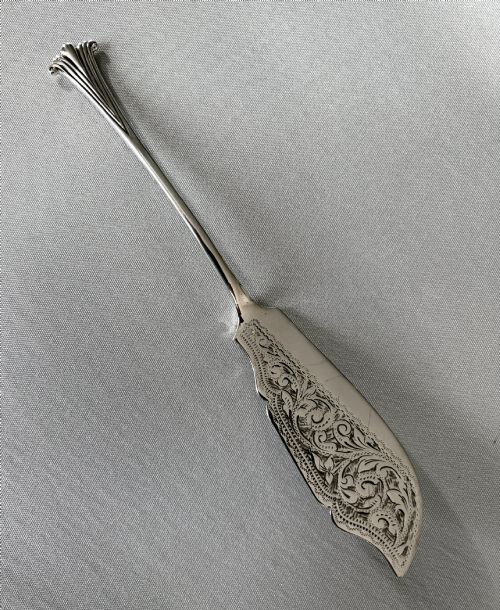
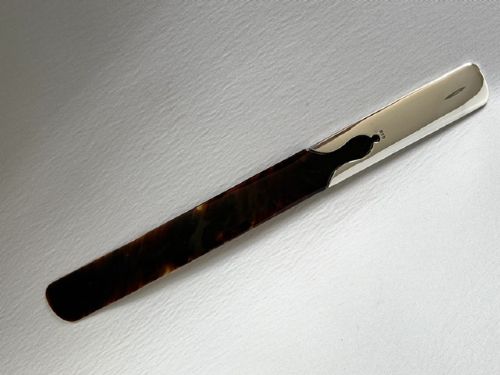
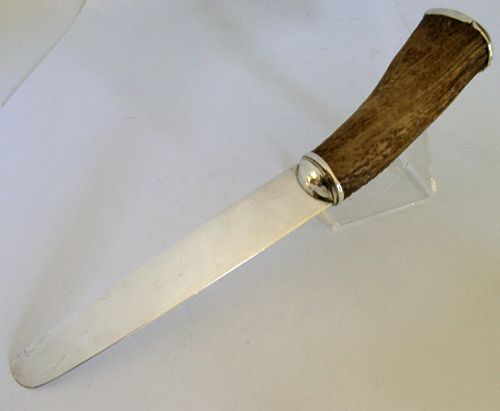
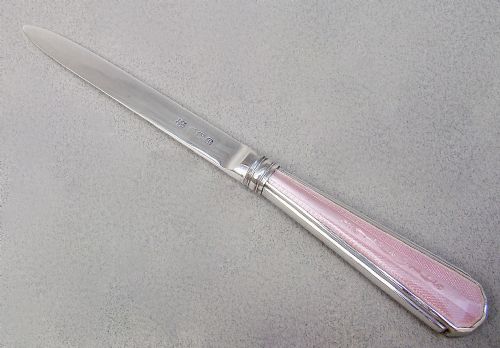
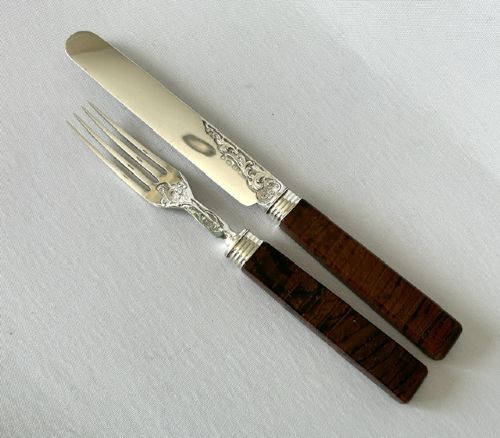
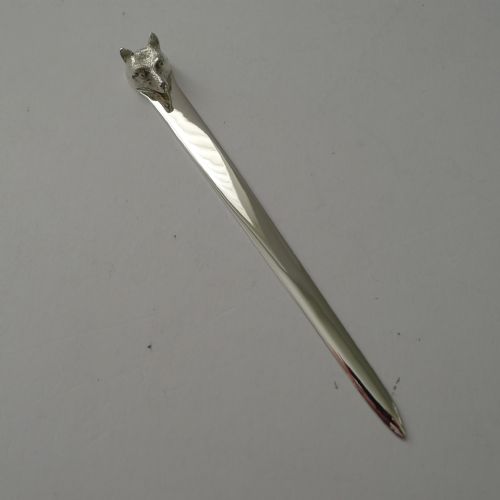
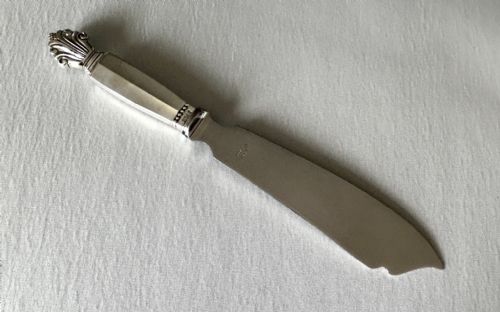
The heading covers a family of small implements rather than one object. Butter knives, mother-of-pearl-handled fruit and dessert knives, cake and wedding cake knives, fish knives and servers, folding pen knives, letter openers and paper knives, and the knife rests that go with them. Some have silver blades, others a silver handle on a steel blade.
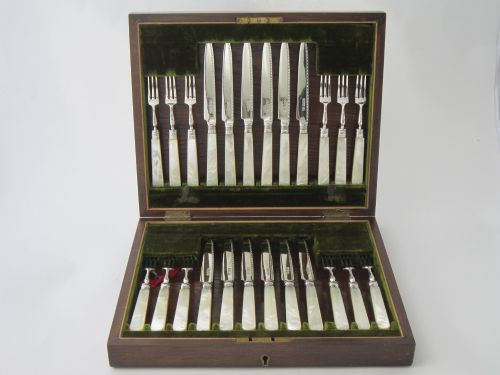
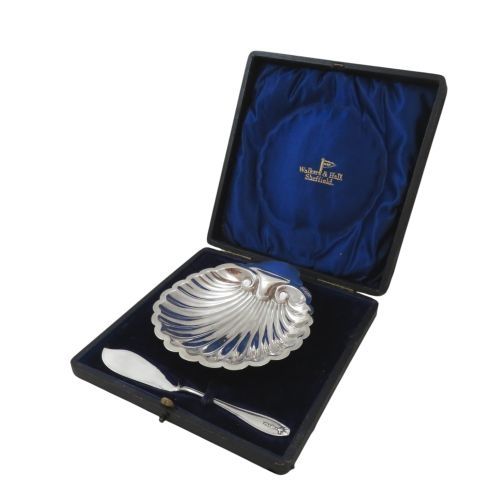
The butter knife is the single commonest thing under the heading, with butter named in around a quarter of all titles, and it runs from a single blade to cased sets of six butter dishes with matching knives. Close behind come fruit and dessert knives with mother-of-pearl handles, which make up the bulk of the cased sets, often in boxed sets of twelve knives and forks.
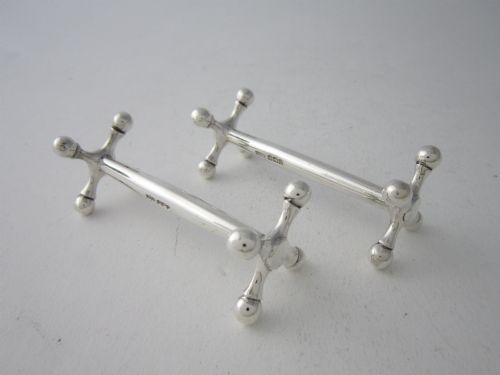
Singles, pairs and sets of six or twelve all turn up regularly. Knife rests form a sub-category of their own, sold in pairs and larger sets, in cut glass, bone, ivory and figural animal forms. Letter openers and paper knives are a smaller share of what has sold but a large share of what is listed now.
Dates run from the middle of the 18th century to the mid 20th, with Victorian pieces the largest group, then Edwardian, then the early decades of the 1900s. Many listings carry an era label rather than a year, so a Victorian entry may sit anywhere across sixty-odd years, while titles often give a precise assay year. Sheffield is the most-named assay office, ahead of Birmingham and London. A visible minority is silver plated rather than sterling.

The Range
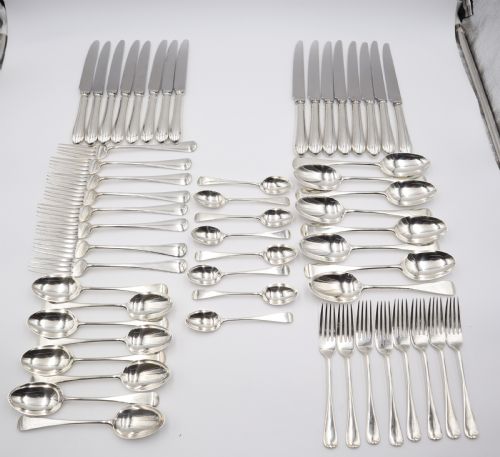
Metal sets the floor. Sterling and solid silver appear in far more titles than plated, and the cheapest things in the category are plated: a pair of plated knife rests, a plated cake knife. The top of the range isn't really a knife at all but a full canteen or flatware service that happens to include them.
After that it's completeness. Single butter and fruit knives cluster at the bottom; sets of twelve fruit knives and forks, fish canteens and matched services sit at the other end. An original fitted case counts for a good deal, and cased or boxed pairs and sets consistently sit above loose equivalents.
Two other things lift a piece. A named pattern or an out-of-the-way assay office gets flagged in titles as a point of interest, with Kings, Queens, Onslow, Fiddle, Albany, Coburg and Grecian all named, and Chester, Glasgow, Edinburgh, Inverness, York, Cork and Dublin marks turning up against a Sheffield majority. So does figural modelling: owl, fox, duck and greyhound letter openers, lions, bulls, sphinxes and rams as knife rests.
Antique Silver Knives Retail Price Guide 2026
Typical UK retail prices for silver knives, calculated from the Sellingantiques database of over a million retail prices indexed since 2003. This retail price guide relies exclusively on Sellingantiques data; no external sources or auction records are used, so the figures do not describe the wider market.
Victorian is the period label used most on Sellingantiques for silver knives, with Edwardian next and the 1900s third.
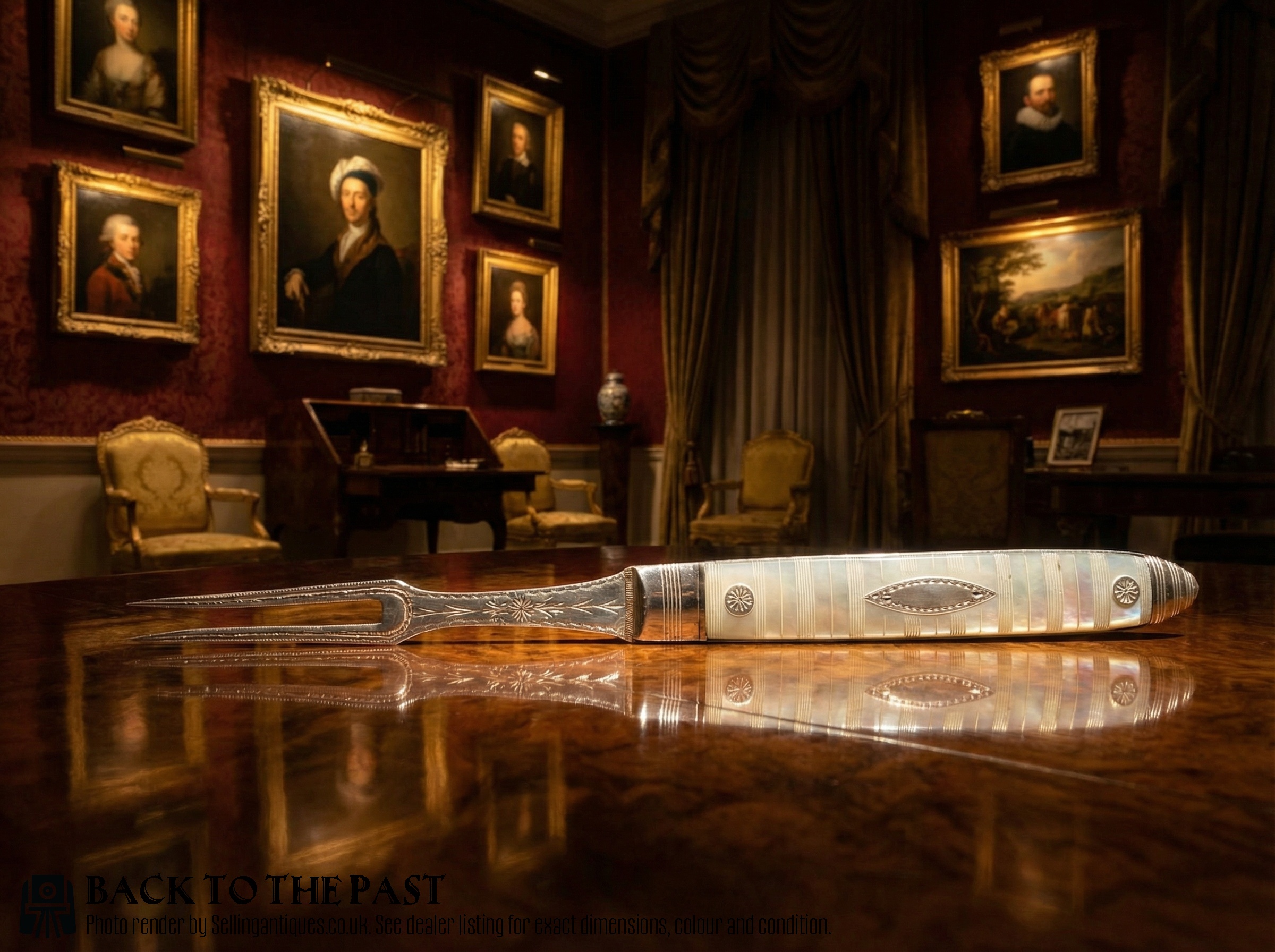
The Antique Silver Knives Glossary
- Silver handled
- A silver grip with a blade of another metal, used in a good many titles and distinct from an all-silver or silver-bladed knife.
- Silver bladed
- The cutting part itself is silver, usual on fruit, butter and cake knives, and the reason fruit knives were made this way in the first place.
- Mother of pearl
- Nacre handle material, abbreviated MOP in many titles, and the commonest handle named across the fruit and dessert knives.
- Cased or boxed
- Sold in its fitted retail case. Both words are used freely across the category, and a set with its case sits above the same set loose.
- Ferrule
- The metal collar joining handle to blade. Some sets are described as having silver or silver-plated ferrules only, the rest of the piece being something else.
- Butter shell
- A shell-form dish sold with its matching butter knife, one of the recurring forms behind the butter count.
Antique Silver Knives: Frequently Asked Questions
What kind of knife turns up most often?
Butter knives. Butter is named in about a quarter of all titles under this heading, and they appear as singles, as pairs, and in cased sets with matching dishes.
Mother-of-pearl-handled fruit and dessert knives are the other large group, and they account for most of the boxed sets.
Are knife rests part of this category?
Yes, and they make up close to one in eleven titles. They're sold in pairs, sets of six and sets of twelve.
Materials include cut glass, bone and ivory. The figural ones get adventurous: rampant lions, longhorn bulls, goats, rams, sphinxes, butterflies and ducks, and a set of twelve French Art Deco rests illustrating Aesop's Fables.
How old are most pieces listed?
The dealer date field runs from 1750 to 1960. Victorian is the largest single group, followed by Edwardian and then the 1900s, 1920s and 1930s decade tags, with Georgian a smaller presence.
Titles reach further at both ends, including a filigree knife and fork set in a shagreen case described as late 17th century, and commemorative letter openers dated 1953 and 1962.
Is everything under this heading solid silver?
No. Sterling and solid silver dominate, but a visible minority is silver plated, and plated pieces are named as such in titles.
Old Sheffield plate, fused silver on copper, shows up mainly on knife trays and earlier plated items.
Which assay offices appear on these knives?
Sheffield leads by a wide margin in titles, with Birmingham next and London after that.
Provincial and foreign marks are the outliers, with single appearances for Inverness, Oban, York, Cork, and for Maltese, Russian, Egyptian, Danish and Dutch work.
Do unusual combination knives come up?
They do, though each seems to appear once and then not again. A fruit knife with a button hook, a knife with a pencil, a cigar cutter and knife, a watch pen knife with key.
Also recorded: a silver swiss army knife, a bloodletting fleam set, and a paper knife with a perpetual calendar.