

Antique Silver Cutlery
Silver and silver-plate eating and serving implements, from a single spoon to a boxed canteen for twelve, made for the table.
Antique Silver Cutlery
Two things sit under the heading. Solid silver, usually described as sterling, and electroplate, where silver covers a base metal. Around a quarter of titles on Sellingantiques say sterling, and a smaller run say plated or plate, so both turn up as you scan.
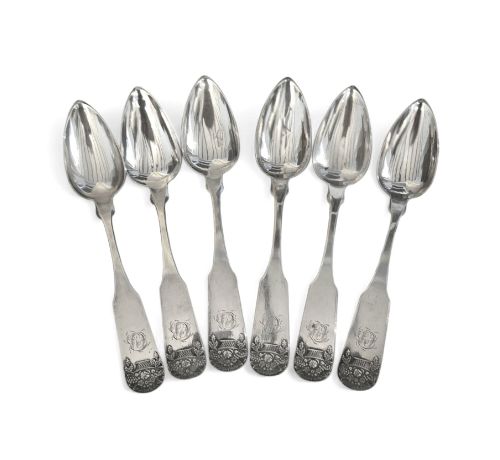
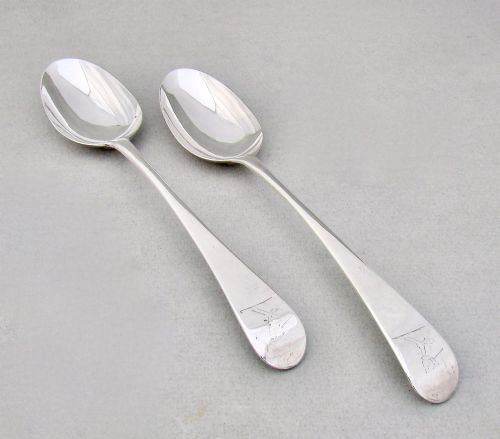
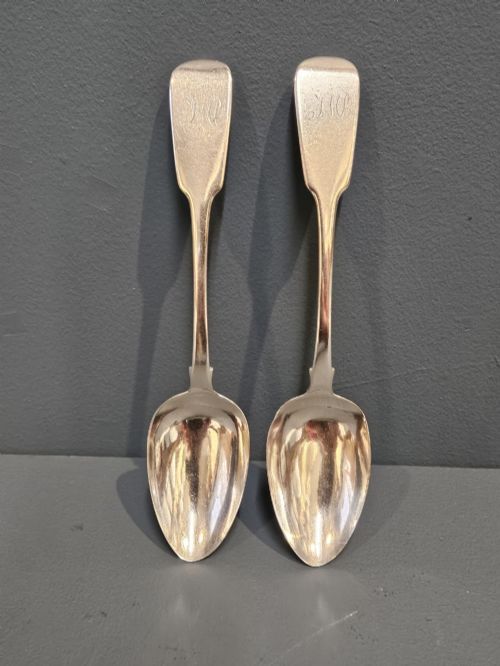
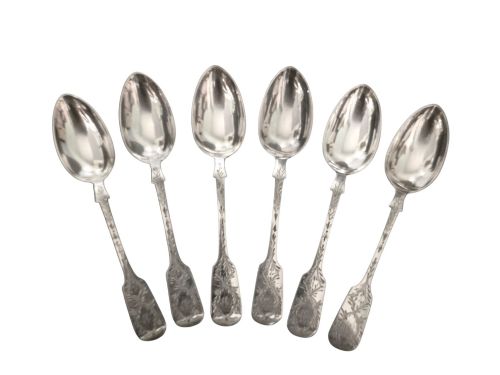
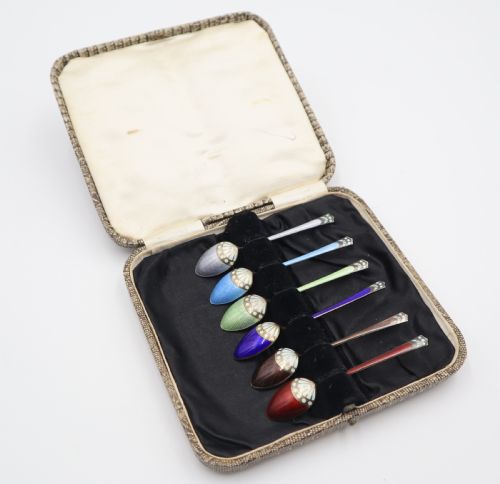
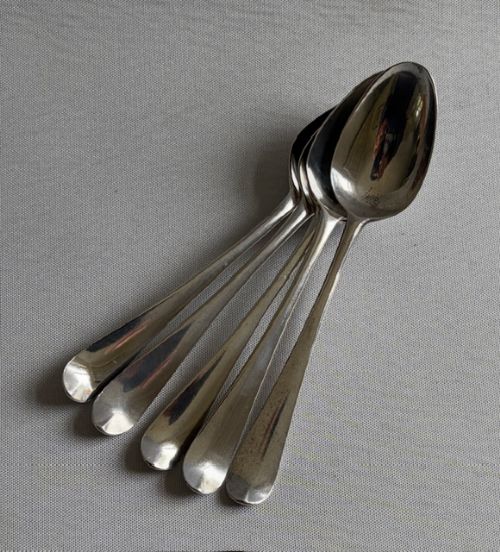
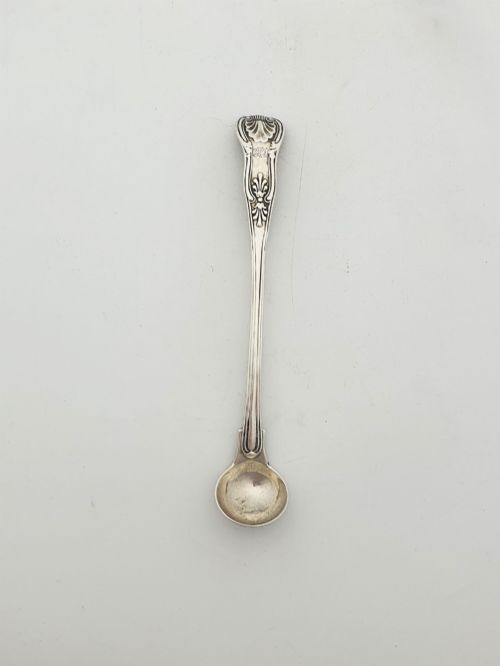
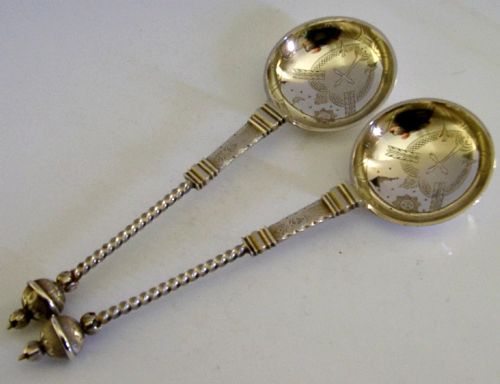
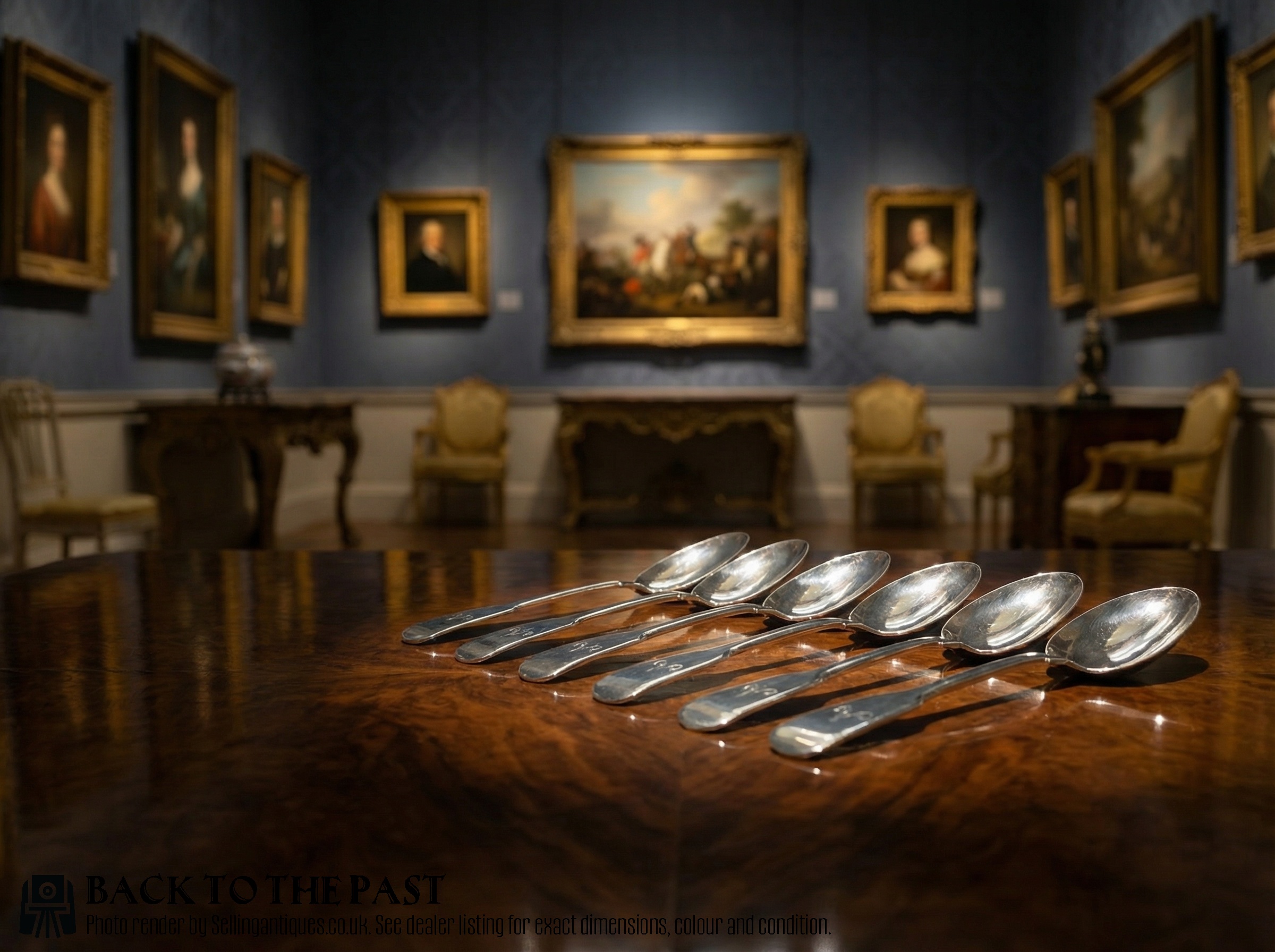
The most likely encounter is a spoon, on its own or in a pair or a set of six. Teaspoons, coffee spoons, salt spoons, caddy spoons, christening spoons, novelty golf and card-suit spoons, enamelled souvenir spoons. Spoon or spoons appears in well over a hundred of the 457 listings, and pair in sixty-seven.
Behind the small pieces sit the cased services. Canteen appears in sixty-seven titles, with sets sampled at 112, 115, 151, 154, 158 and 169 pieces, some in oak or mahogany chests, one fitted into a walnut side table. Named patterns cluster here, fiddle and Kings most often, with Queens, Hanoverian, Old English and Coburg also named.
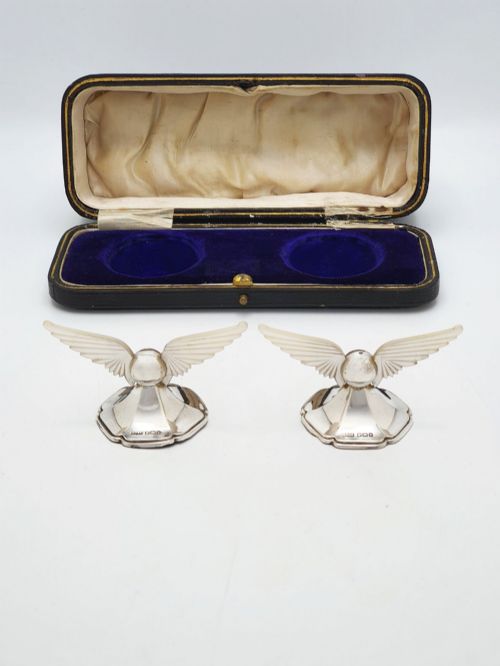
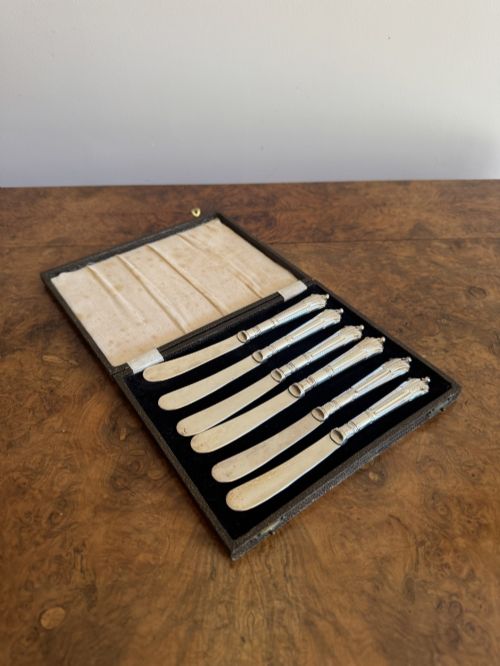
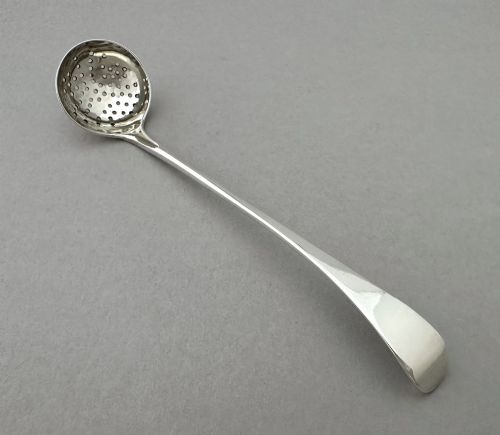
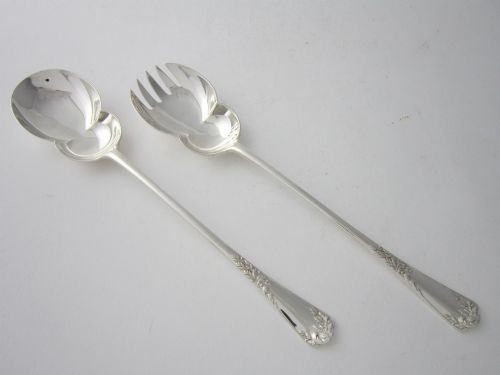
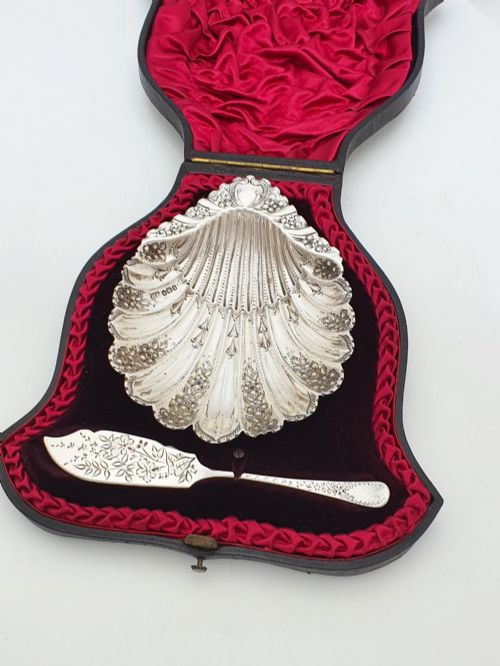
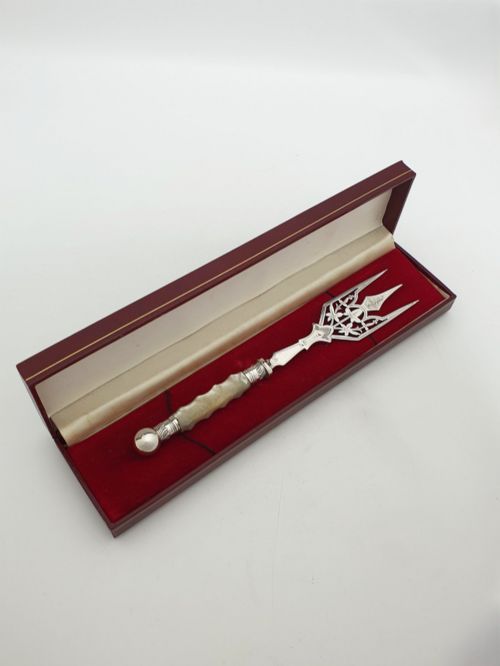
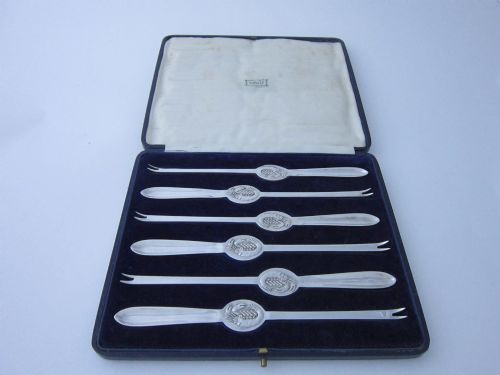
Then the specialists and the accessories: fish servers, berry and basting spoons, marrow scoops, grape scissors, sugar and asparagus tongs, stilton scoops, lobster picks. Knife rests are a small market of their own, thirty-two titles in sterling, plate, cut glass, jade, agate, marble and antler. Dessert cutlery with mother-of-pearl handles runs through twenty-five titles.
What Moves The Range
Metal first. Solid sterling sits above plate, and the plated canteens in this sample sit well below sterling ones with a comparable piece count. After that, completeness. A full service for twelve or more, in its original fitted case, occupies the top of the range, and a named pattern with the case that came with it counts for more than loose pieces of the same design.
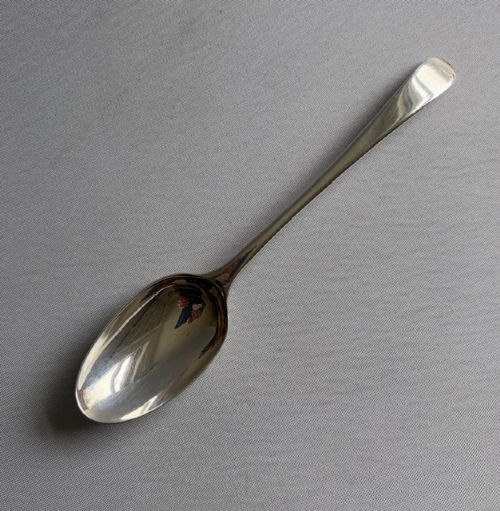
Age lifts single items past whole sets. Early spoons reach far above ordinary Victorian and 1930s ones: seal top and slip top examples dated 1577 to 1655, trefids from 1680 to 1697, dognose spoons around 1699 to 1711. A single spoon of that date can outrun a Victorian set several times its weight.
Weight and origin do the rest. Dealers quote grammages as a selling point, from 38g on a knife rest up to 3,138g on a canteen, and heavy gauge pushes upward. London and Sheffield account for most named assay offices, so Exeter, Chester, Newcastle, York, Inverness, Oban, Dublin and Edinburgh marks stand out when they surface.
Antique Silver Cutlery Retail Price Guide 2026
Typical UK retail prices for silver cutlery, calculated from the Sellingantiques database of over a million retail prices indexed since 2003. This retail price guide relies exclusively on Sellingantiques data; no external sources or auction records are used, so the figures do not describe the wider market.
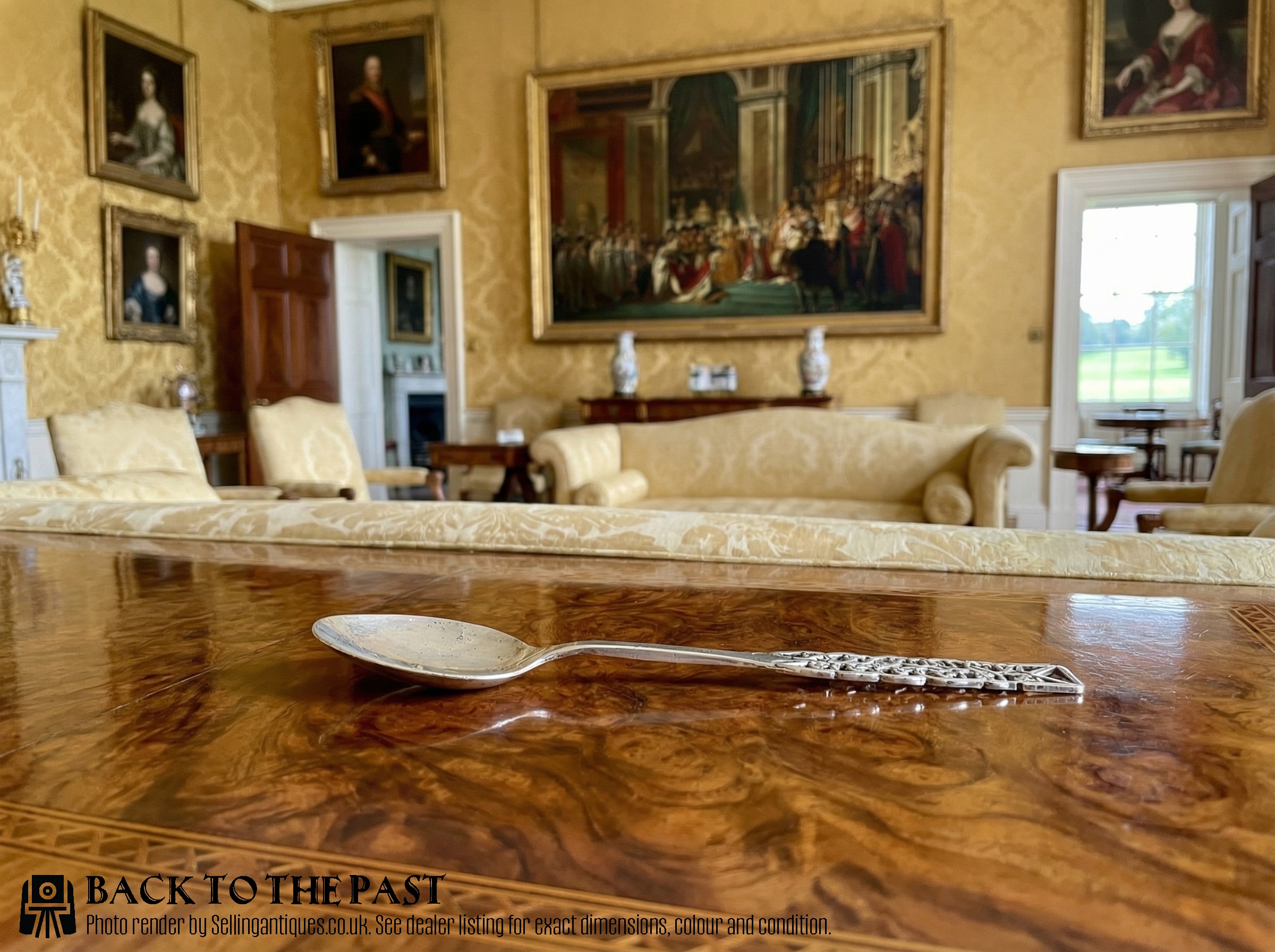
Early spoon shapes carry their own names: seal top, slip top, trefid and dognose, the last for the little rounded end of its handle.
The Antique Silver Cutlery Glossary
- Canteen
- A matched service in a fitted case, chest or table. Sixty-seven titles use the word, and the sets behind it run from a few place settings to 169 pieces.
- Sterling
- The 925 silver standard, and the most common single term in these titles. Solid appears alongside it, doing much the same job.
- Pattern
- The handle design a service is made in. Fiddle is the most-named here, a plain waisted handle with a shouldered stem, followed by Kings, with Queens, Hanoverian, Old English and Coburg also appearing.
- Trefid
- A late seventeenth-century spoon end split into three lobes. Sampled examples carry dates between 1680 and 1697.
- Marrow scoop
- A long implement with a narrow trough, for bone marrow. Eleven titles, almost all labelled Georgian or 19th Century, one of them reversed and double-ended, dated 1751.
- Provincial
- Assayed outside London. Exeter, Newcastle, Chester, York, Inverness and Oban all appear, each only once or twice.
Antique Silver Cutlery: Frequently Asked Questions
Is silver plate included in this category?
Yes. Electroplate sits in the same category as solid silver, and forty-two titles say plated with another fourteen saying plate. Plated fish sets, lobster picks and full canteens all appear.
Old Sheffield plate shows up only two or three times in the whole sample, and mainly as knife trays rather than cutlery.
How old are the oldest pieces?
The period field runs from 1700 to 1960, but titles reach further at both ends. A London spoon dated 1577 is the earliest piece in the sample.
At the other end, a set of grape shears dated 1968 is among the latest. Titles often carry a hallmark year, so they date a piece more closely than the period label does.
Which patterns come up most often?
Fiddle leads the named patterns in these listings, with eleven titles, and Kings follows. Queens, Hanoverian, Old English and Coburg turn up too, along with Athenaeum and Wellington.
Pattern names cluster around canteens and larger sets, where the whole service shares one handle design.
What counts as a specialist serving piece?
Fish servers, berry spoons, basting spoons, marrow scoops, grape scissors, sugar tongs, asparagus tongs, stilton scoops and lobster picks. Serving appears in thirty-five titles, servers in fifteen.
They come singly and in pairs as often as in sets, and dessert, fruit, butter and sugar all recur as descriptors.
Are these listings all British silver?
No. Non-British silver is a steady thread. French appears in twelve titles, Scottish in fourteen and Irish in eleven.
Beyond that, single Chinese export, Belgian, Norwegian, Swedish, Danish, German, Dutch, Swiss, Russian, American and Australasian pieces all surface, including a German canteen for twelve weighing 3,138g.
Do makers' names define this category?
Not on this evidence. Around forty-four listings a year come from more than a hundred dealers, and no firm's name recurs often enough to stand for the category.
Where names do appear, they appear as one-offs, stamped, on a case label, or given as an attribution.