


Antique Silver Tea Caddies
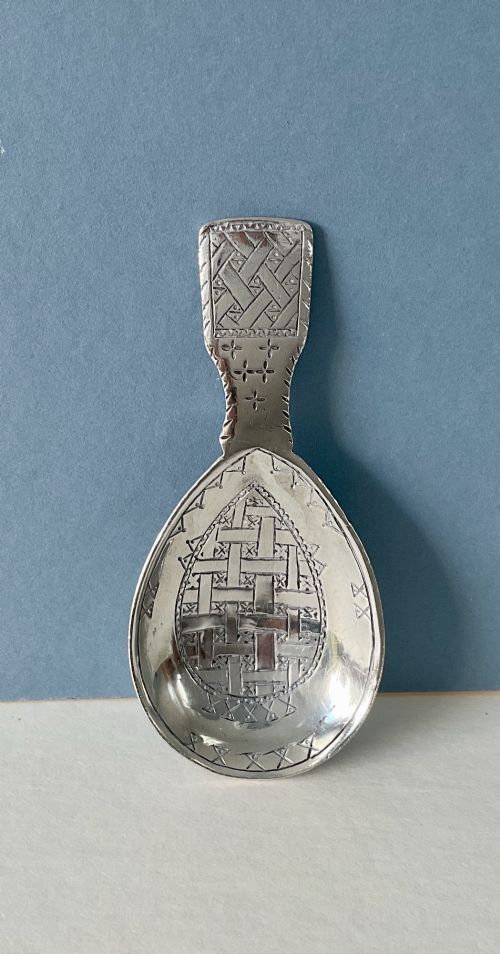
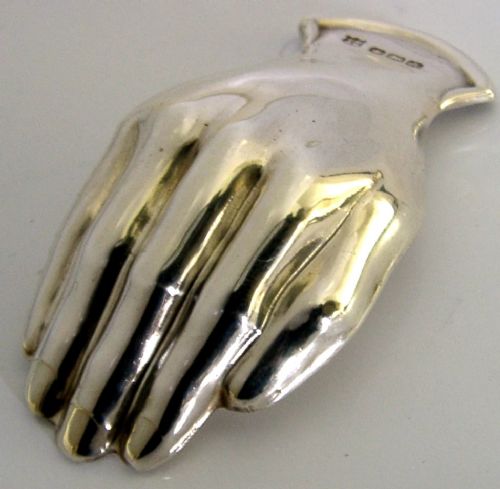
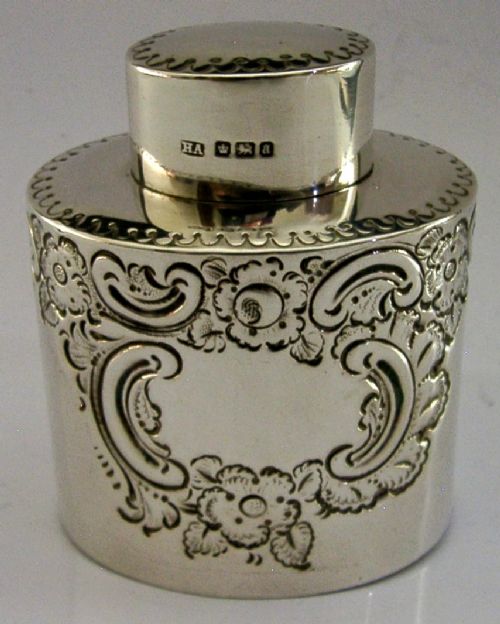
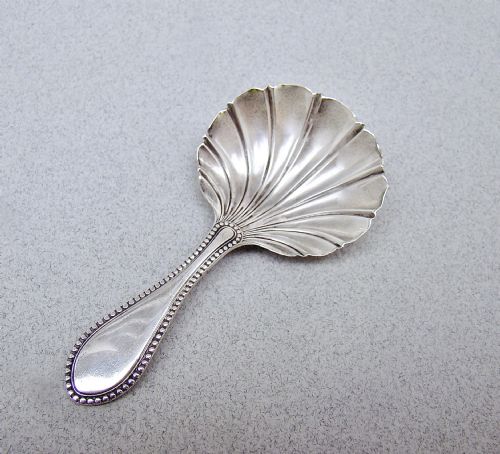
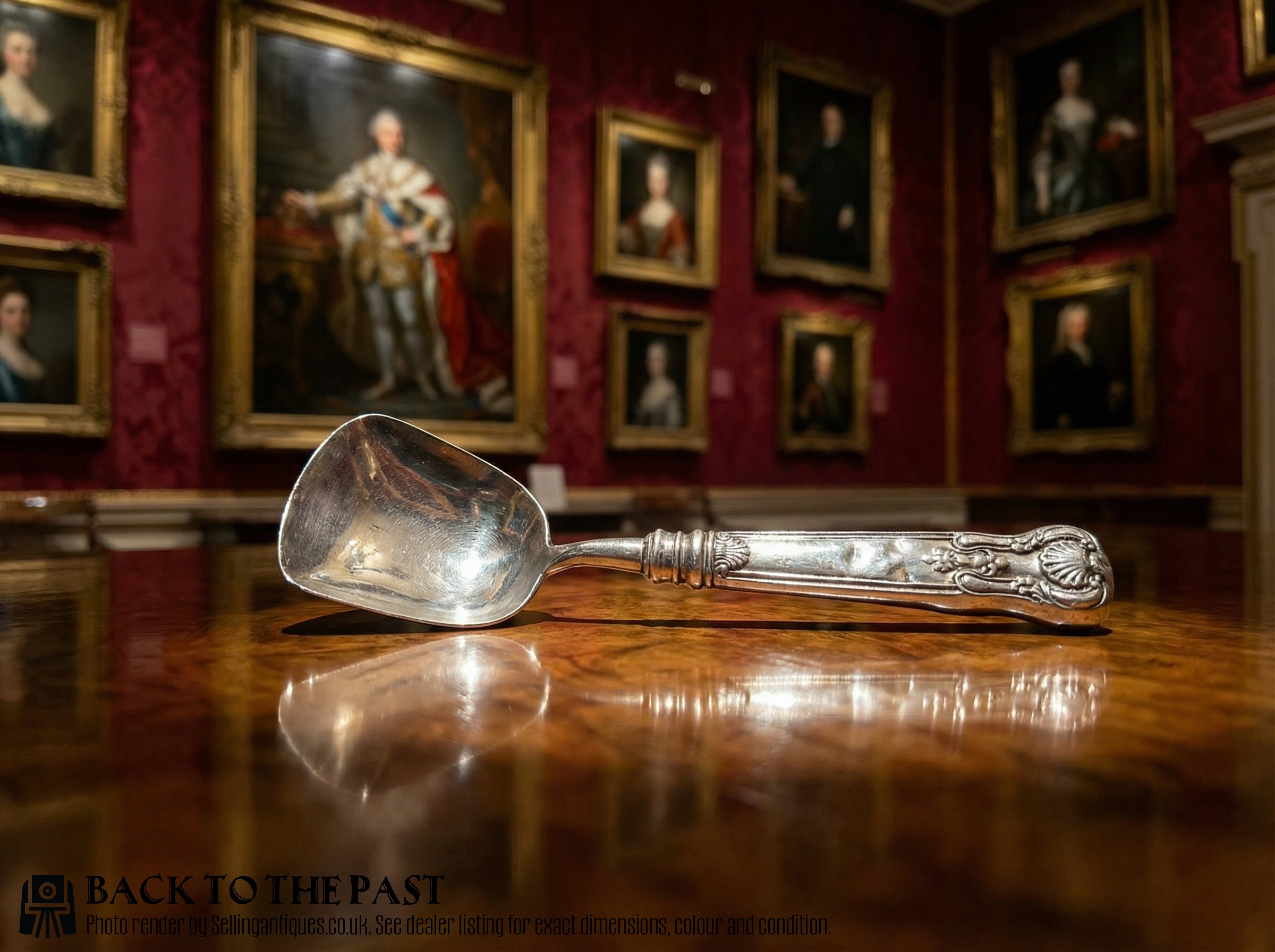
A lidded silver box for dry tea leaf, or the short-handled spoon used to measure it out, both made in Britain from the days when tea was kept locked away.
Antique Silver Tea Caddies
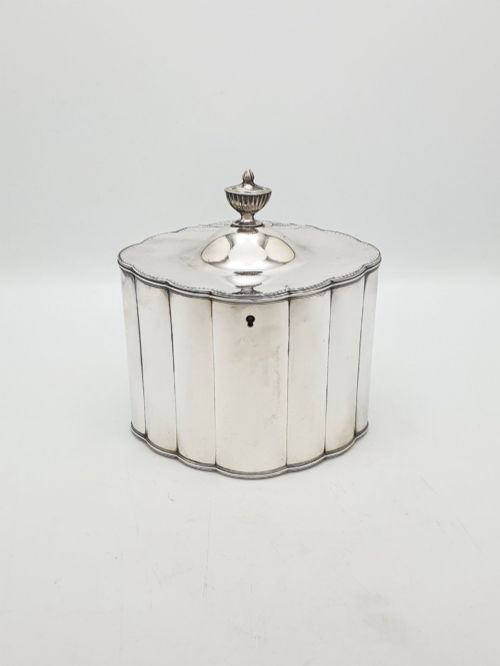
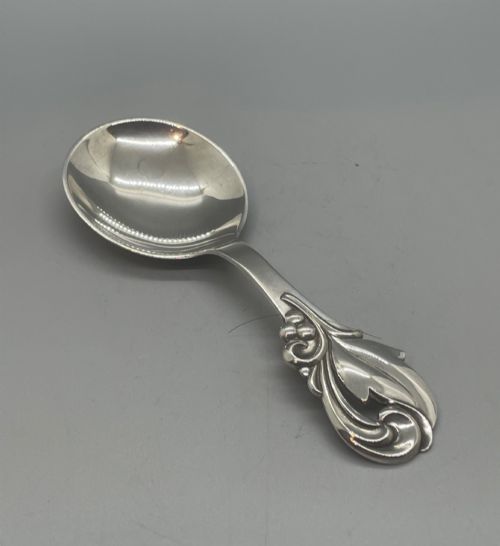
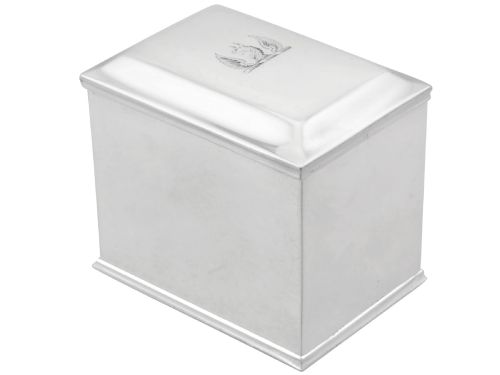
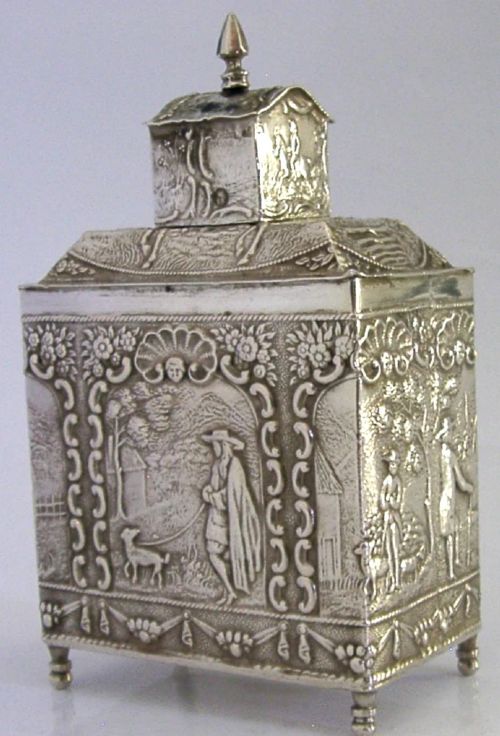
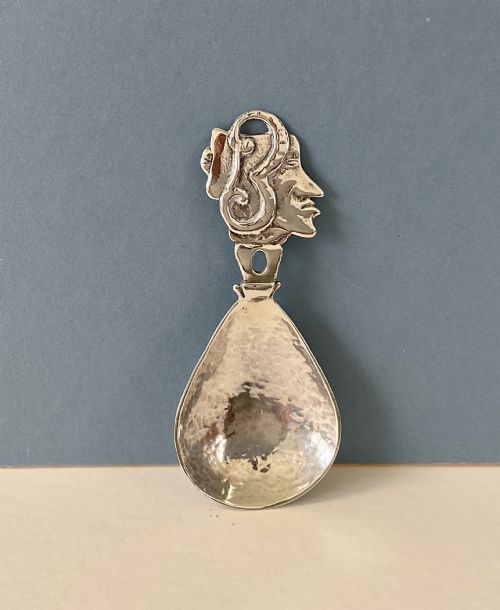
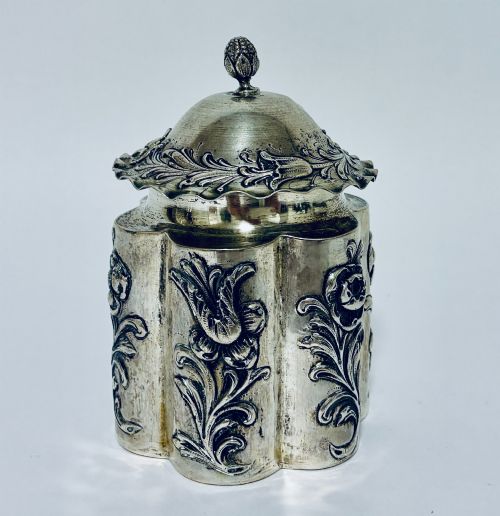
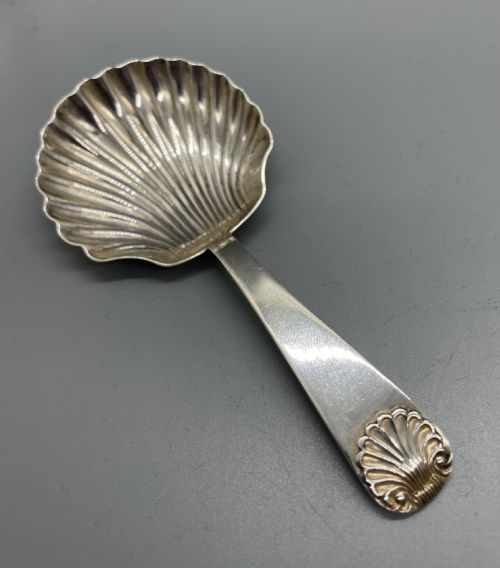
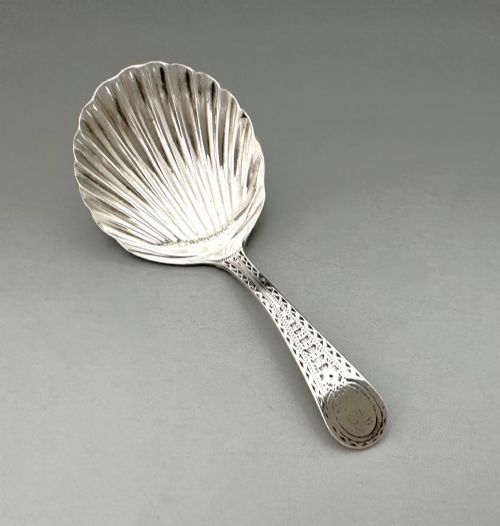
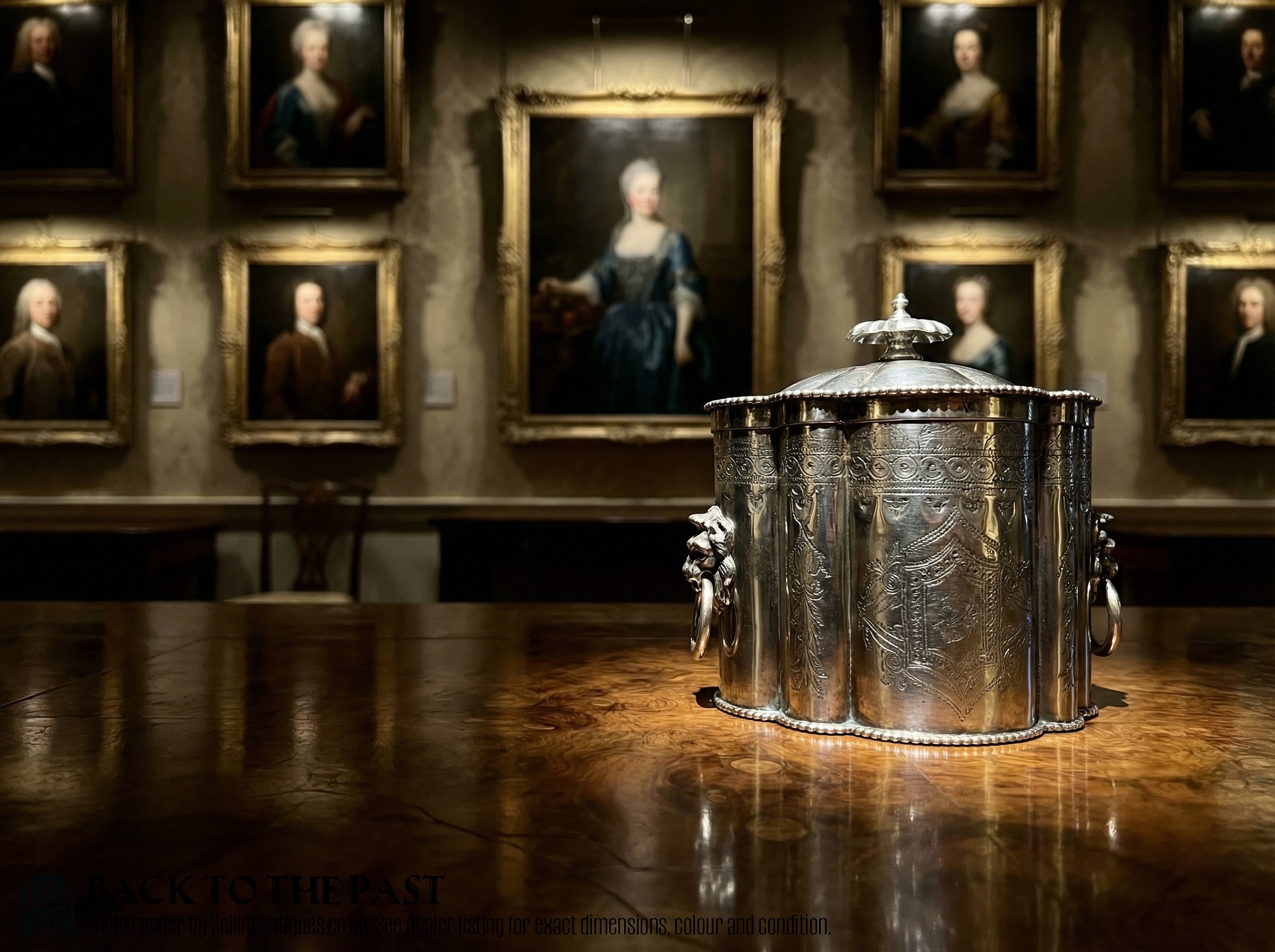
Two different objects share this heading. One is the caddy itself: a lidded box, canister or oval container for dry tea, with a pull-off or hinged lid and sometimes a lock. The other is the caddy spoon, the short-handled scoop for lifting leaf from caddy to pot.
Lidded caddies came into British use from the later 17th and 18th centuries, when tea cost enough to be worth keeping in a small locked container. The caddy spoon appeared as a separate article later in the 18th century, and it now accounts for a quarter of the archive and over half of live stock on Sellingantiques.
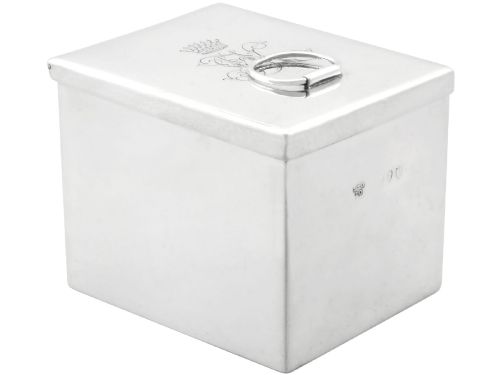
The commonest single thing a buyer meets is a small hallmarked English sterling box of the Victorian or Edwardian decades, London, Sheffield, Chester and Birmingham all turning up as assay towns. Weights quoted in titles for these boxes tend to sit between 100 and 200 grammes. Georgian pieces are fewer.
Around one in eight listings is silver plate or Old Sheffield plate rather than sterling, the fused-plate examples dated across c1775 to about 1840. A visible minority is Continental, colonial or export work, and a few biscuit boxes, sugar boxes and dressing-table boxes sit inside the category too. Era labels are dealer shorthand; the hallmark year quoted in a title is the firmer figure.

What Separates Them
Metal sets the floor. Titles that say plated or plate cluster at the lower end, and the Old Sheffield plate run sits there as a group. Hallmarked sterling and solid silver run through the middle and the top, and among those boxes weight does the sorting, with heavy and heavy gauge attaching only to the dearer pieces.
Date does the rest. The highest-placed caddies carry 18th-century hallmark years, 1726 through the 1750s, 1760s and on to the 1790s, while Edwardian boxes cluster in the middle of the range. The far end is held by Japanese work: a silver-and-enamel natsume, with a second silver natsume elsewhere in the archive.
Shape lifts a piece above a plain oval or rectangle. Jockey cap, paint tin, knife box, basket-weave, troika sledge, figural and locking forms all sit higher. So does completeness: pairs and graduated pairs, a caddy with its fitted spoon, cased examples, and one canister set with a shagreen case and accessories.
Antique Silver Tea Caddies Retail Price Guide 2026
Typical UK retail prices for silver tea caddies, calculated from the Sellingantiques database of over a million retail prices indexed since 2003. This retail price guide relies exclusively on Sellingantiques data; no external sources or auction records are used, so the figures do not describe the wider market.
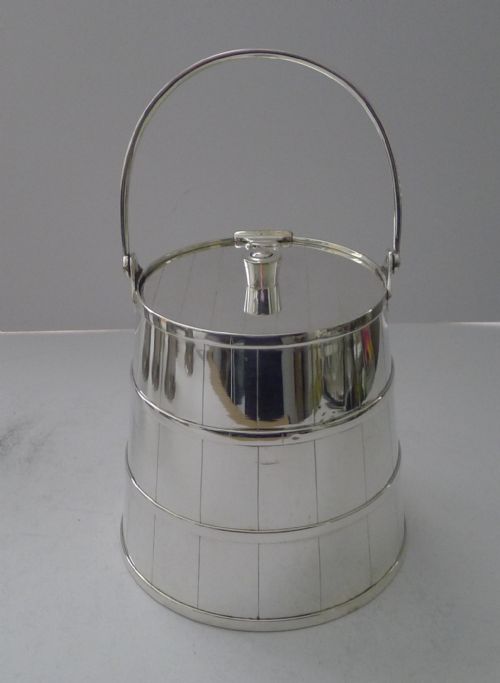
Novelty shapes turn up once in a blue moon: a paint tin, a jockey's cap, a knife box, a troika sledge, a tiffin box and a car.
The Antique Silver Tea Caddies Glossary
- Canister
- A caddy of cylindrical or box form. The word turns up in a small number of titles, mostly alongside sterling.
- Solid silver or sterling
- Dealer shorthand for hallmarked silver as against plate. Between them the two words appear in a large share of titles here.
- Old Sheffield plate
- Silver fused to copper, made before electroplating took over. On caddies it is dated across roughly 1775 to 1840.
- Assay office
- The town whose mark is struck on the piece. London, Sheffield, Chester and Birmingham all appear in caddy titles, with Newcastle, Exeter, Glasgow, Edinburgh and Irish marks turning up once or twice.
- Shovel bowl
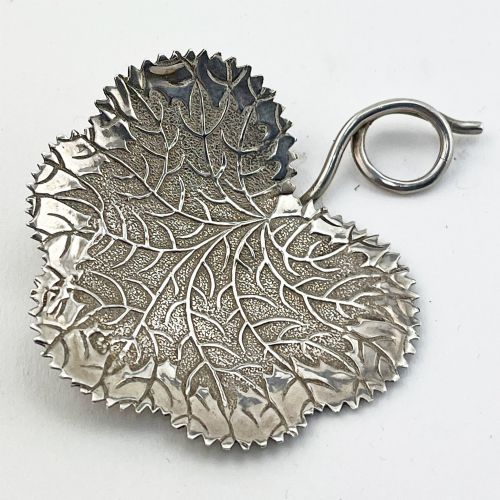
- A broad flat caddy-spoon bowl, recurring on Georgian spoons. Vine leaf, shell, acorn and apostle are the other bowl shapes you meet.
- Natsume
- The Japanese lidded tea caddy form, present in this category in silver and in silver with enamel.
Antique Silver Tea Caddies: Frequently Asked Questions
Are most silver tea caddies boxes or spoons?
Both. Spoons carry the word in a quarter of all titles in the archive, and they make up more than half of what is currently listed on Sellingantiques.
The boxes and canisters are the other half of the story, and the commonest of those is a small hallmarked sterling caddy of the Victorian or Edwardian decades.
What period do these caddies date from?
The dated field spans 1700 to 1950. Fewer than half the listings carry a clean year, and much of the rest is entered by decade or as a reign.
Edwardian and Victorian labels outnumber Georgian. The earliest hallmark quoted in a title is a George I caddy of 1726, with 1745, 1752, 1753, 1755, 1759 and 1762 also present.
How much does a silver caddy usually weigh?
Weights are quoted often enough in titles to compare. Boxes of the Victorian and Edwardian sort tend to cluster around 100 to 200 grammes.
The range runs wider than that. The lightest named piece is a 28g spoon, and the heaviest single caddy stated is 460 grammes, with 328g, 270g and 266g behind it.
Is silver plate common in this category?
Yes, about one in eight listings. Titles say plated or plate, and these sit at the lower end of the range.
Old Sheffield plate forms its own small run, dated across roughly 1775 to 1840, separate from the late Victorian and Edwardian electroplated caddies.
Do foreign silver caddies turn up?
A visible minority, perhaps one in ten. German work appears, along with Hanau, Dutch, Danish, Norwegian 830S, Swedish, Italian and Portuguese pieces.
Colonial and export silver shows up too: Indian, Ceylon, Javanese, Chinese Straits export, American sterling and Japanese natsume.
Which shapes are unusual?
Novelty forms turn up once in a blue moon. Recorded shapes include a paint tin, a jockey's cap as both caddy and spoon, a miniature knife box, a troika sledge, a tiffin box and a car-shaped plated caddy.
Spoons carry the widest vocabulary of all: shovel, apostle, shell bowl, vine leaf, grape leaf, acorn, thistle handle and sifter, with handles of mother-of-pearl, chalcedony and green-stained ivory.