
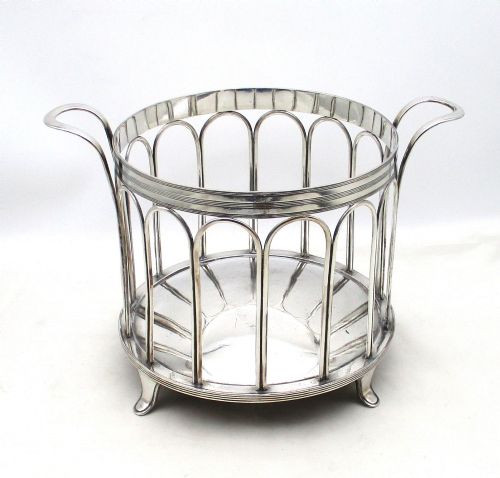
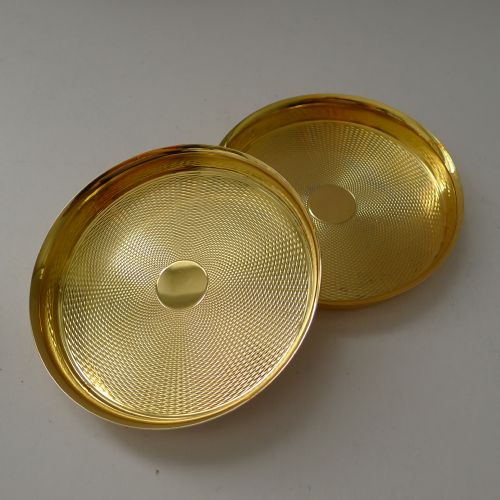
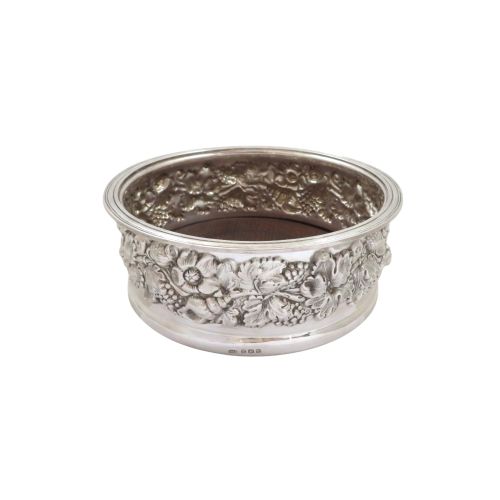
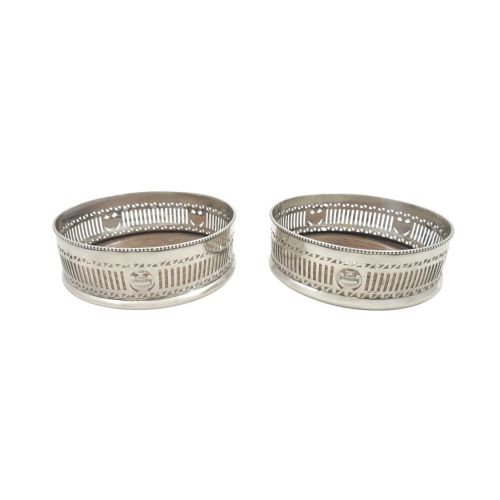

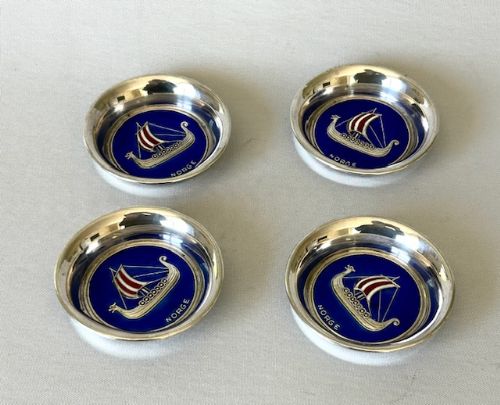


Antique Silver Coasters
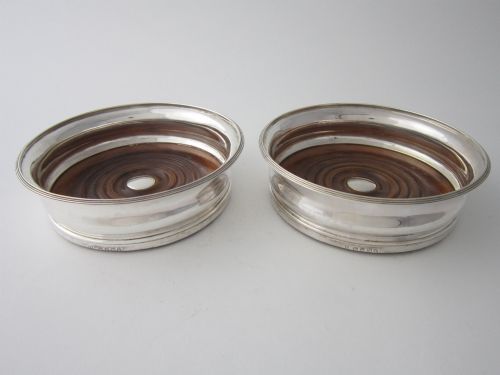
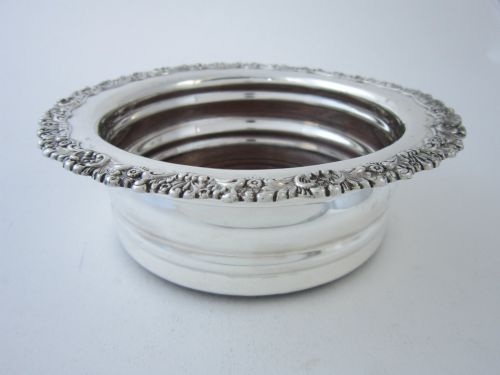
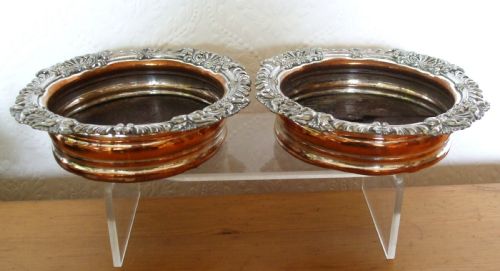
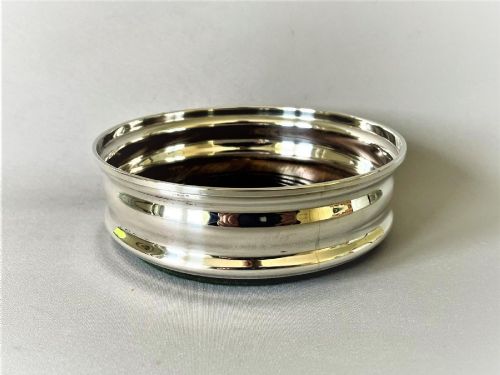
A wine coaster is a shallow circular stand, silver or plated, made to sit a bottle or decanter on the dining table without marking it.

Antique Silver Coasters
The form came into use in Britain in the later 18th century, when the decanter took over from the bottle at dessert. It settled early into a silver or plated gallery over a turned wooden base, and was made in matched pairs and sets so bottles could travel in both directions round the table.
What you meet on Sellingantiques is mostly plate rather than solid silver. Of 401 titles, 142 say plated, another 54 say plate and 29 say Sheffield plate, against 65 saying sterling and 24 solid. Pairs are the norm: 212 titles say pair, and the commonest listing is some form of Victorian or Edwardian silver-plated wine coaster, sold two at a time.
Dates run wider than the Georgian reputation suggests. The dated field spans 1750 to 1960, with 208 listings carrying a clean year, and the 20th century is well represented at 35 from the 1920s and 33 from the 1960s. Mid-century sterling pairs, hallmarked in Birmingham or London, are as regular a sight as Georgian ones. Hallmark years of 1756, 1764, 1796 and 1798 appear in titles, the earliest a London 1756 bottle coaster.
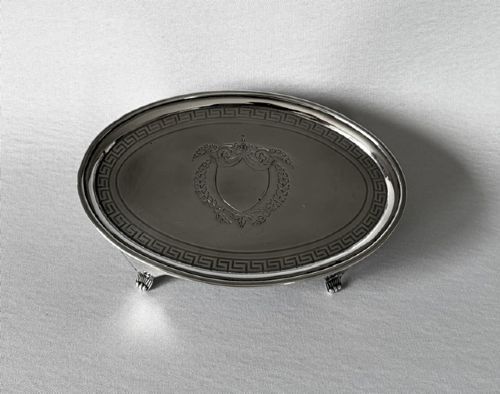
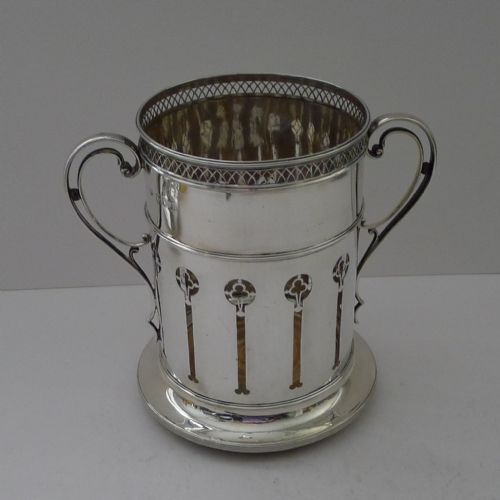
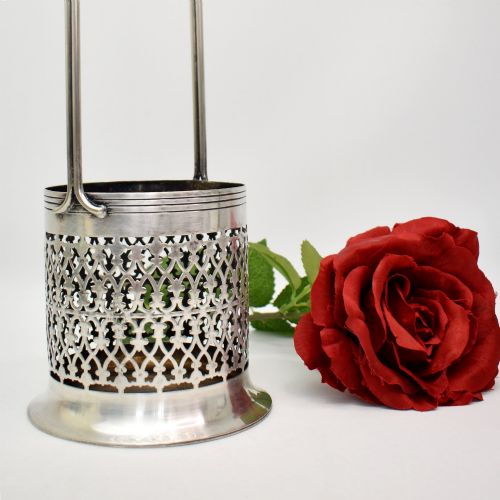
The word stretches to neighbours sold under the same heading. Teapot stands account for 18 titles, and sets of sterling-and-glass drinks mats turn up in fours and sixes. Deeper bottle holders and sleeves appear in 16, magnum coasters in nine, and a handful of wheeled pieces, a wine wagon, a trolley coaster, a double champagne cart, sit well up the range.
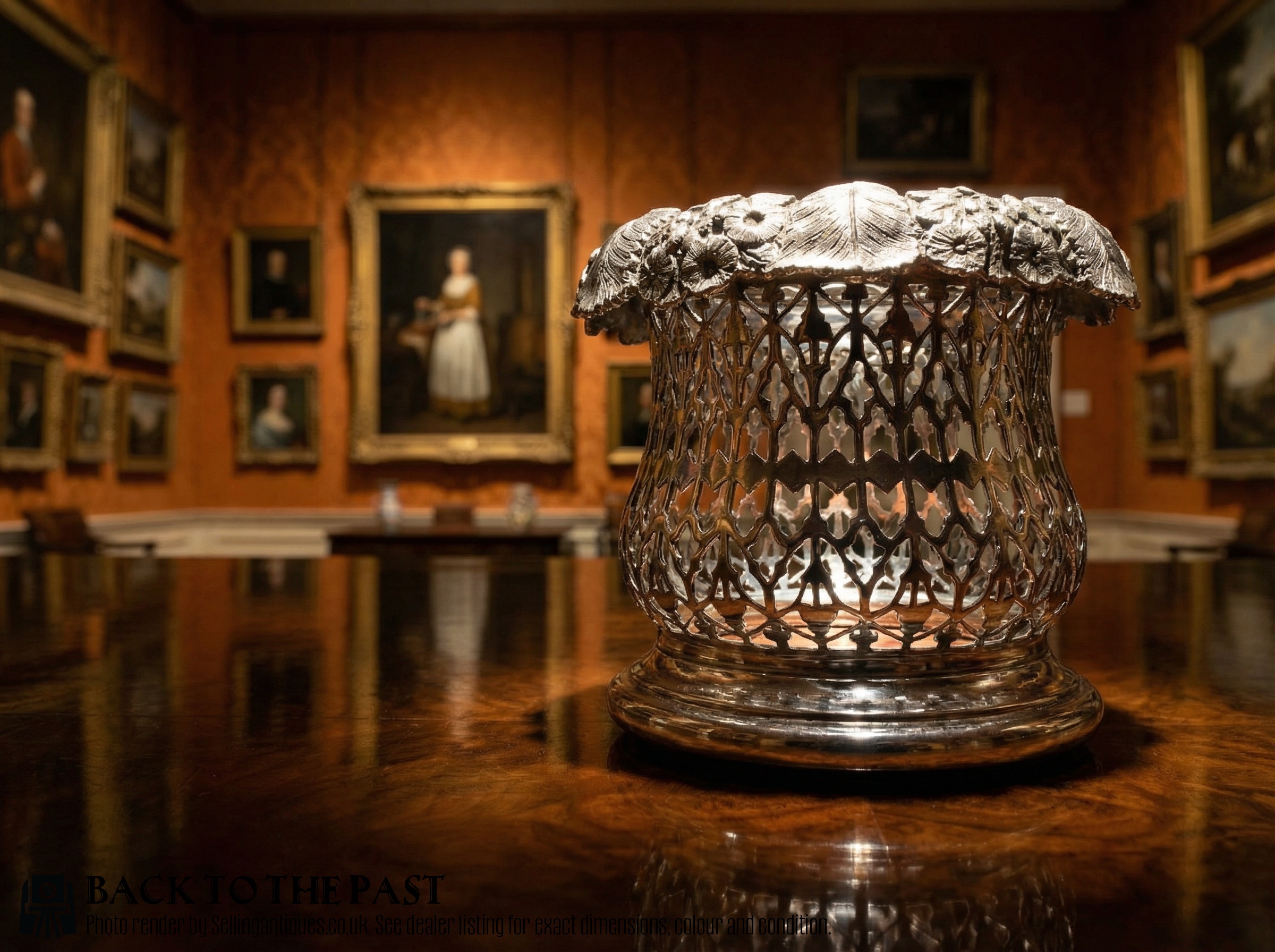
What Separates Them
Metal does most of the work. The upper reaches of the range are almost entirely titles carrying sterling, solid, or a hallmark year, while plated and Old Sheffield plate pairs gather in the lower and middle ground. That holds whether the piece is Georgian or 1960s.
After metal, count. A pair is the standard unit and singles sit at the bottom; sets of three, four, five and six climb from there. Size pulls the same way, with large in 27 titles and magnum in nine, and multiple-bottle stands, one of them holding six, at the top of the sampled range.
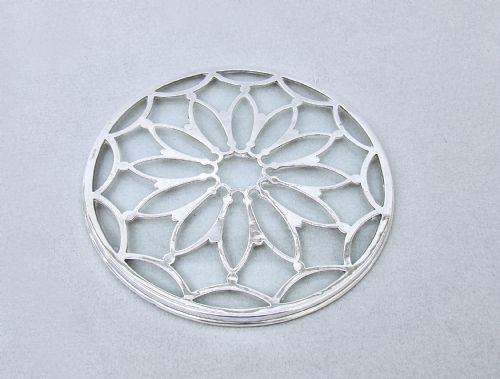
Detail in the title and detail on the gallery both register. Listings that name a maker or an assay town and year, Sheffield 1817, London 1796, Birmingham 1968, sit above those reading only antique bottle coaster. Pierced, cast and reticulated galleries do better than plain ones, and grape and vine is the one motif named often enough to count, across nineteen titles.
Antique Silver Coasters Retail Price Guide 2026
Typical UK retail prices for silver coasters, calculated from the Sellingantiques database of over a million retail prices indexed since 2003. This retail price guide relies exclusively on Sellingantiques data; no external sources or auction records are used, so the figures do not describe the wider market.
The most expensive silver coasters ever sold on Sellingantiques were a pair of sterling silver Victorian wine coasters, in August 2019.
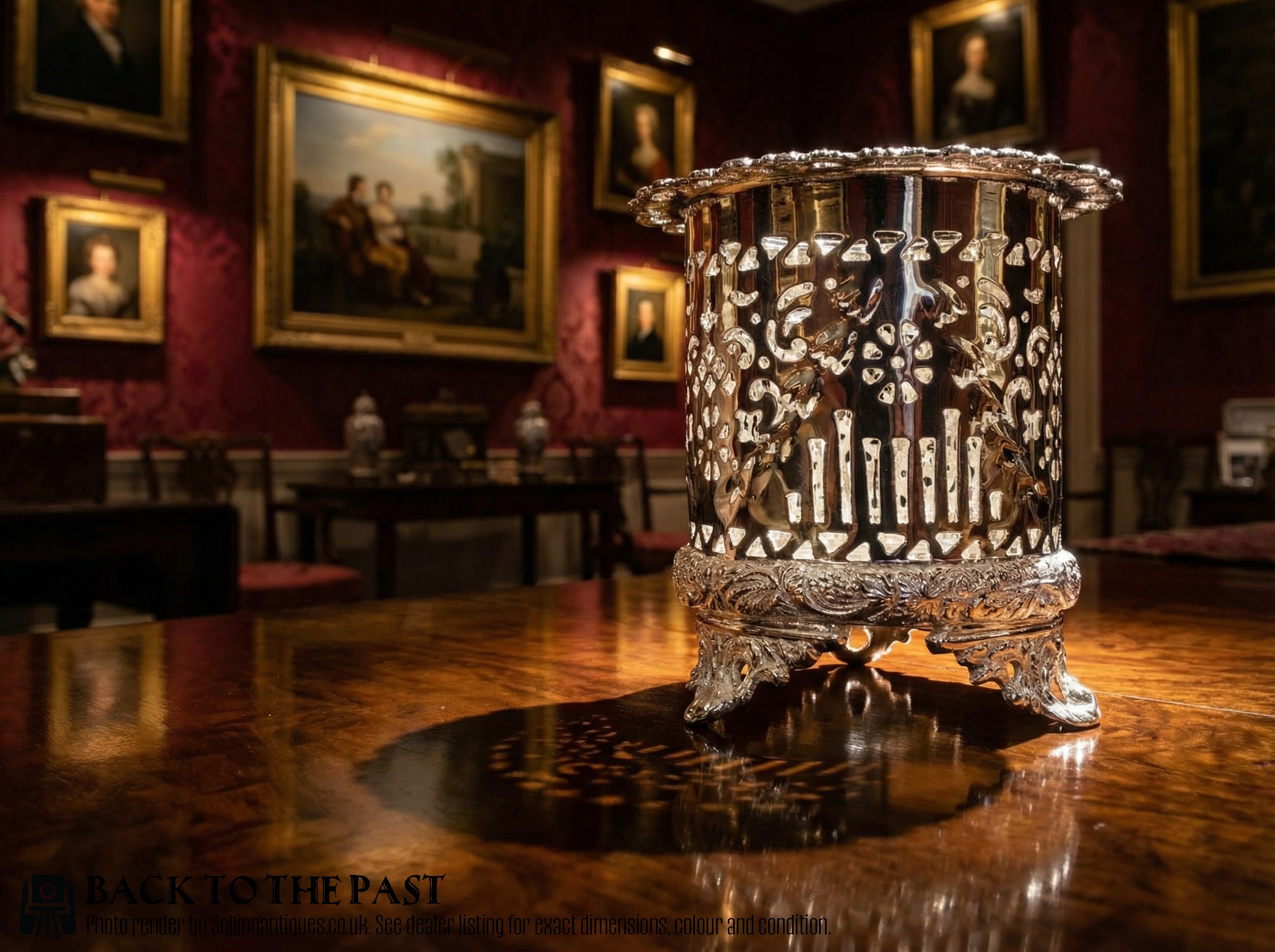
Elkington
The Antique Silver Coasters Glossary
- Coaster
- A shallow stand for a bottle, decanter or glass, meant to slide or be passed across the table.
- Silver plated
- Electroplated silver over a base metal, and the commonest description in this category by a wide margin.
- Old Sheffield plate
- Silver fused onto copper by rolling, used before electroplating; 29 titles carry the term, often shortened to Sheffield plate.
- Sterling or solid
- Hallmarked silver throughout rather than plate; 65 titles say sterling and 24 say solid.
- Turned base
- The wooden disc, mahogany, oak or hardwood in these titles, set into the underside of the gallery.
- Wirework
- A pierced gallery drawn from wire rather than cut from sheet, named in Old Sheffield plate coasters of around 1795 to 1830.
Antique Silver Coasters: Frequently Asked Questions
Are silver coasters usually sold in pairs?
Yes. Pair appears in 212 of the 401 titles, so two at a time is the standard unit, and the form was made in matched pairs so bottles could circulate in both directions.
Singles are common at the lower end. Sets of three, four, five and six also appear, listed as set of four or suite of five.
How much of this category is solid silver?
A minority. Sixty-five titles say sterling and 24 say solid, against 142 saying plated, 54 plate and 29 Sheffield plate.
The sterling group covers two quite different things: Georgian hallmarked coasters, and a large block of 20th-century pairs described as vintage sterling silver wine or champagne coasters.
What period do most of these come from?
The dated field runs 1750 to 1960. Named-period labels are led by 19th Century at 49, then Victorian at 45, Georgian at 39 and Edwardian at 39.
The 20th century holds its own, with 35 listings from the 1920s, 33 from the 1960s and 23 from the 1930s. A buyer meets as many interwar and mid-century pieces as Georgian ones.
Which assay towns appear in the titles?
London, Birmingham, Sheffield, Chester and Edinburgh all turn up. Chester is the rarest, named twice.
Hallmark years quoted in titles include 1756, 1764, 1796 and 1798 at the early end, and 1962, 1965, 1968 and 1969 among the mid-century sterling pairs.
Why are teapot stands listed as coasters?
The heading covers a range of small table stands sold under the same word. Teapot stands account for 18 titles.
Alongside them sit sets of sterling-and-glass drinks mats in fours and sixes, pin dishes and trivets. They make up a small but steady stream, under a tenth of the category.
Do coasters on wheels exist?
They do, and they are scarce. A wine wagon, a wine trolley coaster, a double champagne coaster cart and a triple drinks cart between them account for a handful of listings.
They sit well up the range when they appear.