





Large Silver Tray
A large silver tray brings weight and formal proportion to a surface, holding tea services or drinks with quiet presence.
Large Silver Tray
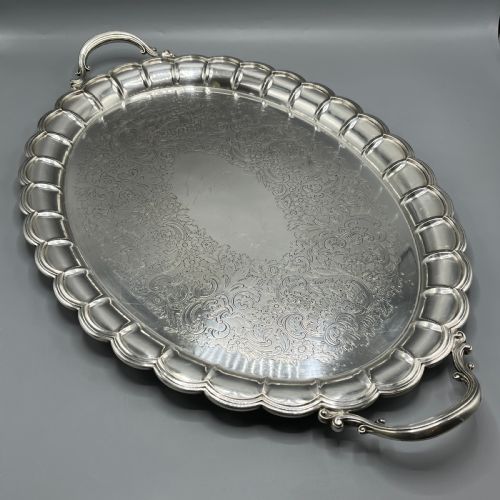
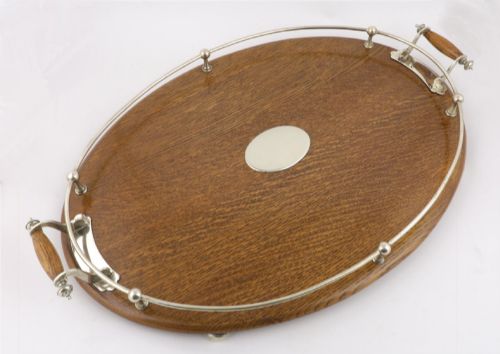
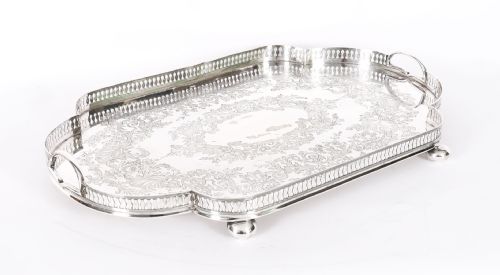
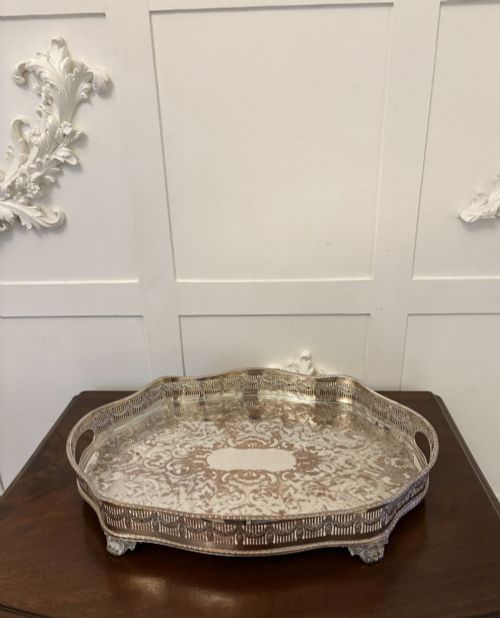
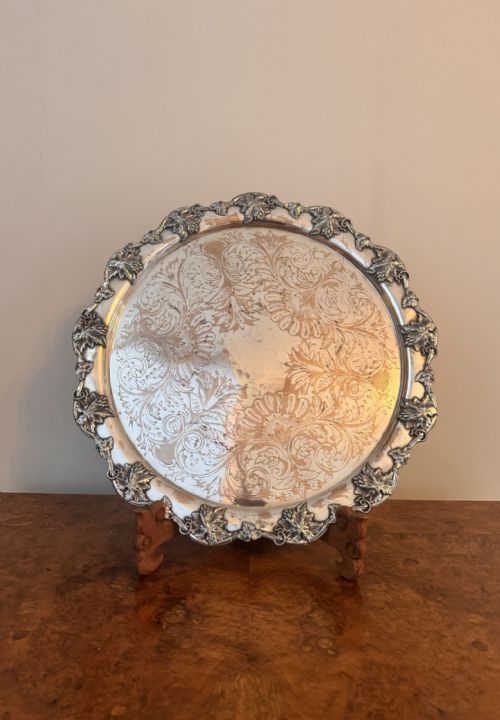
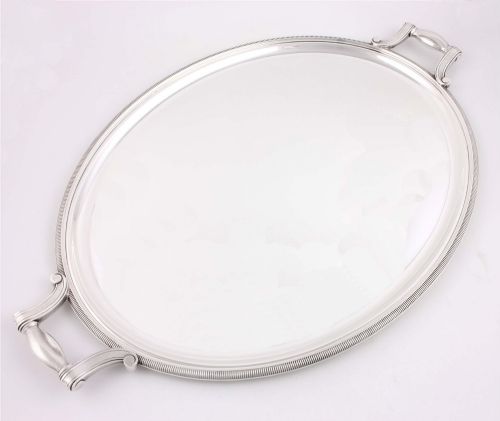
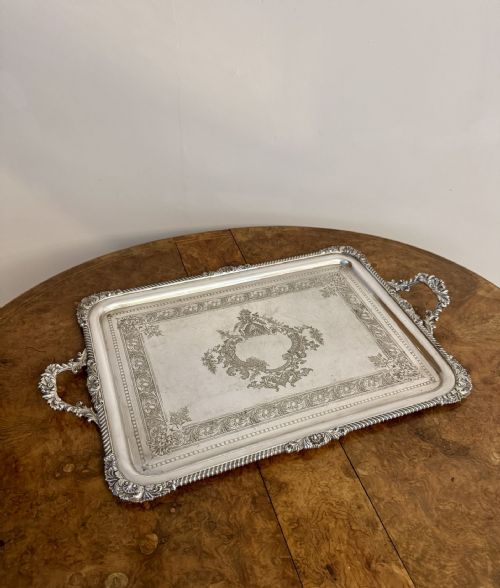
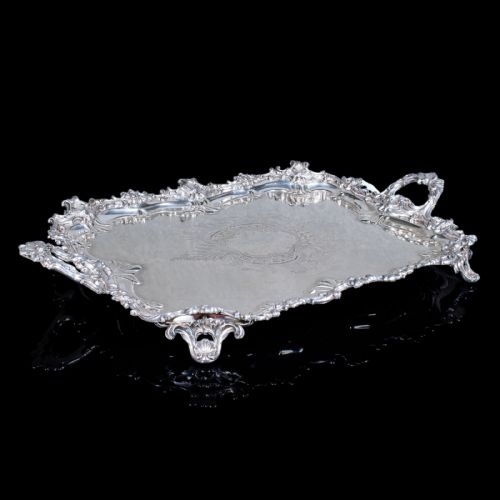
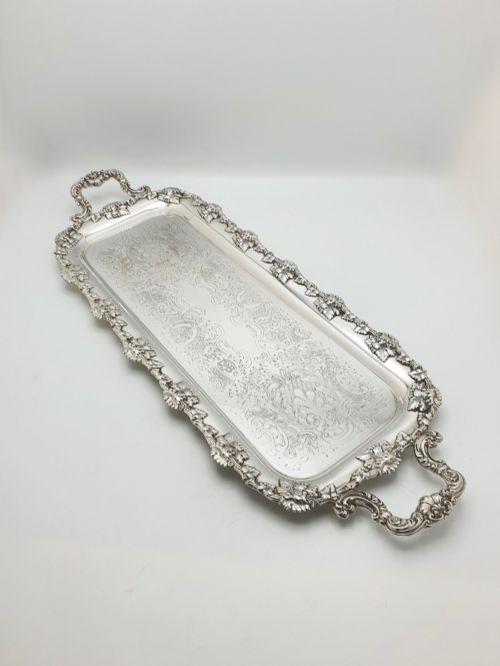
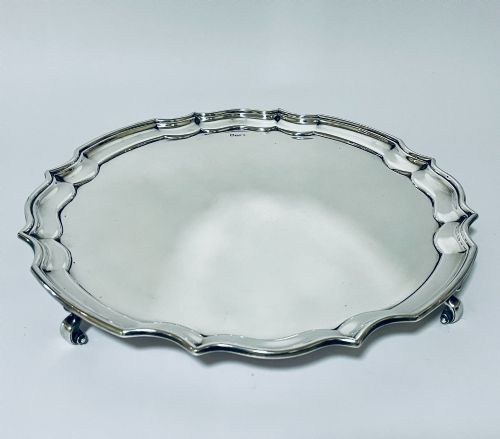
A large silver tray appears primarily as an oval, rectangular, or circular serving piece, often featuring handles, raised galleries, or engraved surfaces designed for domestic use.
The pieces on this page span the Victorian and Edwardian periods through to the mid twentieth century, originating from English workshops, European makers, and international trade routes.
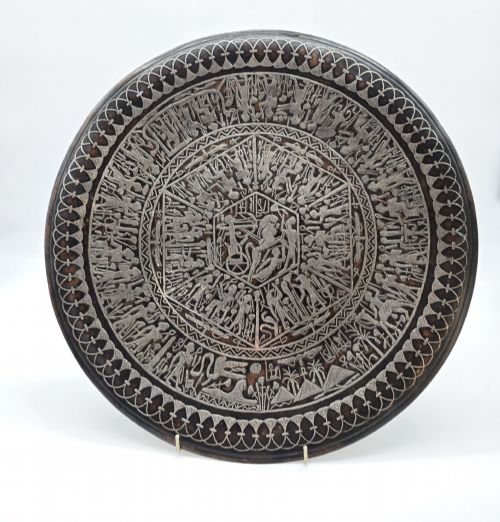
Tea trays, cocktail trays, and galleried serving platters dominate the selection, alongside specialised forms such as inkstands and wall chargers.
Materials and Technique
Makers utilised sterling silver, solid silver, and copper bases overlaid with silver plate through electroplating or traditional Old Sheffield plating methods.
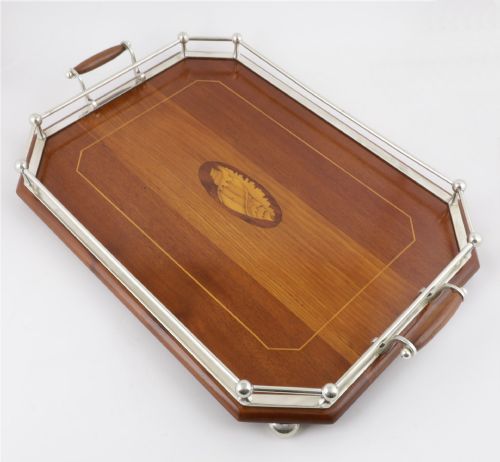
Many examples incorporate secondary materials such as English oak, mahogany, glass, and shell inlay to build rigid internal structures or contrasting borders.
Surface ornamentation relies on chased detailing, hand engraving, pierced brass or silver galleries, and applied grapevine or scrollwork borders.
Large Silver Tray Retail Price Guide 2026
Typical asking prices for large silver tray among the pieces listed under this phrase on Sellingantiques today, from the lower quarter to the upper quarter. They describe what is for sale here now, not the wider market.
Several trays double as miniature architecture with tiny pierced balconies ready to keep runaway gin decanters out of trouble.
Craft and Proportion
Quality rests upon the crispness of the chased or engraved detail and the structural integrity of applied mounts and handles under weight.
The thickness of the silver deposition over the base metal determines longevity, distinguishing heavier plates from thin applications that wear down to the copper or base metal underneath.
James Deakin·Christofle·Mappin & Webb·Elkington Mason·Walker Knowles·Hukin & Heath·Puiforcat·Walker & Hall·Roberts & Belk·Cooper Brothers·William Hutton & Sons·Elkington & Co
The Large Silver Tray Glossary
- Gallery tray
- A tray featuring a pierced or solid raised vertical border around the perimeter, originally designed to keep decanters and glasses secure.
- Old Sheffield plate
- An early fusing technique where a sheet of silver is fused to a thicker copper core by heat and pressure before rolling.
- Salver
- A flat serving vessel raised on feet, typically used for presenting documents, glasses, or calling cards.
- EPNS
- Electroplated nickel silver, a common base metal composition coated with a thin layer of silver through an electrical bath.
- Chasing
- A method of indenting metal with a hammer and punch to push the design forward rather than cutting material away.
Large Silver Tray: Frequently Asked Questions
How do I clean an antique silver tray?
Use a specialised silver cloth or mild polish designed for plated and solid wares, avoiding abrasive pads that strip thin plating.
Work gently around engraved lines and gallery perforations to lift tarnish without scratching the underlying metal.
What is the difference between solid silver and silver plate?
Solid silver contains precious metal throughout its entire structure, whereas silver plate consists of a base metal such as copper or nickel silver covered in a layer of silver.
Hallmarks usually indicate solid silver purity standards, while electroplate marks denote the underlying base metal technique.
Can I use a galleried tray for serving drinks?
Galleried trays function well for carrying glassware and bottles because the raised border prevents items from sliding off the edge.
Ensure the handles and base support the combined weight of heavy decanters before lifting.
How do I date an unmarked tray?
Stylistic clues such as floral engraving, Victorian scrolling, or Art Deco geometric lines provide primary clues to the era of manufacture.
Construction methods, including the presence of Old Sheffield fusion lines or electroplate stamps, narrow down the decade.