



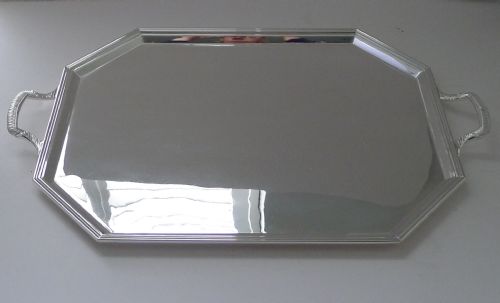


Art Deco Bar Tray
An art deco bar tray brings geometric order and polished shine straight to the drinks trolley.
Art Deco Bar Tray
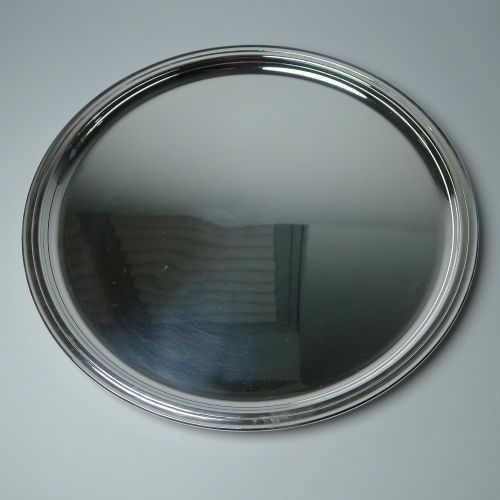
When you search for an art deco bar tray, you are looking at serving pieces designed for entertaining, spanning serving trays, salvers, platters, and complete decanter sets. These pieces range from simple geometric shapes to elaborate cocktail accessories used to hold glassware and bottles.
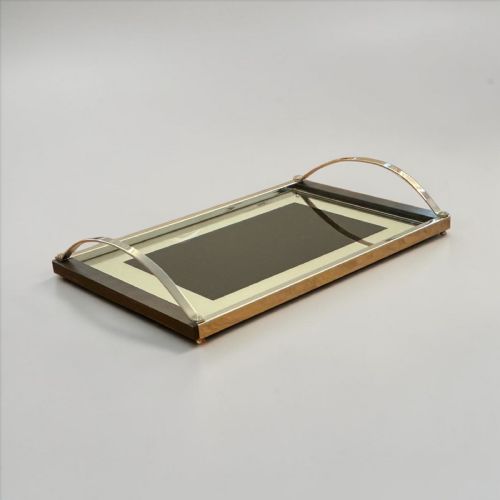
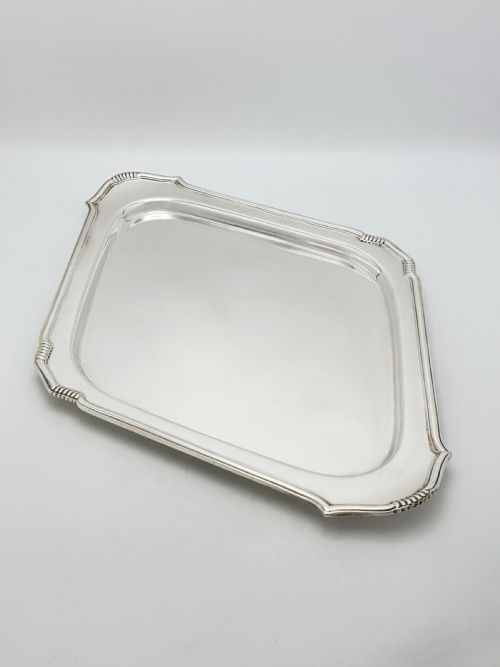
The versions you are most likely to meet on this page hail primarily from the nineteen-twenties and nineteen-thirties, though earlier examples from nineteen hundred onwards also appear. They take the form of square, diamond, or rectangular trays equipped with handles or borders for practical use.
Makers ranged from large silversmiths to specialist firms producing novelty bar ware and modernist designs. Each piece reflects the functional elegance demanded by the period's cocktail culture.
How they were made
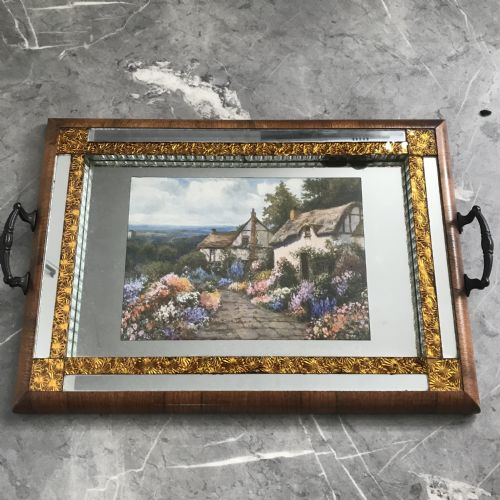
Makers utilised silver plate, sterling silver, nickel silver, and chrome to create durable, reflective surfaces that suited the modern aesthetic. Many pieces incorporated metal frames fitted with mirrored glass or cobalt blue mirror glass bases.
Cabinetmakers and metalworkers also combined wood with metal, employing walnut veneer and Macassar ebony on trays featuring decorative borders or handles. Engine turning and shell patterns added texture to the metal surfaces.
Art Deco Bar Tray Retail Price Guide 2026
Typical asking prices for art deco bar tray among the pieces listed under this phrase on Sellingantiques today, from the lower quarter to the upper quarter. They describe what is for sale here now, not the wider market.
Charlie Chaplin occasionally joins the cocktail hour in the form of novelty bar ware.
What varies in quality
Quality rests upon the weight of the metal and the precision of the joinery between the frame and the mirrored or wooden base. Substantial silver-plated mounts and crisp execution of details like engine turning separate the finest work from standard production.
Provenance and maker attribution elevate certain pieces, particularly those bearing the marks of known silversmiths or luxury retailers. The integration of specialty materials like ivory handles or coloured glass further distinguishes superior examples.
J B Chatterley & Sons·Walker & Hall·Hukin & Heath·James Dixon & Sons·Roberts & Dore·Asprey, London·Elkington·Edward Barnard·Barker Brothers·Barker Ellis
The Art Deco Bar Tray Glossary
- EPNS
- Electroplated nickel silver. This forms the base metal core for a large proportion of silver-plated cocktail trays.
- Salver
- A flat tray used for serving drinks or food. These often feature decorative borders and resting feet.
- Engine turned
- A mechanical engraving technique producing intricate geometric patterns on metal. It creates a textured, light-catching surface.
- Decanter set
- A matched collection comprising a tray, decanters, and sometimes glasses. These provide a complete serving station for spirits.
Art Deco Bar Tray: Frequently Asked Questions
What is an art deco bar tray used for?
These trays served primarily to hold cocktail shakers, glasses, and decanters during entertaining. They kept the glassware organised and protected polished wooden furniture from spills.
Today, collectors use them on sideboards or bar carts to display period glassware and vintage bar ware.
How do I clean a silver plated tray?
Cleaning requires a soft cloth and a gentle silver polish formulated for plated items. Avoid harsh abrasives that can wear through the thin silver layer.
Mirrored glass inserts need mild glass cleaner applied carefully to prevent moisture seeping behind the silvered backing.
Are these trays made of solid silver?
Most examples utilise silver plate over a base metal such as nickel silver or standard metal. Sterling silver versions do exist, marked with hallmarks indicating purity and date.
Makers often stamped their pieces with specific marks to denote the plating method and the manufacturing firm.
How do I date an art deco tray?
Dating relies on maker marks, style characteristics, and sometimes silver hallmarks that include assay office symbols and date letters. Design elements like geometric borders and modernist shapes point to the nineteen-twenties and nineteen-thirties.
Earlier pieces from nineteen hundred often display heavier Edwardian proportions before transitioning to streamlined modernism.