




Art Deco Serving Tray
An art deco serving tray brings geometric elegance and period charm to a drinks party or sideboard display.
Art Deco Serving Tray
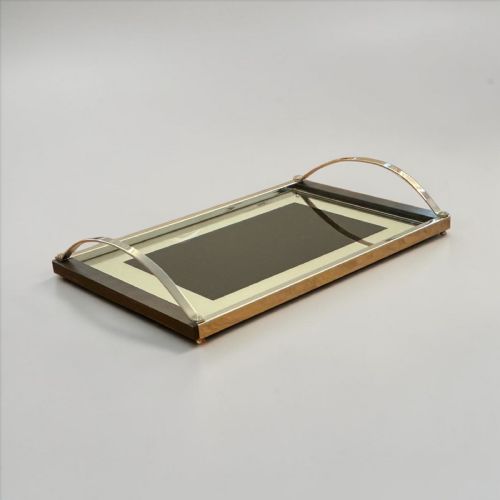
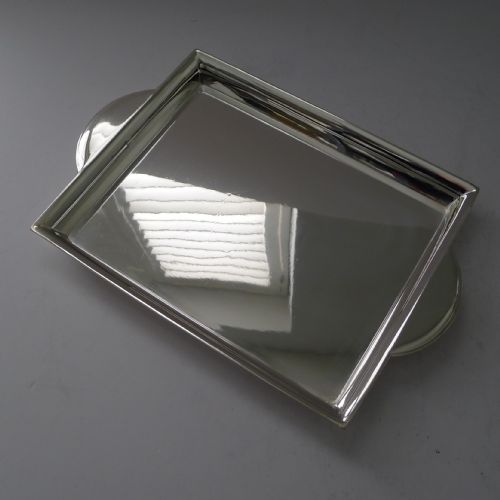
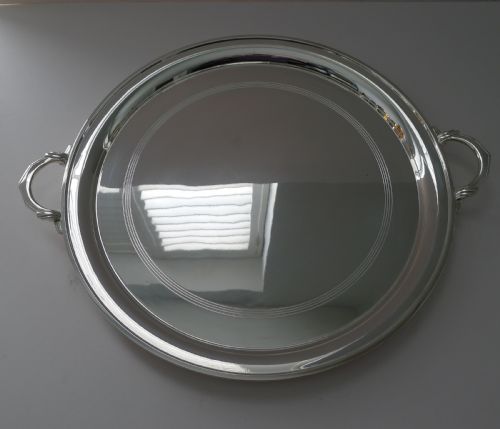
An art deco serving tray combines practical hostessing with the sharp, clean lines characteristic of the interwar period. The versions most commonly found here take the form of cocktail and drinks trays, designed to hold glasses, decanters, and barware.
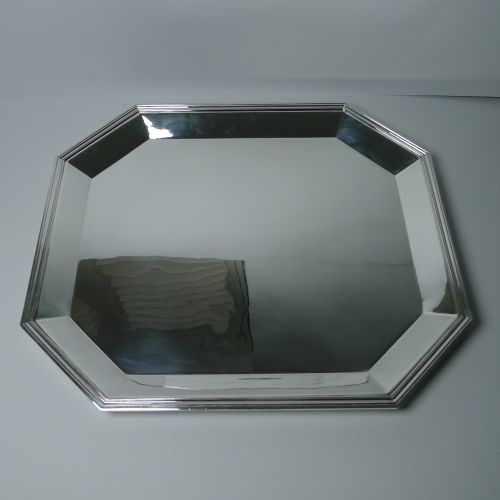
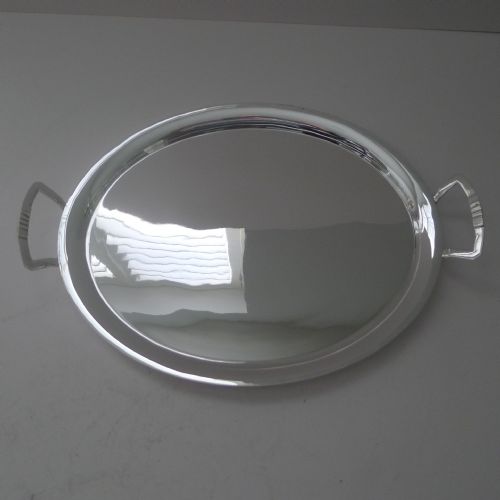
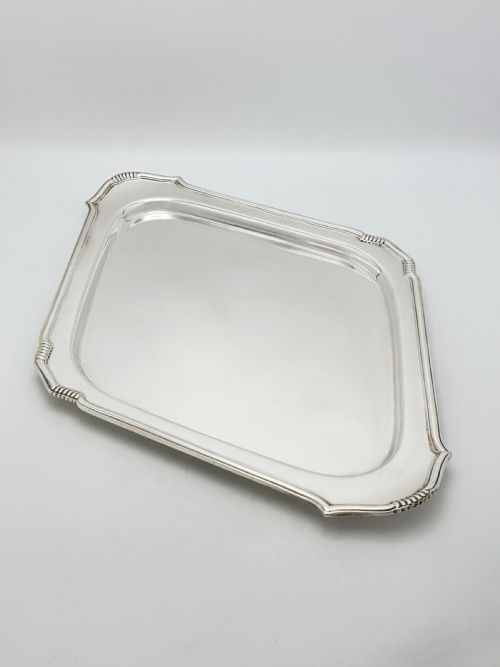
Makers shaped these pieces into rectangles, squares, diamonds, and octagons, often fitting them with handles for easy transport. Beyond drinks service, the selection includes dishes, lazy susans, and platters suited for display or dining.
Originating largely from British and French workshops, these items capture the modernist shift away from Victorian clutter. They serve equally well in daily use or as decorative accents on a sideboard or coffee table.
Materials and Construction
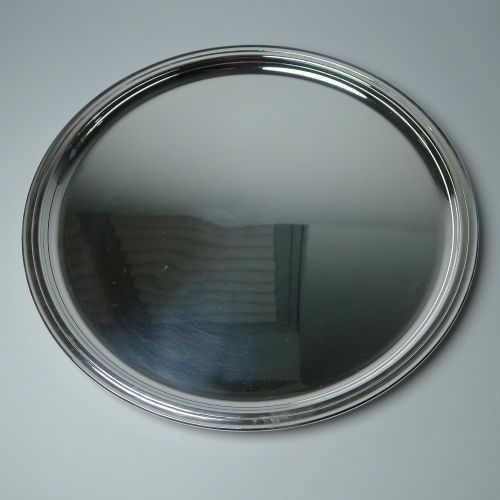
Silversmiths and manufacturers relied heavily on silver plate, sterling silver, and nickel silver to form the metallic bases and borders of these items. Chrome, brass, and copper also appear, providing a bright, industrial contrast to traditional precious metals.
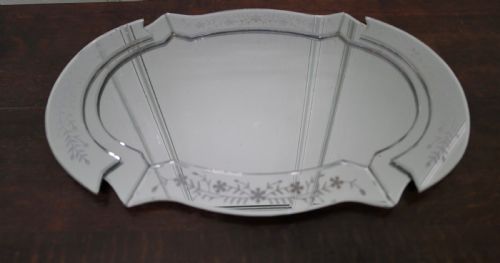
Reflecting the period's love for mixed media, bases frequently incorporate mirrored glass, cut glass, or polished wood veneers such as walnut and macassar. Artisans secured these components with hand-soldered joints, etched glass surfaces, and geometric borders.
Art Deco Serving Tray Retail Price Guide 2026
Typical asking prices for art deco serving tray among the pieces listed under this phrase on Sellingantiques today, from the lower quarter to the upper quarter. They describe what is for sale here now, not the wider market.
Materials recur across multiple forms, combining silver plate and sterling silver with glass, mirror, chrome, and oak.
Markers of Distinction
Superior examples distinguish themselves through the weight of the metal and the crispness of the geometric chasing or engine-turned engraving. Makers who invested in heavy silver plating or solid sterling silver produced pieces that retained their structural integrity and surface polish over decades of use.
The integration of materials also dictates overall caliber, particularly in the clarity of Venetian mirror glass and the precision of inlaid wood veneers. Signed pieces from notable firms command attention through balanced proportions and superior handle construction.
Keith Murray For Mappin & Webb·J B Chatterley & Sons·Walker & Hall·Hukin & Heath·James Dixon & Sons·John Collyer & Co·Christofle·Roberts & Dore·Brille·Asprey·Elkington·Roberts & Belk·Atkin Brothers·Luc Lanel·Barker Ellis
The Art Deco Serving Tray Glossary
- Silver Plate
- A base metal such as copper or nickel silver coated with a thin layer of pure silver. This technique allowed manufacturers to produce substantial tableware at a lower cost than solid sterling silver.
- Engine Turned
- A decorative mechanical technique that etches intricate geometric patterns into metal surfaces. This method creates a precise, light-catching texture popular on twentieth-century barware.
- Venetian Mirror
- Silvered glass featuring bevelled edges or hand-etched designs. These reflective surfaces were frequently set into wooden or metallic frames to form cocktail trays.
- Lazy Susan
- A rotating tray placed on a table or stand to allow easy sharing of dishes. Period examples often feature oak or silver-plated construction with a central pivot mechanism.
Art Deco Serving Tray: Frequently Asked Questions
How do I clean an antique silver plated tray?
Use a soft cloth and a specialised silver cream to gently remove tarnish without scratching the metallic surface. Avoid harsh chemical dips, which can strip the plating and damage embedded mirror glass or wooden veneers.
For mirrored bases, wipe gently with glass cleaner applied to the cloth rather than sprayed directly onto the tray. This prevents moisture from seeping behind the glass and corroding the silver backing.
Can I use these trays for serving drinks daily?
Many of these items were built specifically for cocktail service and handle regular use well, provided they are treated with care. Heavy silver plate and sturdy handles support the weight of decanters and glassware without difficulty.
To preserve the condition of antique glass and polished metal, lift the tray by its handles rather than sliding it across tables. Hand wash only and dry immediately to prevent water spots on the finish.
How can I tell a French art deco tray apart from a British one?
French examples often lean further into avant-garde modernism, utilising exotic woods like macassar ebony alongside heavy silver plate or geometric brass framing. They frequently bear maker stamps from Parisian houses.
British pieces tend to reflect traditional silversmithing techniques adapted to modern styles, featuring restrained geometric borders, engine-turned patterns, and hallmarks associated with Sheffield or Birmingham makers.