


Round Silver Platter
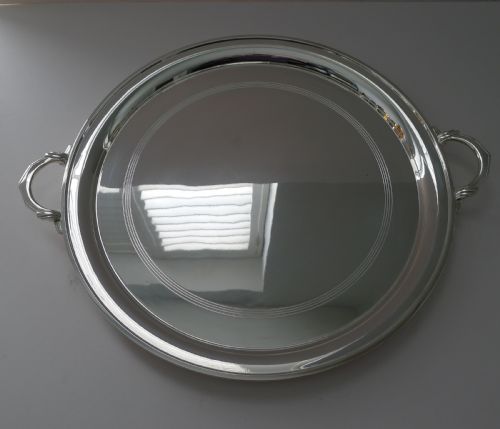
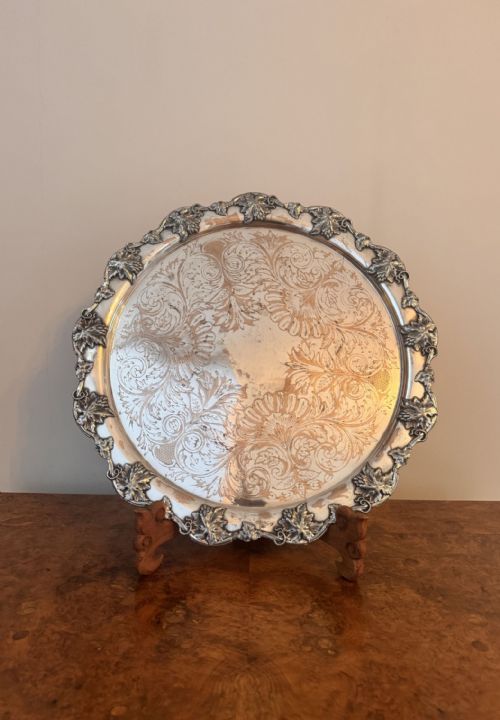
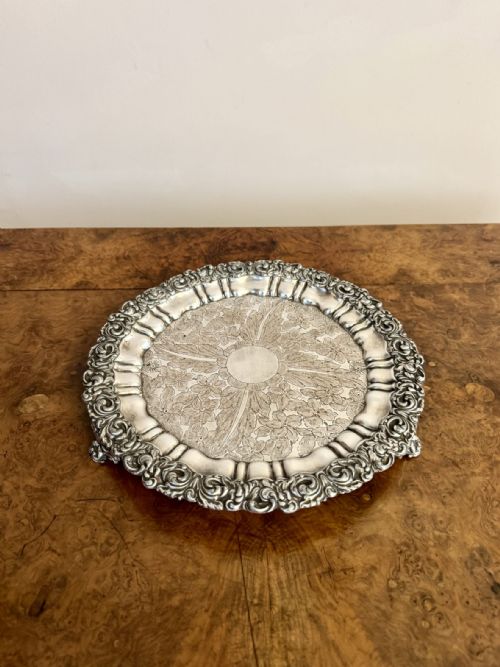
These round silver platter items are circular serving pieces in silver, silver plate and EPNS, chosen for serving drinks or displaying objects with style.
Round Silver Platter
When you search for a round silver platter, you are looking at circular serving vessels that appear in forms such as trays, salvers and serving trays. These items span periods from the nineteenth century through the Victorian and Edwardian eras into Art Deco and mid-century modern designs.
The version you are most likely to meet on this page is silver plated or EPNS, often featuring engraved surfaces and raised detailed rims. Pieces range from large cocktail trays down to small modernist English cocktail trays and plain salvers.
How they were made
Makers utilised silver plate and electroplated nickel silver over a base metal foundation to create these circular vessels. Artisans also employed solid silver for select examples.
Surface decoration frequently involved engine turned patterns and detailed engraving across the face, paired with raised rims shaped to contain glasses and decanters.
Materials recorded across the inventory include solid silver, silver plate, EPNS and base metal.
What varies in quality
Quality rests upon the crispness of the engraved surface detail and the substance of the raised rim. Heavier gauge base metals support thicker silver plating that withstands generations of polishing.
Design attribution to known makers or distinctive modernist styles elevates certain examples above standard domestic service pieces.
Keith Murray For Mappin And Webb·John Harrison·Elkington
The Round Silver Platter Glossary
- Salver
- A tray, typically with feet, used for serving drinks or presenting items. These circular platforms often feature heavily engraved centres.
- EPNS
- Electroplated nickel silver. This designates a base metal core coated with a layer of silver through an electrolytic process.
- Engine turned
- A mechanical decorative technique producing precise geometric patterns. This work creates repetitive linear motifs across the metal surface.
- Cocktail tray
- A circular serving surface designed specifically for glassware and spirits. These pieces became particularly popular during the Art Deco and mid-century periods.
Round Silver Platter: Frequently Asked Questions
What is the difference between a salver and a tray?
A salver traditionally stands upon small feet and serves formal functions like presenting letters or glasses. A tray generally lacks feet and functions primarily for carrying items.
Both forms appear under the round silver platter description, spanning Victorian, Edwardian and later periods.
How do I care for silver plated items?
Clean silver plate and EPNS with a soft cloth and a dedicated silver polish designed not to strip the coating. Avoid harsh abrasives that expose the base metal underneath.
Regular gentle upkeep preserves the engraved surface details and the reflective shine of the metal.
How can I date an Art Deco tray?
Art Deco trays from the nineteen twenties and thirties display geometric lines, modernist motifs and streamlined forms. Makers such as Keith Murray introduced distinct architectural styles during this period.
Engine turned patterns and restrained decoration often distinguish these twentieth-century pieces from Victorian designs.
How were these platters originally used?
Households utilised these circular vessels for serving afternoon tea, cocktails and formal drinks to guests. Their raised rims prevented glasses and decanters from sliding off during transport.
Today they function equally well as decorative table centres or serving pieces in contemporary homes.