




1920s Silver Serving Tray
These 1920s silver serving tray pieces bring geometric clarity and practical elegance to home entertaining through period forms.
1920s Silver Serving Tray
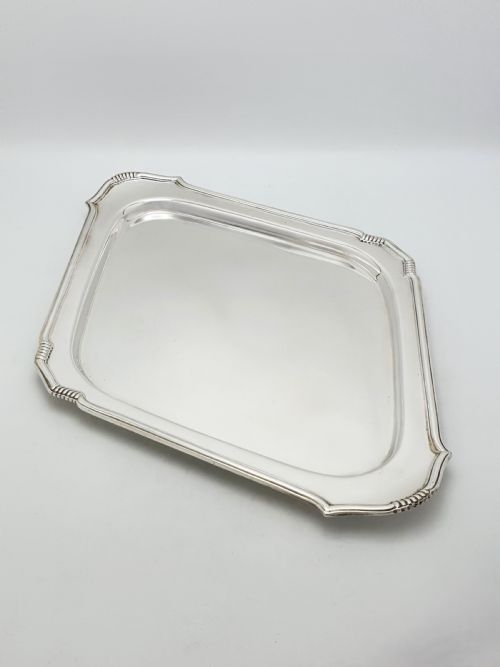
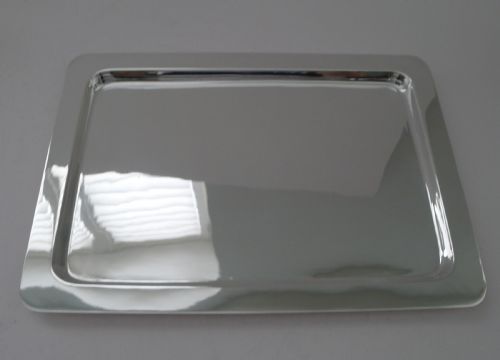
When you search for a 1920s silver serving tray, you encounter pieces designed primarily for drinks, cocktails, and formal domestic hospitality. The examples on this page span oval, round, square, diamond, hexagonal, and starburst configurations reflecting the dominant design movements of the era.
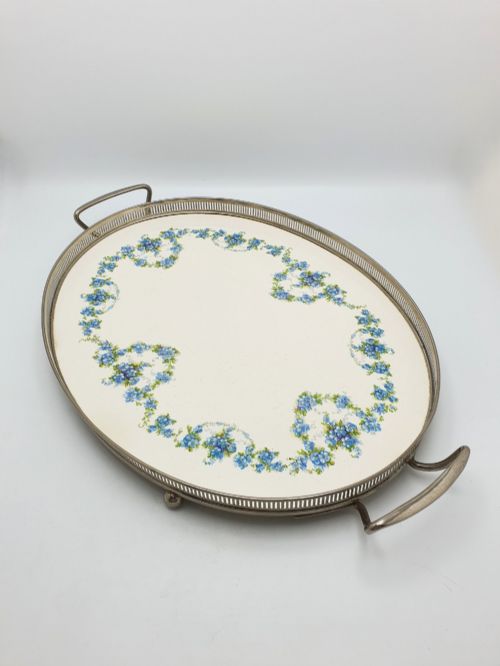
Continental decorative pieces appear alongside English manufacture, frequently pairing silver plate with contrasting elements like cobalt blue glass, mirror glass, or ceramic centres. Formats range from dedicated cocktail trays to wider serving platters and dishes intended for display or service.
How they were made
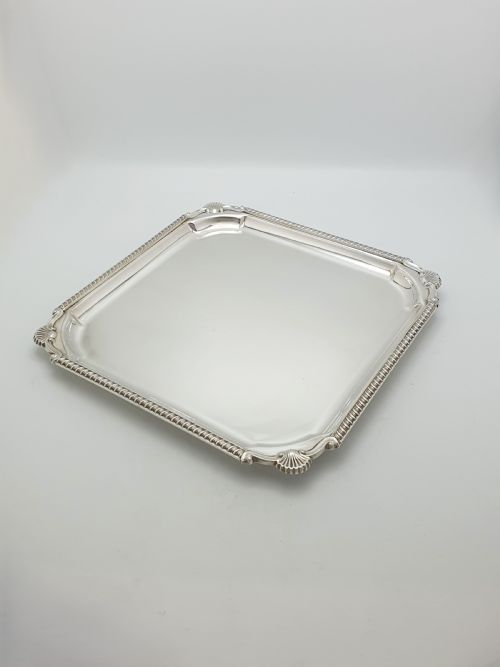
Production relies heavily on silver plate and EPNS applied over base metal foundations, supporting durable daily utility while maintaining bright reflective surfaces. Workshops employed specialised stamping and casting techniques to produce distinct geometric borders, shell motifs, and structural handles.
Decorative inserts combine cut glass, mirror glass, and cobalt glass fitted securely into metal frames, while ceramic panels feature hand-painted or printed floral motifs. Surface finishing includes polished plate and textured detailing typical of Art Deco manufacturing standards.
Several trays include cobalt blue glass centres designed to make your evening gin and tonic look exceptionally dramatic under candlelight.
What varies in quality
Quality differences rest on the crispness of stamped decorative borders, the thickness of the silver plate over the base metal, and the precision of the joinery between metal frames and glass inserts. Superior examples maintain intact mirror or cobalt glass without clouding and show robust structural rigidity in handles and feet.
The distinction between standard commercial output and finer workshops is visible in the weight of the metal and the refinement of stylistic motifs like shell edges or geometric facets. Maker attribution also separates standard generic pieces from documented workshop productions.
Walker & Hall·John Collyer & Co.·Roberts & Belk·Atkin Brothers
The 1920s Silver Serving Tray Glossary
- Silver Plate
- A thin layer of silver fused or electroplated to a base metal foundation such as copper or nickel brass. This technique allowed manufacturers to produce domestic items with the appearance of solid silver at a lower cost.
- EPNS
- Electro-Plated Nickel Silver, a common alloy base of copper, nickel, and zinc coated with silver. It provides a durable and stable substrate for serving wares produced across the period.
- Art Deco
- A design style characterised by sleek geometric shapes, streamlined forms, and stylised ornamentation. It heavily influences the diamond, round, and hexagonal tray formats found in this category.
- Cobalt Glass
- A deep blue glass produced by adding cobalt oxide to the molten batch. It frequently appears as mirror glass or decorative inserts within silver-plated frames.
- Base Metal
- The underlying metallic material beneath the silver plating, typically consisting of brass, copper, or nickel alloys. The quality of this substrate affects the long-term durability of the piece.
1920s Silver Serving Tray: Frequently Asked Questions
How do I clean a silver plated tray?
Clean silver plate gently using a dedicated silver polish and a soft cloth to avoid wearing through the plated surface to the base metal underneath.
Avoid harsh abrasive cleaners and soaking pieces in water, particularly items featuring glass inserts or ceramic centres that might be loosened by moisture.
Were these trays used for cocktails?
Many examples from this decade were specifically designed as cocktail trays to support the rising popularity of mixed drinks and home entertaining during the period.
Their raised borders and fitted handles prevented glassware from sliding during service in drawing rooms and dining spaces.
How do I identify Art Deco pieces?
Art Deco pieces display geometric outlines such as diamond, hexagonal, or sharp circular shapes alongside stylised motifs like shell borders and sunburst patterns.
They depart from earlier floral ornamentation in favour of symmetry, clean lines, and industrial influences.
What is mirror glass?
Mirror glass is a reflective glass panel fitted directly into the base of the tray to create bright visual effects beneath glassware and decanters.
These panels are secured within metal frames and require careful handling during cleaning to prevent moisture damage to the silver backing.