


Silver Metal Tea Tray
A silver metal tea tray brings heft and gleam to a room, offering a functional surface for serving drinks or displaying glassware.
Silver Metal Tea Tray
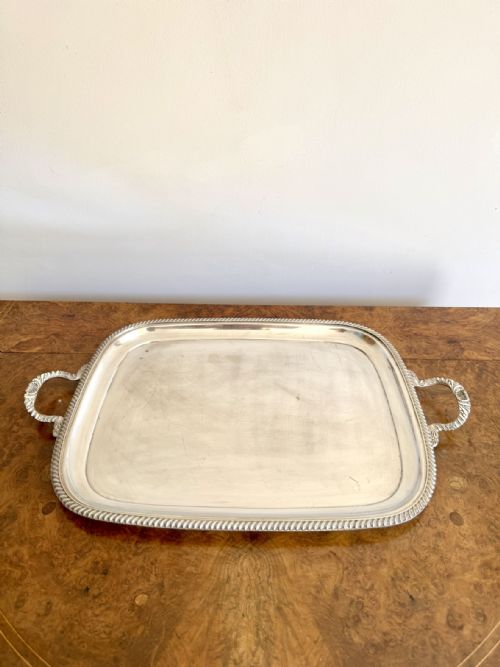
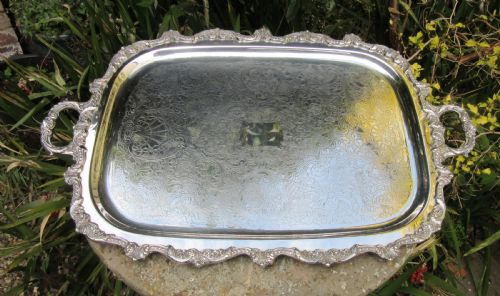
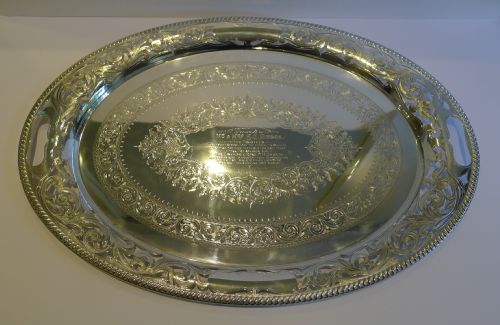
A silver metal tea tray is a domestic serving piece designed for carrying cups, teapots, and decanters. These objects appear in various forms on this page, including serving trays, salvers, and platters.
The pieces span multiple periods from the nineteenth century into the twentieth century, taking in Victorian, Edwardian, and Art Deco designs. Makers shaped them into oval, round, and large rectangular formats.
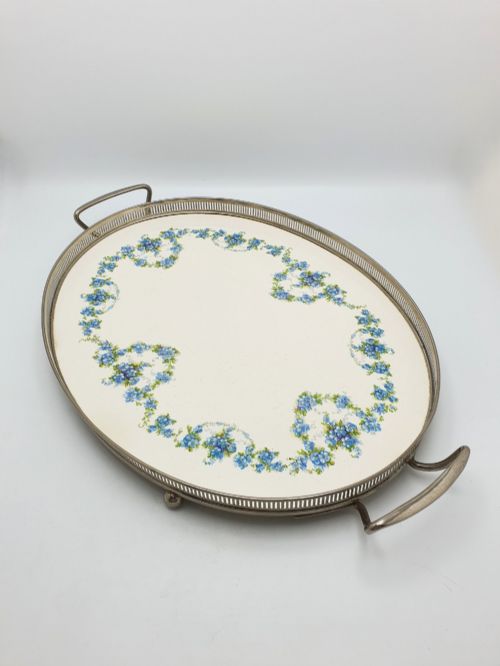
Continental origins appear alongside English pieces, with specific examples featuring ceramic centres or reticulated galleries. Buyers encounter items intended for afternoon tea as well as cocktail service.
How they were made
Makers utilised base metals such as copper, nickel silver, and electroplated nickel silver to form the body of each tray. Silver plate and Old Sheffield Plate provided a bright metallic skin over the underlying metal.
Some examples incorporated ceramic elements, such as blue floral centres, combined with metal mounts. Pierced and reticulated borders required careful cutting and piercing of the metal sheet before plating.
Materials range from simple base metals and copper to silver plate, EPNS, and ceramic inserts.
What varies in quality
The weight of the metal and the thickness of the plating dictate the durability and substance of the tray. Generous proportions and substantial mounts separate utilitarian items from grand presentation pieces.
Detailing in the handles, feet, and border decoration indicates the skill involved in the manufacturing process. Pieces bearing clear maker marks or specific regional origins command attention for their documented provenance.
Peters Hamburg·Frank Cobb And Co Sheffield·Fenton Russel·J H Potter
The Silver Metal Tea Tray Glossary
- EPNS
- Electroplated nickel silver. This denotes a base metal alloy coated with a thin layer of silver through an electrolytic process.
- Old Sheffield Plate
- A method of fusing a thin sheet of silver to a thicker copper core. This technique predates modern electroplating and leaves a distinctive edge where the metals join.
- Salver
- A flat serving tray, traditionally used for presenting letters, glasses, or small dishes. These usually stand on small feet.
- Reticulated
- Pierced or patterned with openwork designs. This ornamental technique creates lace-like metal borders on the tray rim.
- Base metal
- Any metal other than a precious metal, used as the structural foundation for plating. Common examples include copper and nickel alloys.
Silver Metal Tea Tray: Frequently Asked Questions
How do I clean a silver metal tea tray?
Use a soft cloth and a gentle metal cleaner formulated for plated items. Avoid abrasive pads that can wear away the silver layer.
Wash the tray in warm soapy water and dry it thoroughly to prevent water spots from forming on the surface.
Can I use these trays for serving drinks?
These pieces were built for domestic service and handle teapots, glasses, and cocktail shakers with ease. Their solid construction supports heavy vessels during use.
Take care with acidic liquids or prolonged moisture to protect the plated surface over time.
How do I tell Victorian trays apart from later pieces?
Victorian items often display heavier cast mounts, ornate borders, and substantial handles. They frequently feature deep engraving or presentation inscriptions.
Later Edwardian and Art Deco examples tend towards cleaner lines, simpler geometric forms, and lighter overall proportions.
What does Old Sheffield Plate mean?
This term describes an early method of fusing silver and copper together before shaping the metal. Craftsmen rolled the combined metals into sheets to make trays and other vessels.
Items made this way show subtle traces of copper where the silver layer has thinned through generations of use.