


Silver Plated Tray Handles
Silver plated tray handles anchor the edges of serving pieces produced across the Victorian, Edwardian, and Art Deco periods.
Silver Plated Tray Handles
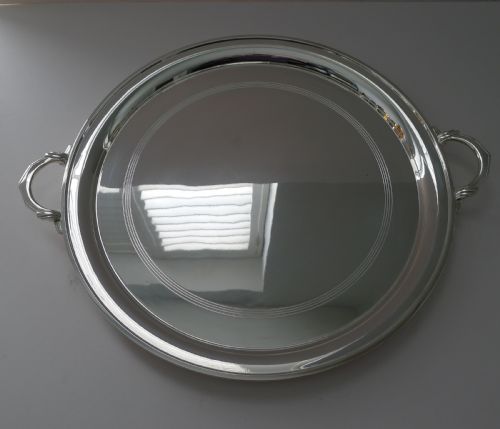
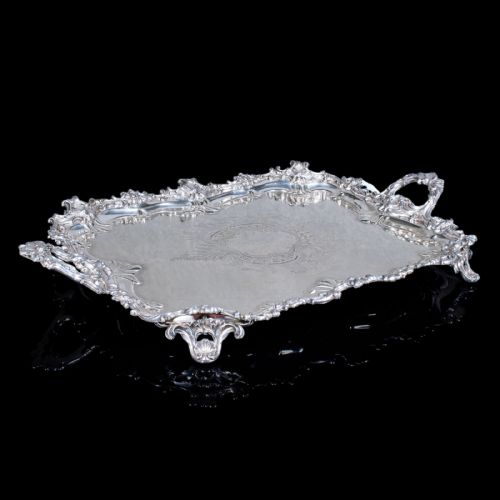
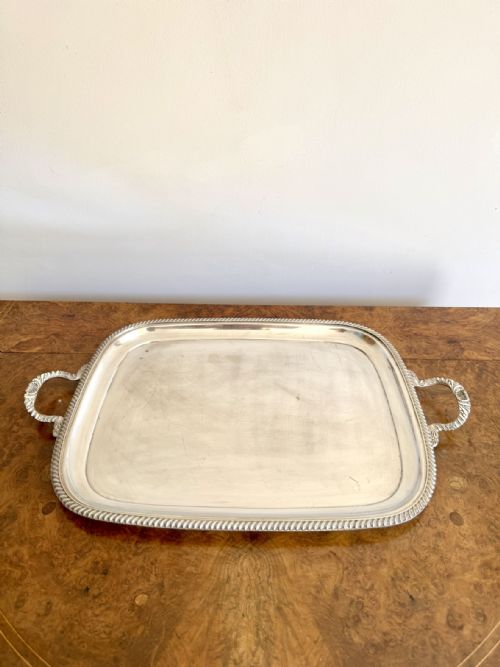
Silver plated tray handles appear primarily on serving trays, cocktail trays, and gallery trays originating from the nineteenth and twentieth centuries. These fittings form an integral part of pieces designed for formal presentation and table service, ranging from heavy Victorian meat trays to streamlined Art Deco cocktail vessels.
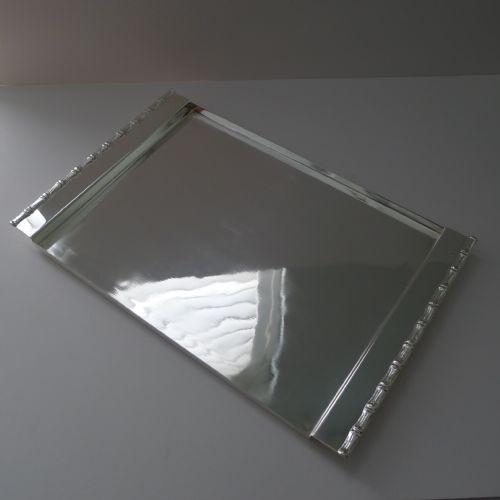
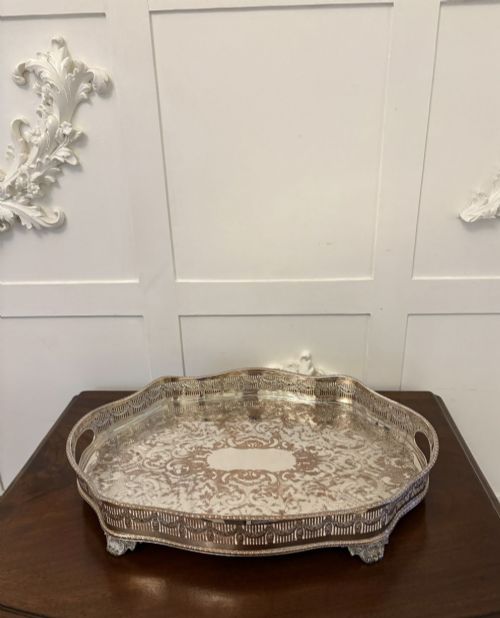
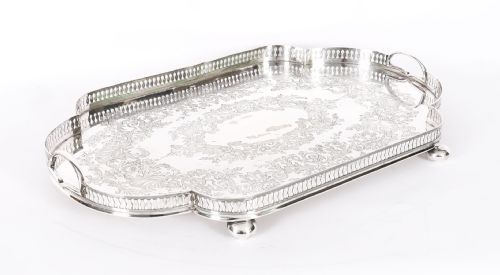
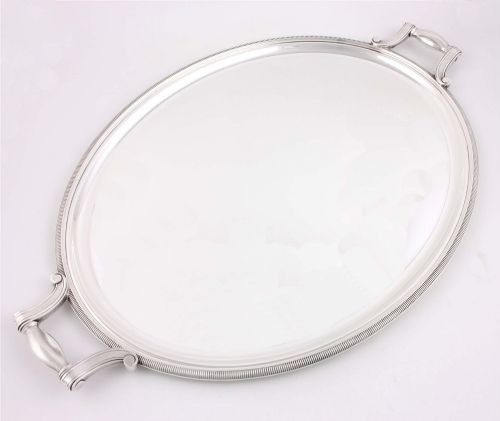
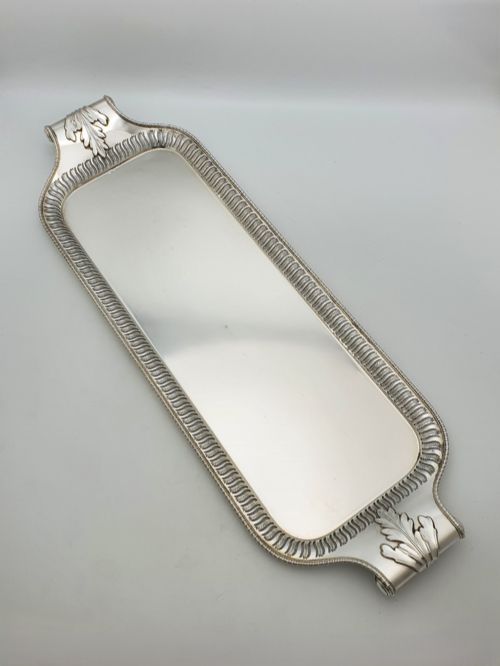
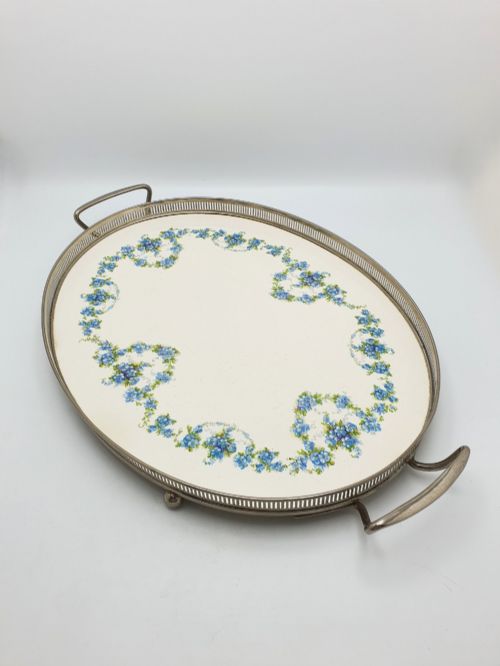
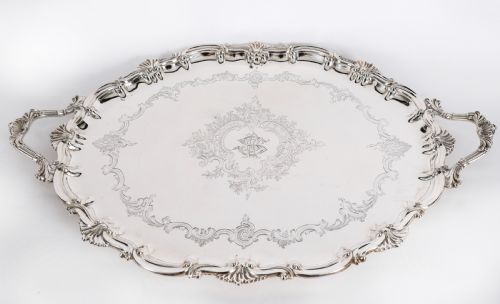
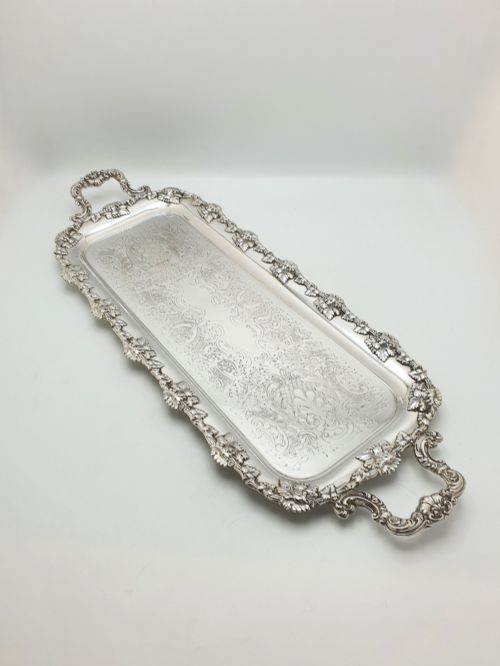
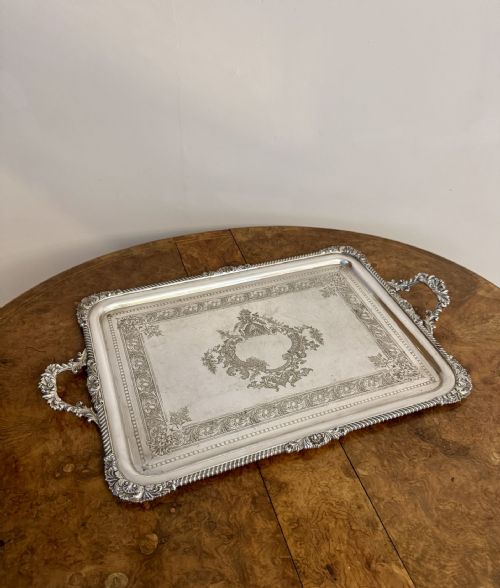
The specimens met on this page span several decades of British, French, and German manufacturing, utilising styles such as Edwardian, Art Nouveau, and Mid-Century Modern. Buyers encounter handles integrated directly into pierced galleries, cast in naturalistic shapes like bamboo or coral, or riveted firmly to large oval butler trays.
Makers fashioned these grips to endure the heavy daily lift of hospitality use while matching the decorative borders of the service. Whether mounted on a simple rectangular ebonized base or a monumental presentation plate, the handle serves as the primary structural interface for the bearer.
Materials and construction methods
Manufacturers built these objects using base metal, copper, or nickel silver as a foundational core before applying a durable silver plate or electroplated nickel silver finish. Old Sheffield plate items employ an older fused technique where a thin sheet of silver is mechanically bonded to a copper ingot.
Craftsmen cast decorative handles separately before soldering or screwing them securely to the tray body, ensuring structural strength for heavy lifting. Wood and ebonized elements occasionally appear in tandem with metal mounts to provide insulated grips on tea and coffee service items.
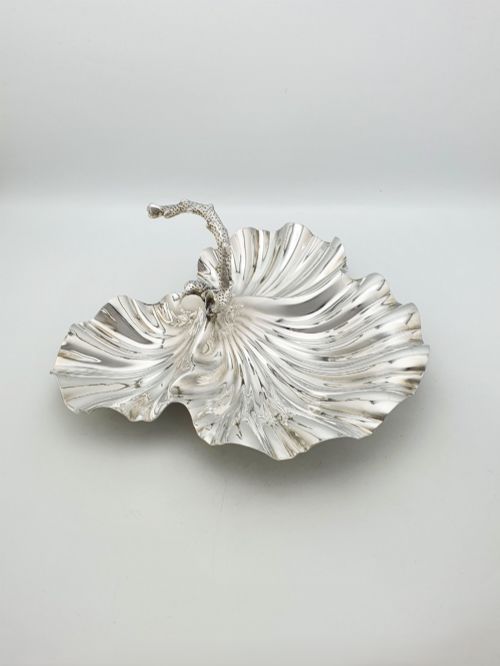
Stylised coral and bamboo handles bring botanical whimsy to rigorous Victorian and Modernist cocktail service.
Assessing construction standards
Quality rests heavily on the weight of the metal core and the thickness of the original silver deposit applied over the base metal. Superior examples display crisp chasing, deeply struck maker marks, and robust handle joints that show no movement under stress.
Artisanal execution distinguishes mass-produced items from works by premier makers such as Mappin & Webb or Christofle. The integration between the handle and the gallery wall reveals the skill involved in finishing the piece.
Keith Murray For Mappin & Webb·James Deakin·Christofle·Thomas Bradbury & Sons·Hukin & Heath·J B Chatterley & Sons·Peters Hamburg
The Silver Plated Tray Handles Glossary
- EPNS
- Electroplated Nickel Silver. This acronym denotes a base of nickel alloy coated with a layer of pure silver via an electrical current.
- Gallery tray
- A serving tray featuring a pierced or solid upright metal wall around its perimeter. This architectural border prevents decanters and glasses from sliding off during transport.
- Sheffield plate
- An early method of fusing silver to a copper core by heat and pressure. This technique predates modern electroplating.
- Base metal
- The underlying alloy used beneath the silver plating. Common materials include brass, copper, and nickel compositions.
- Sauciere
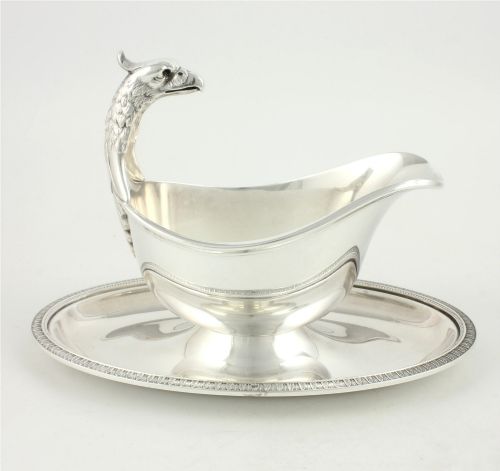
- A specialised ceramic or metal vessel designed for serving gravy or sauce. These often accompany matching platters and trays.
Silver Plated Tray Handles: Frequently Asked Questions
How do I clean silver plated tray handles?
Use a soft cloth and a specialised silver polish designed for plated items to maintain the shine without wearing through the thin metal layer.
Avoid harsh abrasive cleaners and abrasive pads that strip the silver coating from the underlying base metal.
Can I use these trays for serving drinks?
Many of these pieces were specifically created as cocktail or decanter trays and handle glasses and bottles with ease.
Ensure the handles feel entirely secure before lifting heavy loads of glassware.
What is the difference between old Sheffield plate and EPNS?
Old Sheffield plate involves a sheet of silver fused directly to a copper base through heat, creating a distinct layered appearance.
Electroplated nickel silver utilises an electrical charge to bond silver particles onto a nickel alloy core.
How do I date a silver plated tray?
Examine the style of the handles, the presence of pierced galleries, and any stamped maker marks or registry numbers on the underside.
Victorian pieces often feature ornate naturalistic motifs, while Art Deco items display geometric minimalism.