




Art Deco Cocktail Tray
When you handle an art deco cocktail tray, you notice the clever balance of heavy metal mounts and reflective surfaces designed for entertaining.
Art Deco Cocktail Tray
An art deco cocktail tray serves as a foundational piece of period barware, designed specifically for holding decanters, glasses, and mixing equipment. These items bridge the gap between practical hosting accessories and decorative table centerpieces.
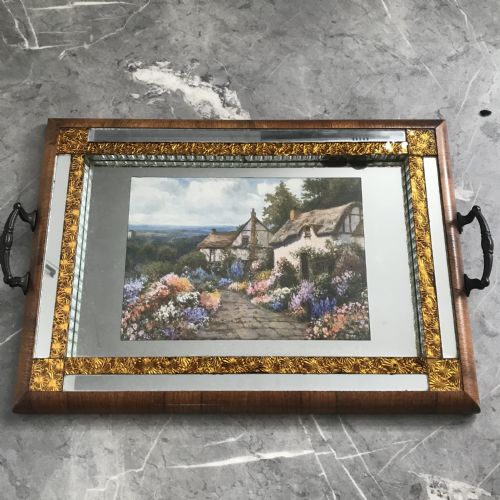
Most examples you encounter on this page date from the interwar period, predominantly the nineteen-twenties and nineteen-thirties. You will frequently find silver-plated frames paired with inset mirror glass or polished timber bases.
How they were made
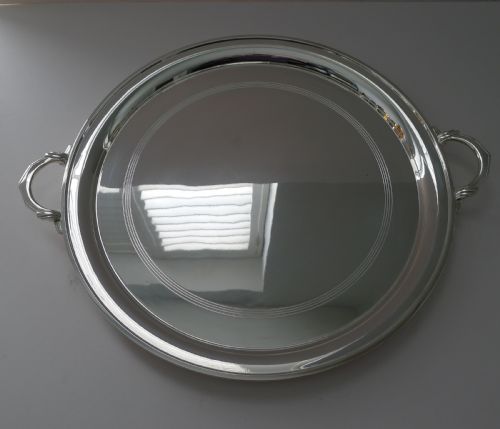
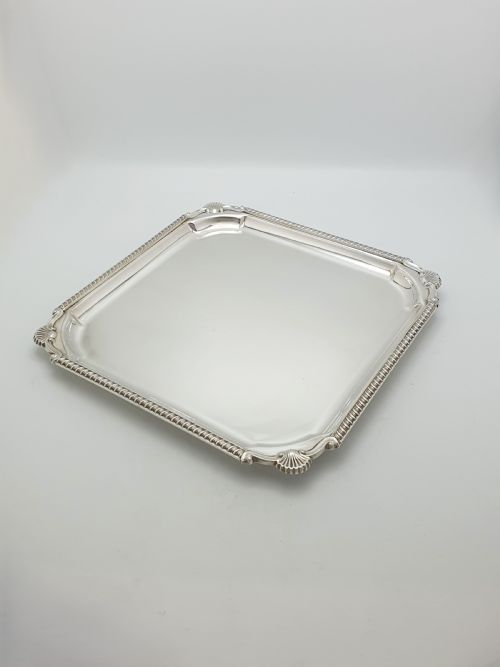
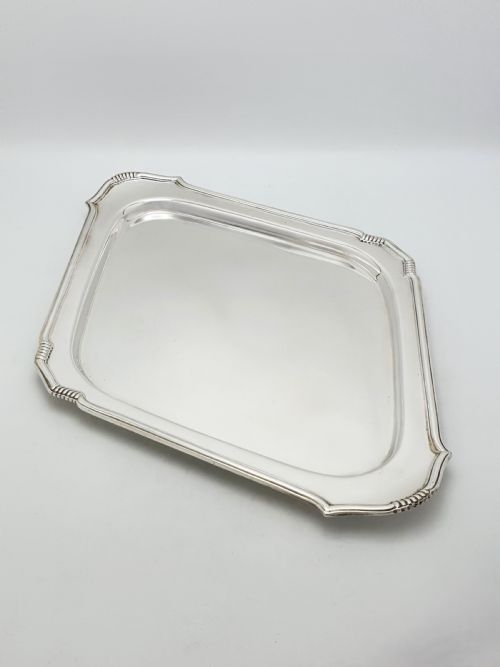
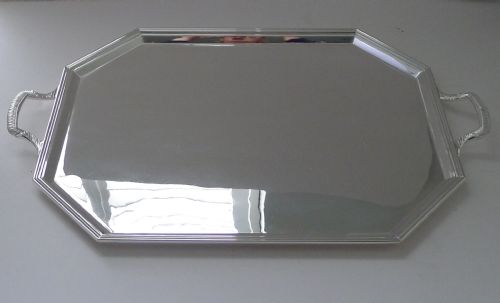
Silversmiths utilised heavy silver plating, sterling silver, and nickel silver to form structural frames, gallery rails, and integrated handles. Metalwork often featured engine-turned geometric patterns or cast borders displaying shell and Celtic motifs.
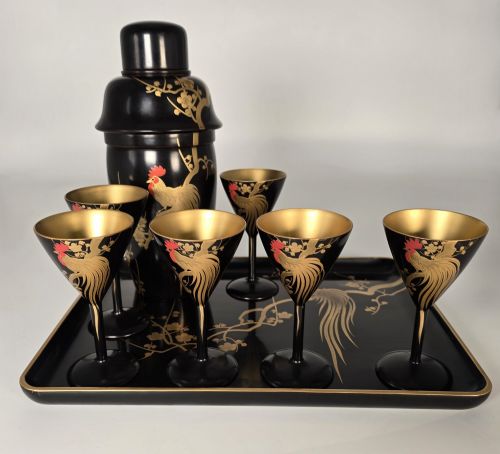
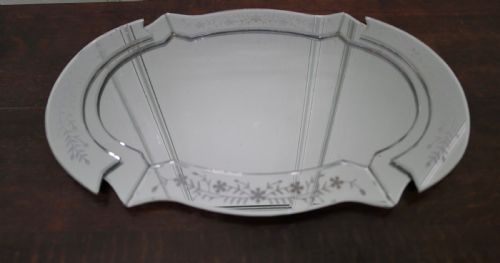
Makers combined these metallic structures with contrasting materials such as Venetian cut glass, cobalt blue mirror, and exotic wood veneers like walnut and Macassar. Czech glass decanter sets and hand-painted Japanese lacquer trays also appear among the manufacturing methods.
One novelty barware tray depicts Charlie Chaplin, combining silent film stardom with the practicality of an evening drink.
What varies in quality
The distinction between standard production and top-tier manufacturing often lies in the weight of the metal base and the precision of the handle attachments. Heavier silver-plated foundations and solid sterling silver pieces demonstrate superior substance.
Makers known for exceptional output integrated high-grade materials, such as heavy bevelled mirror glass and complex veneer work, rather than relying solely on stamped metal designs.
Keith Murray For Mappin & Webb·J B Chatterley & Sons·Walker & Hall·Hukin & Heath·James Dixon & Sons·John Collyer & Co·Roberts & Dore·Asprey London·Elkington·Roberts & Belk·Adie Brothers·Ravinet d Enfert·Christofle Paris·Albert Frionnet·Barker Brothers·Francis Howard·C W Fletcher·Wilhelm Wolff Pforzheim·Edouard Deetjen
The Art Deco Cocktail Tray Glossary
- Salver
- A flat tray, usually made of silver or silver plate, used for serving drinks or holding objects. They often feature raised decorative rims and small supporting feet.
- Engine-turned
- A decorative technique involving precise geometric patterns mechanically engraved into a metal surface. This finish catches the light and reduces the visibility of minor surface scratches.
- Gallery rail
- A low perforated or solid metal gallery border raised around the edge of a tray to prevent glasses from sliding off. This feature is typical on many drinks trays from the period.
- Macassar
- A dense, dark tropical timber with distinctive light brown or golden stripes, utilised as a veneer on modernist trays. It originates from Celebes in Indonesia.
- Decanter set
- A matched grouping consisting of a serving tray alongside matching glass decanters and sometimes small beakers or glasses. These sets were produced for domestic barware display.
Art Deco Cocktail Tray: Frequently Asked Questions
What is an art deco cocktail tray used for?
These trays were originally designed to hold cocktail shakers, decanters, and glassware during home entertaining. They gathered bar accessories in one portable place while protecting wooden tabletops from spills.
Today, collectors use them to display vintage barware collections on sideboards or coffee tables. They function equally well as decorative accents and practical serving pieces.
How do I clean a silver plated cocktail tray?
Maintenance requires gentle cleaning with a soft microfibre cloth and specialised silver polish designed for plated items. Avoid abrasive pads that can wear away the thin silver layer over the base metal.
Mirror glass and wooden veneer sections need separate care using mild glass cleaner or furniture wax. Keep moisture away from the edges where the mirror backing meets the metal frame to prevent tarnishing.
How can I tell the period of a drinks tray?
Dating relies heavily on stylistic markers, maker marks stamped into the metal, and registered design numbers. Pieces from the nineteen-twenties and nineteen-thirties typically exhibit geometric motifs, streamlined handles, and specific manufacturing stamps.
Comparing the construction techniques, such as silver plating quality and glass thickness, helps narrow down the production era. Hallmarks on sterling silver versions provide precise assay office date letters.
Are these trays safe for serving drinks?
Silver-plated and sterling silver trays are suitable for serving bottled drinks, glassware, and prepared cocktails. Ensure the surface is cleaned thoroughly before food or beverage contact.
Older mirrored or wooden surfaces benefit from being used alongside coasters or liners to protect the vintage finish from condensation rings and alcohol splashes.