



Silver Round Drinks Tray
A silver round drinks tray brings hospitality and function together, offering a circular surface designed for serving spirits and glassware with elegance.
Silver Round Drinks Tray
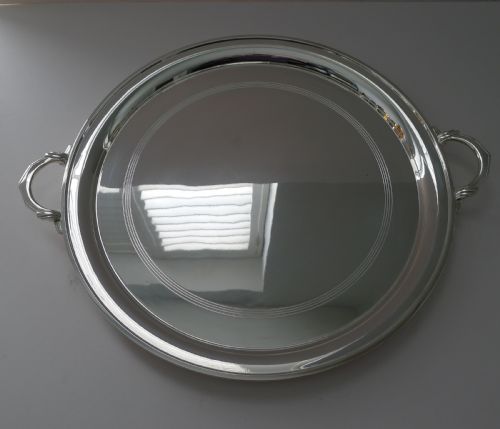
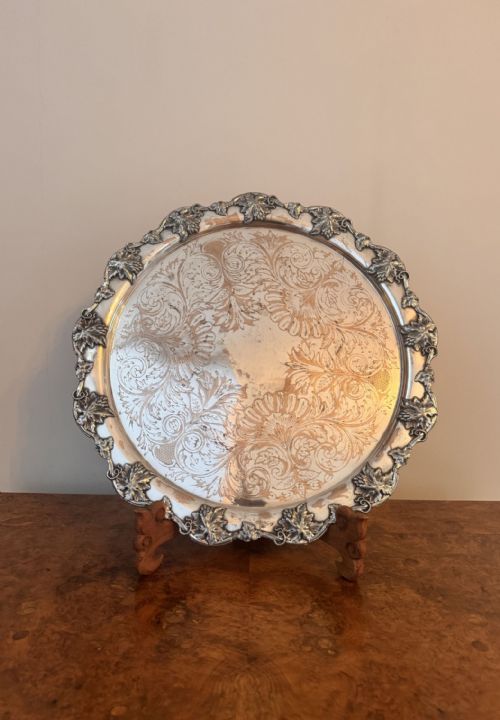
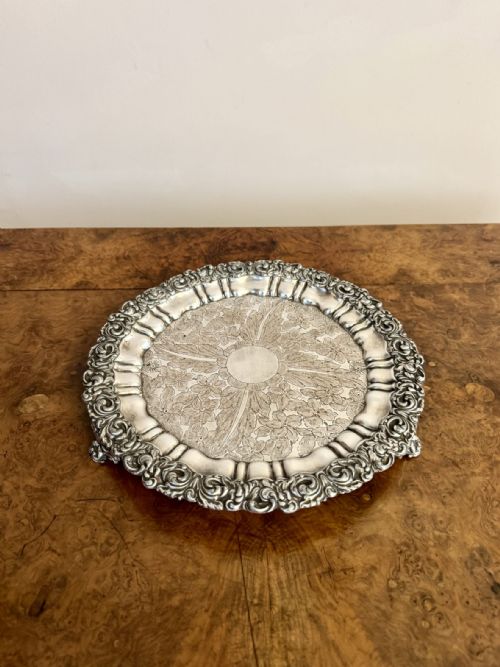
A silver round drinks tray is primarily found in silver plate, EPNS, and base metal, spanning periods from the Victorian and Edwardian eras through Art Deco and Mid-Century Modern designs. These pieces function as serving trays, salvers, and platters, often featuring circular formats suited for cocktail service and entertaining.
Victorian and Edwardian examples sit alongside later 20th-century iterations, including Art Deco designs by makers such as Keith Murray for Mappin & Webb. Buyers will frequently encounter silver plated variations with engraved surfaces, raised detailed rims, and specific maker attributions from notable workshops.
Materials and construction methods
These items rely on silver plate, EPNS, and base metal foundations, utilising metalworking techniques to create sturdy circular platters and salvers. Manufacturing processes incorporate surface engraving, engine-turned detailing, and the application of raised rims to contain glassware during service.
Construction spans multiple decades, utilising traditional plating methods on base metals to achieve durable reflective finishes. Workshops applied specialised techniques for decorative borders, crests, and integrated handles where appropriate to the style of the period.
Listings include silver plate, EPNS, and base metal across Victorian, Edwardian, Art Deco, and Mid-Century Modern styles.
Distinguishing quality across examples
Quality separates through the crispness of engraved surfaces, the weight of the base metal, and the precision of engine-turned patterns on the circular body. Superior pieces display refined detailing on raised rims and retain intact silver plating across the entire serving area.
The distinction between standard production and top tier pieces rests on maker attribution, such as signed works by recognised silversmiths and designers. Execution of decorative crests and the structural integrity of the tray further define the upper range.
Keith Murray For Mappin & Webb·John Harrison·Walker & Hall·Elkington·Victor Saglier
The Silver Round Drinks Tray Glossary
- Silver Plate
- A thin layer of silver bonded to a base metal core. This technique allows pieces to achieve the appearance of solid silver while remaining practical for daily use.
- EPNS
- Electroplated Nickel Silver. This designates a base metal alloy of copper, nickel, and zinc coated with an electrolytic layer of silver.
- Salver
- A flat serving tray typically used for glasses, cups, or letters. These objects often feature raised decorative borders and rest on small feet.
- Engine Turned
- A decorative mechanical technique that etches precise geometric patterns into metal surfaces. This method creates uniform, textured designs across the tray.
- Cocktail Tray
- A specialised serving vessel intended for holding spirits and cocktail glassware. These forms became particularly prominent during the Art Deco and mid-century periods.
Silver Round Drinks Tray: Frequently Asked Questions
What periods do these trays come from?
The available selection spans the Victorian and Edwardian eras, progressing through Art Deco and Mid-Century Modern designs.
Production dates stretch from the nineteenth century into the later twentieth century, reflecting shifting domestic tastes.
How were these trays used historically?
They served primarily for presenting drinks, glassware, and decanters during social gatherings and formal home entertaining.
Hostesses utilised them as portable surfaces for serving cocktails, tea, or cordials to guests in drawing rooms.
How do I care for silver plated surfaces?
Maintenance requires gentle cleaning with appropriate silver care products to preserve the plated finish without wearing it down.
Avoid abrasive cloths and harsh chemical dips that can damage the underlying base metal or delicate engravings.
How do I identify an Art Deco tray?
Art Deco examples typically display geometric patterns, clean lines, and streamlined circular forms characteristic of the 1920s and 1930s.
Designers like Keith Murray introduced modernist proportions that distinguish these pieces from earlier ornate Victorian styles.