


Chased Silver Serving Tray
A chased silver serving tray brings weight and formal hospitality to a table, and you are looking at substantial pieces designed to carry tea, spirits, or dishes.
Chased Silver Serving Tray
A chased silver serving tray is a functional domestic object designed for carrying glasses, teapots, or platters, appearing in various forms across multiple eras. When you search for this phrase, you encounter items intended for formal service that double as display pieces.
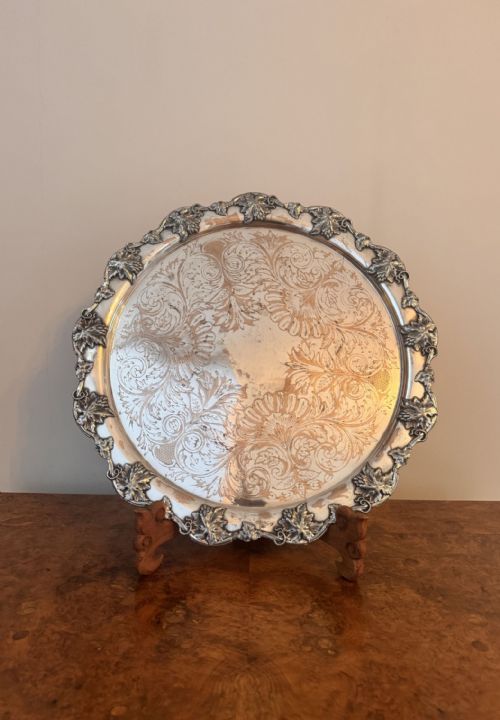
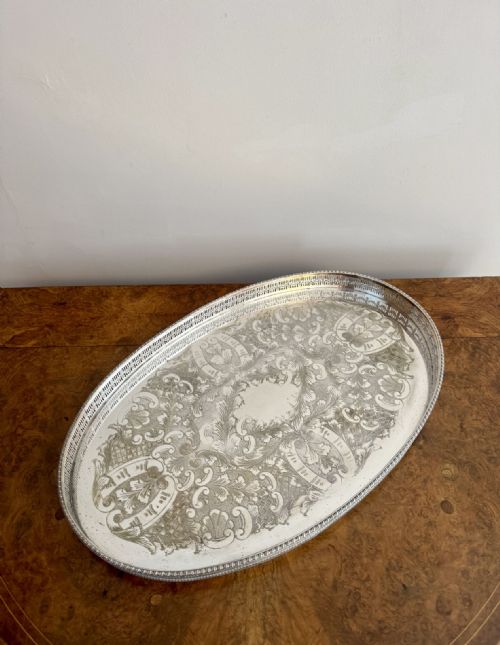
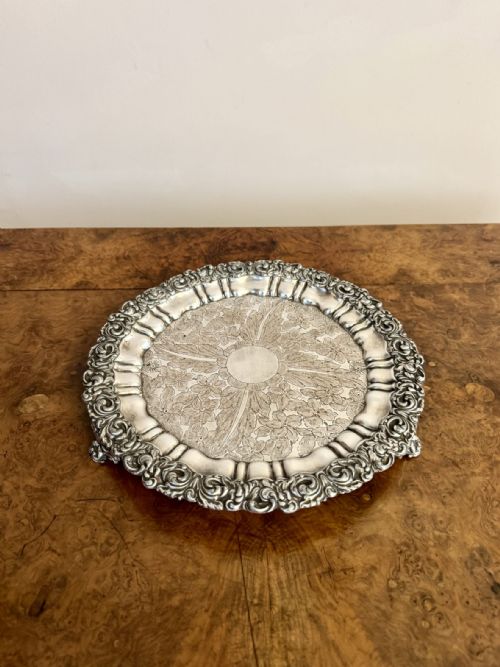
The versions you are most likely to meet on this page include round salvers and oval serving trays originating from the Victorian and Edwardian periods. These pieces span circular trays, tea trays, andplatters with distinct raised rims.
Originating from British, Irish, and Kashmiri workshops, these items incorporate styles ranging from traditional Georgian and Victorian to Indo-Persian designs. The forms encompass generous proportions as well as smaller tea trays suited for specific domestic duties.
Materials and construction
Manufacturers utilised sterling silver and various plated metals, including silver plate, EPNS, and electroplated nickel silver over copper or base metal. This combination provided the visual appearance of solid precious metal while maintaining structural rigidity for daily service.
Artisans applied surface decoration through techniques such as repoussé, embossing, and engraving to create intricate scrolls and detailed borders. Piercing and chasing methods further defined the raised rims and flat surfaces of the copper and silver plated bodies.
Assessing quality and execution
The distinction between standard examples and the finest pieces lies in the crispness of the embossed scrolls and the depth of the repoussé work. Superior items display deliberate, precise hand manipulation rather than shallow machine stamping.
Weight and structural proportion also indicate quality, particularly in larger trays where generous proportions demand substantial base metal beneath the silver layer to prevent flexing. The integration of the raised rim with the central engraved surface reveals the maker's technical skill.
The Chased Silver Serving Tray Glossary
- Chasing
- Working metal from the front with punches and hammers to sink the background and push the design forward in relief. This technique creates textured surface patterns without removing material.
- Repoussé
- Shaping metal by hammering from the reverse side to form raised designs. It often complements chasing work on decorative trays.
- Salver
- A flat tray, typically with a footed base, used for serving drinks or presenting letters. In silver service, it functions similarly to a tray but retains traditional circular proportions.
- EPNS
- Electroplated Nickel Silver, a composite material formed by depositing a layer of silver onto a nickel silver base. It became a common manufacturing standard for durable domestic serving wares.
- Piercing
- Cutting decorative openwork patterns through the metal plate. This method adds lightness and ornamental detail to the rim or body.
Chased Silver Serving Tray: Frequently Asked Questions
What is the difference between a tray and a salver?
A tray generally refers to a flat vessel with raised edges used for carrying multiple items across a room. A salver is traditionally a circular, footed plate specifically designed for presenting solitary items like letters, glasses, or visiting cards.
In practical terms, the distinction often blurs in older listings where the terms are used interchangeably. Both categories appear frequently in silver service collections.
Can I use an antique tray for daily serving?
These items were originally built for functional domestic service, meaning they possess the structural durability required for carrying weight. However, silver plated and sterling items require careful handling to prevent scratching the decorated surface.
Many collectors prefer to use them strictly for display or occasional formal entertaining. If utilised for serving drinks, ensure spills are wiped away promptly to protect the metal.
How do I date a silver serving tray?
Dating relies heavily on hallmarks stamped into the metal, which indicate the assay office, year, and maker for sterling pieces. Unmarked silver plated items require stylistic analysis of the decorative motifs, shape, and manufacturing techniques.
Victorian and Edwardian pieces often feature distinct aesthetic markers like heavy floral scrolls or geometric interwar patterns. Comparing the weight and construction method against known period examples provides further chronological context.