
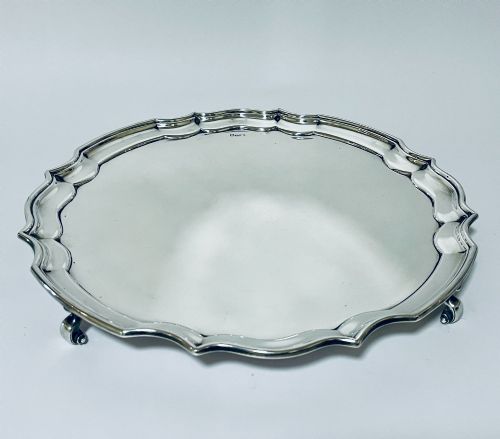


Large Silver Waiter
A large silver waiter is a grand serving piece meant for drinks or afternoon tea, offering a substantial presence for entertaining guests.
Large Silver Waiter
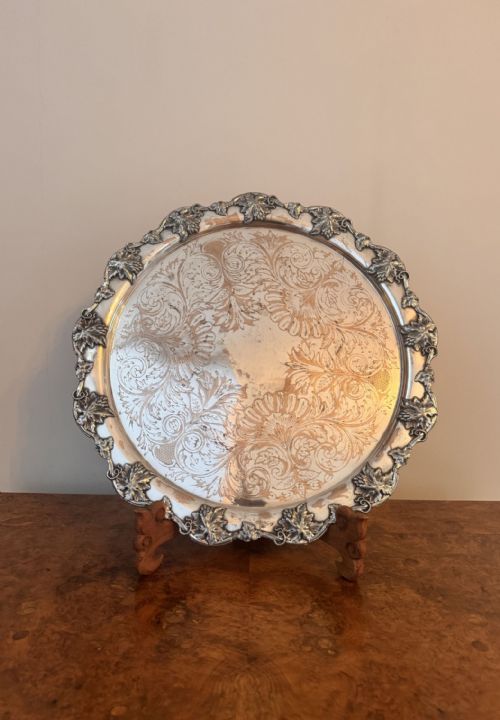
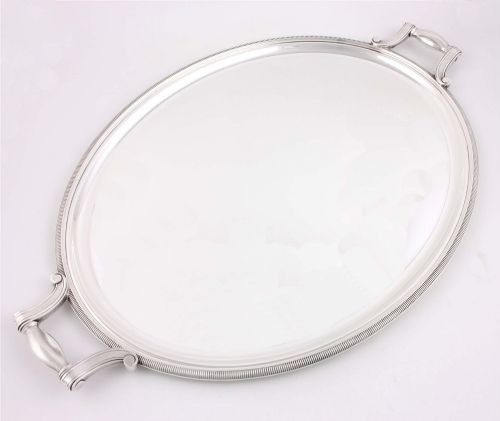
A large silver waiter is a substantial serving tray designed for holding glasses, decanters or tea services during formal hosting. When searching this phrase, buyers encounter circular salvers and wide oval platters intended to command attention on a sideboard or table.
The pieces appearing on this page span several eras, with Victorian and Edwardian examples forming the largest group alongside earlier Georgian and later Art Deco interpretations. These trays serve practical roles in hospitality while functioning as centrepieces of metalwork craftsmanship.
Originating predominantly from English workshops, these items also include continental European makers and prominent French houses. Formats range from plain polished surfaces to heavily pierced galleries and engraved fields.
Materials and construction methods
These items utilise sterling silver or base metals such as copper and nickel silver coated with a layer of silver plate or electroplated nickel silver. Old Sheffield plate examples employ a fused sheet of silver over a copper core.
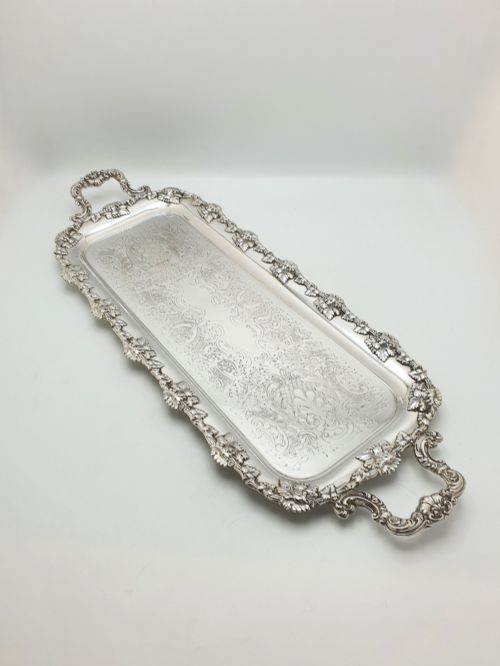
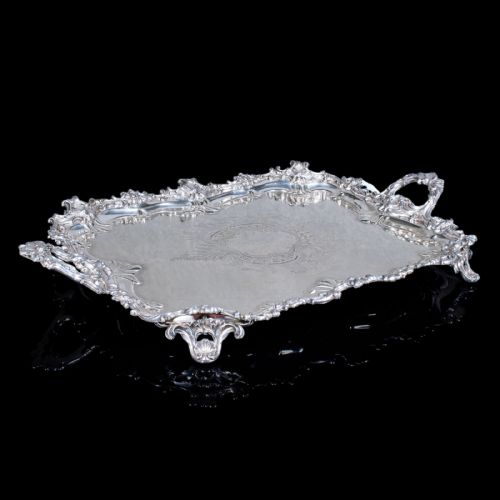
Techniques include hand engraving, engine turning, and applied cast borders featuring grapevine motifs or geometric patterns. Piercing and reticulated work create openwork railings around the edges of many serving trays.
Listings include items spanning the Victorian, Edwardian, and Art Deco periods, utilising silver plate, sterling silver, copper, and wood.
Distinctions in quality
Quality rests in the weight of the metal blank and the crispness of the chased or engraved detail across the central field. Superior pieces display substantial gauge metal that resists flexing under the weight of heavy decanters.
The execution of applied borders and handles separates standard production from exceptional work. Makers who integrate cast handles and detailed reticulated galleries demonstrate higher craftsmanship than those relying on simpler stamped forms.
Christofle·Elkington·Atkin Brothers·Paul Storr·Lee & Wigfull·J.H. Potter·Fenton Russel
The Large Silver Waiter Glossary
- Waiter
- A small tray or salver used by servants for carrying glasses or letters, though larger versions became known simply as serving trays. These pieces typically rest on small feet.
- Salver
- A flat tray, usually made of silver or silver plate, traditionally used for presenting items or serving drinks. They often feature raised rims and decorative feet.
- Old Sheffield Plate
- An early method of fusing a thin sheet of sterling silver to a thicker copper core by heat and pressure. This technique predates modern electroplating.
- EPNS
- Electroplated nickel silver, a common base metal alloy coated with a thin layer of silver through an electrolytic process. It gained widespread use in the nineteenth century.
- Reticulated
- Ornamented with openwork patterns resembling a net or lattice. This decorative technique appears frequently on the raised borders of Edwardian trays.
- Engine turning
- A mechanical technique for producing intricate geometric patterns on metal surfaces using a lathe. It provides a precise, textured finish to the tray field.
Large Silver Waiter: Frequently Asked Questions
How do I clean a silver waiter?
Use a soft cloth and a specialised silver polish designed to remove tarnish without scratching the delicate plated or solid surface. Avoid harsh abrasive cleaners that strip away thin plating.
Rinse the tray thoroughly in warm water and dry it immediately with a lint-free cloth to prevent water spots from forming on the polished metal.
Can I use these trays for serving drinks?
Most large silver waiters remain entirely functional and suit the service of cocktails, tea, or wine glasses during gatherings. Ensure the weight capacity matches the items placed upon it.
Take care to protect the surface from moisture rings by using coasters or linen cloths beneath sweating glassware or metal decanters.
What is the difference between a salver and a tray?
Salvers generally refer to footed circular trays traditionally used for presenting letters or glasses, while serving trays often include handles and oval or rectangular formats.
Over time, terminology blurred as makers applied both terms interchangeably to large flat serving pieces intended for domestic hospitality.
How do I date an antique silver tray?
Examine the hallmarks stamped into the metal for sterling silver pieces, which indicate the assay office and year of production. Silver-plated items often rely on maker marks and stylistic clues.
Stylistic markers such as Victorian grapevine borders, Edwardian reticulation, or Art Deco geometric lines help narrow the decade of manufacture when marks are absent.