

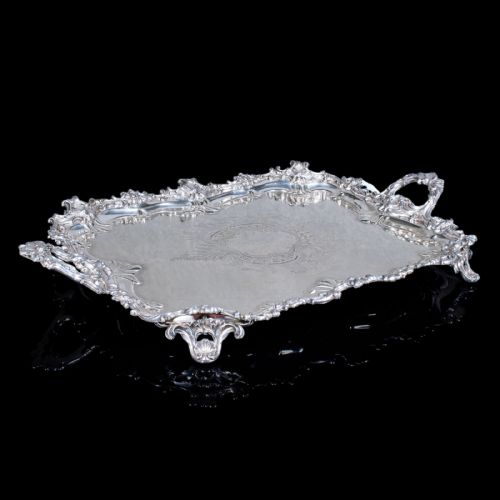


Victorian Silver Plate Waiter
A victorian silver plate waiter offers a gleaming surface for afternoon tea, drinks or presentation, bringing heavy nineteenth-century metalwork into daily domestic use.
Victorian Silver Plate Waiter
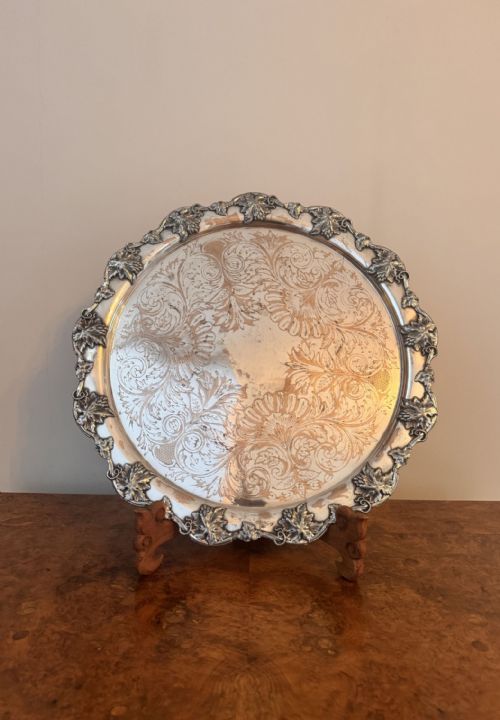
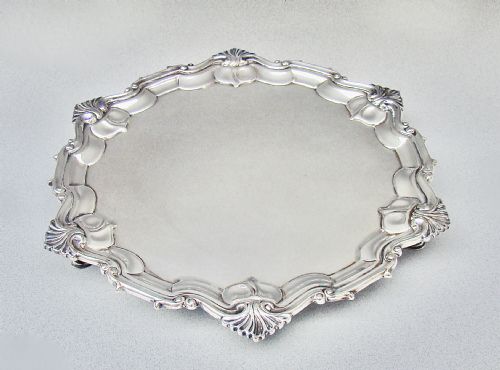
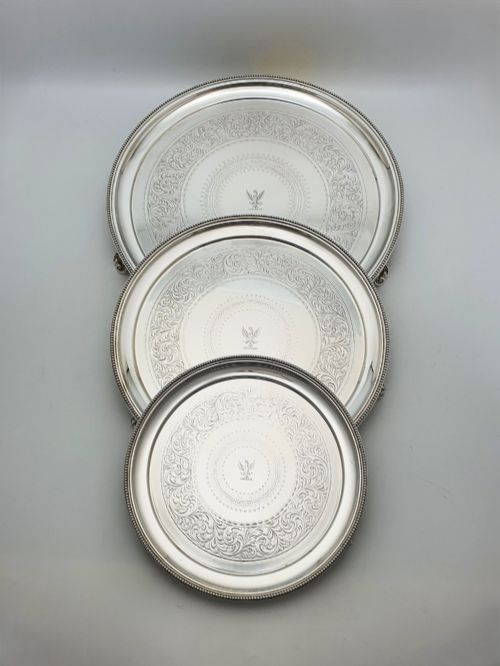
A victorian silver plate waiter typically takes the form of a circular or oval salver, serving tray or gallery tray resting on small feet or a flat base. These pieces originate primarily from the nineteenth century, spanning decades from the eighteen-fifties to nineteen hundred.
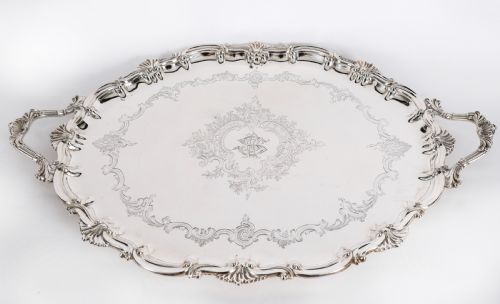
Makers shaped these items for practical hospitality tasks such as holding decanters, calling cards or afternoon tea services. Circular salvers and large twin-handled serving trays dominate the selection found on this page.
English workshops produced the majority of these items, alongside examples bearing continental or Scottish origin. Forms range from simple round trays with raised detailed rims to monumental presentation platters with intricate engraving.
Materials and plating techniques
Makers utilised a base metal, copper or nickel silver as the foundation for these pieces before applying silver plate or utilising electroplated nickel silver and Sheffield plate methods. Electroplated nickel silver, known as EPNS, became common during the nineteenth century as a modern alternative to traditional fusion plating.
Older Sheffield plate involved fusing a thin sheet of silver to a thicker copper core, creating a durable laminate material. Craftsmen then enriched the surfaces through extensive hand engraving, reticulated piercing along the rim, or cast ornamental borders in the Rococo Revival style.
Listings on this site span from eighteen-fifty to nineteen hundred, encompassing Victorian, Edwardian and Rococo Revival styles executed in silver plate and copper.
Distinctions in craftsmanship and metalwork
The standard of a victorian silver plate waiter depends on the depth and crispness of the chased or engraved surface decoration. Deeper hand-cut patterns and substantial weight in the underlying base metal distinguish finer items from lighter, purely utilitarian production.
Makers who invested time in pierced galleries, reticulated borders and cast handles achieved a higher tier of output. The preservation of the original plating across high-use areas also marks the difference between average pieces and superior survivals.
William Hutton & Sons·Thomas Bradbury & Sons·Elkington·John Harrison·Padley Parkin·J Dixon & Sons·Peters Hamburg·Fenton Russel·Walker & Hall·Lee & Wigfull·J.H. Potter·Philip Ashberry & Sons
The Victorian Silver Plate Waiter Glossary
- Waiter
- A small serving tray or salver, typically raised on feet, used for carrying glasses, letters or visiting cards.
- Salver
- A flat tray, usually circular with a raised rim and supported by three or four feet, designed for serving food or drink.
- Sheffield Plate
- An early composite material made by fusing a thin layer of silver to a copper ingot before rolling them into sheets together.
- EPNS
- Electroplated nickel silver, a method introduced in the nineteenth century where a silver coating is deposited onto a nickel alloy using electrical current.
- Reticulated
- Openwork decoration formed by piercing or cutting patterns through the metal plate of the rim or gallery.
Victorian Silver Plate Waiter: Frequently Asked Questions
What is the difference between a waiter and a salver?
In historical usage, a waiter is generally smaller and often handled or footed for passing drinks, while a salver refers to a larger flat tray intended for presentation or service.
Both terms describe similar flat metal vessels designed to hold items off a tabletop during hospitality rituals.
How do I clean an antique silver plated tray?
Cleaning requires warm soapy water and a soft cloth to remove surface dust without abrasive scrubbing.
Harsh metal polishes strip the remaining silver layer away from the base metal, so gentle cleaning preserves both the finish and the underlying plating.
Can I use these trays for serving food and drinks?
These pieces function well for displaying bottles, glasses or afternoon tea items during gatherings.
Direct contact with acidic foods should be avoided to protect the historic metal surface from unnecessary tarnishing or wear.
How can I tell the date of a silver plated tray?
Dating relies on maker marks, stylistic clues such as Rococo Revival motifs, and the transition from Sheffield plate to electroplated nickel silver.
Registry marks or stamped maker names help narrow the production period to specific decades within the nineteenth century.