




Antique Circular Waiter Tray
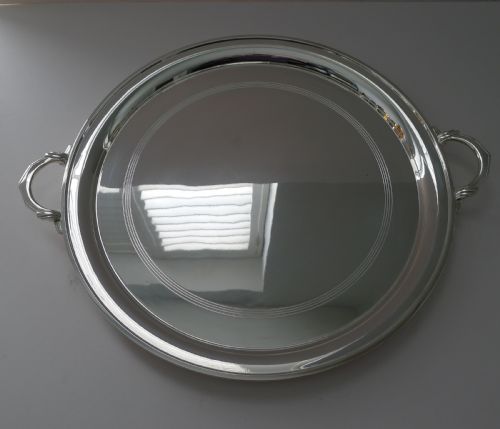
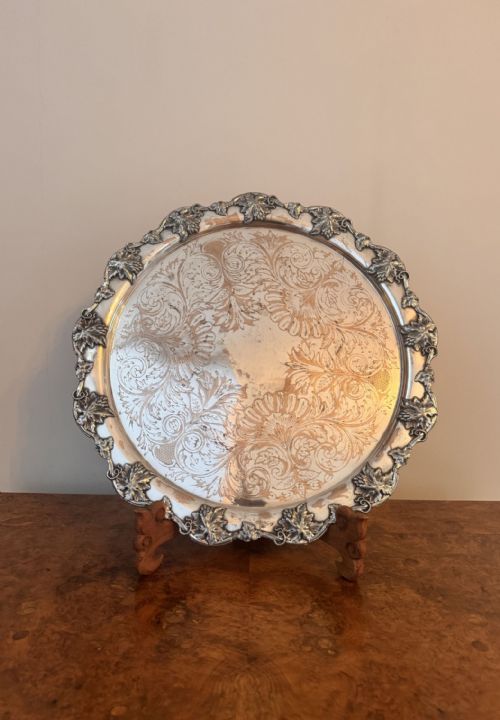
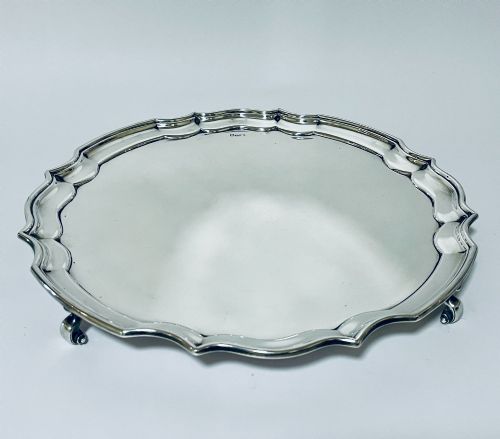
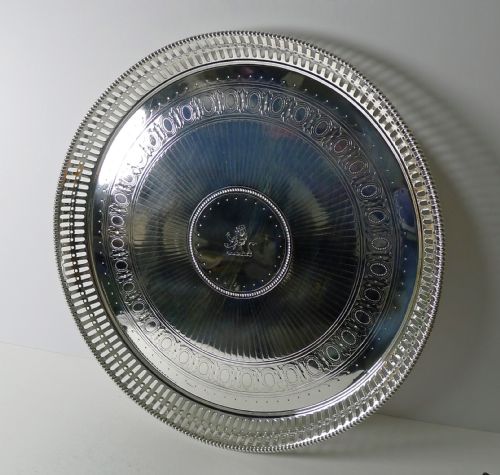
An antique circular waiter tray brings a classic round form to drinks service, combining period craftsmanship with practical utility.
Antique Circular Waiter Tray
When you search for an antique circular waiter tray, you are looking at round serving pieces, salvers, and occasional tables spanning the Georgian, Victorian, Edwardian, and Art Deco periods. These items range from small card trays and wine coasters to large cocktail trays and multi-tiered dumb waiters.
The versions you are most likely to meet on this page include silver-plated serving trays from the late nineteenth and early twentieth centuries, alongside earlier mahogany and inlaid wood examples from the Georgian era. Form follows function across these eras, providing stable round surfaces for drinks, canapés, and glassware.
Materials and construction methods
Makers utilised traditional metals such as sterling silver, Old Sheffield plate, copper, base metal, and EPNS to construct durable circular trays, often applying engine-turned decoration to create geometric surface patterns. Plating techniques advanced through the nineteenth century, moving from fused silver plate to electroplating on base metals.
Wooden examples rely on dense cabinet timbers like mahogany, enhanced with contrasting boxwood and satinwood inlay. Joiners and cabinetmakers shaped these round tops for wine trays, card trays, and revolving dumb waiter tables using solid timber construction.
Some Edwardian circular trays double as party turntables, proving that cocktail hour entertainment is remarkably enduring.
Distinctions in quality and execution
Quality in these round trays rests upon the weight of the metal, the crispness of chased or engraved borders, and the precision of engine-turned detailing. Finer silver-plated pieces maintain an even coating without base metal breakthrough, while superior wooden trays show tight joinery and delicate inlay work.
The standing of the maker also dictates value, with recognised workshops demonstrating superior finishing on handles, feet, and rims compared to anonymous production pieces. Proportion and balance in the circular form separate standard utility items from distinguished presentation pieces.
Keith Murray For Mappin & Webb·Walker & Hall·J Dixon & Sons·Elkington
The Antique Circular Waiter Tray Glossary
- Salver
- A flat round tray, usually made of silver or silver plate, used for serving drinks or presenting letters. They often rest upon small bracket or claw feet.
- Old Sheffield Plate
- A composite material made by fusing a thin sheet of silver to a thicker copper ingot. This early plating method produces a rich tone as the copper subtly shows through high points.
- EPNS
- Electroplated Nickel Silver, a base metal alloy plated with silver using an electrical current. This method became widespread in the Victorian period for mass production.
- Dumb Waiter
- A freestanding multi-tiered piece of furniture with round revolving or stationary trays. They held dishes and bottles near a dining table without requiring a human servant.
- Engine-Turned
- A geometric surface pattern cut into metal by a lathe. This precise mechanical engraving creates repetitive decorative lines across the tray face.
Antique Circular Waiter Tray: Frequently Asked Questions
What is the difference between a salver and a tray?
A salver generally refers to a more formal metal plate with raised edges used for serving drinks or calling cards. Trays often include wooden serving pieces or domestic items with handles built for carrying.
Historical terminology sometimes overlaps, but silver salvers typically denote presentation pieces resting on small feet rather than utilitarian vessels.
How do I clean silver-plated round trays?
Maintenance requires a soft cloth and a specialised silver polish formulated for plated items. Vigorous rubbing should be avoided on Old Sheffield plate to protect the underlying copper layer.
Regular dusting prevents tarnish build-up, while chemical dips should be avoided in favor of gentle cream polishes.
Are these round trays suitable for daily use?
Many silver-plated and wooden examples remain sturdy enough for holding glasses or serving drinks at gatherings. Metal surfaces handle moisture well, provided they are dried promptly after use.
Wooden wine trays and inlaid card trays need protection from standing water and heat to preserve the timber and decorative veneers.
How can I tell a Georgian tray from a Victorian one?
Georgian pieces frequently employ mahogany with subtle inlay or feature early fused silver plate rather than electroplate. Design lines tend to follow classical proportions with restrained ornamentation.
Victorian and later Edwardian items often display heavier silver plating, EPNS marks, engine-turned engraving, and more ornate cast borders reflecting industrial manufacturing advances.