





Silver Plated Barware Tray
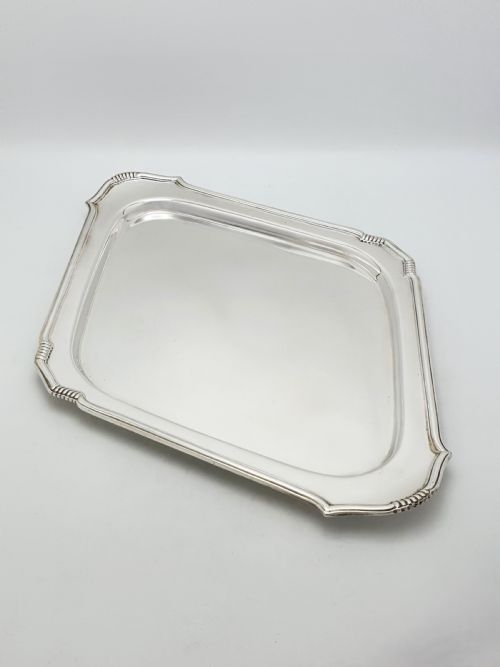
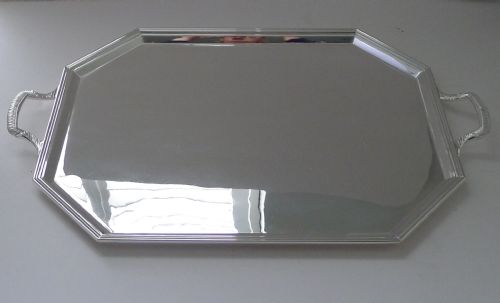
A silver plated barware tray brings practical elegance to the pouring of drinks, offering a sturdy surface designed for domestic service.
Silver Plated Barware Tray
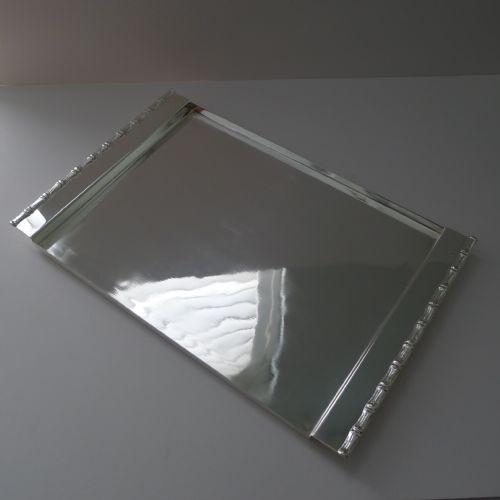
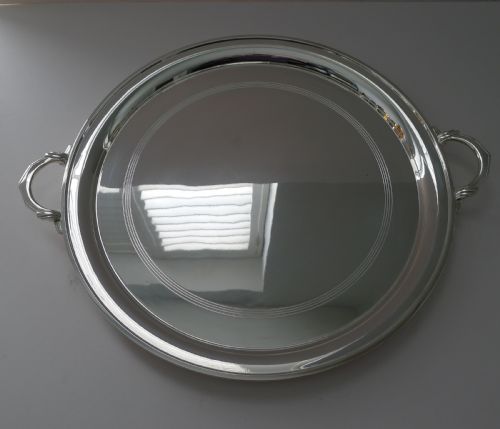
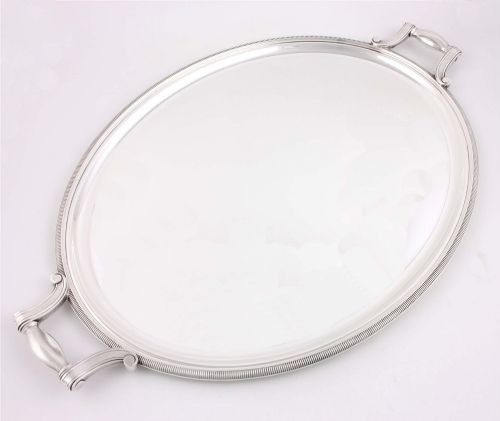
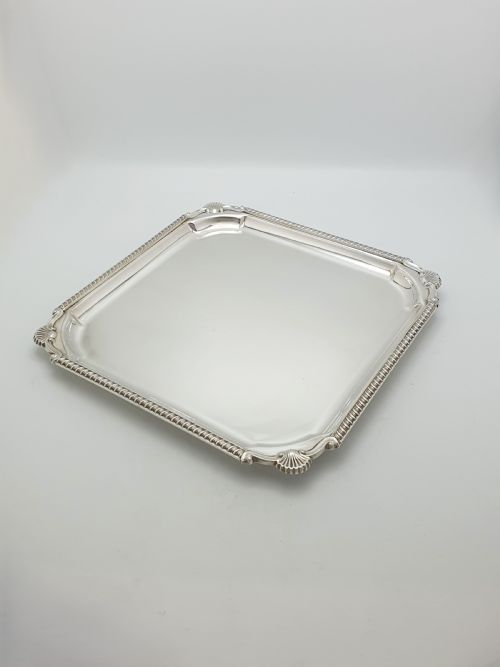
A silver plated barware tray serves as a dedicated vessel for holding decanters, glasses and cocktail shakers during household entertaining. Buyers searching for a silver plated barware tray encounter forms ranging from circular salvers and oval platters to geometric diamond shapes and long serving surfaces.
The pieces on this page span several decades, crossing the nineteenth century, the Edwardian era and the interwar Art Deco period through to mid-century modernist designs. Round serving trays and twin-handled drinks platters dominate the selection, often incorporating raised rims and engraved surfaces to secure glassware in transit.
Materials and Construction Methods
Makers formed these trays using base metals, nickel silver and electroplated nickel silver, applying layers of silver plate over a foundational core. Techniques such as engine turning created intricate geometric patterns across the metal surfaces, whilst applied borders introduced cast details like shell motifs and bamboo handles.
Earlier examples utilise old Sheffield plate methods, fusing silver sheets to copper substrates, whereas twentieth-century pieces rely primarily on electroplating. Cut crystal and glass inserts occasionally complement the metal framework, particularly in specialised decanter sets and lemon squeezers.
Materials represented across the selection include traditional copper, nickel silver, cut glass and electroplated base metals.
Distinctions in Quality and Execution
The calibre of a silver plated barware tray depends on the crispness of its decorative borders, the depth of its engraved surface work and the structural integrity of its handles. Superior examples display balanced proportions, substantial weight in the base metal and clean, even plating that adheres firmly to the underlying structure.
Pieces bearing the marks of recognised silversmiths demonstrate greater refinement in their cast handles and gallery rims. The precision of geometric lines in Art Deco designs and the clarity of engine-turned patterns separate standard commercial output from the finest workshop productions.
Keith Murray For Mappin & Webb·Christofle·Hukin & Heath·J B Chatterley & Sons·Walker & Hall·James Dixon & Sons·John Collyer & Co·Roberts & Dore·Asprey London·Elkington·Roberts & Belk·Atkin Brothers·Victor Saglier
The Silver Plated Barware Tray Glossary
- EPNS
- Electroplated Nickel Silver. This acronym denotes a base alloy of copper, nickel and zinc coated with a thin layer of pure silver.
- Salver
- A flat serving tray typically used for drinks or visiting cards. These pieces often feature footed bases and decorative engraved borders.
- Engine Turning
- A mechanical decoration technique. It produces precise, intricate geometric patterns across the metal surface of the tray.
- Old Sheffield Plate
- An early composite material. It involves fusing a sheet of silver to a copper core prior to shaping.
- Gallery Rim
- A raised vertical border surrounding the edge of a tray. This feature prevents glassware from sliding off during service.
Silver Plated Barware Tray: Frequently Asked Questions
What is a silver plated barware tray used for?
These trays provide a stable, protective surface for organising and transporting decanters, glasses and cocktail accessories.
They protect polished furniture surfaces from condensation and drips while facilitating the serving of drinks to guests.
How do I date a silver plated barware tray?
Dating relies on stylistic indicators such as geometric Art Deco lines, Victorian engraving styles or modernist minimalist profiles.
Maker marks stamped onto the underside provide additional clues to the manufacturing period and workshop origin.
What is the difference between EPNS and old Sheffield plate?
EPNS utilises a modern electroplating process over a nickel-silver base metal, introduced during the nineteenth century.
Old Sheffield plate involves physically fusing a thin sheet of silver to a copper ingot before rolling it into sheets.
How should I clean a silver plated barware tray?
Maintenance requires gentle cleaning with a specialised silver polish and a soft cloth to remove tarnish without wearing away the plating.
Avoid abrasive pads or harsh chemical dips that can damage the underlying base metal or decorative engraving.
Are these trays suitable for everyday use?
Sturdy construction and durable metal cores allow these items to handle regular service during home entertaining.
Prompt drying after use prevents moisture spots and maintains the bright finish of the silver surface.