


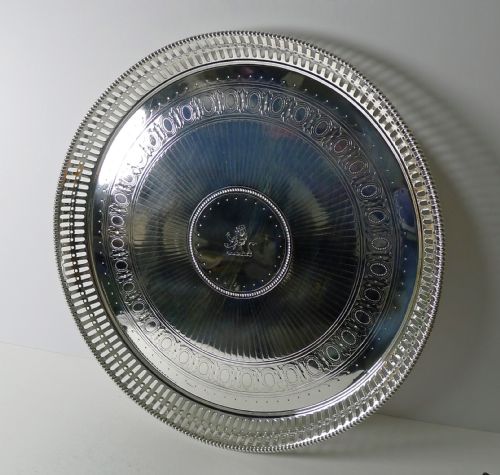
Circular Silver Tray
A circular silver tray brings genuine weight and polished reflection to a table, combining utility with decades of craftsmanship.
Circular Silver Tray
A circular silver tray encompasses everything from small cocktail service pieces to large Victorian salvers and mirrored table plateau bases. When searching for a circular silver tray, buyers encounter items produced across the nineteenth and twentieth centuries in various plated and solid silver metals.
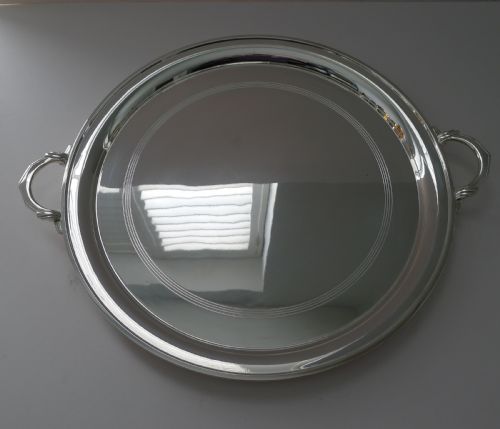
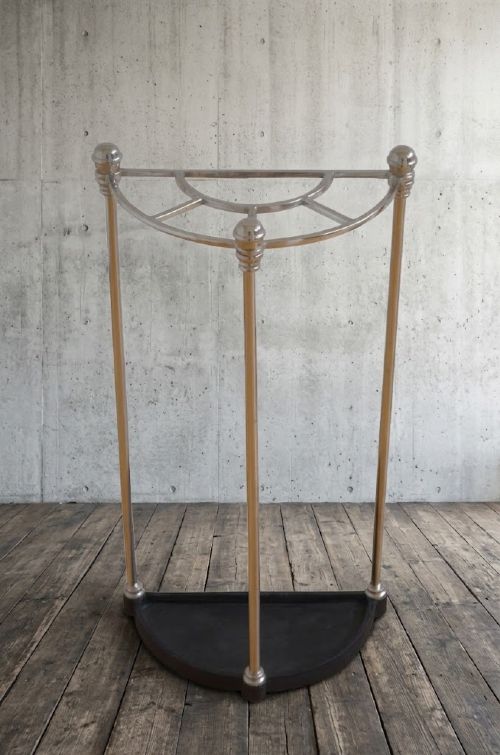
The selections span distinct stylistic eras, including Georgian, Victorian, Edwardian, Art Deco, and Mid-Century Modern designs. Many examples serve specific domestic functions, functioning as drinks trays, ashtrays, or serving platters alongside decorative umbrella stands and mirror plateaus.
How they were made
Manufacture relies primarily on silver plate, EPNS, and sterling silver applied over base metals such as copper, nickel plating, and cast iron. Oak also appears as a structural material in combination with silver plate for serving trays.
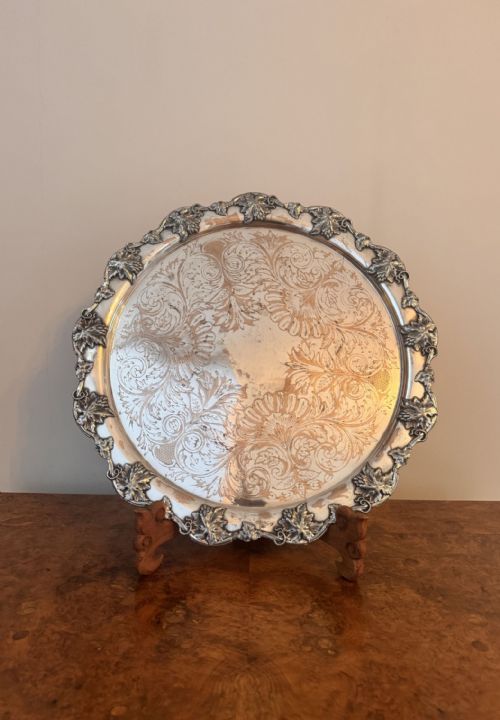
Craftsmen applied decorative techniques including engine turning, etching, and the creation of Old Sheffield plating methods. Design execution ranges from plain circular surfaces to pieces featuring elaborate borders and distinct divisions.
What varies in quality
Quality rests upon the weight of the underlying metal and the thickness of the silver application, distinguishing substantial Victorian salvers from lighter plated wares. The precision of engine turning and the depth of surface etching dictate the visual merit of each piece.
Maker attribution to notable firms such as Mappin & Webb, Elkington, Walker & Hall, J Dixon & Sons, or Adie Brothers elevates a piece. The crispness of period styling, from Art Deco geometry to Victorian ornamentation, marks the distinction between standard production and superior work.
Keith Murray For Mappin & Webb·Walker & Hall·J Dixon & Sons·Elkington·Adie Brothers
The Circular Silver Tray Glossary
- Salver
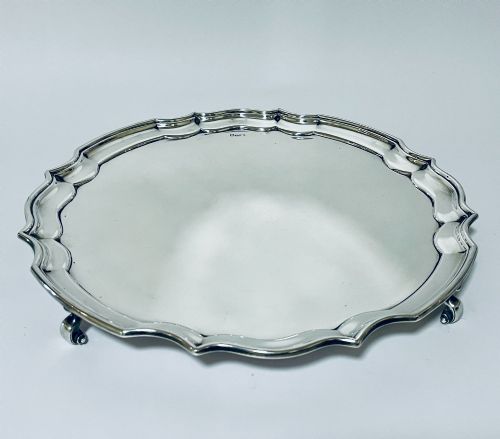
- A tray, typically made of silver or silver plate, used for serving food or drinks or for presenting visiting cards. They often feature footed bases and decorative cast rims.
- EPNS
- Electro-Plated Nickel Silver. This designates a base metal of nickel silver coated with a layer of pure silver through an electrolytic process.
- Old Sheffield Plate
- An early method of fusing a thin sheet of silver to a thicker copper ingot by heat and pressure. This technique predates modern electroplating.
- Engine turned
- A decorative mechanical technique involving precise geometric patterns cut into metal surfaces. It provides both texture and visual depth.
- Table plateau
- A mirrored base placed in the centre of a dining table to hold ornaments, decanters, or candelabras. They frequently incorporate silver-plated mounts and wooden frames.
Circular Silver Tray: Frequently Asked Questions
How are circular silver trays cleaned?
Cleaning requires a soft cloth and a specialised silver polish formulated to protect thin platings and delicate engravings. Harsh abrasives must be avoided to preserve the underlying metal layers.
Regular dusting and careful handling prevent tarnish accumulation and maintain the polished reflective quality of the surface over years of use.
Can silver plated trays be used daily?
Silver plated items function well for daily service provided they are washed by hand using mild detergents and dried immediately. Storing them away from damp environments prevents premature plate wear.
Using coasters and avoiding acidic foods directly on the silver surface helps maintain the finish against routine household demands.
How do I identify Art Deco trays?
Art Deco examples display geometric lines, streamlined forms, and restrained ornamentation characteristic of the interwar period. Designers prioritized functional simplicity alongside striking silhouettes.
Signatures from makers active during the nineteen twenties and thirties often confirm the period alongside stylistic markers such as engine turned borders.