


Antique Metal Waiter Tray
An antique metal waiter tray serves drinks or carries cards with period weight and polish.
Antique Metal Waiter Tray
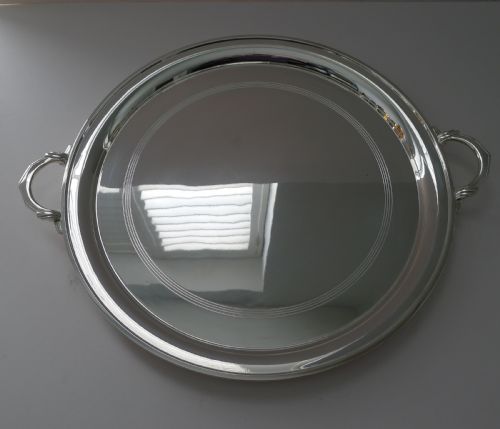
An antique metal waiter tray encompasses round salvers, cocktail pieces, and serving trays produced across the nineteenth and twentieth centuries. These items function as portable surfaces for beverages, visiting cards, or general presentation.
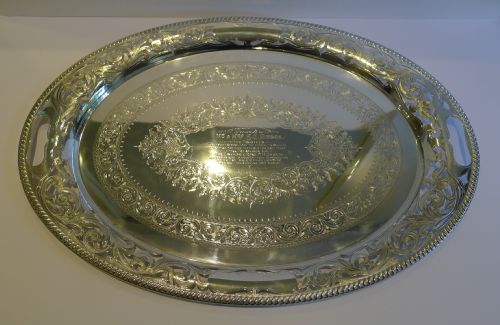
The pieces on this page span from Regency designs through Victorian revivals and into Art Deco creations. Buyers encounter various forms including plain circular plates, pierced borders, and oval formats in silver plate or base metal.
Makers and origins range from English silversmiths to German workshops, alongside occasional lacquer work. This selection reflects diverse dining and entertaining customs across different historical periods.
How they were made
Makers utilised metals such as copper, nickel silver, and base metal as a foundation, applying silver plating through standard methods or the earlier Old Sheffield Plate technique. These layered constructions provided the appearance of solid silver at a lower production cost.
Surface decoration involved hand engraving, piercing, and reticulated borders to create detailed patterns along the rims and centres. Workshops shaped circular and oval formats using rolling and pressing methods suited to each era.
What varies in quality
The depth and clarity of the engraved surface decoration distinguish simpler items from more ambitious examples. Crisp lines on the raised rim and well-defined piercing indicate higher execution standards by the maker.
The base metal choice and the preservation of the silver plating layer influence the overall integrity of the tray. Substantial weight and balanced construction demonstrate superior manufacturing.
Keith Murray·Mappin And Webb·Padley Parkin·Peters Hamburg·Fenton Russel·Clay·J.H. Potter
The Antique Metal Waiter Tray Glossary
- Salver
- A tray, typically with feet, used for serving food or drinks or for presenting cards.
- Old Sheffield Plate
- A fused material of a copper core sandwiched between sheets of silver, produced before electroplating.
- EPNS
- Electroplated Nickel Silver, a common base metal composition used for silver-plated items from the nineteenth century onward.
- Reticulated
- Having a network or web-like pattern, often seen in pierced metal borders on trays.
- Regency
- An English stylistic period spanning the early nineteenth century, characterised by classical influences.
Antique Metal Waiter Tray: Frequently Asked Questions
How do I clean an antique metal waiter tray?
Clean silver-plated surfaces gently with a soft cloth and a specialised polish formulated for plated items. Avoid harsh abrasives that can wear away the thin silver layer.
Regular dusting keeps the metal bright without risking damage to the engraved details or the underlying base metal.
What is the difference between a salver and a tray?
A salver traditionally denotes a small plateau raised on feet, primarily intended for presenting items or serving drinks. Trays encompass a broader range of flat serving surfaces with or without handles.
Both serve similar functional roles in domestic entertaining across different periods.
How can I tell Old Sheffield Plate from later silver plate?
Old Sheffield Plate often reveals a faint line of copper visible along edges or wear points where the fused silver sheet has thinned. Later electroplated items typically show the greyish tone of nickel silver beneath the worn plate.
Manufacturing dates and maker marks also help distinguish the fusion technique from nineteenth-century electroplating.
Can I use these trays for daily serving?
Many metal trays remain suitable for everyday use in serving drinks or displaying objects. Proper care prevents excessive wear on the plated surfaces.
Hand washing and drying immediately after use protects the finish from moisture damage.