
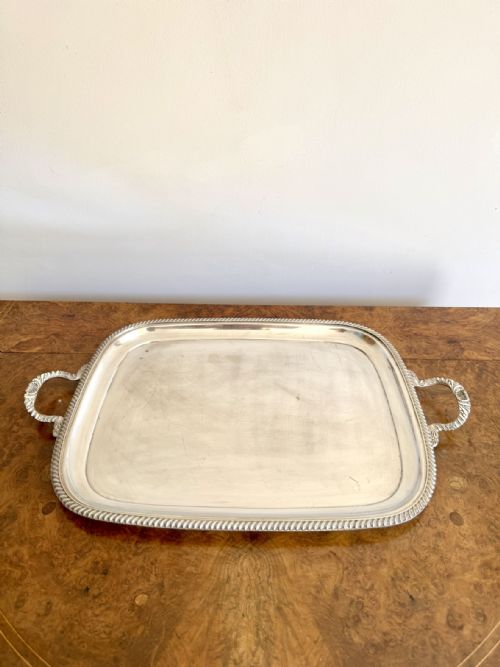
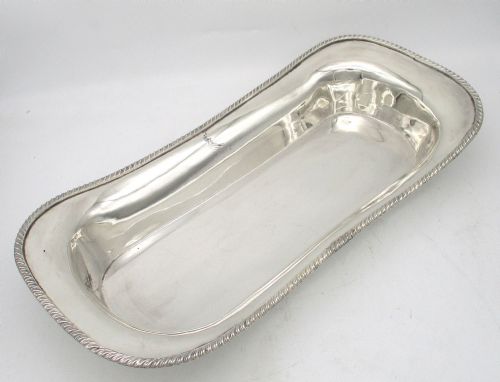


Gadrooned Silver Tray
A gadrooned silver tray brings tactile weight and period presence to a table, offering a textured border that catches the light.
Gadrooned Silver Tray
When you search for a gadrooned silver tray, you encounter serving pieces defined by their rounded, carved edge decoration that frames the central plate. These items span serving trays, platters, entree dishes, and knife trays originating across the eighteenth, nineteenth, and early twentieth centuries. The examples on this page predominantly take the form of silver plated or sterling silver serving pieces from the Victorian, Edwardian, and Art Deco periods, alongside Georgian and Regency designs.
The assortment includes specialised forms such as rectangular entree dishes, cocktail trays with shell borders, and Old Sheffield plated serving dishes. Makers and merchants from Sheffield and Dublin produced these works in sterling silver, silver plate, copper, and EPNS. A buyer is most likely to meet silver plated examples from the Edwardian era or the nineteenth century, alongside substantial Georgian and Victorian iterations.
Materials and construction methods
The physical construction relies on base metal, copper, and silver plate, alongside solid sterling silver and Old Sheffield Plate. Craftsmen shaped copper and base metals as a foundation before applying silver plating or fusing thin sheets of silver to copper bases in older Sheffield pieces. Heavier items utilise sterling silver or substantial silver plate over copper, requiring skilled metalworking to form the characteristic raised borders.
The defining gadrooned edge involves hammering, rolling, or casting rounded decorative motifs directly into the metal border or soldering applied rims onto the tray body. Makers such as Elkington and Co., Frank Cobb and Co., and Creswick employed these established techniques to attach handles, feet, and decorative borders to the central serving area.
Gadrooned Silver Tray Retail Price Guide 2026
Typical asking prices for gadrooned silver tray among the pieces listed under this phrase on Sellingantiques today, from the lower quarter to the upper quarter. They describe what is for sale here now, not the wider market.
The listings on this page span the eighteenth, nineteenth, and twentieth centuries, featuring materials from copper and EPNS to sterling silver and Old Sheffield Plate.
Assessing quality in period metalwork
Quality reveals itself in the crispness of the gadrooned border and the structural integrity of the metal beneath the plating. Superior pieces display deep, sharply defined decorative carving along the rim that remains even and well-defined rather than worn smooth through decades of cleaning. The weight of the tray relative to its size indicates the thickness of the metal used in the body and base.
The choice of material creates a distinct hierarchy, moving from base metal and basic EPNS up to Old Sheffield Plate, heavy silver plate, and hallmarked sterling silver. The reputation of the workshop, such as Elkington and Co. or Creswick, and the precision with which decorative elements like shell borders or cast handles are integrated, separates standard domestic items from superior examples.
Robert Breading·Elkington and Co.·Creswick·Frank Cobb and Co.
The Gadrooned Silver Tray Glossary
- Gadroon
- A decorative, embossed band of rounded, convex carvings typically running along the rim or border of a tray.
- Old Sheffield Plate
- An early fusing technique where a thin sheet of silver is fused to a thicker copper core before shaping.
- EPNS
- Electroplated nickel silver, a common base material coated with a thin layer of silver using an electrical current.
- Sterling silver
- A silver alloy containing a high proportion of pure silver by weight, distinct from plated base metals.
- Salver
- A flat tray used for serving food or drinks, often standing on small feet.
Gadrooned Silver Tray: Frequently Asked Questions
What is a gadrooned edge?
A gadrooned edge is a decorative, rounded border pattern resembling small parallel curves or lobes. It provides a tactile, textured frame around the perimeter of the tray.
This ornamental banding appears on serving pieces across multiple centuries, serving both a decorative purpose and a functional one by offering a secure grip.
How do I care for silver plated trays?
Care involves gentle cleaning with appropriate silver polishes and soft cloths to preserve the thin metallic coating. Avoid abrasive materials that can wear through plating on raised edges.
Storing pieces in dry environments helps prevent tarnish and corrosion on items that combine copper, base metal, and silver plating.
What is Old Sheffield Plate?
Old Sheffield Plate is an early manufacturing method where silver is mechanically fused to a copper base before shaping. This technique creates items with distinct material layering.
Pieces made this way often show subtle traces of copper where centuries of use have worn the outer silver layer.
How are different periods distinguished?
Periods are identified through hallmarks, manufacturing techniques, stylistic markers, and maker marks stamped into the metal. Georgian and Regency pieces show heavier hand-wrought construction, while Edwardian and Art Deco items reflect later industrial methods.
Examining the underside or borders reveals stamps and construction clues that link the item to specific nineteenth or twentieth-century eras.