
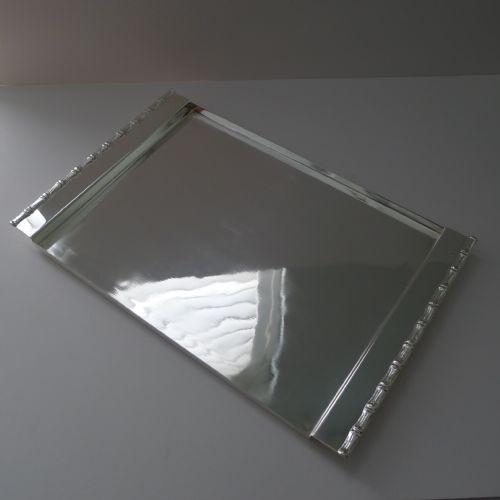
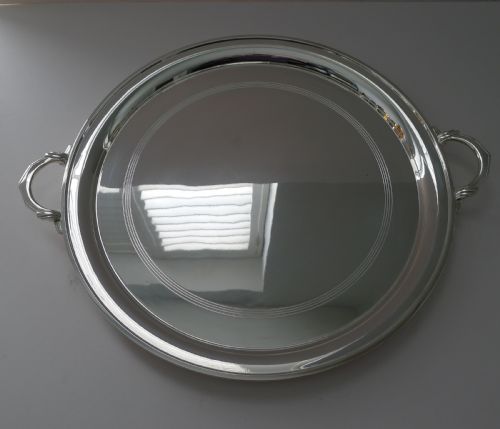
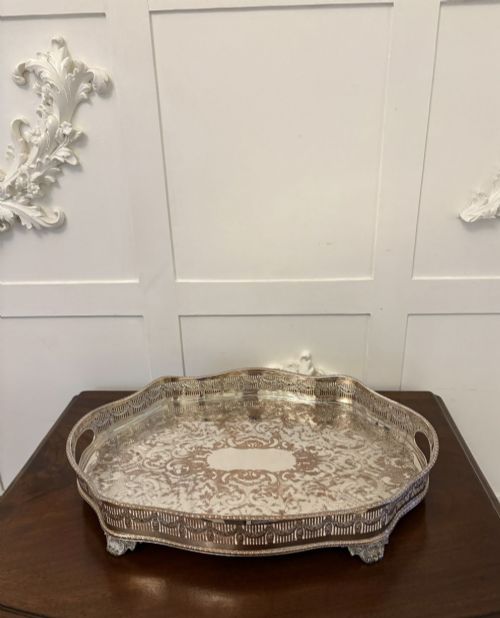
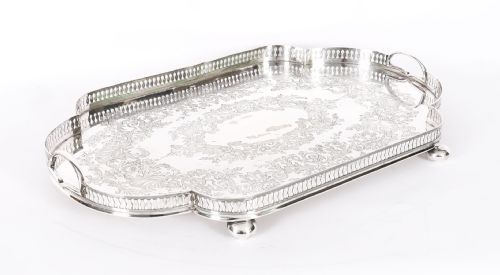

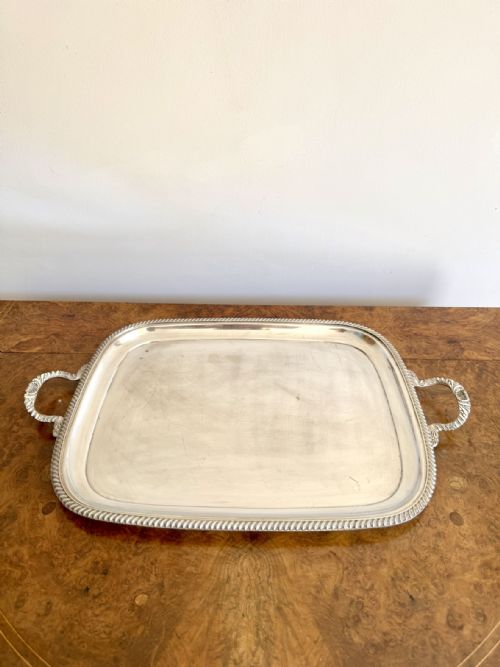


Silver Platter with Handles
These silver platter with handles pieces are practical serving pieces that bring traditional hospitality and period craftsmanship to modern tables.
Silver Platter with Handles
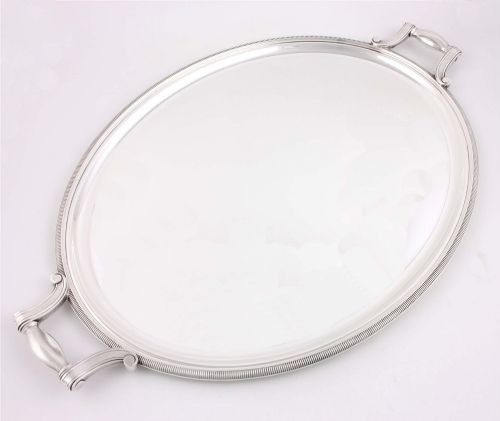
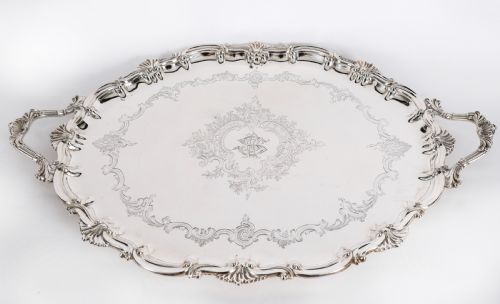
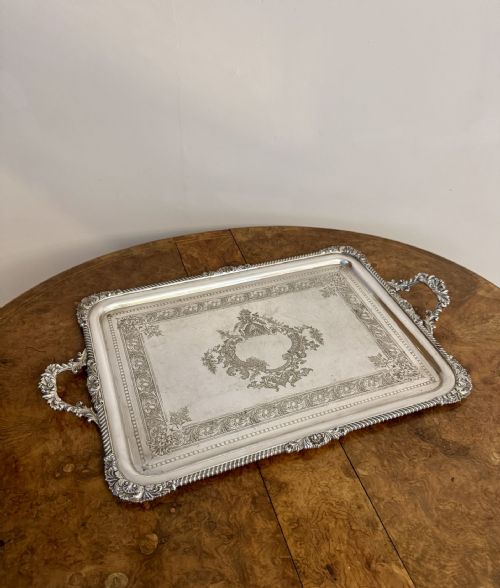
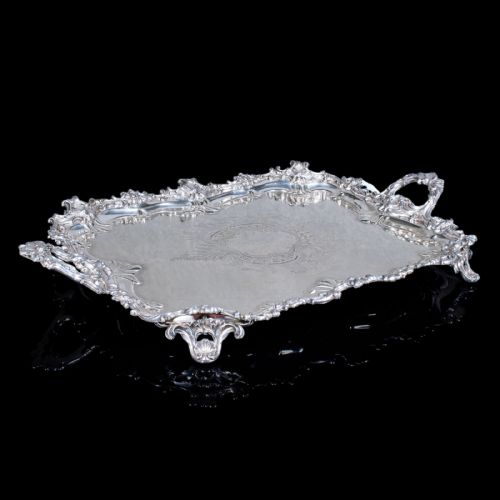
A silver platter with handles is a serving vessel designed for drinks, tea, and formal presentation, appearing in forms such as cocktail trays, gallery trays, and tea trays. The selection spans periods from the nineteenth century through the Edwardian era and the nineteen-thirties, reflecting diverse domestic uses over time.
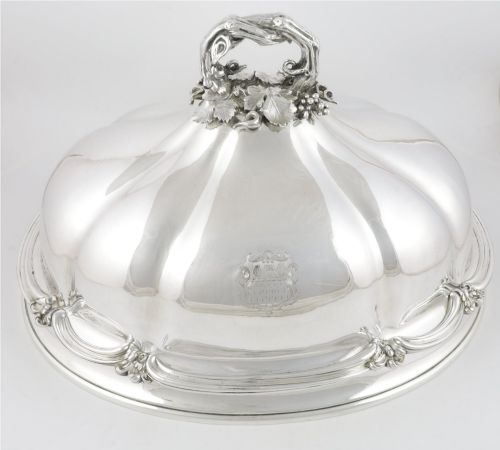
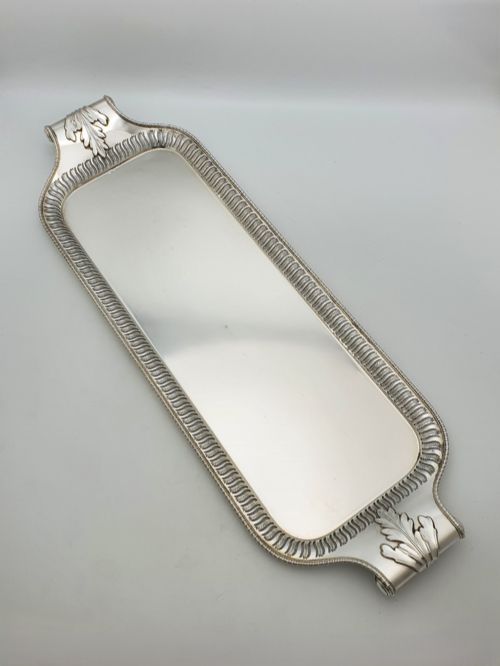
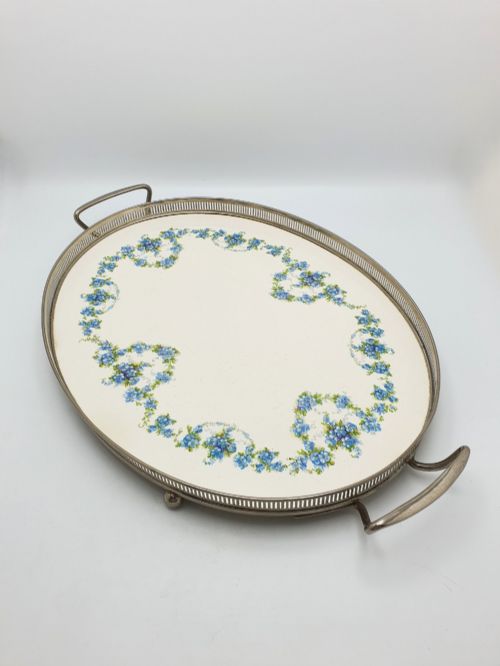
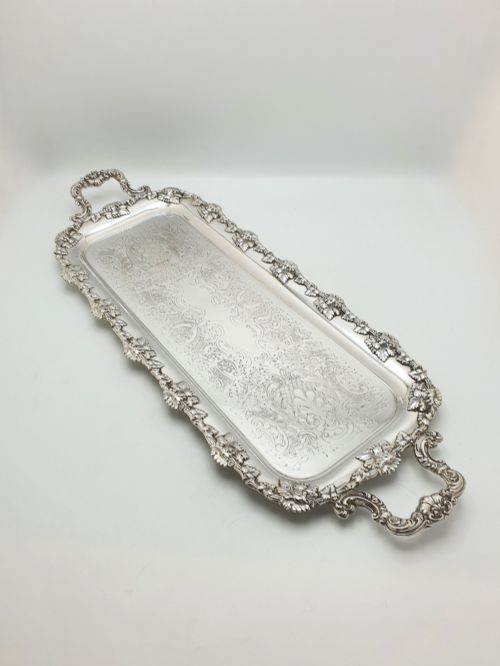
The most common examples on this page are silver plated and electroplated nickel silver serving trays, often decorated with engraved details, pierced borders, or grapevine motifs. Pieces range from large oval gallery trays with handles to continental oval designs featuring blue floral centres or oak construction.
How They Were Made
Manufacturing methods include traditional Sheffield plating, electroplating on nickel silver, and solid sterling silver fabrication. Makers combined metal bases with applied borders, pierced galleries, and securely fastened handles.
Surface decoration relies on hand engraving, floral ceramic centres, and cast metal rims featuring grapevine or classical motifs. Oak is occasionally integrated into the body of large trays alongside silver plate.
Some nineteenth century trays were built sturdy enough to survive multiple generations of enthusiastic cocktail parties without losing their grip.
What Varies in Quality
Quality depends on the weight and gauge of the metal used for the base and handles, alongside the thickness and durability of the silver plating. Superior examples maintain crispness in their engraved patterns and cast borders rather than wearing down to the base metal.
Design complexity and maker attribution also influence the standard of a piece, with recognised manufacturers and thoughtful detailing on handles and galleries setting finer examples apart from standard production items.
Keith Murray For Mappin & Webb·Christofle·Ralph Lauren·Elkington & Co
The Silver Platter with Handles Glossary
- Sheffield Plate
- An early method of fusing a thin sheet of silver to a copper core. This technique predates modern electroplating and produces a warm tone as underlying copper occasionally shows through with age.
- EPNS
- Electroplated Nickel Silver. A common base metal composition coated with a layer of silver through an electrolytic process.
- Gallery Tray
- A tray featuring a pierced or solid upright metal rim designed to prevent decanters and glasses from sliding off during service.
- Salver
- A flat serving tray typically supported on small feet, often used for presenting drinks or calling cards.
- Continental Decorative
- A stylistic category indicating manufacture in mainland Europe, frequently incorporating distinct regional motifs or ceramic centres.
Silver Platter with Handles: Frequently Asked Questions
How do I clean a silver plated tray?
Use a specialised silver polish and a soft cloth to gently remove tarnish, avoiding abrasive pads that can damage the plated surface.
Rinse the tray thoroughly in warm water and dry it immediately with a lint-free cloth to prevent water spots.
Can these trays be used for daily serving?
Most silver plated and metal trays are durable enough for regular use in serving drinks and food items.
Care should be taken with antique pieces to prevent scratching the surface or exposing the plating to harsh acidic foods.
How can I tell Sheffield Plate from electroplate?
Sheffield plate often reveals a faint reddish hue of underlying copper where the silver layer has worn thin along high points.
Electroplated items usually display a uniform silver surface and often carry specific maker marks denoting electroplate or EPNS.