



Silver Dressing Table Tray
A silver dressing table tray brings a touch of period elegance to a bedroom, designed to hold brushes, combs, and small personal trinkets.
The Silver Dressing Table Tray
A silver dressing table tray is a compact vessel created to organise personal effects on a bedroom surface. The examples found here span from the late nineteenth century through the Edwardian period and into the early twentieth century.
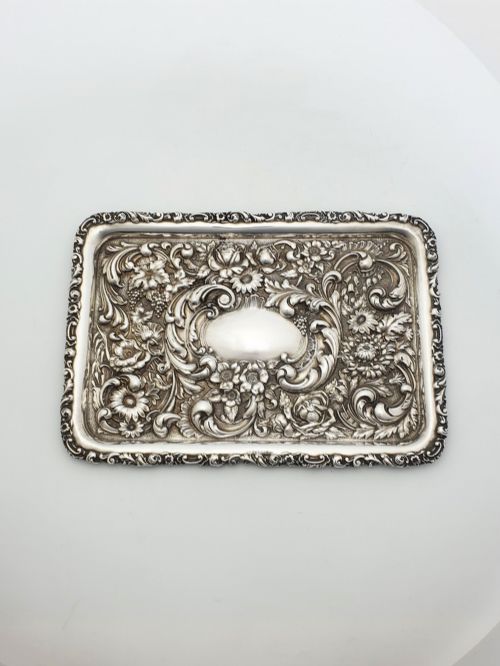
Most pieces seen in this category date from the Edwardian era and the late nineteenth century, taking the form of dedicated vanity or trinket trays. These items frequently display distinct stylistic influences including Victorian ornamentation, floral Art Nouveau designs, and Rococo motifs.
Makers produced these trays in various scales, from small trinket dishes to larger vanity and pen trays. Their primary domestic function was to gather combs, hairpins, and jars upon a dressing chest.
Materials and Manufacture
Silversmiths utilised sterling silver, silver plate, and nickel silver to fabricate these trays, working sheet metal into shallow basins. Many pieces received British hallmarking, identifying the town of assay such as Birmingham or Chester alongside the date letter.
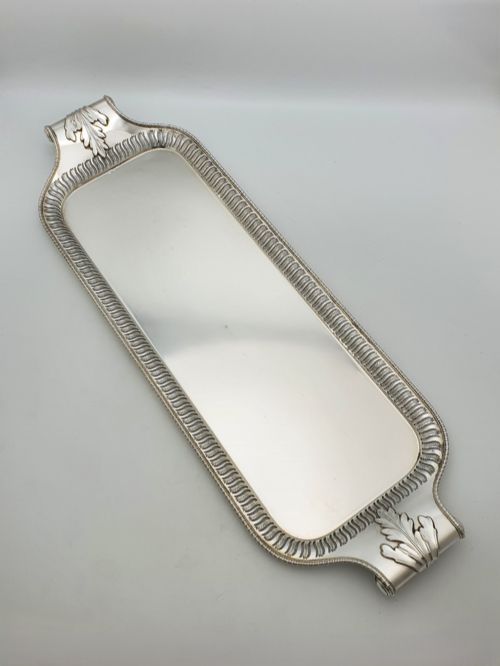
Techniques of embossing and repoussé dominate the surface decoration, pushing and hammering the metal from reverse and front to create raised motifs. Pierced borders and planished finishes also appear, showing the manual labour involved in shaping and texturing the metal.
Retail Price Guide 2026
Typical UK retail prices for silver dressing table tray, calculated from the Sellingantiques database of over a million retail prices indexed since 2003. This retail price guide relies exclusively on Sellingantiques data; no external sources or auction records are used, so the figures do not describe the wider market.
Cherubs and Reynolds Angels gaze up from the metalwork, keeping a watchful eye on misplaced hairpins and loose change.
Quality and Craftsmanship
The distinction between standard and superior pieces rests on the depth and crispness of the repoussé work. Finer examples display deeply chased floral or figural scenes, such as cherubs and angels, with sharp relief and clean hand-finished detailing.
Material choice and structural weight separate everyday domestic items from exceptional commissions. Trays with thicker gauge silver retain their rigid form better over time, while renowned silversmiths command attention through superior proportion and balanced composition.
William Comyns·Nathan and Hayes·James Deakin and Son·Williams Ltd·W. J. Myatt and Co
The Silver Dressing Table Tray Glossary
- Repoussé
- A metalworking technique where the artisan hammers designs from the reverse side to create a raised pattern on the front. This method defines the ornamented borders of many period vanity trays.
- Hallmark
- An official stamp applied to precious metals indicating purity, the maker, and the assay office. British pieces commonly show town marks and date letters.
- Planished
- A surface texture created by light hammer blows leaving small, controlled facets across the metal. This finish catches the light and subdues reflectivity.
- Sterling silver
- An alloy consisting of pure silver and other metals, traditionally copper, standardised for quality. It provides the durable foundation for solid silver dressing table wares.
- Pierced border
- An openwork design created by cutting decorative patterns through the metal rim. This technique lightens the visual weight of the tray.
Frequently Asked Questions
How do I date a silver dressing table tray?
Dating relies heavily on the hallmarks stamped into the metal, which include specific letters corresponding to the year of assay and the town where it was tested.
Stylistic cues also help narrow the period, such as flowing Art Nouveau floral lines or heavier Victorian repoussé motifs popular around the turn of the century.
How do I care for antique silver trays?
Maintenance involves gentle cleaning with a soft cloth and a reputable silver polish specifically formulated for antiques to remove tarnish without stripping the metal.
Avoiding harsh chemical dips preserves the subtle details of repoussé work and maintains the natural patina accumulated over decades of use.
Can I use these trays daily?
These trays adapt easily to modern use, serving as elegant containers for jewellery, keys, or desk accessories rather than traditional vanity items.
Placing them on soft surfaces or felt pads prevents scratching the underside and protects the original silver or plated finish during everyday handling.