


Embossed Silver Tray
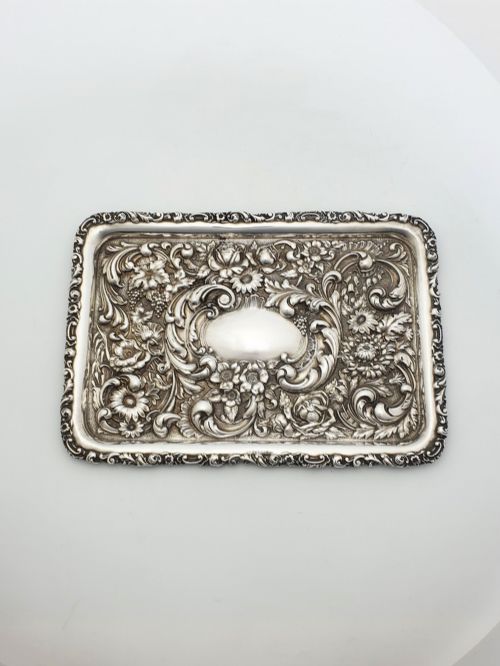
An embossed silver tray brings tactile relief work and gleaming metal to a dressing table, sideboard or serving routine.
Embossed Silver Tray
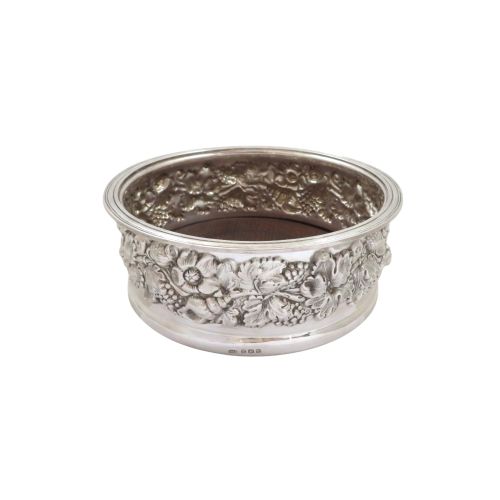
An embossed silver tray encompasses various forms including dressing table trays, pen trays, wine coasters, chargers and decorative dishes, all united by raised surface ornamentation. When you search for an embossed silver tray, you encounter pieces designed for personal vanity, dining service or display, spanning the Victorian, Edwardian and interwar periods.
The objects on this page predominantly reflect traditional British and Victorian aesthetics, with sterling silver and silver plate being the primary mediums. Pieces range from small trinket dishes and vanity trays to large chargers and serving platters.
Makers and manufacturers during these eras utilised detailed repoussé work, floral motifs, figural scenes and scrollwork to decorate the metal surfaces. These items survive from the nineteenth and twentieth centuries, reflecting the domestic habits of past households.
Materials and construction
Silversmiths constructed these items using sterling silver, silver plate, silver gilt and occasionally supporting materials like bronze, wood, velvet and satin for backing or lining. The application of silver gilt added a rich gold tone over silver, creating a contrasting decorative effect on chargers and sideboard dishes.
The characteristic raised decoration was achieved through repoussé and chasing techniques, where artisans hammered the metal from the reverse side to push the design outward before refining the details on the front. This required considerable skill to ensure even thickness and sharp definition in motifs such as floral garlands, figural battle scenes and classical scrolls.
Recorded object types range from wine coasters and dressing table trays to large decorative chargers and wall plates.
Assessing quality and execution
Material choice and structural integrity also differentiate the range. Solid sterling silver items retain their intrinsic metal value and durability better over time compared to plated alternatives where the underlying metal may eventually show through.
William Comyns·James Hennell
The Embossed Silver Tray Glossary
- Repoussé
- A metalworking technique where the artisan hammers the design from the reverse side to create a raised pattern on the front. This method gives embossed trays their tactile, three-dimensional surface.
- Silver Gilt
- Silver that has been coated with a thin layer of gold. It provides a warm, two-tone appearance often seen on large chargers and ceremonial dishes.
- Charger
- A large decorative plate or tray placed beneath other courses or displayed on a sideboard. These pieces often feature complex figural or floral embossed scenes.
- Coaster
- A small tray or stand designed to hold a wine or champagne bottle, protecting table surfaces. Many examples feature raised grape and vine motifs.
- Hallmark
- Official stamps marked on precious metals indicating the standard of silver, the assay office, and the date letter. These marks help identify the exact origin of Victorian and Edwardian pieces.
Embossed Silver Tray: Frequently Asked Questions
What are embossed silver trays used for today?
These trays function well on dressing tables for holding perfumes and jewellery, or on sideboards as decorative chargers and serving pieces. Their raised metalwork adds texture and reflection to interior surfaces.
Many collectors also use smaller pen trays and trinket dishes for everyday organisation of small personal items. Their historical utility adapts easily to modern domestic display.
How do I clean an antique silver tray?
Cleaning requires a soft cloth and a gentle silver polish specifically formulated for antiques to preserve the delicate repoussé details. Avoid harsh abrasive cleaners that can wear down the raised high points of the design.
Regular, light dusting helps prevent heavy tarnish buildup in the recessed areas of the embossing. Proper care maintains the natural gleam of the silver without harming the vintage surface.
How can I tell Victorian trays from later pieces?
Victorian examples frequently display heavier cast elements, naturalistic floral repoussé, and distinct hallmarks indicating nineteenth-century London or Birmingham offices. Stylistic clues like Rococo revival scrolls also point toward this era.
Later pieces from the interwar period often feature simpler geometric layouts or lighter plate construction. Comparing the weight, hallmarks, and specific motif styles clarifies the manufacturing era.
Are silver plated trays worth collecting?
Silver plated pieces offer access to substantial decorative forms, such as large chargers and serving trays, often featuring intricate embossed work without the higher cost of solid sterling. Many plated items display high artistic merit from notable nineteenth-century workshops.
Collectors appreciate them for their visual impact and craftsmanship. Evaluating the condition of the plating ensures the longevity of the piece in a collection.