
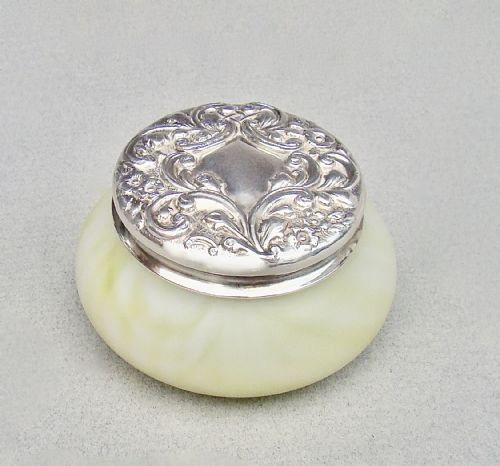
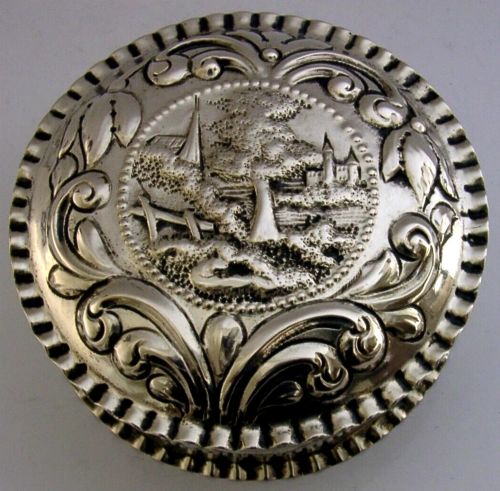
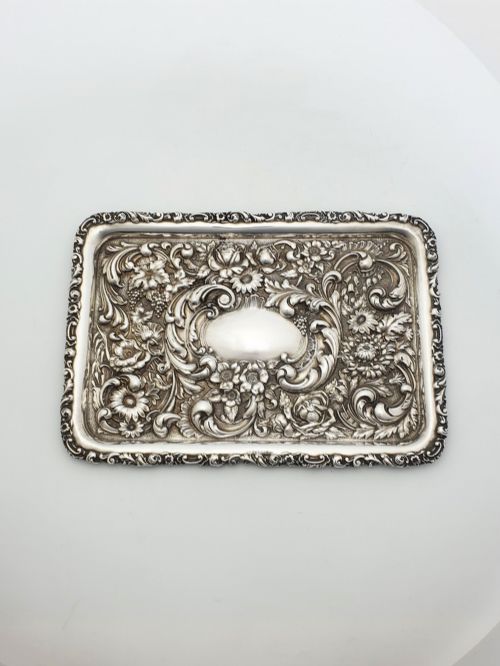
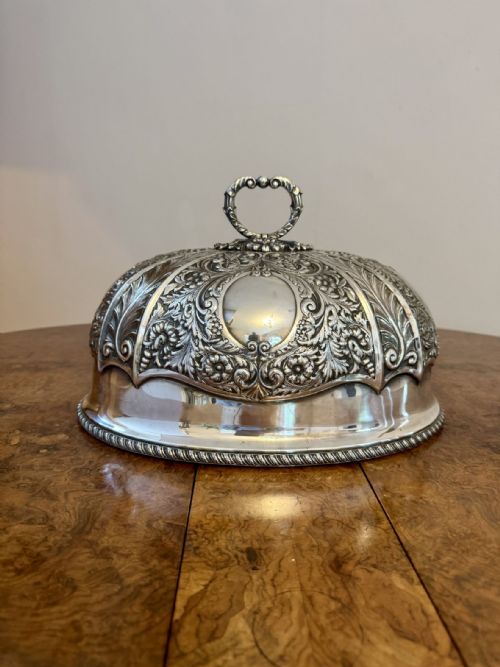




Embossed Silver Dish
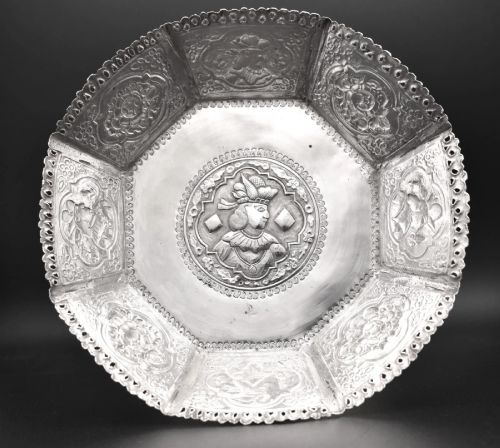
An embossed silver dish brings tactile depth and historic character to a table, shaped by hammers and presses across the Victorian and Edwardian eras.
Embossed Silver Dish
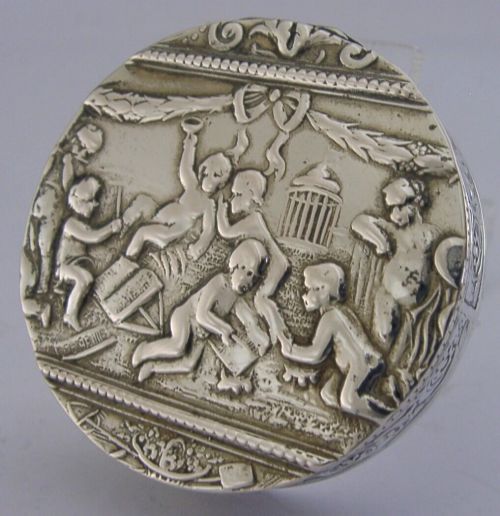
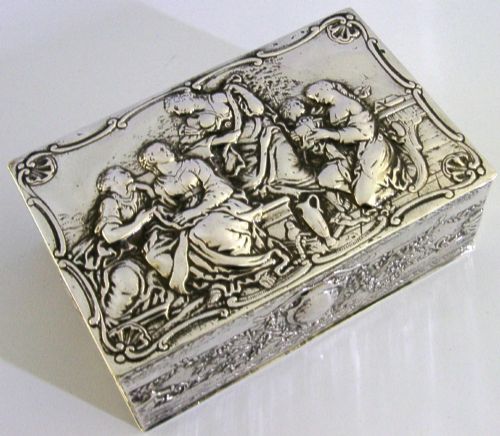
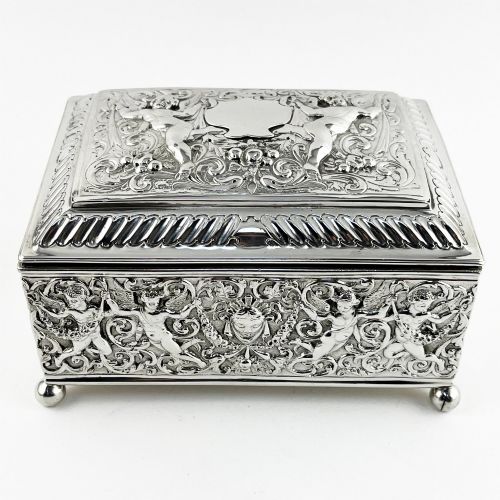
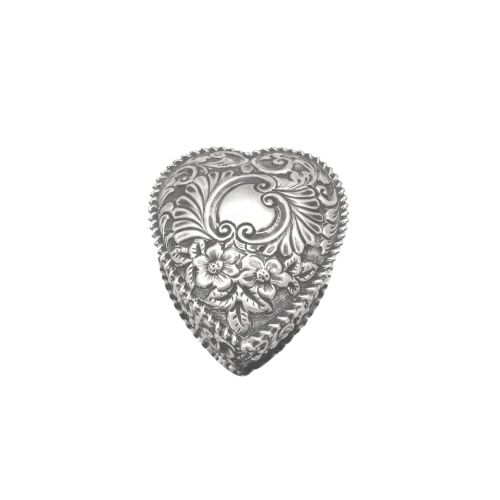
An embossed silver dish encompasses a broad family of tableware and dressing table items, ranging from shallow serving vessels to lidded boxes and trinket trays. When exploring an embossed silver dish, buyers typically encounter pieces originating from the nineteenth century, the Edwardian period, and around the year nineteen hundred.
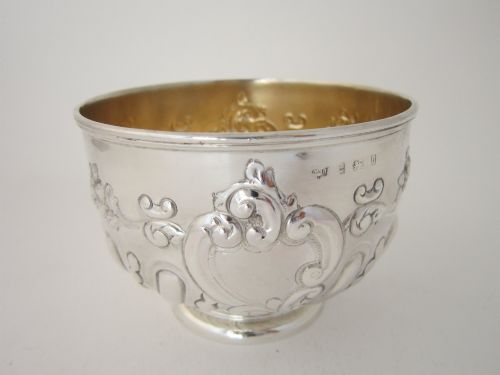
The domestic forms recorded in these archives include decorative bowls, tazzas, chargers, ring trees, and cushioned caskets alongside open dishes. Makers applied surface ornament to sterling silver, silver plate, and silver gilt, frequently producing matching pairs or individual display items for the sideboard.
Regional variations span traditional British domestic hallmarks from London, Birmingham, and Sheffield to continental European centres like Hanau, alongside Anglo-Indian, Chinese Export, and Thai craftsmanship. The common thread across these origins is the raised metalwork relief that defines the surface texture.
Materials and technique
The fabrication of an embossed silver dish relies predominantly on sterling silver, solid silver, and silver plate over base metals like bronze, shaped by hammering or pressing. Craftsmen pushed the metal from the reverse side to create raised motifs, a technique often termed repoussé, before refining the details from the front with chisels and punches.
Surface treatments frequently involve partial gilding, known as silver gilt, which highlights specific figural scenes or floral scrolls against a textured background. Certain examples incorporate contrasting elements such as cut glass or satin glass bodies fitted with chased metal rims and hinged lids.
Listings span the 19th Century, 1880, 1890, 1900, Edwardian, and 1920 periods, utilising sterling silver, silver plate, solid silver, silver gilt, cut glass, and satin glass.
Assessing quality in relief work
The distinction between ordinary production and superior craftsmanship rests upon the crispness and depth of the chased relief work. High-grade examples display hand-hammered detailing with distinct undercutting and clean margins, whereas lesser pieces show shallower, rounded impressions that lack individual definition.
Weight and structural substance separate substantial table boxes and heavy chargers from lighter pressed metal trays. The clarity of maker marks and standard hallmarks also indicates the workshop's standing and the original purity of the metal.
A. Bromet & Co·William Comyns·James Hennell·James Deakin & Sons·William Neale & Sons·Faraday & Davey
The Embossed Silver Dish Glossary
- Repoussé
- A method of metalworking where the design is hammered into relief from the reverse side. This technique creates three-dimensional floral, figural, or abstract patterns across the surface of the vessel.
- Silver Gilt
- Silver that has been coated with a thin layer of gold on its surface. This finish provides a warm, two-tone appearance that protects the underlying metal and accentuates chased details.
- Chasing
- The complementary metalworking process done from the front to refine, sink, and texture the surface after the initial repoussé work. It sharpens lines and adds fine surface detail to figures and foliage.
- Hallmark
- An official stamp applied to precious metals indicating the standard of purity, the assay office, and the date of manufacture. These marks allow collectors to trace the exact origin and maker of British and imported pieces.
- Tazza
- A shallow bowl or saucer raised upon a stem and foot, used historically for serving small portions of food or displaying fruit. In silver work, it provides an elevated platform for elaborate repoussé scenes.
Embossed Silver Dish: Frequently Asked Questions
How do I clean an antique silver dish?
Maintenance requires mild soapy water and a soft cloth to preserve the dark highlights within the recessed embossed areas. Avoid harsh abrasive dips that strip away the natural patination accumulated over generations.
Patina is an essential part of an antique's character, showing age and gentle handling. Over-polishing flattens the sharp edges of repoussé work and diminishes the historical value of the piece.
Were these dishes meant for dining?
Many examples served practical roles on the dining table as sweetmeat baskets, nut dishes, or fruit chargers during formal Victorian and Edwardian meals. Others were designed specifically for the dressing table to hold pins, rings, or calling cards.
Heavier lidded boxes acted as cigarette holders or trinket caskets in the drawing-room. Their multifaceted uses reflect the varied social rituals of the nineteenth and early twentieth centuries.
What is the difference between sterling and plate?
Sterling silver denotes a specific legal alloy containing ninety-two point five percent pure silver, with the remainder composed of copper or other metals for durability. Silver plate consists of a thin layer of silver bonded to a base metal core, such as copper, nickel, or bronze.
Solid silver pieces bear standard town and maker hallmarks verifying their composition. Plated items often show marks indicating the plating technique or underlying white metal.