

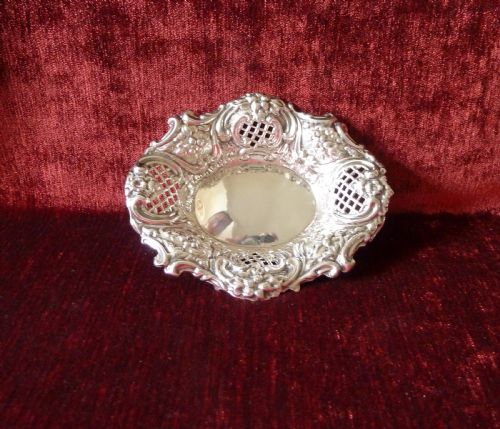


Repousse Silver Tray
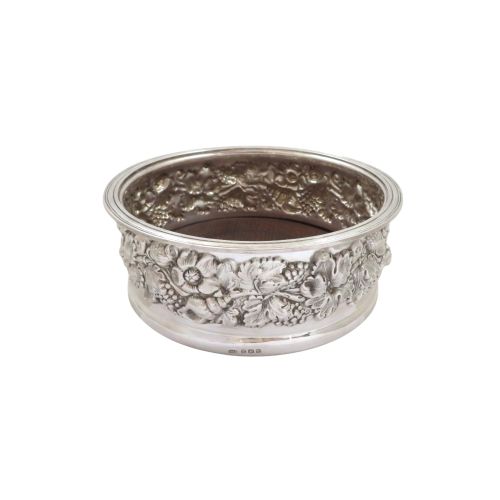
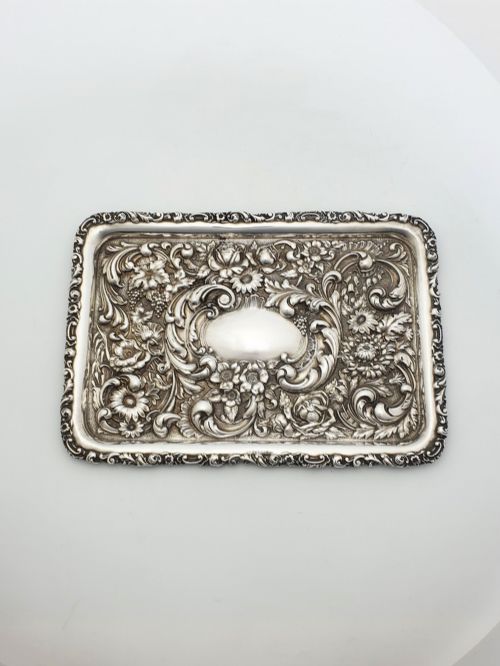
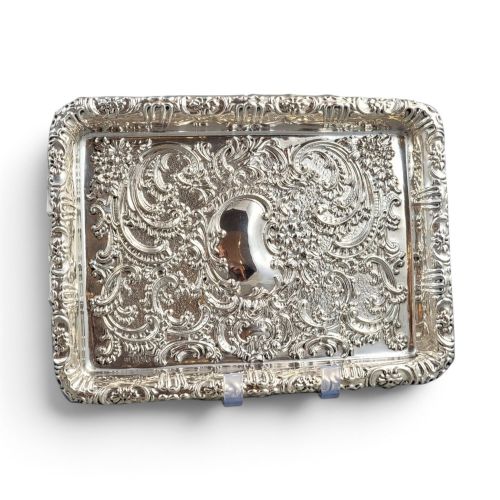
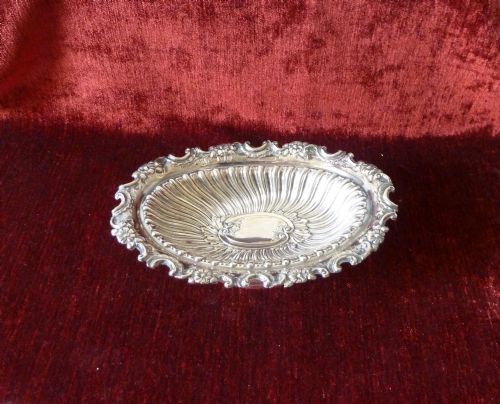
These repousse silver tray examples combine heavy metalworking with deep relief ornamentation, bringing texture and character to any tabletop.
Identifying Repousse Silver Tray Pieces
A repousse silver tray search reveals functional tabletop pieces created primarily across the nineteenth and early twentieth centuries, spanning periods from George IV to Edwardian and Art Nouveau eras. The items range from small vanity and dressing table trays to larger card trays, platters, and decorative dishes.
The most common forms you will encounter on this page are Edwardian sterling silver dressing table trays and card trays, alongside decorative continental or Anglo-Indian examples from the early twentieth century. These domestic items were designed for holding visiting cards, vanity accessories, or serving small items.
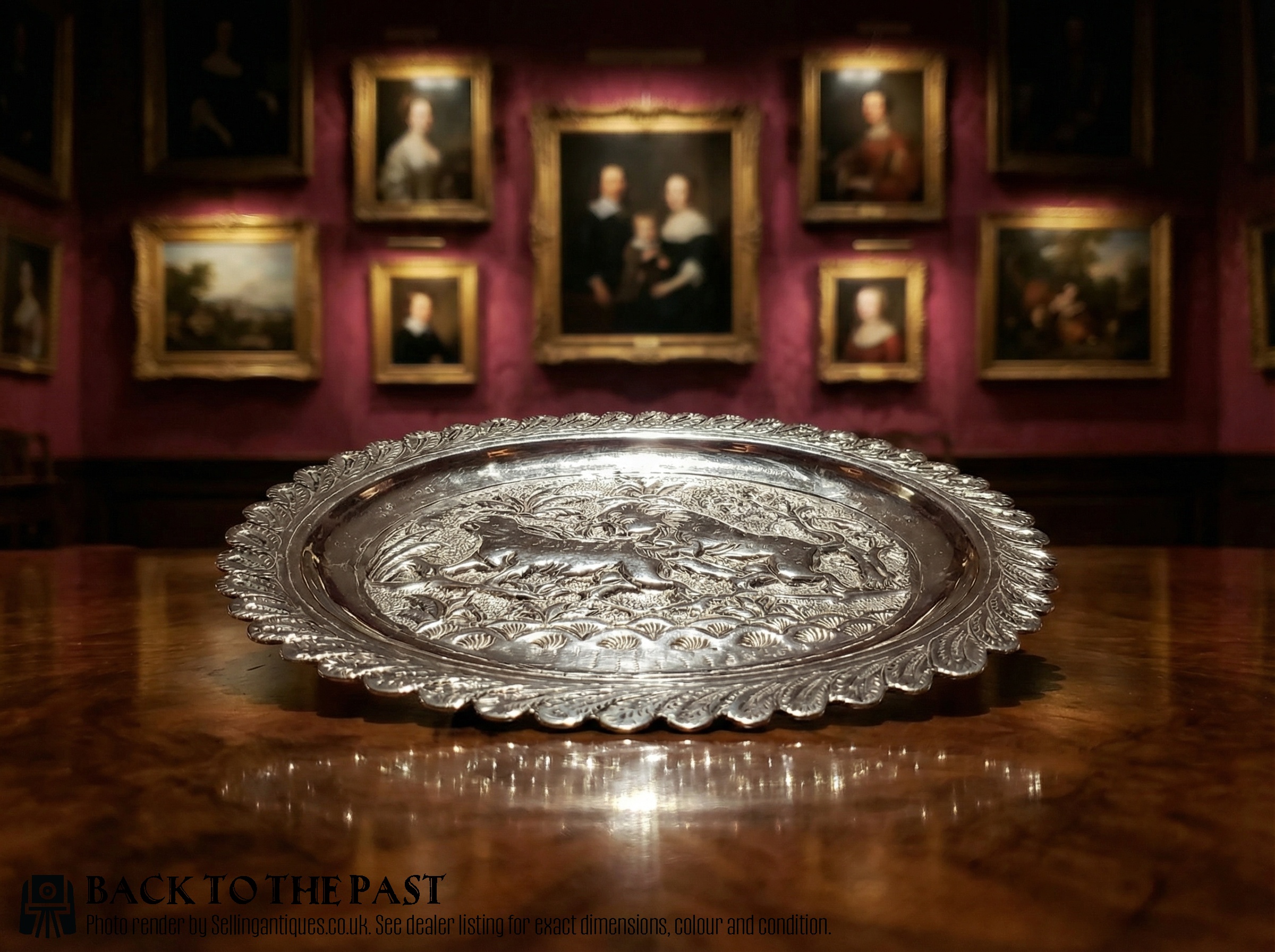
Makers utilised various regional aesthetics, incorporating classical motifs, angelic scenes like Reynold's angels, and intricate hunting scenes into the beaten metal surfaces. Each item reflects the specific decorative tastes of its manufacturing period, from Georgian formality to flowing Art Nouveau lines.
Materials and Working Methods
These pieces are constructed entirely from solid sterling silver or silver, shaped through traditional metalworking techniques. Artisans worked the metal from the reverse side using hammers and punches to push the design outward into high or low relief.
Once the primary raised form was established on the reverse, the silversmith flipped the tray to refine details, chase lines, and texture the background from the front. This combination of repousse and chasing created the signature tactile surfaces seen across these platters and trays.
Retail Price Guide 2026
Typical UK retail prices for repousse silver tray, calculated from the Sellingantiques database of over a million retail prices indexed since 2003. This retail price guide relies exclusively on Sellingantiques data; no external sources or auction records are used, so the figures do not describe the wider market.
Materials across these listings focus entirely on solid silver and sterling silver, spanning Edwardian, Victorian, and Georgian eras.
Assessing Repousse Silver Tray Quality
Quality in these items rests on the crispness and depth of the chased relief work against the gauge of the silver. Superior pieces maintain thick metal walls that resist bending even when heavily worked into deep, three-dimensional decorative scenes.
The clarity of hallmarks and the precision of the hand-be beaten details distinguish standard production items from master silversmith output. Finer examples display meticulous attention to background texturing and anatomical definition within figural scenes.
Robert Pringle & Sons·William Comyns·Henry Matthews
The Repousse Silver Tray Glossary
- Repousse
- A metalworking technique where the artisan hammers and pushes the design from the reverse side to create a raised relief pattern on the front. This method allows for sculptural decoration on flat metal surfaces.
- Chasing
- The complementary metalworking process performed on the front side of the metal after repousse work, using punches to refine details and add texture. It sharpens the contours established during the initial hammering.
- Sterling silver
- An alloy consisting of ninety-two point five percent silver by mass and seven point five percent other metals, usually copper. This standard ensures structural durability while maintaining a bright metallic lustre.
- Hallmark
- An official stamp applied by an assay office to indicate the purity of the metal, the maker's mark, and the year of testing. These marks provide definitive evidence of origin and date.
- Salver
- A tray, usually with a foot or decorative rim, traditionally used for presenting letters, cards, or drinks. In silverwork, it denotes a formal serving piece rather than a casual vanity dish.
Frequently Asked Questions
How do I date a silver tray?
Dating relies primarily on the official hallmarks stamped into the metal, which indicate the specific assay office and year of production. Stylistic clues like Art Nouveau curves or Georgian symmetry also help narrow the period.
London, Birmingham, and Chester marks, alongside makers' initials, provide precise chronological markers for these items.
Were dressing table trays used daily?
Yes, dressing table trays formed part of a gentleman or lady's daily grooming routine, holding items like brushes, hairpins, and small trinkets. They protected polished wooden surfaces while organising personal accessories.
Over time, the silver developed a soft patina from regular handling and cleaning during everyday domestic use.
What is the difference between a card tray and a salver?
Card trays were typically smaller domestic items intended for receiving visiting cards in an entrance hall, often featuring raised rims and light repousse decoration. Salvers were larger, more formal serving pieces occasionally raised on small feet.
Both items utilise similar silver smithing techniques but served distinct functions within period households.