
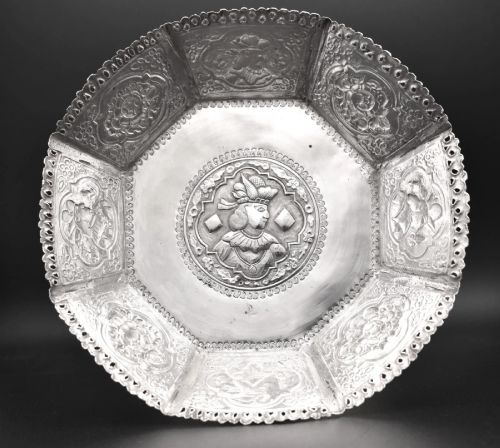


Colonial Indian Silver
Colonial Indian silver pieces are heavy display vessels and boxes reflecting regional workshops, and a collector buys them for their distinct chased ornament and historical association.
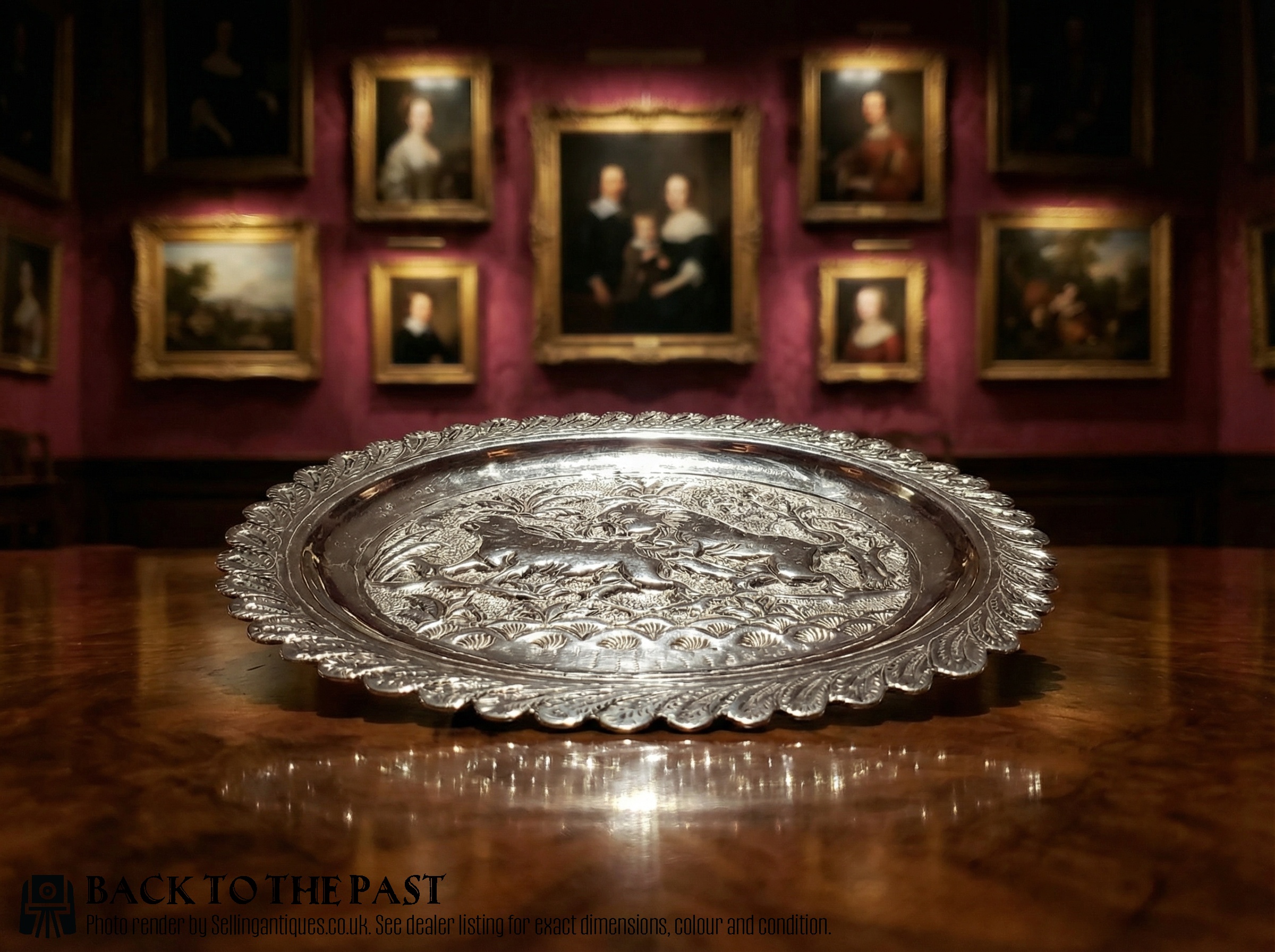
What colonial indian silver pieces are
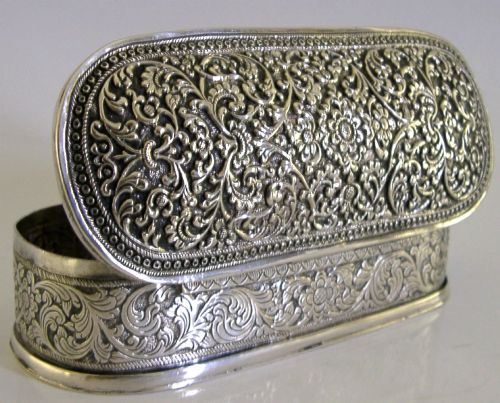
Colonial Indian silver encompasses presentation trophies, lidded jars, vases, trinket boxes, decorative bowls, and decorative trays created during the nineteenth and twentieth centuries. These objects reflect Anglo-Indian, Anglo-Indian Colonial, and Burmese styles associated with British administration and local craftsmanship.
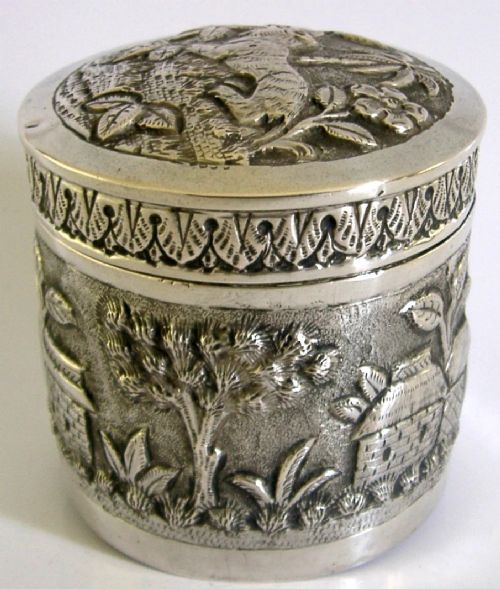
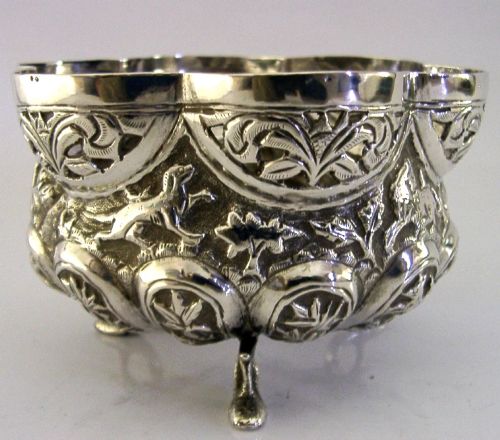
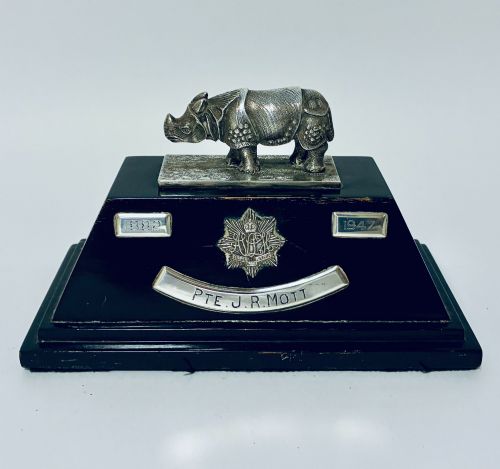
The pieces on this page include items from specific regions such as Kutch in Gujarat, alongside military presentation trophies like the Assam Valley Light Horse piece dated 1940. Forms range from large baluster vases and footed bowls to small condiment sets and round lidded boxes decorated with hunting scenes.
Dating spans the nineteenth century, Edwardian period, and specific years such as 1890, 1900, 1910, and 1940. Collectors encounter items created for British officials alongside those produced for broader export and local presentation.
How they were made
Makers utilised solid silver, sometimes combining it with ebonised wood components as seen in specific containers and presentation pieces. The weight of these objects varies, with substantial items such as baluster vases and spice boxes reflecting heavy metal usage.
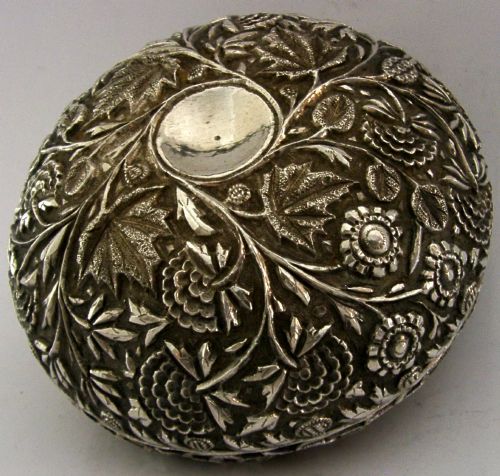
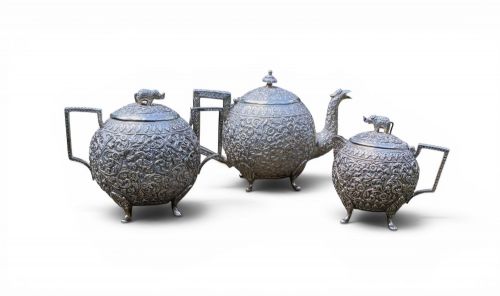
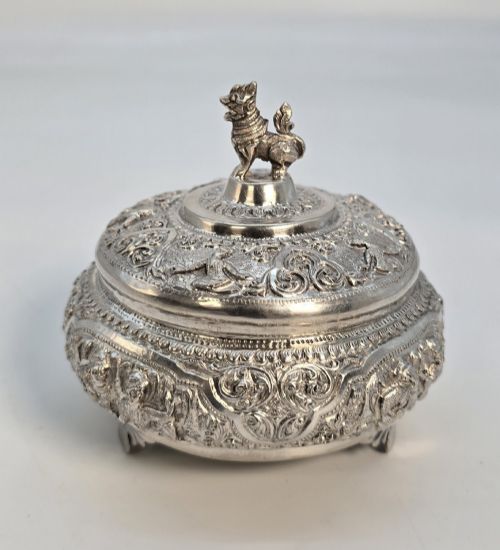
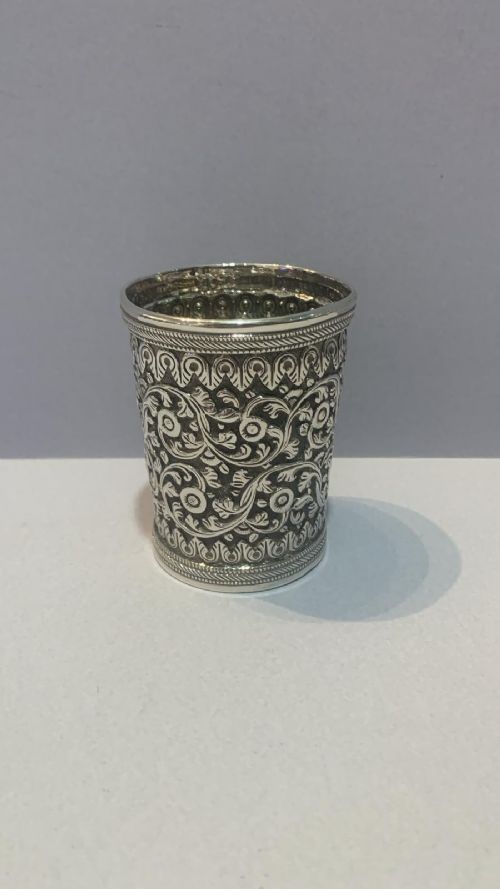
Surface ornamentation relies on repoussé and chased techniques, creating deep relief scenes that depict hunting motifs and regional foliage. Skilled silversmiths shaped the metal by hand into intricate decorative bowls, trays, and lidded jars.
Retail Price Guide 2026
Typical UK retail prices for colonial indian silver, calculated from the Sellingantiques database of over a million retail prices indexed since 2003. This retail price guide relies exclusively on Sellingantiques data; no external sources or auction records are used, so the figures do not describe the wider market.
Listings span the 19th Century, Edwardian period, 1890, 1900, 1910, and 1940, utilising silver and ebonised wood across Anglo-Indian and Burmese styles.
What varies in quality
Quality in colonial indian silver rests upon the depth and clarity of the repoussé work, where crisply defined hunting scenes and foliage demonstrate superior craftsmanship. Objects with complex regional ornament command attention over simpler utilitarian vessels.
The scale and weight of the silver item also shape its standing, with large baluster vases and heavy presentation trophies showing greater ambition than smaller trinket boxes. Provenance and specific regional attribution, such as work originating from Kutch, add distinction.
The Colonial Indian Silver Glossary
- Repoussé
- A metalworking technique where the silver is hammered from the reverse side to form a raised design on the front. This method creates the three-dimensional scenes found on bowls and dishes.
- Baluster
- An architectural term applied to vase forms that feature a rounded lower body narrowing to a neck. Large examples of this shape appear in nineteenth-century output.
- Ebonised wood
- Timber treated to resemble ebony, utilised alongside silver in specific boxes and containers. It provides a dark, contrasting material for handles or structural parts.
- Anglo-Indian
- A style describing decorative arts produced in India under British influence, blending local silversmithing traditions with European forms.
Frequently Asked Questions
What is colonial indian silver?
Colonial indian silver refers to decorative and functional items produced in India during the nineteenth and twentieth centuries, often under British influence. These objects include presentation trophies, bowls, vases, and boxes.
Craftsmen in regions such as Kutch and Burma created these pieces using traditional silversmithing methods, incorporating local motifs like hunting scenes into forms suited for British patrons.
How do I date these silver items?
Dating relies on stylistic evidence, engraved inscriptions, and historical context recorded in the piece. Items often span the nineteenth century, Edwardian era, and specific decades up to 1940.
Military trophies typically bear precise dates relating to regiments such as the Assam Valley Light Horse, while other objects are attributed through regional design characteristics.
What forms do these silver pieces take?
The surviving pieces take various decorative and practical forms, including large baluster vases, footed bowls, and decorative trays. Smaller items comprise lidded jars, spice boxes, and condiment sets.
Many of these objects feature dense repoussé decoration depicting local wildlife, foliage, or figures engaged in traditional hunts.