



Vintage Silver Jewellery Box
A vintage silver jewellery box holds personal treasures safely on a dressing table while bringing substantial period character to the room.
Vintage Silver Jewellery Box
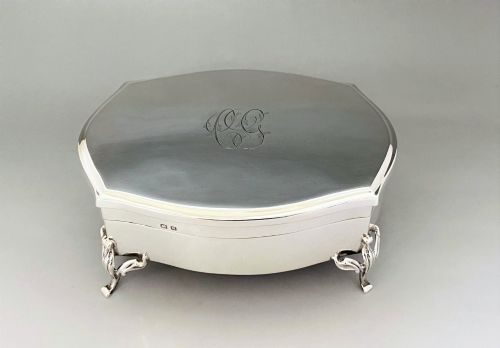
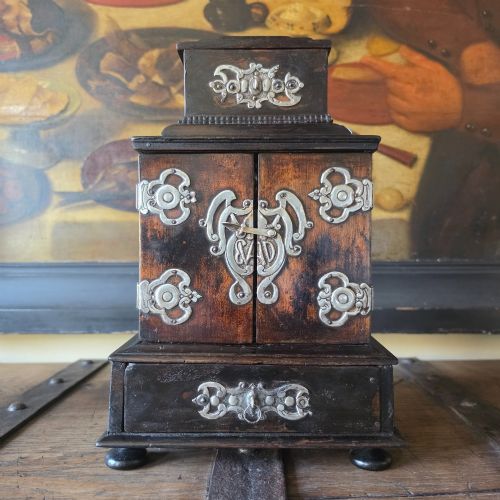
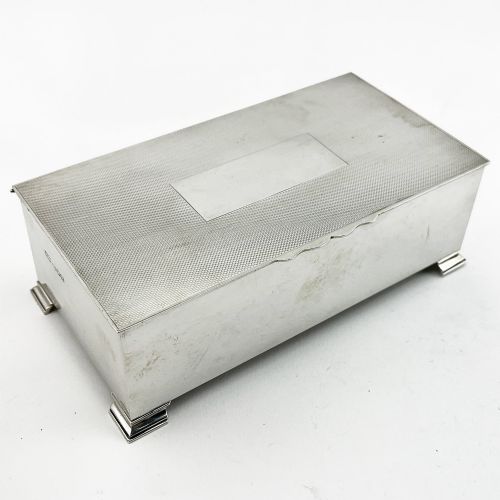
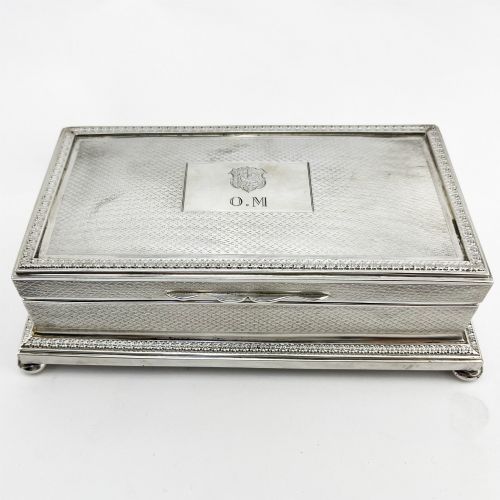
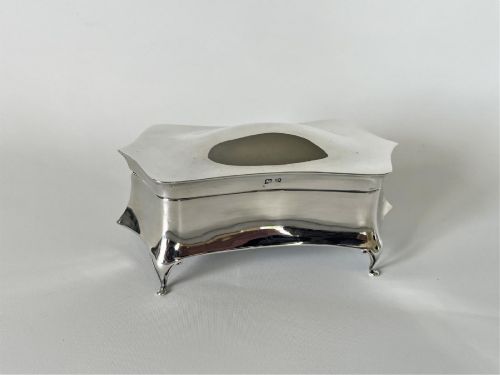
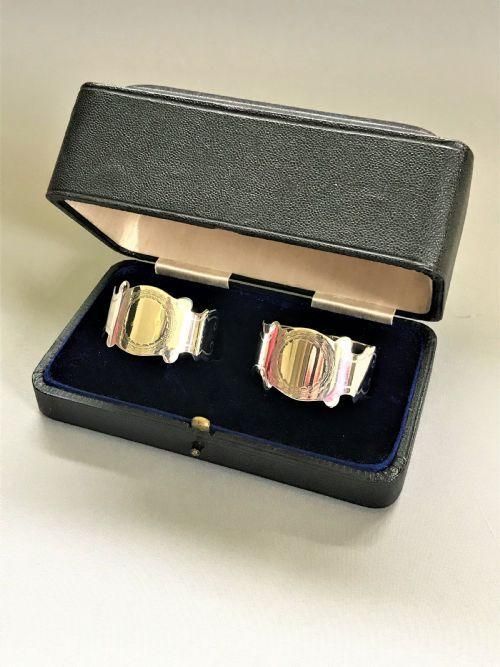
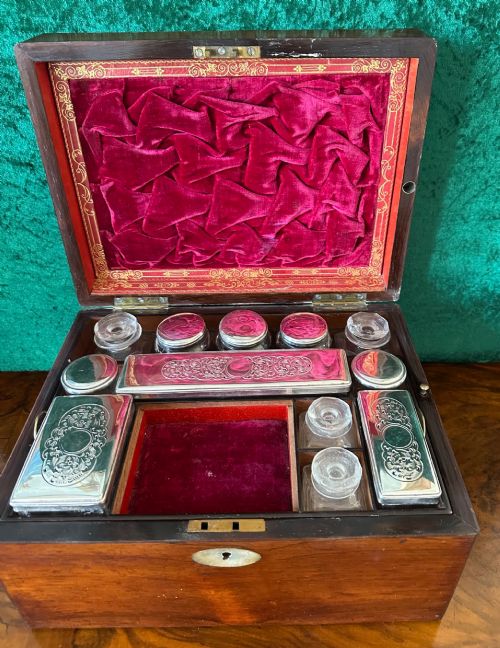
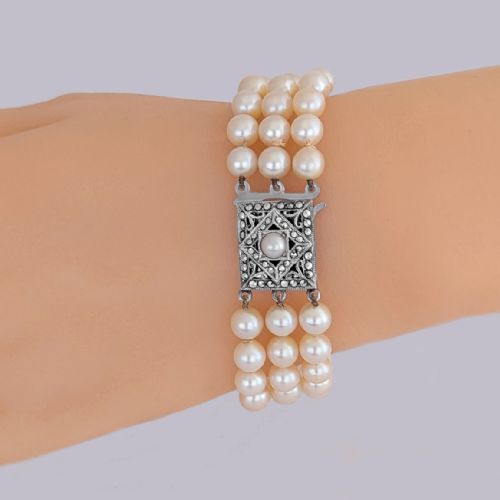
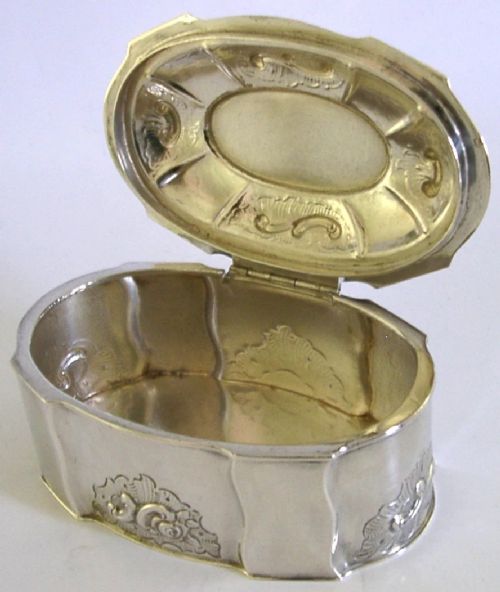
When you search for a vintage silver jewellery box, you encounter a specialised vessel designed to store rings, necklaces, and small keepsakes. These containers range from compact hinged trinket vessels to larger dressing table caskets and multi-tiered cabinets.
The selections span distinct historical periods, with Edwardian, Victorian, and Art Deco examples appearing frequently alongside mid-century Scandinavian designs. Many pieces combine precious metals with contrasting elements like cut glass, tortoiseshell, or vibrant enamel panels.
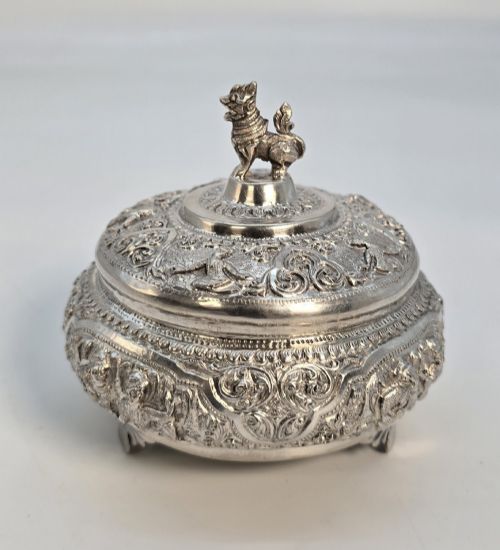
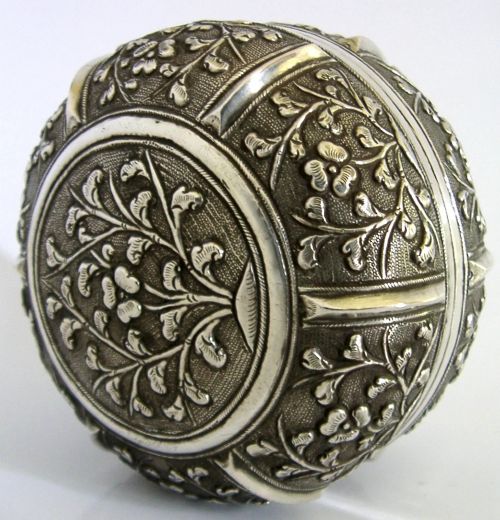
Origin points vary widely across the inventory, encompassing domestic British workshops alongside continental European pieces and export items from India. Buyers often choose between heart-shaped novelties, rectangular caskets, and cylindrical jars depending on their intended storage needs.
How they were made
Makers utilised sterling silver and silver plate for the primary structures, often employing stamping, casting, and hand-beating techniques to shape the metal. Interiors typically feature soft linings such as velvet or silk to protect delicate items from scratching.
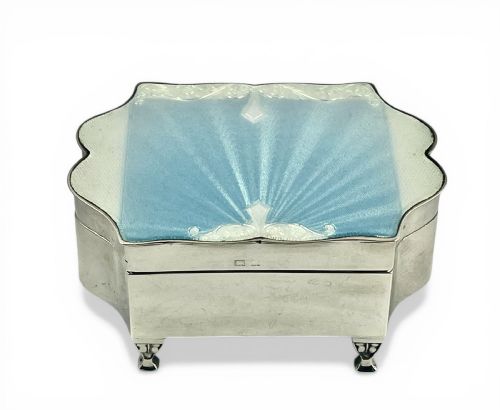
Decorative lids frequently incorporate specialised crafts like guilloche enamel work, where translucent coloured layers overlay engine-turned metal grounds. Other pieces rely on fitted panels of genuine tortoiseshell, polished cut glass, or carved wood to create varied surface textures.
Vintage Silver Jewellery Box Retail Price Guide 2026
Typical asking prices for vintage silver jewellery box among the pieces listed under this phrase on Sellingantiques today, from the lower quarter to the upper quarter. They describe what is for sale here now, not the wider market.
Several heart-shaped boxes survive specifically because Victorian suitors needed somewhere dramatic to present a ring.
What varies in quality
The calibre of a piece depends heavily on the crispness of its chasing, the weight of the metal utilised, and the structural integrity of the hinges. Superior examples retain intact internal linings and tight-fitting lids that close flush without gaps.
Artistry in supplementary materials also dictates overall excellence, distinguishing simple stamped mounts from hand-enamelled surfaces or intricately carved tortoiseshell inserts. Maker marks and clear hallmarks add historical definition that elevates certain examples above unmarked domestic wares.
Mappin & Webb·Sigvard Bernadotte for Georg Jensen·William Neale & Sons·Henry Williamson Ltd
The Vintage Silver Jewellery Box Glossary
- Guilloche
- A decorative technique where a mechanical lathe etches a precise, intricate geometric pattern into a metal surface before translucent enamel is applied over the top. This method creates a shimmering effect that shifts with the light.
- Hallmark
- An official stamp applied by an assay office to indicate the metal purity, the maker, and the year of production. These tiny pressed marks provide essential clues for dating British silver.
- Trinket box
- A small lidded container traditionally used for holding rings, pins, and loose personal adornments. These items sit comfortably on dressing tables or desks.
- Casket
- A larger, more substantial box often featuring a hinged lid and secure fastening, designed for housing valuable collections of jewels. Many period examples include fitted internal trays.
- Tortoiseshell
- The mottled brown and amber shell material harvested from sea turtles, utilised extensively in Edwardian and Victorian boxes for decorative lid panels. This organic material is prized for its warm, translucent depth.
Vintage Silver Jewellery Box: Frequently Asked Questions
Are these boxes safe for modern jewellery?
Most vintage receptacles provide secure storage for rings, earrings, and delicate chains. The soft internal fabrics protect items from daily dust and accidental scratching.
Consider the interior depth before storing oversized modern pieces, as older compartments were tailored for smaller Victorian and Edwardian accessories.
How do I identify the period?
Examine the hallmarks stamped on the metal surface for specific date letters and assay office symbols. Stylistic cues also help, such as geometric motifs indicating Art Deco or flowing floral lines pointing to Art Nouveau.
Consult the construction methods and fastener styles, which shifted noticeably from heavy Victorian caskets to streamlined mid-century designs.
Did these boxes include keys originally?
Many larger caskets and dressing table boxes featured small working locks intended to secure valuable contents. Keys were frequently lost over generations of use.
The absence of a key is standard for vintage pieces and rarely diminishes the decorative appeal or practical utility on a modern dressing table.