
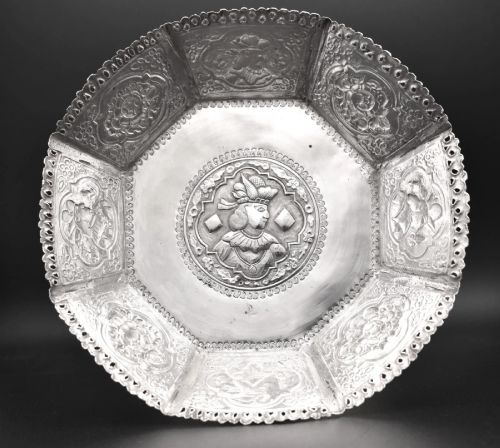


Antique Indian Silverware
Antique Indian silverware brings dense traditional craftsmanship into the home through decorative bowls, presentation trophies, and lidded jars.
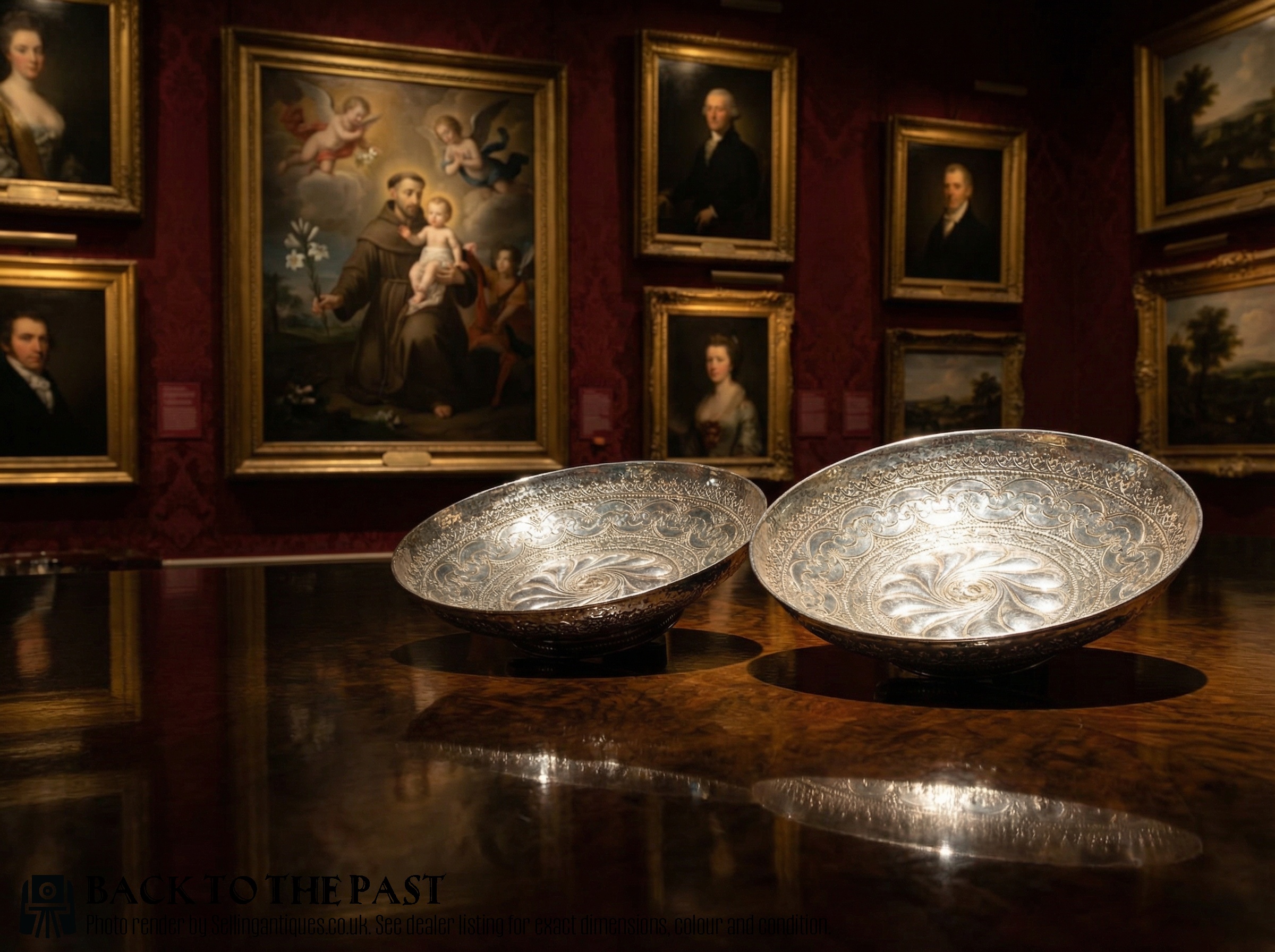
Antique Indian Silverware
When you search for antique Indian silverware, you encounter items shaped by colonial history and regional craftsmanship across the nineteenth and twentieth centuries. The selection spans distinct forms including decorative bowls, presentation trophies, lidded jars, vases, and serving dishes.
You are most likely to meet pieces representing Anglo-Indian, Indian Colonial, and Burmese styles. Makers worked within specific regional traditions, such as Kutch in Gujarat or the Assam Valley, producing vessels intended for both local use and British colonial presentation.
The objects vary from solid silver presentation pieces to silver plate serving dishes. Dating stretches from the 1800s through the Victorian and Edwardian eras up to the mid-twentieth century.
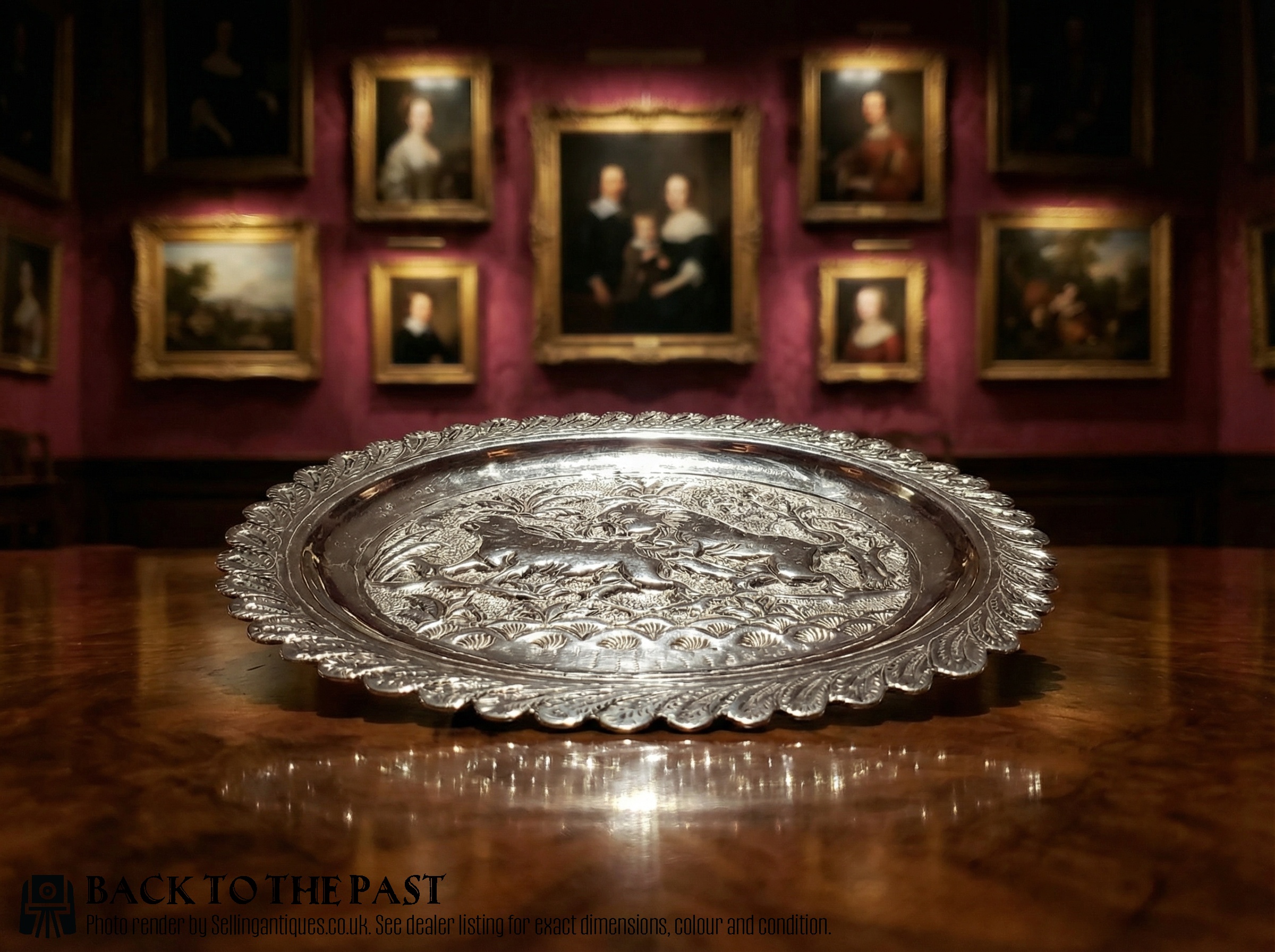
How they were made
Silversmiths utilised solid silver and silver plate, sometimes combining the metal with ebonised wood. Artisans shaped these materials into baluster vases, footed bowls, and betel nut containers.
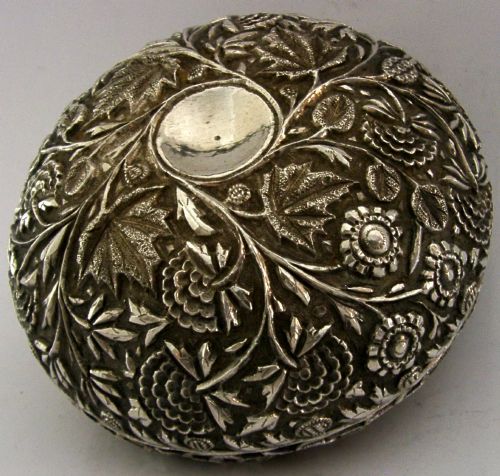
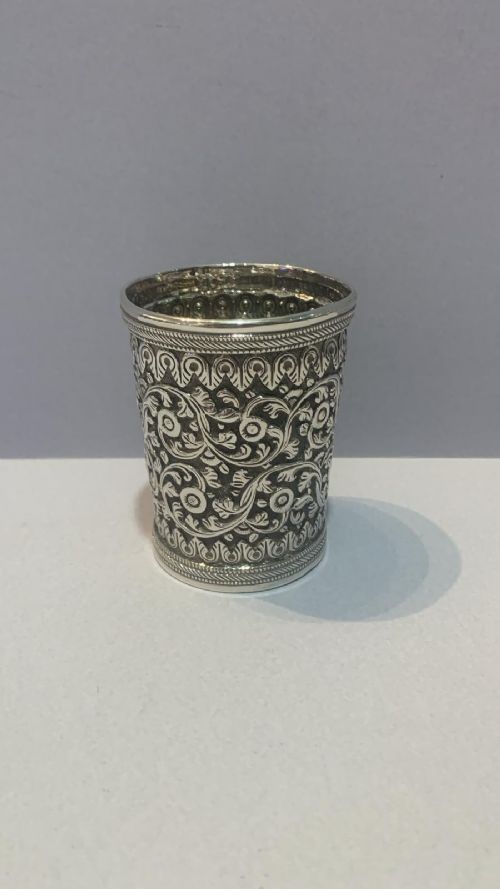
Decoration relied heavily on repoussé techniques and intricate embossing. Craftsmen hammered the silver from the reverse to raise detailed folkloric and decorative motifs across the surface of jars, trophies, and tazzas.
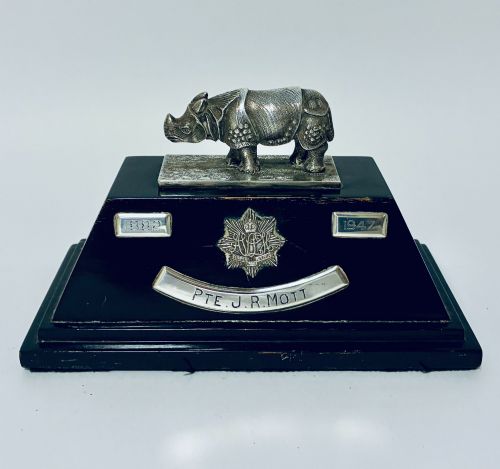
Military personnel stationed in Assam required specialised silver trophies to mark local equestrian victories.
What varies in quality
The standard of antique Indian silverware rests upon the depth and precision of the repoussé work and embossing. Pieces with crisp, deeply chased folkloric scenes and well-defined botanical or figurative motifs stand apart from simpler surfaces.
Substance and scale also divide the range, marked by heavy solid silver construction in substantial items like baluster vases and presentation trophies compared to lighter vessels or silver plate alternatives.
Hodsoll Collection
The Antique Indian Silverware Glossary
- Repoussé
- Metalworking technique where the artisan hammers the design from the reverse side to form raised relief patterns on the front. This method creates the tactile surface texture seen on bowls and tazzas.
- Kutch
- Regional style of silversmithing originating from Gujarat, known for dense foliage and animal motifs. Pieces from this area display distinctive local craftsmanship.
- Anglo-Indian
- Style reflecting the cultural exchange between British tastes and Indian manufacturing during the colonial period. It often combines familiar European forms with traditional eastern ornamentation.
- Baluster
- Architectural vase shape characterised by a rounded lower body tapering to a narrow neck. This profile appears frequently in larger silver vessels.
- Tazza
- Footed ornamental bowl or plate elevated on a stem. These pieces were typically utilised for display or presentation.
Antique Indian Silverware: Frequently Asked Questions
What periods do these pieces date from?
The items span the nineteenth and twentieth centuries, including pieces from the 1800s, the Victorian and Edwardian eras, and up to 1940.
Specific periods such as the Raj era and the early nineteen-hundreds are well represented among the surviving silverware.
How were presentation trophies used?
Presentation trophies served as ceremonial awards for military and civil achievements within the British Empire, such as those associated with the Assam Valley Light Horse.
They functioned primarily as commemorative display pieces rather than everyday tableware.
What is an Indian colonial betel nut container?
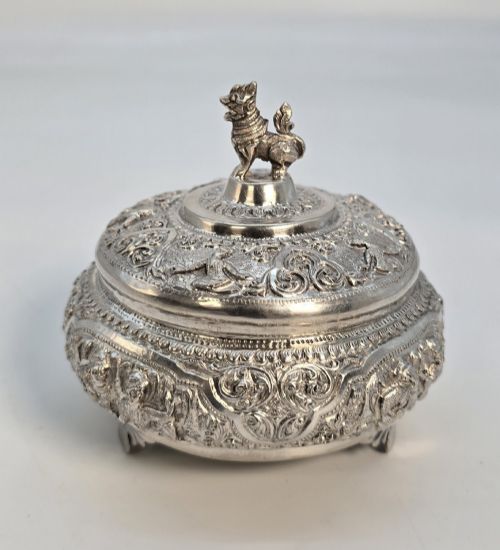
A betel nut container is a lidded vessel designed to hold areca nuts and related masticatories used across South Asia for social and ceremonial hospitality.
These containers often feature intricate embossed folkloric decoration reflecting traditional domestic customs.
How do I distinguish Burmese silver?
Burmese silver typically displays deep repoussé work depicting figures and dense narrative scenes derived from local mythology and folklore.
These pieces are often substantial in weight and take the form of large footed bowls or decorative vessels.