




Art Deco Silver Platter
An art deco silver platter brings geometric punch and polished gleam to a modern room.
Art Deco Silver Platter
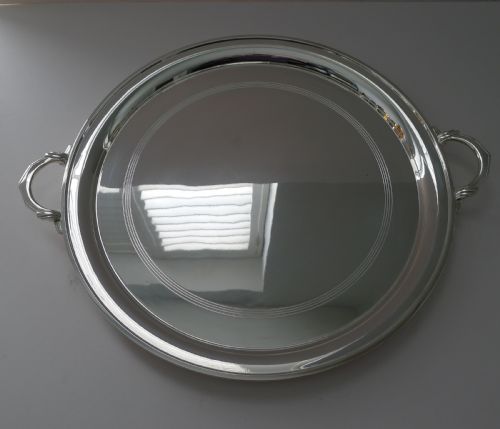
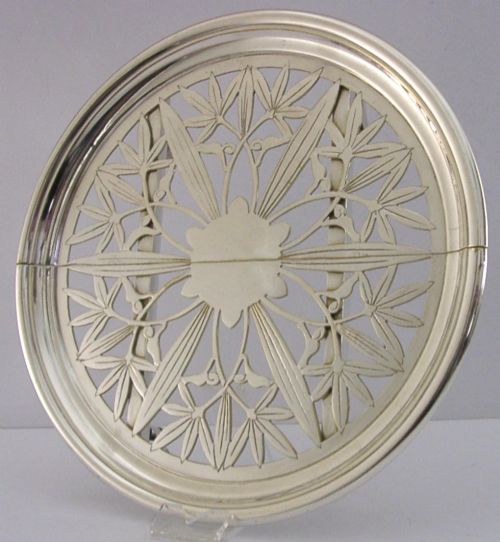
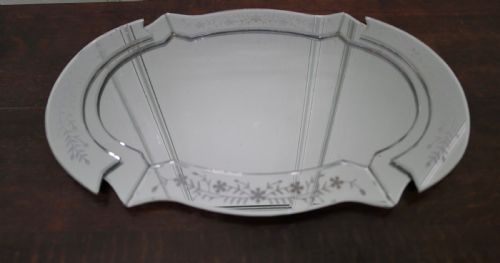
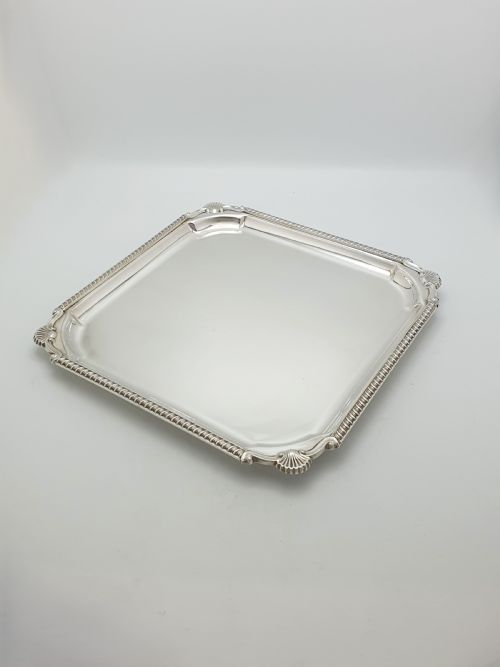
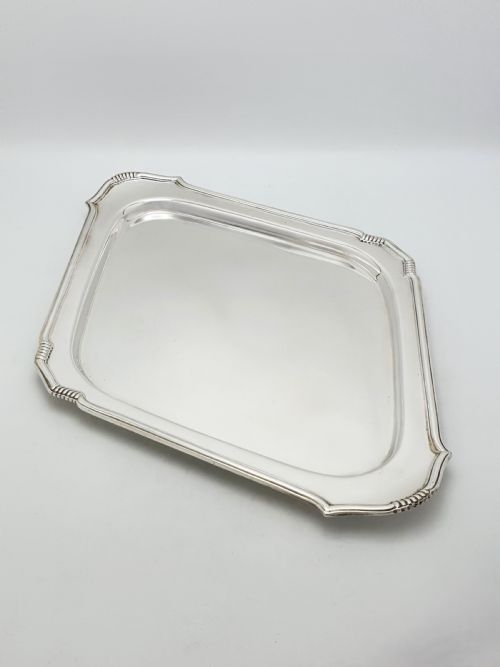
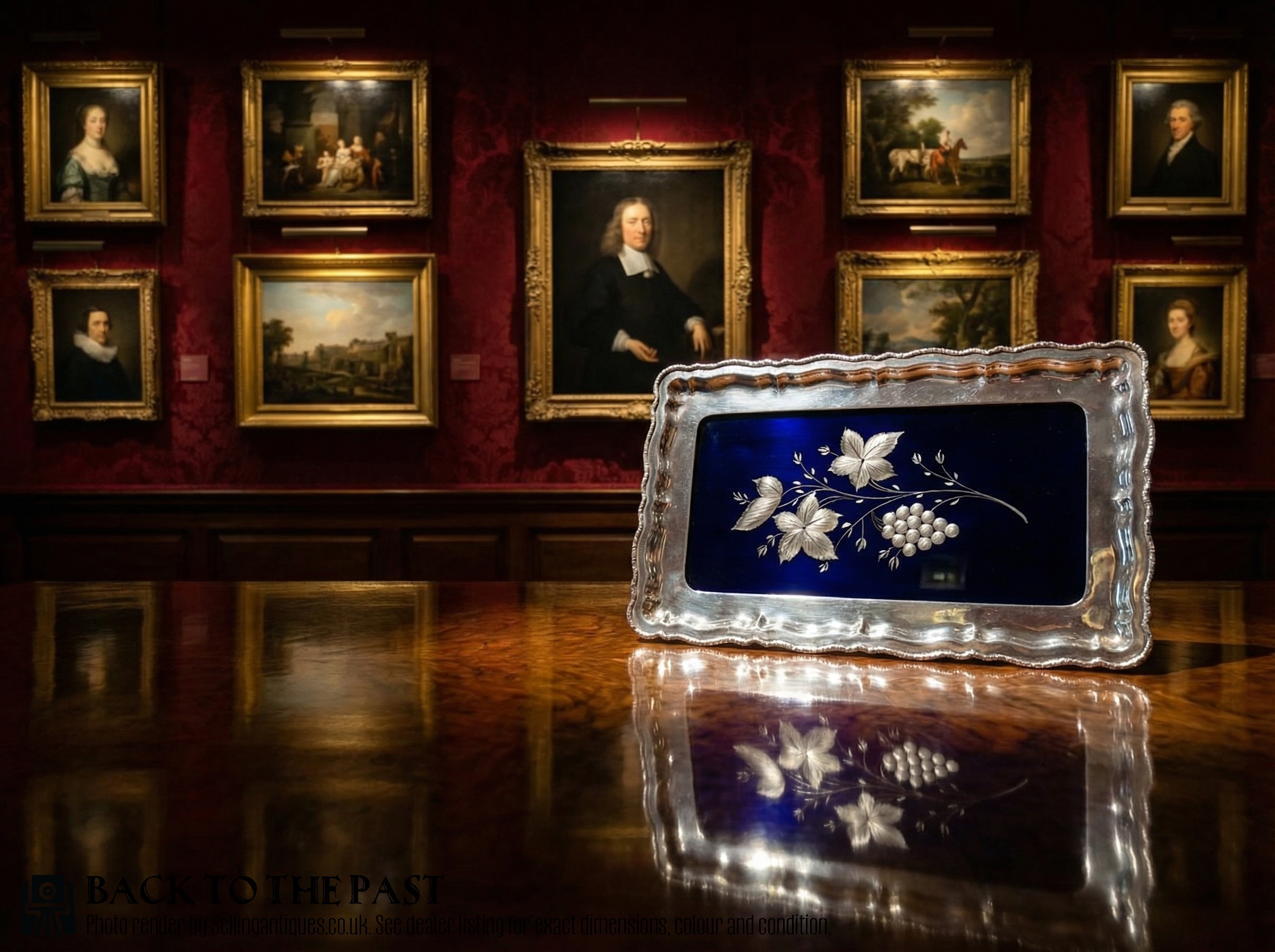
An art deco silver platter brings functional geometric form and polished metal to domestic service, spanning cocktail trays, drinks trays and serving dishes. These pieces originate primarily from the nineteen-twenties and nineteen-thirties, with occasional examples from the early nineteen-hundreds and nineteen-fourties. You will most commonly encounter silver plated or nickel silver surfaces shaped into round, diamond, hexagonal or rectangular formats.
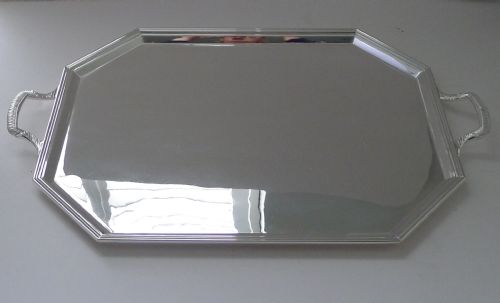
The objects serve primarily as cocktail trays, drinks trays, or serving dishes designed for entertaining and display. French makers contribute extending serving dish stands and fruit baskets alongside British manufacturers producing handled drinks trays with shell borders or engine turned details.
Distinguishing quality in period platters
Quality rests upon the weight of the metal blank, the crispness of the geometric stamping, and the integrity of the silver plating. Superior pieces display substantial heft in the base metal and clean, purposeful lines in handles and borders without soft casting details.
Maker attribution elevates a piece, with recognised silversmiths and firms delivering sharper execution in hinges, handles, and inset mirror plates. The precision of engine turned decoration and the quality of cut glass inserts further separate standard production from finer workshop output.
Listings feature items spanning the nineteen-hundreds through to the nineteen-forties, constructed from silver plate, sterling silver, glass, and mirror.
Keith Murray For Mappin & Webb·Christofle·J B Chatterley & Sons·Hukin & Heath·James Dixon & Sons·Roberts & Dore·Asprey, London·Elkington·Roberts & Belk·Atkin Brothers·John Collyer Birmingham
The Art Deco Silver Platter Glossary
- EPNS
- Electroplated nickel silver. This forms the base white metal alloy coated in a thin layer of pure silver.
- Engine turned
- A mechanical engraving technique producing precise geometric patterns on metal surfaces. This method was widely utilised during the period for surface decoration.
- Salver
- A flat tray used for serving food or drinks. These pieces typically feature a raised rim and rest on feet.
- Base metal
- An inexpensive metal such as brass, copper, or iron used as the core material beneath silver plating.
Art Deco Silver Platter: Frequently Asked Questions
How do I clean an art deco silver platter?
Use a soft cloth and a gentle silver cleaner formulated for plated items to maintain the surface shine. Avoid harsh abrasives that can wear through the silver layer on base metal or nickel.
Take care around inset mirror glass or delicate etched sections so cleaning agents do not seep beneath the frame edges.
Were these platters meant for daily use?
Makers designed these items for serving cocktails, drinks, and food during social gatherings in the home. They function well for modern entertaining when handled with reasonable care.
Surface marks from glasses develop naturally over decades, showing the functional history of each piece.
How can I tell a British piece from a French piece?
British examples often carry clear maker marks and town hallmarks indicating origins in workshops like Sheffield or London. These frequently take the form of handled drinks trays or cocktail servers.
French pieces from makers such as Christofle often include specialised serving stands or basket forms with distinct continental maker stamps.
What is the difference between silver plate and sterling silver?
Sterling silver consists of solid precious metal throughout the object, marked with standard purity stamps. Silver plate uses a base metal or nickel silver core covered with an outer layer of pure silver.
Plated items offer the bright appearance of silver at a different weight and material composition than solid pieces.