


.JPG)

Art Deco Silverware
Art deco silverware brings geometric lines and striking contrast to the table, uniting practical dining with the bold design language of the early twentieth century.
Art Deco Silverware
Art deco silverware encompasses dining accessories, flatware sets, and serving vessels produced across the 1920s, 1930s, and 1940s. These pieces display the characteristic geometry and streamlined forms that define the era.
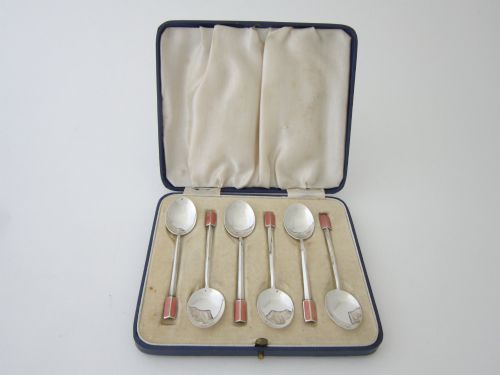
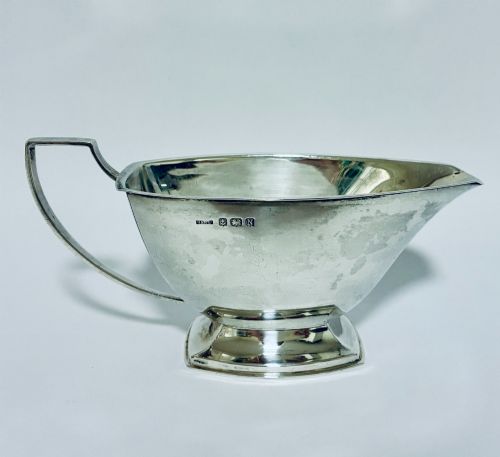
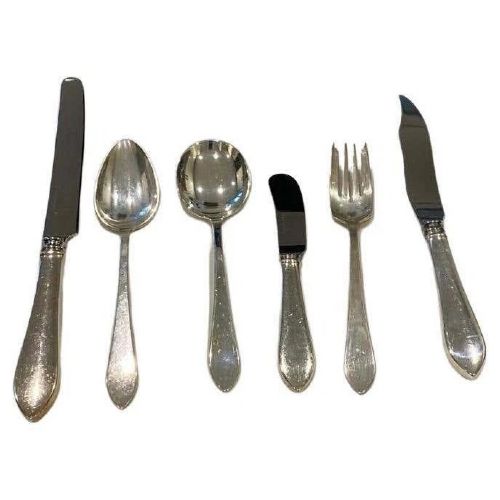
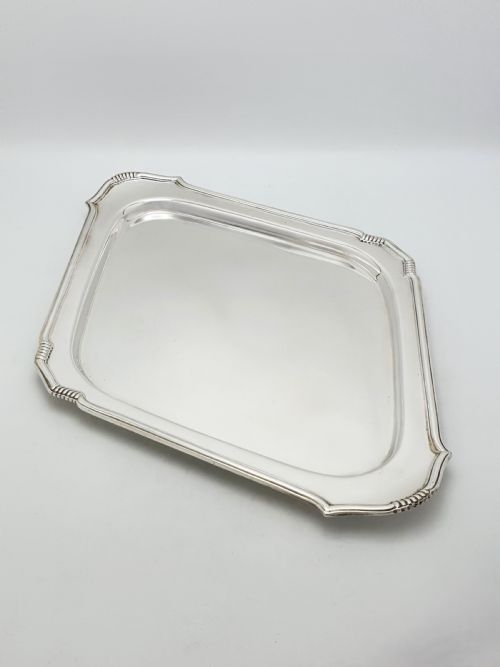
The items most frequently encountered include coffee spoons, sugar casters, sauce boats, and ashtrays. Flatware sets and cocktail trays also appear, reflecting the social habits of the period.
Origins span British workshops alongside continental makers, with sterling silver and silver plate serving as the primary media. Enamel and cut glass often provide vibrant colour and texture contrasts to the metal.
Materials and construction
Silversmiths utilised sterling silver and silver plate as the foundational metals for holloware and flatware. These metals were shaped into polygon sides, lighthouse forms, and diamond shapes through hammering, spinning, and casting techniques.
Vitreous enamel was applied to spoons, salts, and small dishes to introduce brilliant bands of colour. Cut glass and porcelain were integrated into pieces like sugar casters and wine coolers to balance the weight of the metal.
A tiny mirror plateau waits patiently to elevate a small decanter, proving that dining tables love a stage as much as actors do.
Assessing quality and execution
Quality rests upon the crispness of the geometric angles and the structural integrity of the piece. Well-executed items maintain precise symmetry across faceted surfaces and polygon sides.
The application of enamel and the integration of secondary materials such as cut glass indicate the standard of craftsmanship. Intact enamel surfaces without chips or restoration command greater attention from collectors.
Tiffany·Elkington·John Grinsell And Sons·Roberts And Belk·Waring And Gillows
The Art Deco Silverware Glossary
- Sterling silver
- An alloy containing a high proportion of pure silver combined with other metals to ensure durability in tableware. It carries official hallmarks indicating assay office and date.
- Silver plate
- A layer of silver fused to a base metal substrate, offering the visual appeal of solid silver. Elkington and other prominent firms developed advanced plating techniques.
- Vitreous enamel
- A material made by fusing powdered glass to a metallic substrate through firing. This technique creates a glossy, coloured surface frequently seen on spoons and salts.
- Polygon
- A geometric shape with many straight sides, characteristic of the faceted designs seen on sugar shakers and vessels from this period.
- Demitasse
- A small cup used for serving strong black coffee or espresso, often accompanied by specialised miniature spoons.
Art Deco Silverware: Frequently Asked Questions
What defines art deco silverware?
Art deco silverware is characterised by geometric shapes, clean lines, and stylised motifs that break away from traditional floral ornamentation. The pieces embrace modern industrial forms, symmetry, and functional elegance.
Items range from everyday cutlery sets to decorative cocktail trays and sugar casters, spanning the 1920s through the 1940s.
How do I care for silver and enamel?
Silver requires gentle cleaning with appropriate non-abrasive polishes to maintain its lustre without wearing away delicate details or hallmarks. Enamelled sections need particularly careful handling to prevent scratching or damage.
Storing pieces in dry conditions away from direct sunlight protects both the metal surfaces and the coloured glass elements.
Can I use these items daily?
Many items, such as flatware sets and sauce boats, remain entirely functional for modern dining and entertaining. Sterling silver and robust silver plate are durable enough for regular use when handled with proper care.
Fragile pieces incorporating extensive vitreous enamel or delicate cut glass are better reserved for occasional display or careful service.
How are different periods identified?
Periods are identified through official hallmarks, maker's marks, and registered design numbers stamped onto the metal. stylistic shifts also provide clues, moving from Edwardian flourishes to the stark geometry of the 1920s and 1930s.
Documented shapes and materials align closely with specific manufacturing decades recorded by silversmiths.