

Silver Dining Tableware
These silver dining tableware pieces bring formal service and careful design to the table, ranging from napkin rings to menu holders.
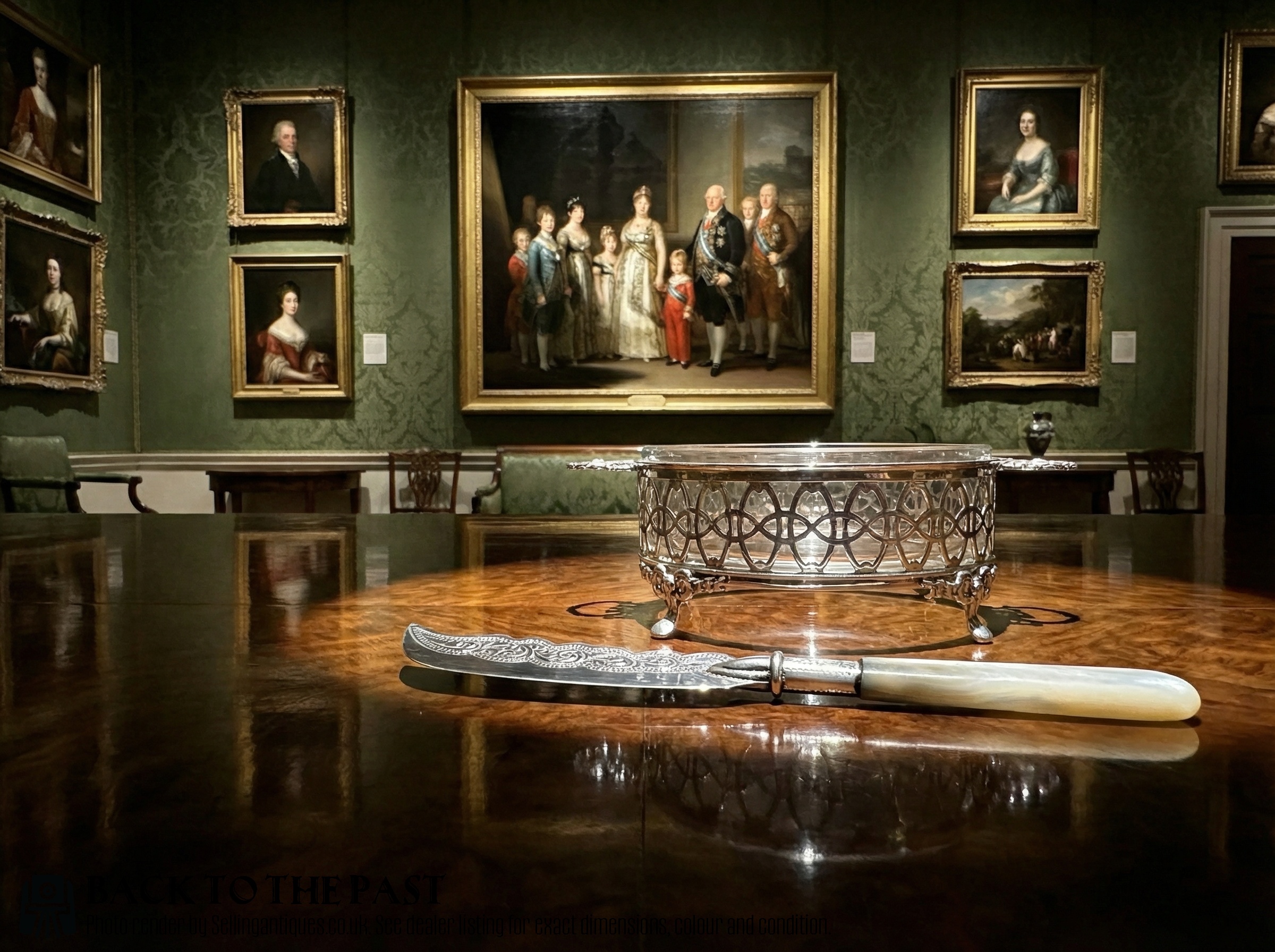
Silver Dining Tableware
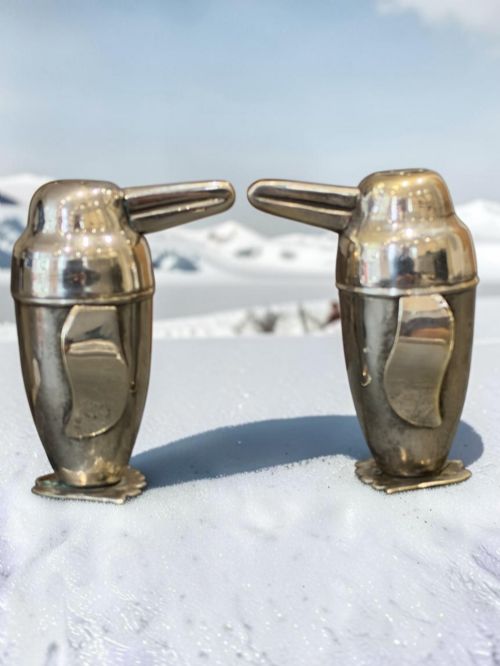
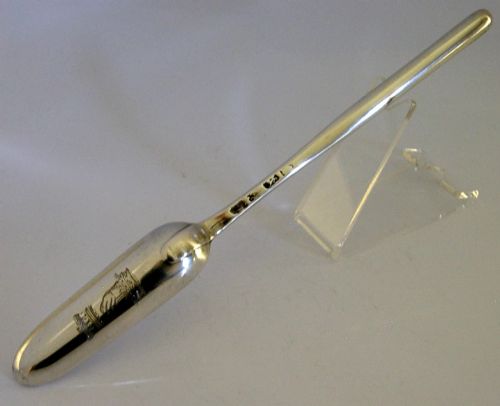
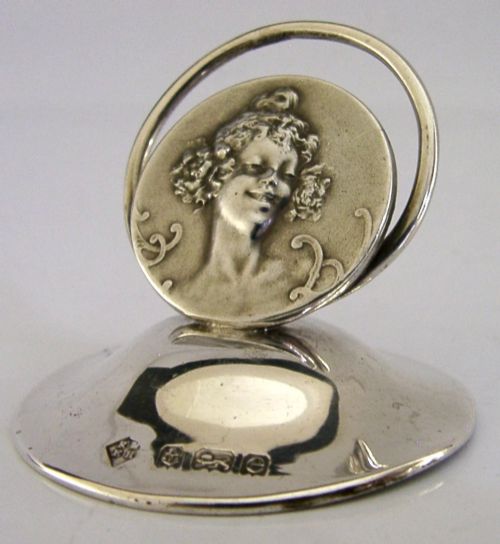
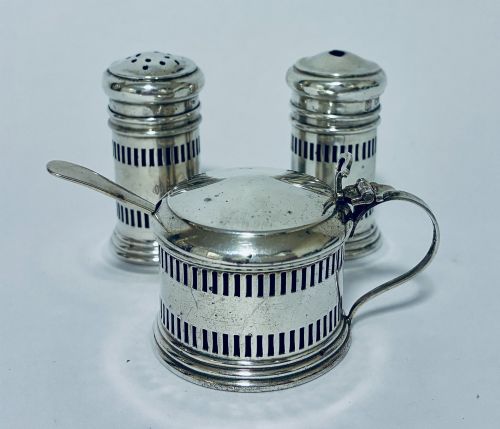
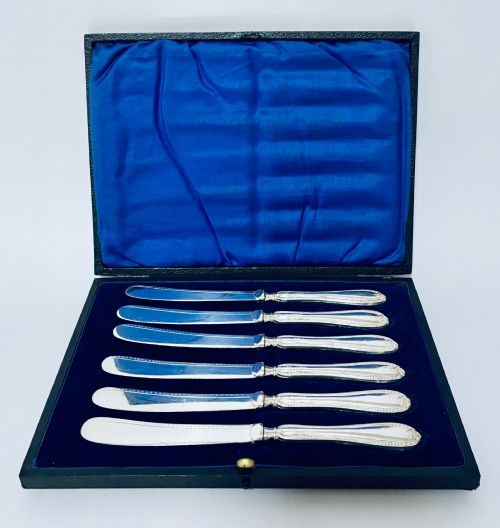
Silver dining tableware comprises utilitarian and decorative objects designed for the dining table, encompassing forms from the Georgian period through to the mid-twentieth century. Napkin rings, cruet sets, and menu holders appear most frequently alongside candlesticks, sauce boats, and knife rests.
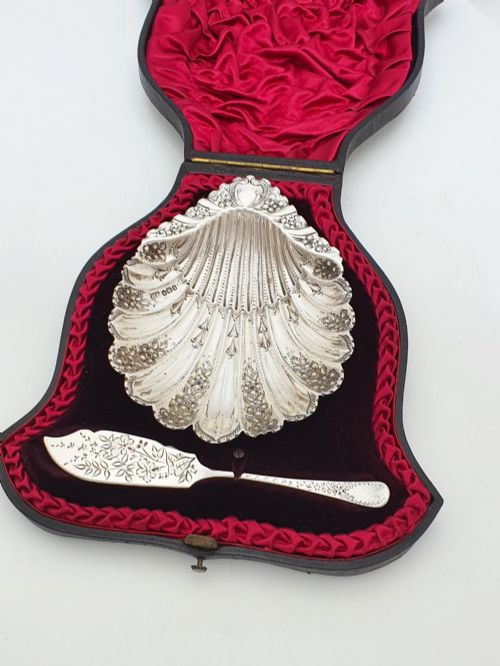
Victorian and Edwardian examples sit alongside George V and later mid-century pieces, reflecting shifts in dining habits over more than a century. Cased sets intended for gifts emerge particularly in the Edwardian and interwar decades.
Makers utilised sterling silver and silver plate, frequently pairing the metal with glass liners, velvet, silk, or leatherette cases.
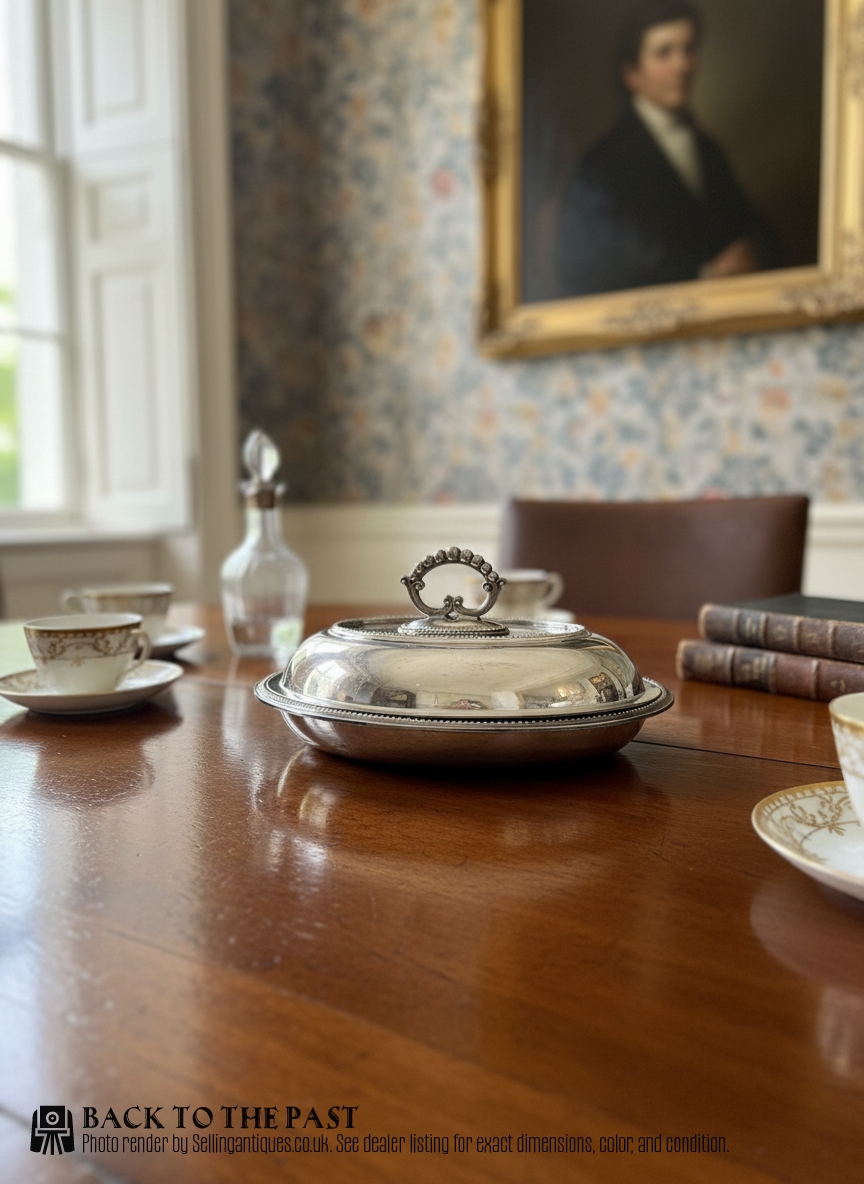
Materials and Technique
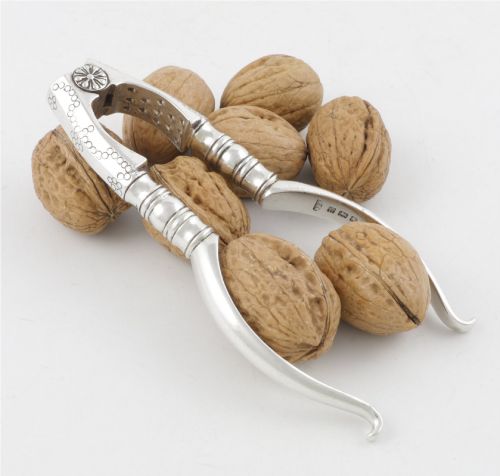
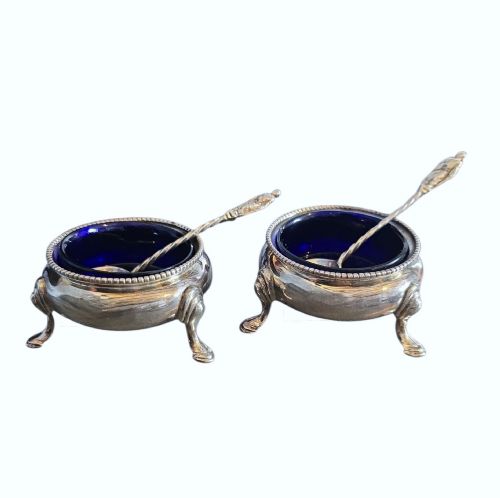
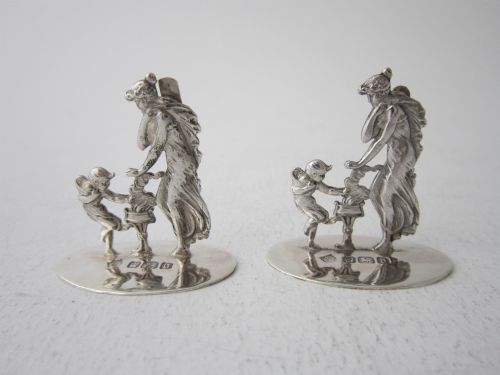
Silversmiths formed solid sterling silver and silver plate through casting, hammering, and detailed hand-chasing, evident in items such as figural menu holders and grape scissors. Glass components, including cobalt glass liners for salt cellars and claret jugs, were blown and fitted directly to the metalwork.
Supplementary materials such as oak, velvet, silk, and leatherette provide structural backing for cased sets and condiment barrels, while materials like horn or steel appear in specialised cutting implements.
Silver Dining Tableware Retail Price Guide 2026
Typical asking prices for silver dining tableware among the pieces listed under this phrase on Sellingantiques today, from the lower quarter to the upper quarter. They describe what is for sale here now, not the wider market.
Listings span periods from Georgian and Victorian eras through to the mid-twentieth century, incorporating materials like sterling silver, silver plate, cobalt glass, and velvet.
Judging Quality
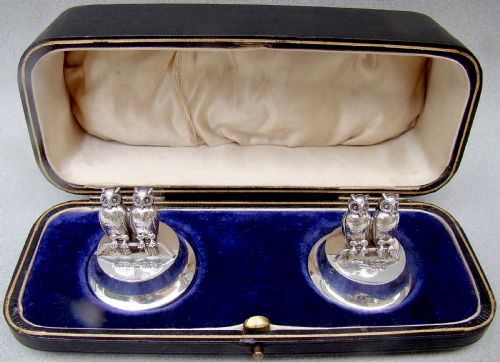
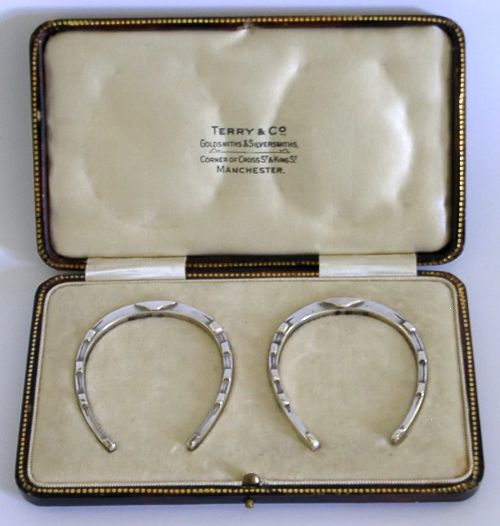
Distinction in these pieces lies in the crispness of the hallmark stamping, the weight of the metal, and the depth of hand-chased relief work on figural subjects such as owls, monkeys, or horseshoes. Maker marks from established workshops signify accountability and finer finishing.
The presence of original fitted velvet or silk-lined cases elevates a set, as does the retention of intact, period-correct glass liners in salt cellars and butter dishes.
Levi & Salaman·R. E. Stone·Christofle Gallia·Georg Jensen
The Silver Dining Tableware Glossary
- Hallmark
- An official stamp applied to precious metals indicating the standard of purity, the assay office, and the date of manufacture. These marks allow collectors to date pieces accurately.
- Cruet set
- A matched group of small containers holding condiments such as salt, pepper, and mustard. They often feature glass inserts and sit within a silver or plated frame.
- Sauce boat
- A small pitcher designed for serving gravies or sauces, typically featuring an oval body, a spouted lip, and a scrolled handle. Many rest upon attached saucer bases.
- Knife rest
- A small horizontal support designed to keep carving or dining knives elevated above the tablecloth between courses. They appear in matched sets of varying lengths.
- Sheffield plate
- An early form of composite metal made by fusing a thin sheet of silver to a thicker copper base. This technique preceded modern electroplating.
Silver Dining Tableware: Frequently Asked Questions
What is a silver cruet set?
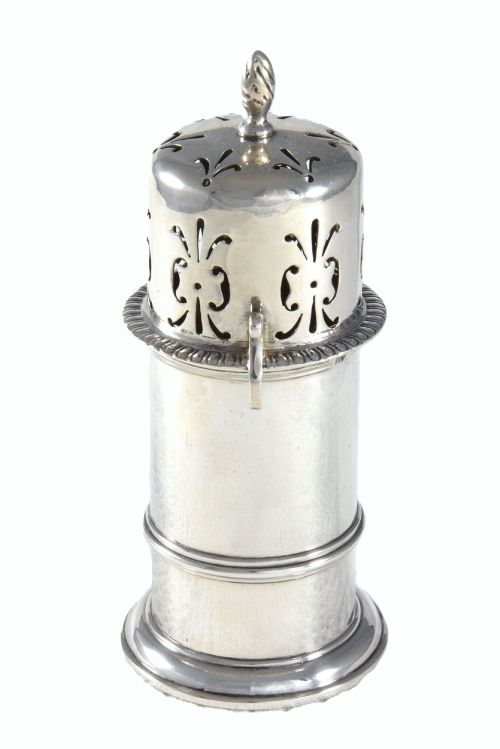
A cruet set is a matched group of vessels used for holding condiments at the dining table. They typically contain bottles or cellars for salt, pepper, and mustard.
These sets often sit on small stands or frames, sometimes accompanied by fitted spoons. They date across the Victorian, Edwardian, and later twentieth-century periods.
How do I clean silver tableware?
Cleaning solid silver and silver plate requires a soft cloth and a gentle, non-abrasive silver polish formulated to remove tarnish without scratching the metal surface. Care must be taken around applied details and hallmarks.
Items with glass inserts or velvet lining demand extra caution to keep moisture away from vulnerable non-metal components during the polishing process.
Were napkin rings always cased?
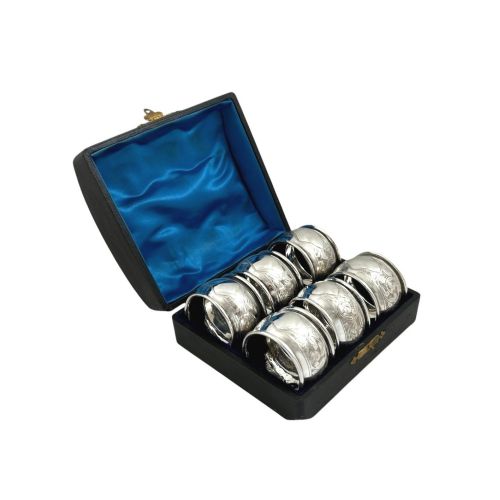
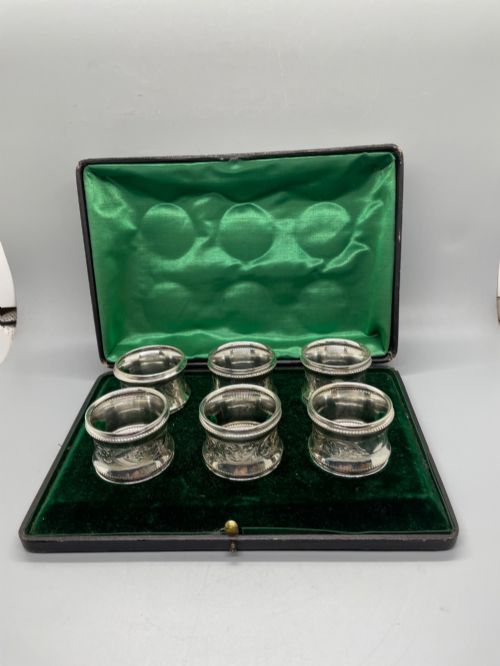
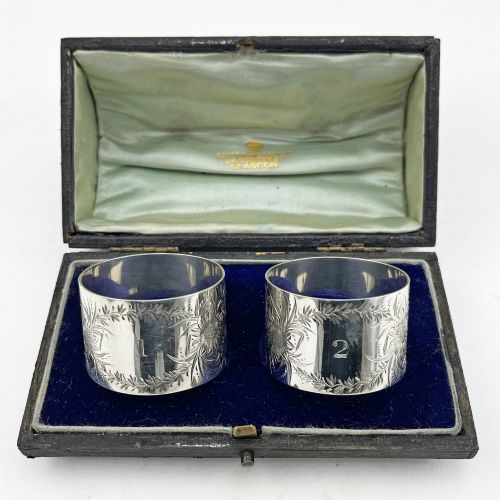
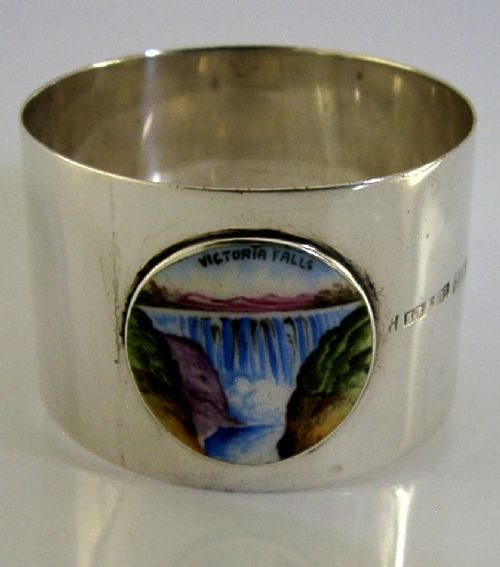
Napkin rings were frequently sold as matched sets housed in fitted boxes lined with silk or velvet, particularly during the Edwardian and Art Deco eras. These presentation cases protected the silver from dust and made them popular choices for wedding or anniversary gifts.
Single napkin rings also appear frequently, often representing individual purchases made over time rather than part of a boxed set.
What are knife rests used for?
Knife rests are small supports placed beside a plate to keep the blade and handle of a knife elevated off the tablecloth. This practice kept linens clean between courses during formal nineteenth and twentieth-century dinners.
They are commonly found in pairs or sets of four, shaped from solid sterling silver in various architectural and animal forms.